




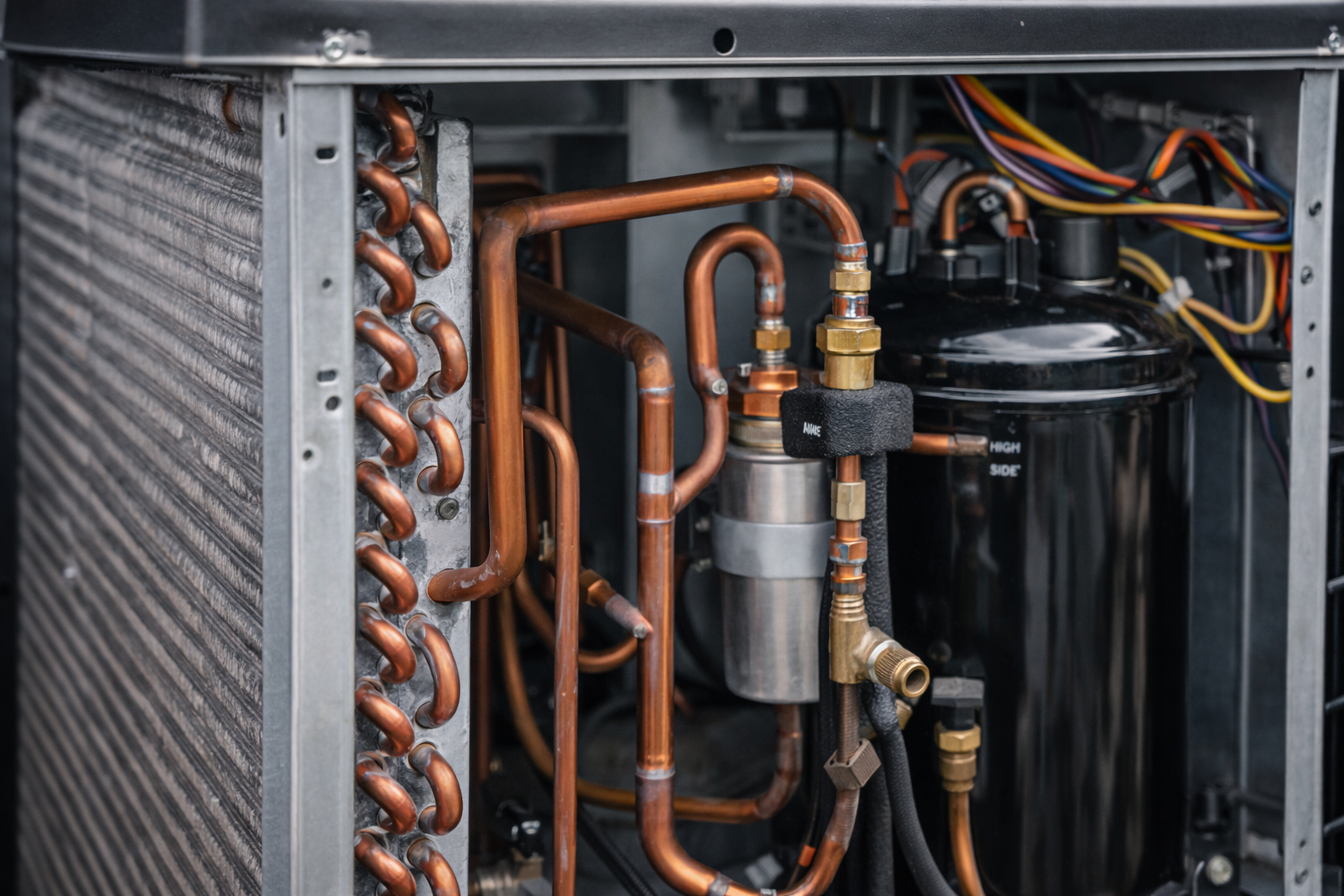
The Metals Inside Your AC: Why They Matter to Performance and Value
Air conditioners are built around a handful of critical metals, primarily copper, aluminum, steel, brass, and bronze. Together they determine how efficiently the system moves heat, how long it lasts, and how vulnerable it is to theft and corrosion. From decades of hands-on work and shipping thousands of systems, we see the same pattern: copper moves heat best, aluminum saves weight and cost, steel adds structure and protection, and brass or bronze make durable valve bodies and connections.
Think of the unit like a relay team where each metal runs a leg. If one runner stumbles, capacity drops and failures start. This article keeps the jargon light and focuses on practical takeaways for homeowners, vehicle owners, and property managers. We explain which metals are used and why, the weak points that tend to fail, and what simple steps reduce risk, like corrosion prevention and theft deterrence. If you care about cooling performance, repair costs, and resale value, understanding the metal mix is one of the fastest ways to make smarter maintenance and replacement choices.
How Metal Choice Affects Performance, Durability and Lifecycle Cost
Smarter purchase and repair decisions look beyond sticker price. Upgrading to newer, higher efficiency equipment often trims lifetime operating cost, but the payback depends on climate, runtime, electric rates, sizing and installation quality, not on metal choice alone. Metal selection still matters for risk management: compare coil material (copper vs aluminum), factory anti corrosion coatings, and warranty terms on coils and cabinets. These elements influence how well the unit resists leaks and corrosion, keeps its efficiency, and holds resale or scrap value over time. Treat cost and savings as qualitative tradeoffs rather than fixed numbers: better materials and protection reduce the chance of early failure and unplanned downtime. In short, choose the efficiency level for your utility reality, then choose materials and warranties for durability.
Copper: The Heat Transfer Workhorse: What It Does and Why It's at Risk
Copper is the backbone of the refrigeration circuit because its thermal conductivity is exceptional. That single property lets refrigerant absorb and shed heat quickly, so copper is used for refrigerant lines and often for coils. Think of it like an express lane for heat, moving energy with minimal resistance so the system can do more cooling or heating with less effort.
There is a flip side. Copper's high scrap value makes exposed line sets and outdoor condensers frequent theft targets, a non mechanical risk that can disable a system immediately. Owners should prioritize practical protection, especially in locations with easy access or limited visibility.
- Install a lockable condenser cage.
- Use tamper resistant screws on access panels.
- Add locking service caps on refrigerant ports.
- Route or conceal the line set to reduce visibility and access.
- Place equipment where it is visible and well lit.
- Document model and serial numbers, and keep photos for insurance and police reports.
These steps do not change how copper performs, they simply protect the material that makes efficient heat transfer possible.
Steel, Brass & Bronze: The Frame, Fasteners and Seals That Keep Refrigerant Contained
Steel forms the cabinet, frame, and many fasteners. It gives the unit its backbone, shields the coil and compressor from impacts and weather, and holds alignment over years of vibration. Protective paint helps, and proper clearance lets panels dry, which reduces rust.
In our experience at Budget Heating (BudgetHeating.com), brass and bronze are ideal at service valves, fittings, and select wear parts. They resist corrosion and their machined threads and seats create tight, durable connections that keep refrigerant contained.
- Inspect cabinet panels and screws for rust or looseness.
- Clean early rust and touch up finishes to seal out moisture.
- Confirm service valve caps are present and snug after service.
- Where corrosion is heavy, replace fasteners with corrosion resistant types.
When These Metal Choices Aren't Optimal: Honest Tradeoffs and Better Alternatives
From decades in the field, we treat materials as tools, not trophies. Aluminum coils are not inherently inferior when engineered and protected. Copper remains central to the refrigerant circuit, but heavier metal alone does not ensure longer life. Since DOE test procedures moved to SEER2 in 2023, manufacturers balance coil geometry, cabinet airflow and weight, often choosing microchannel or copper-tube/aluminum-fin to meet regional minimums without giving up durability.
- Coastal sites: Salt speeds corrosion. Choose factory anti-corrosion coatings, stainless fasteners, or all-aluminum coils, and plan gentle rinsing and inspections instead of uncoated copper coils.
- Dusty or desert: Grit clogs fins quickly. Pick units with sturdy coil guards or protective screens and plan more frequent cleanings rather than a bare, cheaper coil.
- High-theft areas: Exposed copper is a target. Route line sets inside walls or conduit, use locking caps, consider condenser cages, and place equipment out of sight.
Match metals to local risks, balancing conductivity, corrosion resistance, weight and cost.
Aluminum Coils & Fins: Lightweight, Corrosion-Resistant, But Easy to Damage
Aluminum is common for condenser coils and fins because it is light, does not rust, and stands up well outdoors on heat rejection surfaces. It sheds heat efficiently with thin, tightly packed fins, but those fins are delicate, like the pages of a paperback. Bending or clogging them cuts airflow and raises head pressure.
Care is simple and gentle. Keep the coil clear of leaves, grass clippings, lint, and nests that trap moisture. Rinse with a garden hose from the inside out to float debris away while preserving fin shape. Skip pressure washers and avoid harsh or acidic cleaners that can strip protective films and scar the metal. If fins are bent, straighten them carefully with a fin comb or similar tool. Staying ahead of dirt and damage keeps operating pressures in check and reduces stress on the compressor and fan.

How Metals Fail: Corrosion, Galvanic Action, Wear and Impact Damage
AC metals fail for two reasons: chemistry and force. Corrosion is the chemical path, moisture and oxygen attack surfaces, especially in thin fins and coil ends, slowly eating metal like a slow burn. Galvanic action is a special case: when dissimilar metals touch and an electrolyte is present, one metal sacrifices itself. We most often see it as fastener halos, pitting around coil joints, or under chipped paint where bare edges meet.
Mechanical paths include wear and abrasion, grit scouring coil faces or vibration fretting contact points, and impact damage from hail or flying debris that bends fins or cracks guards.
Environment sets the pace. Salt spray, road salt, dust, and industrial pollution accelerate all four modes. In harsh zones, extra protection matters: factory coil coatings, stainless hardware, and debris guards reduce risk and slow the clock.
Common Symptoms of Metal Related Problems (Home and Car): Quick Signs to Watch For
- Cabinet and hardware: rust at the base or fasteners, loose screws, bent or missing panels that expose parts, and missing or loose brass valve caps.
- Coil and fan: bent fins, heavy dirt or debris, and white or gray corrosion spots that cut airflow and efficiency.
- Lines and fittings: oil stains, missing or cracked insulation, kinks or flattened sections, rubbing marks, and loose or missing caps.
Do a quick visual check about quarterly to catch issues early.
Practical Steps to Protect Your Investment: Maintenance, Coatings, Security and When to Call a Pro
- Keep 2-3 feet clear around the condenser and trim vegetation.
- Rinse coils gently from the inside out. Avoid pressure washers and harsh cleaners.
- Confirm service valve caps are present and snug.
- Document model and serial numbers for insurance.
Schedule yearly professional service for deep coil cleaning, refrigerant leak checks and pressure testing, inspection for galvanic corrosion at dissimilar metal joints, charge verification, and tightening of electrical and mechanical connections. In our experience at Budget Heating (BudgetHeating.com), this keeps systems near rated efficiency and protects copper, aluminum and steel parts.
After storms, vandalism or suspected theft, do not operate the unit. Shut off power, take photos, file police and insurance reports, then have a qualified HVAC technician perform leak and pressure testing before restart.
For repairs or replacement, ask about coil materials and anti corrosion features, verify correct line set sizing with pressure testing, request locking caps, and consider a condenser cage or tamper resistant fasteners in theft prone areas. Never attempt DIY refrigerant work or brazing. Call a qualified technician.
Summary: Simple Habits That Extend Your AC's Life and Protect Your Investment
Your home, business and vehicle AC rely on coordinated metals to move heat. Protect that metal infrastructure with cleaning, corrosion control, security and professional service to stay near rated efficiency and extend life. If you are unsure about damage, leaks or security options, contact a qualified HVAC technician for an inspection, and document serial numbers and photos for your records. With 30+ years in HVAC, we can help you choose equipment, parts and protection with wholesale pricing and full warranties.
- Get a Custom Quote
- Talk to Our Team: U.S.-based phone support
- Shop AC and Heat Pump Systems
- Financing with Affirm, many systems ship free
 Cooling
 Heating
 Learning Center
 Money Saving Tips
 Product and Brands Insights
 Buying Guides
 State by State
 HVAC Systems