





 how to guide
 learning center
How to Find Someone to Fix Your Window AC Unit (Quick guide)
When a window AC stops cooling or starts making odd noises, timely qualified repair matters. Fast service restores comfort, keeps energy bills from creeping up, and helps the unit last longer by catching small issues before they turn into major failures. This quick guide previews the steps to find, vet, and hire the right technician, so you avoid guesswork and surprises.
- Do simple, safe checks first to rule out easy fixes.
- Use trusted search channels to build a short list of pros.
- Verify credentials: current license, proof of insurance, and EPA 608 certification.
- Compare clear, itemized quotes, not lump sums.
- Decide repair vs replacement using age, refrigerant type, and total cost.
Follow this path to move quickly from problem to solution, with confidence that the work is done right and your unit is not wasting energy or shortening its life.
Should you call a pro or try DIY first? (Safe triage checklist)
Document symptoms: won't start, no or limited cooling, weak airflow, unusual noises, smells, ice on coils, indoor leaks, breaker or GFCI trips, error codes. Note when it happens and take photos or video. Gather nameplate info: brand, model, serial, BTU, refrigerant, age, plus install and electrical details.
Safe DIY: unplug before cleaning, test outlet and reset GFCI, check breakers, set to Cool, lower setpoint, replace filter, clear the drain, thaw ice fully first. Do not open electrical covers or touch capacitors. Hard stops: repeat trips, burning or chemical smells, new noises, persistent ice, indoor leaks, or codes. Skip recharge kits. Refrigerant loss usually means a leak that needs a certified tech.
Common window AC problems that need a technician (compressor, fan, refrigerant, electrical)
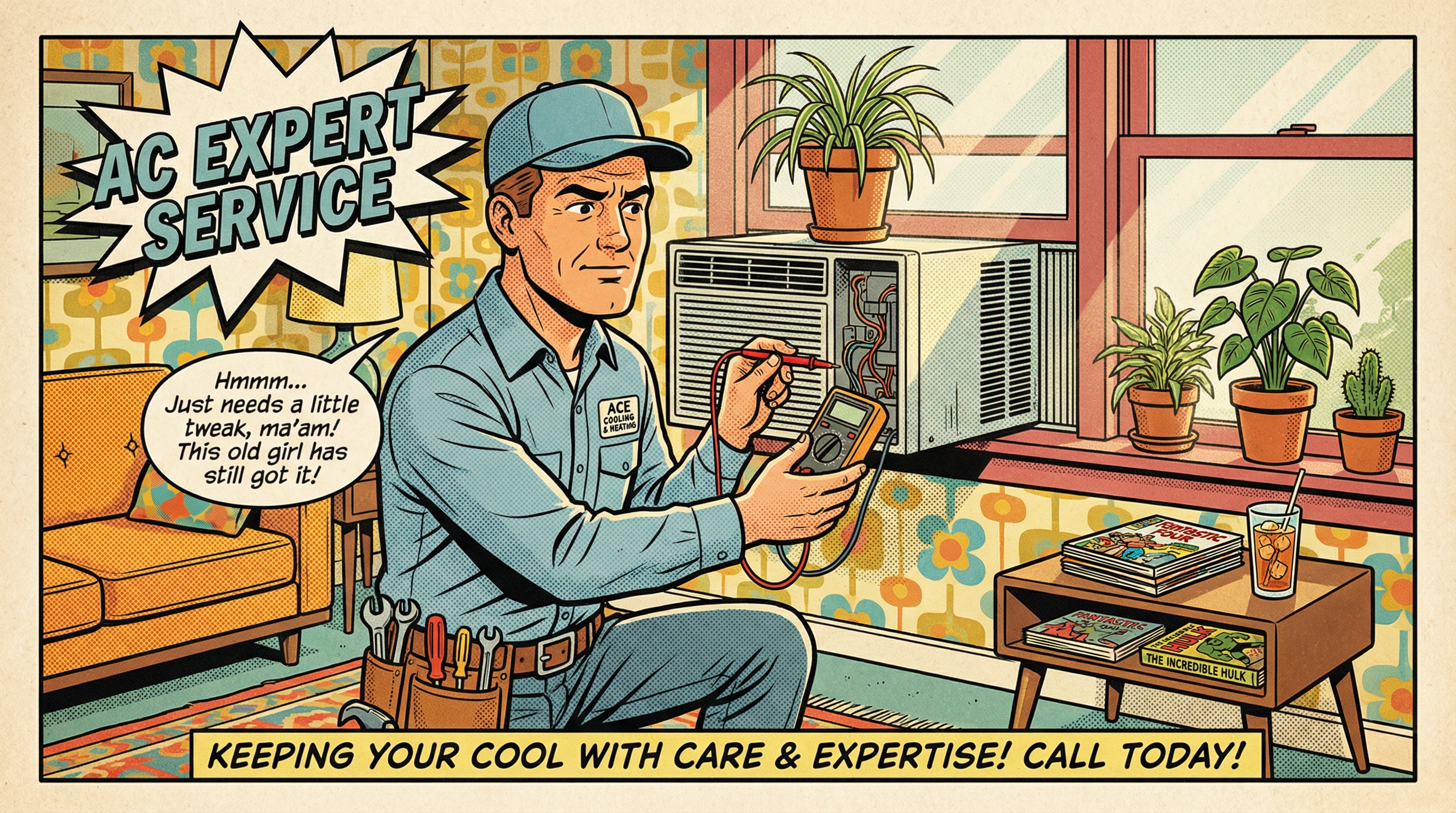
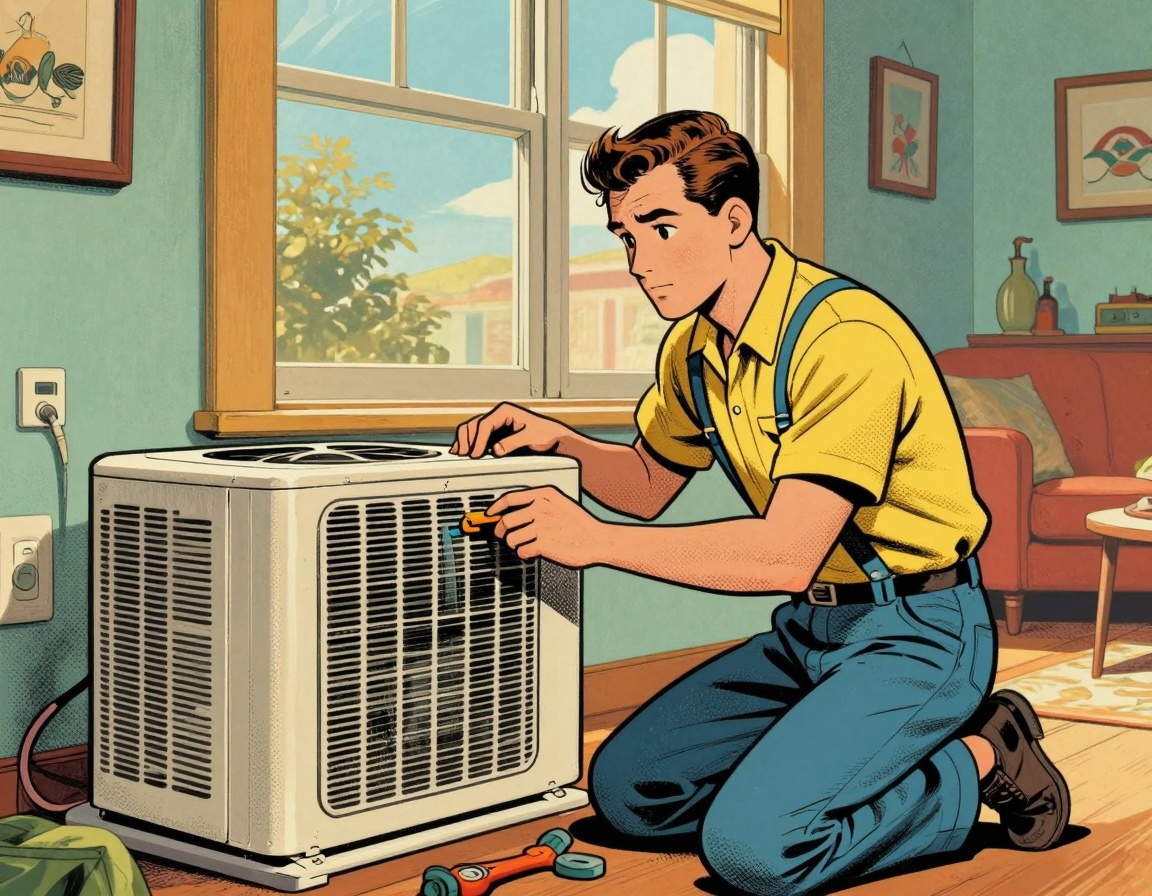
Some window AC failures are beyond DIY. When issues involve the sealed refrigerant system, the compressor, or high-voltage electrical parts, a licensed technician is required. In our experience, this is about safety, accurate diagnosis, and preserving the unit.
- Refrigerant and compressor: Think of the sealed system like a closed bloodstream. Signs of trouble include hissing, oily residue on tubing or coils, persistent frost or ice, and poor cooling despite clean filters and good airflow. Sealed-system work and charging are pro-only.
- Electrical faults: Failed capacitors, control boards, wiring problems, and fan motors require proper testing and trained handling.
- Mechanical fan issues: Motor failures or bearing problems call for technician service to avoid further damage.
Small parts are often inexpensive, but sealed-system or compressor failures can be costly. Do not attempt electrical repairs, capacitor or motor replacements, sealed-system work, or complex mechanical fixes.
Search terms and info that get fast, accurate quotes (what to say and show)
Use precise searches to reach the right pros: window AC repair near me, window AC service, AC repair near me, AC compressor test, freon leak detection, window AC repair cost, and brand terms like "LG window AC repair". In our experience at Budget Heating (BudgetHeating.com), adding your city speeds responses.
When you message, specify removable window unit or through-the-wall sleeve, and note access limits like gated entry, stairs, or tight parking. Attach brand, model, serial, BTU, refrigerant type, clear photos of the nameplate, full install, plug and outlet, plus any visible damage. Add a 20-second video of symptoms so techs can pre-qualify, confirm on-site service or shop drop-off, and quote accurately.
Typical costs, timelines and when repair is worth it vs replacement
When we weigh repair against replacement, we start simple: if the repair quote is around 50 to 60 percent of a comparable new unit installed, replacement usually wins. Age matters too. Units past 7 to 10 years, especially those using obsolete refrigerants, are harder to justify repairing. Add comfort clues like rising noise or uneven cooling, and the balance tilts further toward replacement.
- Pricing structure: ask if the job is flat-rate or time-and-materials, whether the diagnostic fee is credited if you proceed, and if after-hours or travel surcharges apply. These can change the final bill meaningfully.
- Efficiency context: window units are rated by CEER or EER, not SEER. If you are stepping up to ductless or central, look at 2023 and newer SEER2 regional minimums and potential rebates or tax credits for higher SEER2 equipment.
- Timeline: peak-season or emergency visits often carry premiums and longer waits. Off-peak scheduling can lower costs and restore comfort faster.
Scenarios where repair is not the best choice:
- Cooling multiple rooms regularly: a ductless mini split or central system provides better whole-home comfort and lower operating cost.
- Older unit with noisy operation or outdated refrigerant: a modern replacement improves efficiency and parts availability.
- Sound-sensitive spaces or strict building rules: consider a through-the-wall unit or ductless for quieter, cleaner installs.
Specific dollar ranges vary by market and are not listed here. Get itemized estimates from local pros so you can benchmark labor, parts, and any surcharges against the options above.
Where to search for a reliable window AC repair pro (apps, local shops, and referrals)
We find the fastest wins come from channels that let you filter for window-unit specialists and show real results.
- Apps: Angi, Thumbtack. Enter your ZIP and job details to match with pros who list window AC service. Use verified reviews and photos to shortlist.
- Manufacturer: Check authorized service centers for your model.
- Local shops: Look for appliance repair shops that explicitly list window or room ACs.
- Referrals: Ask neighbors or building management. Favor recent reviews noting punctuality, cleanliness, first-visit fixes, and true window-unit experience.
- Verify scope: Before booking, confirm they service window units. Many HVAC shops focus on central systems.
How to vet candidates: licenses, EPA certification, insurance and references
Use this quick checklist and ask for documents, not promises. In our experience at Budget Heating (BudgetHeating.com), the right paperwork avoids most headaches.
- Current state or local HVAC or appliance repair license: get the license number and issuing authority. Protects you from failed inspections and unsafe work.
- EPA Section 608 certification for any refrigerant task: ask to see the card and confirm recovery equipment. Protects against illegal venting, fines, and compressor damage.
- Insurance: proof of general liability and workers' comp if applicable, with insurer name and policy details. Protects you if property damage or injuries occur on site.
- Local experience: confirm they work in your climate and know local codes or rebates. Protects against noncompliant or poor fit repairs.
- References: two recent similar jobs with contact info. Protects against no-shows and sloppy workmanship.
Questions to ask before you book: fees, warranties, parts and scheduling
Use these exact questions to pre-qualify a tech and avoid price or timing surprises.
- Fees: What is the diagnostic fee, is it credited to the repair, and are there trip or after-hours charges?
- Pricing: Do you bill flat-rate or hourly, and what is the hourly rate and minimum?
- Estimates: Will you provide a written, itemized quote listing diagnostic, trip, parts, labor, refrigerant or recovery, and disposal or haul-away?
- Warranties: How long is the labor warranty, are parts OEM or aftermarket, what happens if the same fault returns, and is the workmanship guarantee in writing?
- Parts and scheduling: Do you stock the part, what is the ETA if ordered, any restocking fees, and what arrival window will I receive?
To compare itemized estimates, line up each line item, confirm if the diagnostic fee is credited, note flat-rate versus hourly assumptions, include all surcharges, and weigh OEM versus aftermarket part warranties. Total the complete job, not just the part price.
Red flags and how to avoid scams when hiring an AC tech
In our 30+ years on job sites, a few signals separate pros from pretenders. Positive signs include branded vehicles, clear written estimates, a verifiable online presence, techs who explain findings, and compliance with refrigerant recovery rules.
- Refuses to provide license or insurance
- Reluctant to give a written estimate
- Requests a large cash deposit for a small job
- Persistently poor or sparse reviews
- Quote dramatically cheaper without a clear justification
Do not choose solely on lowest price. If a bid seems magical, it usually means corners or parts are missing. Walk away.
Next steps: booking the visit, follow-up, and keeping your window AC healthy
Book smart and keep records. Here is a simple plan to get the visit done right and your unit running reliably.
- Before the visit: Clear 3 to 4 feet around the unit, snap photos of the model and serial, secure pets, and have an adult available to approve work and open panels.
- During the call: Describe symptoms, ask the tech to show readings or failed parts in plain terms, and approve any work beyond diagnosis in writing.
- After repair: Run a full cooling cycle, get an itemized invoice with part numbers and warranty terms, keep old parts if you want them, replace or clean filters monthly, and check window seals and unit tilt annually.
Post-service bookkeeping: keep invoices, warranty paperwork, and nameplate photos in one folder, note filter dates, and set calendar reminders. It protects warranties and speeds future service.
Treat this like any important home-service: verify you need a tech, use reputable channels, require license, insurance, and EPA 608 where relevant, get itemized quotes, weigh cost against unit age and efficiency, and never compromise safety. Whether you need pricing or guidance, our team makes it straightforward. With 30+ years in HVAC and over 200,000 orders fulfilled, we back you before and after the sale.
- Get a Custom Quote
- Talk to Our Team by phone for U.S.-based technical support
- Shop Window ACs and Parts, with fast shipping and Affirm financing available
 Cooling
 Heating
 Money Saving Tips
 Product and Brands Insights
 Buying Guides
 State by State
 HVAC Systems