




 cooling
 hvac systems
 learning center

Do I Need an Inverter AC System? A Practical Buyer's Primer
As a homeowner, you might be asking, do I really need an inverter AC or will a standard unit do the job? This primer explains what inverter systems are, where they shine, where they may not, and how to decide. Expect clear tradeoffs: higher upfront cost balanced against comfort gains and potential energy savings that depend on your home and climate.
Inverter ACs use variable speed compressors to match output to your home's exact cooling needs. That approach trims electricity use, smooths out temperature swings, lowers operating noise, and can help the system last longer when the installation and maintenance are done right. Think of it like a dimmer switch for cooling instead of an on or off light switch.
Not every home benefits equally. Warmer climates, longer run times, rooms with hot and cold spots, or noise-sensitive spaces usually see the most value. Mild climates, very small loads, or leaky ducts can blunt the payoff. There is no single universal one page checklist, but you will get a practical checklist later in this article to weigh costs, comfort goals, energy rates, and installation quality. From decades of field work with variable speed systems, we have seen that the right answer is specific to how your home is used.
What Is an Inverter AC, and How Does the Variable-Speed Compressor Work?
An inverter AC uses a variable-speed compressor that ramps up or down to match the exact cooling or heating load instead of switching fully on and off. Think of it like a dimmer switch for your comfort, not a simple on/off switch. When the space needs a little conditioning, the compressor idles along. When the load rises, it speeds up smoothly. This modulation trims the frequent start and stop cycles seen in fixed-speed systems, avoids the big electrical surge at startup, and keeps temperature steadier during the part-load conditions where equipment operates most of the time.
With a fixed-speed unit, the compressor runs at 100 percent, then shuts off, which creates noticeable swings before the next cycle. A variable-speed inverter holds a lower, continuous output to maintain the set point more precisely and often more quietly. Fewer hard starts mean less stress on components, and longer, lower-speed runs translate to better real-world efficiency and more consistent comfort.
Inverter AC vs Non inverter AC: Key Differences You'll Notice at Home
After 30+ years working with both types, we see the differences where it matters most: everyday comfort, noise, and bills.
- Energy use: In real homes at part load, inverter systems commonly cut consumption, often near 40 percent compared with fixed speed units.
- Comfort: Temperature feels steadier with smaller swings, so rooms stop drifting from cool to warm and back.
- Humidity control: Modulating capacity holds setpoints more precisely and removes moisture more consistently in humid climates.
- Sound and runtime: They run longer at lower speeds, so compressor and fan noise drop indoors and at the outdoor unit. Think cruise control rather than stop and go.
- Wear and reliability: Fewer hard starts and less cycling reduce mechanical stress, which can help components last longer.
Non inverter units can still cool well, but you will notice more on off cycling, louder operation, larger temperature swings, and typically higher power draw whenever the weather is mild.
Drawbacks and Situations Where an Inverter AC May Not Be Worth It
In our experience, inverter units cost more up front, and the payback is not guaranteed. It depends on runtime, climate, electricity rates, and correct sizing and installation. If you use cooling lightly, live in a mild climate, or have very low power rates, the premium may not pencil out. Older or restrictive ductwork that cannot be corrected can also blunt the efficiency gains. If the plan is to close vents in unused rooms to force air elsewhere, expect higher duct static pressure and lower efficiency. Zoning or ductless mini splits are better fits in those cases. Poor placement, long refrigerant lines, or rushed commissioning can further erode benefits, so a ductless layout or simpler system can be more practical.
- Myth: Inverter ACs are always cheaper to own. Reality: usage and rates decide.
- Myth: Long run time means inefficiency. Reality: low power operation is by design.
- Myth: Dropping the thermostat lower cools faster. Reality: it only adds runtime.
- Myth: Turning the AC off and on saves energy. Reality: frequent cycling wastes energy.
- Myth: Any existing ducts will work fine. Reality: older ducts may need modification.
- Myth: Maintenance is optional. Reality: dirty filters, coils or leaks hurt efficiency.
Power, Installation and Safety Cautions (Portable ACs, Power Strips, Wiring)
In our experience, the safe homeowner line is simple: replace air filters every 1 to 3 months, keep supply and return vents unblocked, and clear debris from the outdoor condenser. Stop and call a licensed technician for anything involving refrigerant, electrical diagnostics or repairs, gas or combustion, refrigerant charging, or detailed commissioning.
Inverter units contain sensitive electronics and control boards, so installation, charging and diagnostics should be handled by trained technicians to protect reliability. Treat portable AC power, outlets, power strips and any wiring changes as electrical work. HVAC systems involve high voltage and refrigerants, and improper handling risks shock, leaks or hazardous exposure, so do not troubleshoot electrical or refrigerant issues yourself.
Extra Benefits of Inverter ACs: Solar, Environmental Upsides and Heat Pump Heating
Inverter ACs draw smoother power with lower surge current, so they pair well with residential solar. By using less electricity, they also reduce grid energy greenhouse gas emissions. That smoother draw is easier to accommodate when panels are supplying most of the load. It also better aligns with how rooftop arrays deliver power across the day.
Many inverter systems are available as reverse cycle heat pumps. The refrigerant circuit reverses to move heat indoors in winter and outdoors in summer, delivering efficient heating as well as cooling. This approach often outperforms resistance electric heaters for year round comfort and efficiency. In our experience at Budget Heating (BudgetHeating.com), homeowners like the simplicity of one system that handles both seasons without juggling separate heating and cooling units.

When You Should Choose an Inverter AC: A Practical Use Case Checklist
Based on decades of field installs and service, use this quick self-check:
- Runtime: You cool many hours per day or have a long season, especially in the South or coastal humidity.
- Electric rates: Your kWh cost is high, or utilities have time-of-use pricing. Faster payback here.
- Climate and load swings: Hot afternoons, humid nights, west-facing rooms, or mixed occupancy create variable cooling needs.
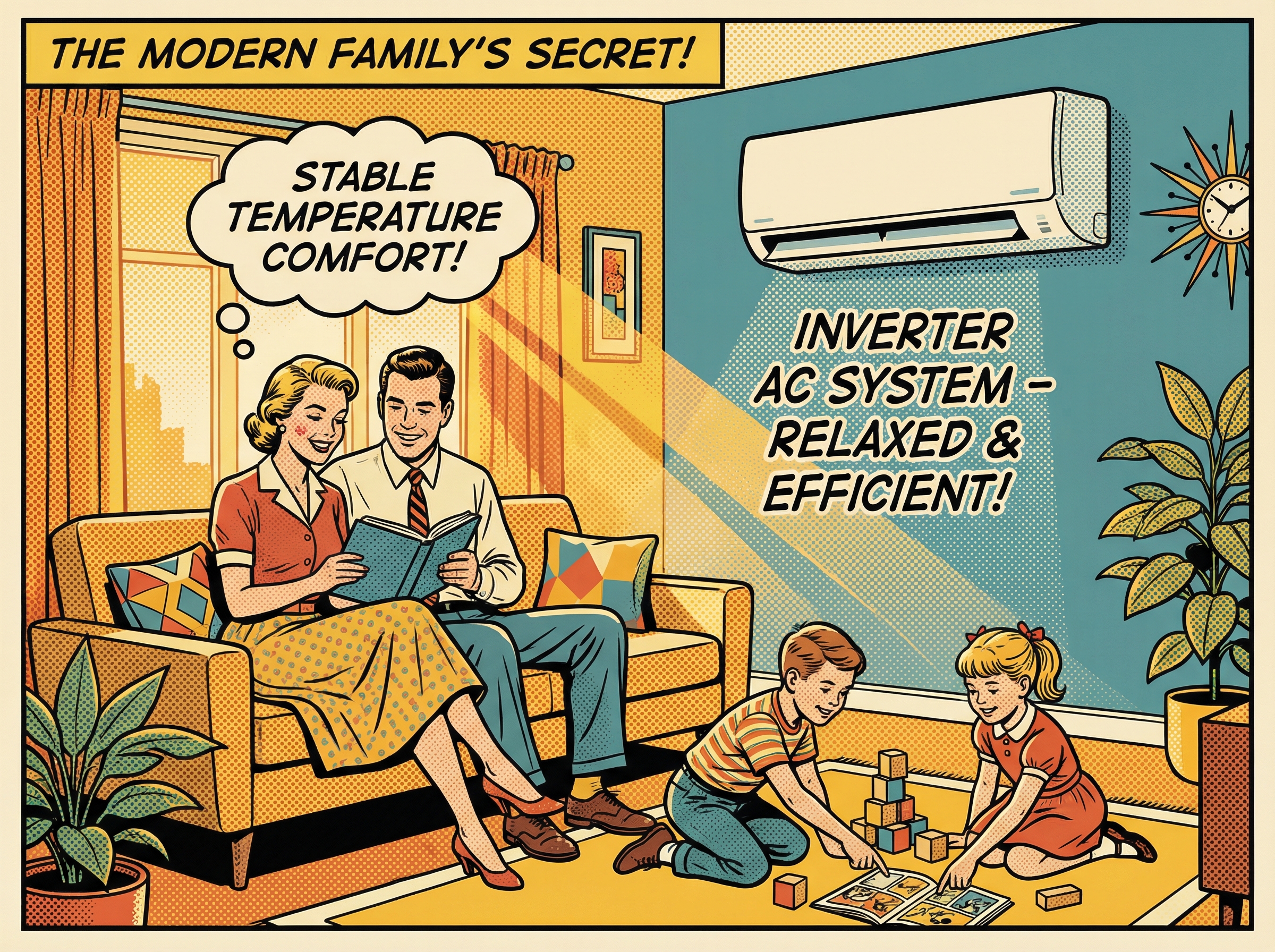
- Comfort: You want steady temperatures and quieter operation for bedrooms, nurseries, or home offices, like using a dimmer instead of an on-off switch.
- Solar pairing: You plan rooftop PV and want to stretch every kWh.
- Budget math: Higher upfront cost is offset by SEER gains when local runtime is high. In mild climates with low rates, payback is slower.

Costs and Payback: Upfront Price vs Long-Term Electricity Savings
High efficiency inverter heat pumps and ACs typically cut cooling energy 20-40% compared with older fixed speed units. Legacy systems ran about 8-12 SEER, today's baseline is 14-16, and top tier inverter models reach 20-26+. SEER or SEER2 reflects how much cooling you get per unit of electricity: higher number, lower bill.
Quick payback math: use about $7 per SEER point per month in savings versus a 13 SEER baseline. Savings per month equals SEER difference times $7. Annual savings equals that number times your cooling months. Payback years equals the extra upfront cost divided by annual savings.
Example: upgrading from 14 to 20 SEER is a 6 point jump. 6 x $7 = $42 per month. If you cool 7 months, that is about $294 per year. If the higher SEER system costs $1,800 more, simple payback is roughly 6.1 years. In our experience at Budget Heating (BudgetHeating.com), hotter climates often see faster payback because inverter systems can trim roughly 40% of annual cooling energy. Mild summers lengthen payback, high electric rates shorten it.
Buying Tips, Brands and Regulations (What to Check, including for Pakistan buyers)
SEER and SEER2 tell you how much seasonal cooling you get per unit of electricity. SEER2 is the updated U.S. Department of Energy test, and higher numbers mean lower operating cost. Since 2023, U.S. minimums rose by region: Northern states require about 14 SEER, which is 13.4 SEER2, while Southeast and Southwest often require 15 SEER, which is 14.3 SEER2, depending on size. Always check local rules before you buy. For buyers outside the U.S., including Pakistan, confirm which efficiency labels are accepted by your local authority and whether the manufacturer warranty is valid in your country.
- Pick a reputable brand and verify an authorized service network near you.
- Insist on proper sizing using a formal load calculation, not a rule of thumb.
- Quality installation and commissioning are essential to realize inverter benefits and long term reliability.
- Homeowners handle filters and debris, but refrigerant or electrical issues and all warranty work should be done by authorized service.
Quick Decision Guide: Should You Buy an Inverter AC?
If you run cooling several hours a day and want steadier temperature, quieter operation, and lower electric bills, choose an inverter AC. Expect a higher upfront price that is often recovered over months to a few years, depending on usage and local power costs. You will only realize those benefits with proper sizing, high quality installation, and a reputable brand, since these choices drive efficiency and comfort. If you are on the fence, we can translate your goals into the right equipment and a clean installation path. We can also help you avoid common sizing pitfalls so the system performs the way you expect. Ready to move forward?
- Get a Custom Quote for an inverter AC matched to your home and climate
- Talk to Our Team by phone for sizing and installation guidance
- Shop Inverter ACs and ductless mini splits
 Heating
 Money Saving Tips
 Product and Brands Insights
 Buying Guides
 State by State