




 how to guide
 learning center
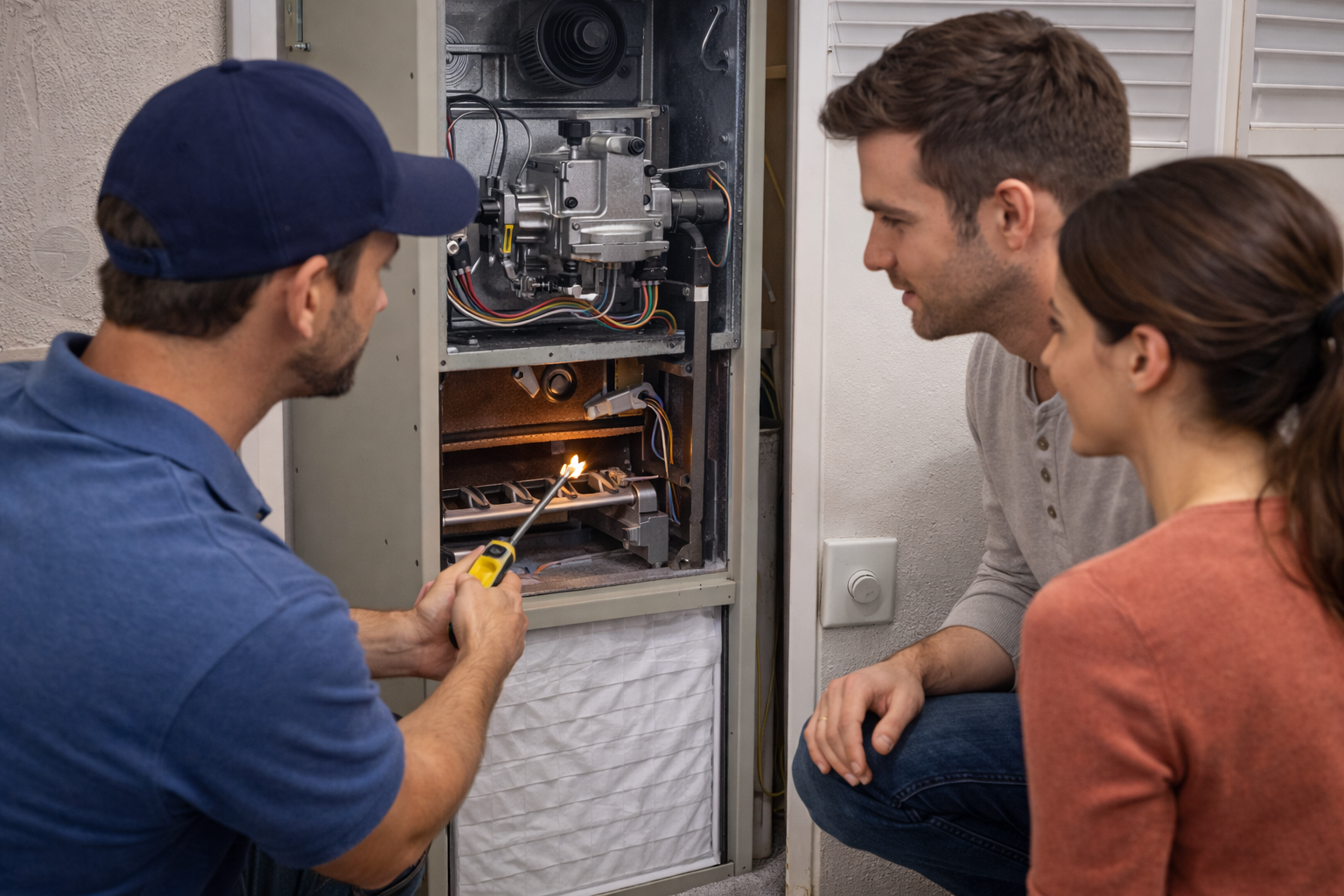
How to Relight the Pilot Light on Your Gas Furnace: Quick Overview
If your furnace stopped heating on a cold night, a blown-out pilot is a common, fixable cause. Relighting it often restores comfort quickly and can improve ignition reliability. Start with safety: always find and follow the lighting label on the furnace and the manual for your exact model. Those instructions take priority.
Know your ignition type first. Many older furnaces use a standing pilot, a small flame that burns constantly, similar to a candle. This type can usually be relit using the gas valve's Pilot setting and the sequence on the label. Newer units often use electronic or hot-surface ignition, which lights the burners only when there is a heat call. These systems do not have a pilot to relight.
Quick identifiers: if you can see a steady little flame near the burners even when the furnace is off, you have a standing pilot. If you see a ceramic glow stick or a spark electrode that lights only during startup, it is electronic or hot-surface ignition. In our experience, confirming the ignition type before attempting anything prevents mistakes and keeps the process safe.
Before You Start: Safety Precautions and When NOT to Relight
We always start by confirming the furnace has a true standing pilot and a factory lighting label. If you do not see a PILOT or ON/OFF control, stop. Do not attempt a manual relight.
Turn the furnace off, set the gas control to OFF, then wait 3 to 5 minutes. That wait lets unburned gas dissipate so you are not introducing a flame into a pocket of fuel. It is like airing out a spilled solvent before striking a match.
- If you smell gas or hear hissing, evacuate and call your gas utility from outside.
- Ventilate the area and keep combustibles away.
- Do not bypass safety switches.
- Never work while the furnace is running.
Tools and Materials You'll Need to Relight a Pilot Safely
Have everything ready before you start, then follow the safety wait already covered. In our experience at Budget Heating (BudgetHeating.com), staging tools within reach prevents missteps.
- Flashlight for visibility, not as an open flame.
- Long-neck lighter or long-handled match for ignition.
- Protective work gloves.
- Thin wire or a small pipe cleaner to gently clear a clogged pilot orifice, used cautiously.
- Know the location of the access panel and pilot assembly at the base or front, plus the gas-control knob labeled OFF, PILOT, ON and any reset button.
If the Pilot Light Won't Stay Lit: Common Causes and Quick Fixes
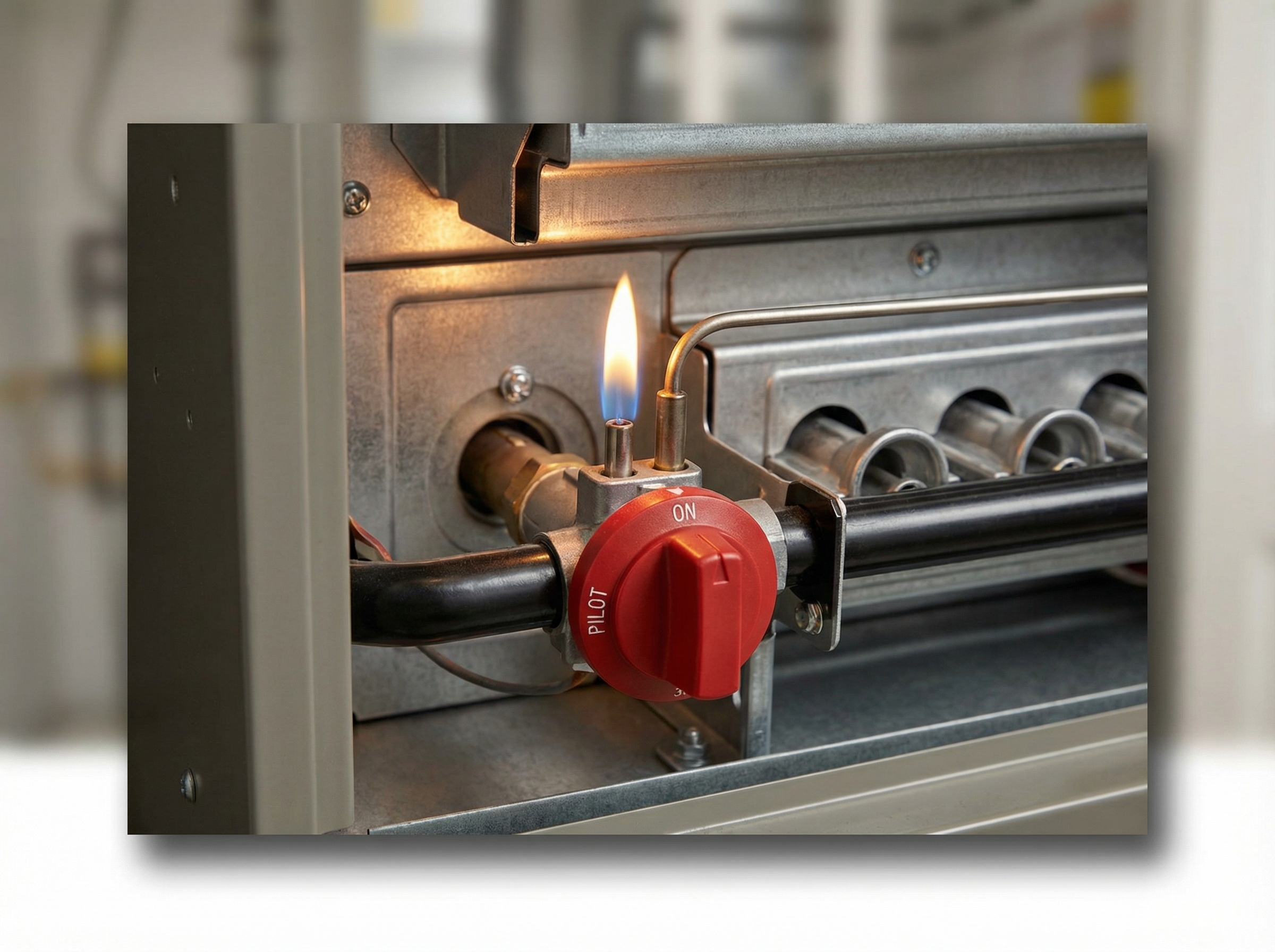
We often see pilots go out for simple reasons that are easy to check. Start with the basics: confirm the gas control is set to PILOT, not ON or OFF, then try one careful relight while holding the reset for the full recommended time. If you recently shut the unit down or smell gas, wait for the gas to clear before attempting to light. Relighting too soon can snuff the flame.
- Clean the intake screen: A clogged screen on the furnace's gas intake valve restricts flow, like a clogged straw. If it is visible and reachable, gently remove debris and try again.
- Clear the pilot orifice: A dirty pilot nozzle can block steady ignition. If access and visibility are safe, carefully clear the orifice with a thin wire and retry.
If the pilot still will not stay lit after one proper relight, there is likely a deeper issue beyond quick homeowner checks. At that point, further diagnosis is warranted, especially if the flame will not hold even with correct knob position and a clean pilot path.
When to Stop and Call a Licensed HVAC Technician (Honest Limits of DIY)
There are clear points where DIY relighting should stop. In our field experience, safety and compliance come first, even for handy homeowners.
- Stop immediately if the pilot will not stay lit after careful attempts, if controls are stiff or hard to turn, if you smell gas, or if the pilot goes out repeatedly.
- If a careful relight, light cleaning, and one more attempt still will not hold the pilot, assume a thermocouple, gas valve, or venting problem that requires a technician.
- After a meter shutoff or utility service work, the gas utility or local code may require a qualified technician to restore service or relight appliances.
- Do not attempt gas line or gas valve repairs, thermocouple replacement, combustion analysis, heat exchanger inspection, or any flue or chimney work. These are professional-only tasks.
- Tradeoffs to consider: repeated pilot outages, suspected cracked heat exchanger or flue issues, or poor access to components. Better alternatives include calling a licensed HVAC pro, contacting the gas utility for any odor or hiss, or evaluating an upgrade to electronic ignition if failures persist.
- Common misconceptions: you do not need to repair the valve yourself if it will not light, and releasing the reset quickly is not fine. The safety device needs time to heat before it will hold.
Step by Step: How to Relight a Gas Furnace Pilot Light Safely
The pilot system has two key parts: the gas-control knob and a safety device, the thermocouple or thermopile. When the pilot flame heats that sensor, it creates a small signal that tells the gas valve it is safe to stay open. Think of it like a tiny generator that needs a short warm up.
- Confirm it is safe to proceed. Turn the thermostat to Off and cut furnace power at the switch or breaker. At the gas valve, turn the control knob from OFF to PILOT as shown on the appliance label.
- Press and hold the pilot or reset button. This allows a small flow of gas to the pilot orifice while you ignite it.
- Introduce ignition. Place a long neck lighter or long match at the pilot orifice. Some systems will spark automatically. Keep holding the pilot or reset button while the flame lights.
- Keep holding for 30 to 60 seconds, commonly about 60 seconds. This heats the thermocouple or thermopile so it can generate the signal that keeps the gas valve open. In our experience at Budget Heating (BudgetHeating.com), giving it the full minute often makes the difference between a pilot that holds and one that quits.
- Release the button slowly and verify the pilot remains lit with a steady, well defined blue flame. If it stays lit, turn the control knob from PILOT to ON.
- Reinstall any access panels. Restore electrical power and thermostat control. Set the thermostat to call for heat and watch the furnace. The main burners should ignite and produce a steady blue flame pattern.
If the pilot goes out as you release the button, repeat the process and hold the button closer to 60 seconds so the sensor reaches full temperature before you switch to ON.
How to Check the Gas Valve and Thermocouple on Your Furnace (What You Can Test Safely)
We keep homeowner checks simple. Set the gas control to PILOT, press and hold the reset, then light the pilot. Hold 30 to 60 seconds. If the pilot lights but dies when you release the reset, the thermocouple is likely not producing enough millivolts to hold the gas valve open. If the pilot will not stay lit after a hold, the thermocouple or thermopile may be failing.
- Pilot flame should be sharp and blue, wrapping the thermocouple tip. A weak or yellow flame that barely touches the tip can mimic a bad thermocouple.
- If the pilot stays lit but burners never fire in ON, gas control may be at fault and needs professional diagnosis.
Thermocouple replacement, gas line or gas valve repairs, combustion tuning, CO testing, heat exchanger inspection, and flue repairs are professional work. Do not DIY these items.
What a Yellow or Weak Pilot Flame Means: When It's Dangerous
A yellow, flickering, or sooty pilot flame signals poor combustion, draft problems, or a dirty burner, and it can mean elevated carbon monoxide risk. Treat this as a safety red flag. Turn the furnace off and call a licensed technician. Do not continue to run the appliance. Follow the appliance's lighting procedures per fuel-gas codes and utility guidance, and use carbon monoxide alarms where required by local law.
Preventive Maintenance to Keep Your Pilot Burning Reliably
- Keep burner and pilot areas clean, change or wash filters as recommended, and keep registers and vents clear.
- Periodically confirm a steady blue pilot and that the furnace starts when the thermostat calls.
- Schedule routine service with a licensed HVAC professional for inspection, cleaning, and combustion checks to catch venting or heat exchanger issues early.
- Plan ahead by upgrading older standing-pilot furnaces to sealed-combustion electronic-ignition models for reliability and efficiency.
Quick Safety Checklist and Relight Recap: When to Do It and When to Call a Pro
Relighting a standing pilot furnace is safe for many homeowners who follow the appliance label: turn gas to OFF and wait, set to PILOT, hold reset 30 to 60 seconds, light the pilot, then switch to ON and confirm the main burners ignite. After a successful relight, restore panels and power, set the thermostat, and verify steady blue flames with normal cycling; relighting restores heat but does not change AFUE, and SEER or SEER2 apply to cooling. Older standing pilot models use a small continuous amount of gas, so upgrading to electronic ignition can boost long term efficiency. If you smell gas, see yellow flames, have repeated dropouts, or feel unsure, stop and contact a licensed HVAC technician or your gas utility. Our team brings 30 plus years in HVAC and U.S.-based support to help you choose the safest next move.
- Get a Custom Quote for a replacement furnace or ignition upgrade
- Talk to Our Team by phone for quick help
- Shop Gas Furnaces at wholesale pricing, many items ship free, Affirm financing
 Cooling
 Heating
 Money Saving Tips
 Product and Brands Insights
 Buying Guides
 State by State
 HVAC Systems