





 buying guides
 cooling
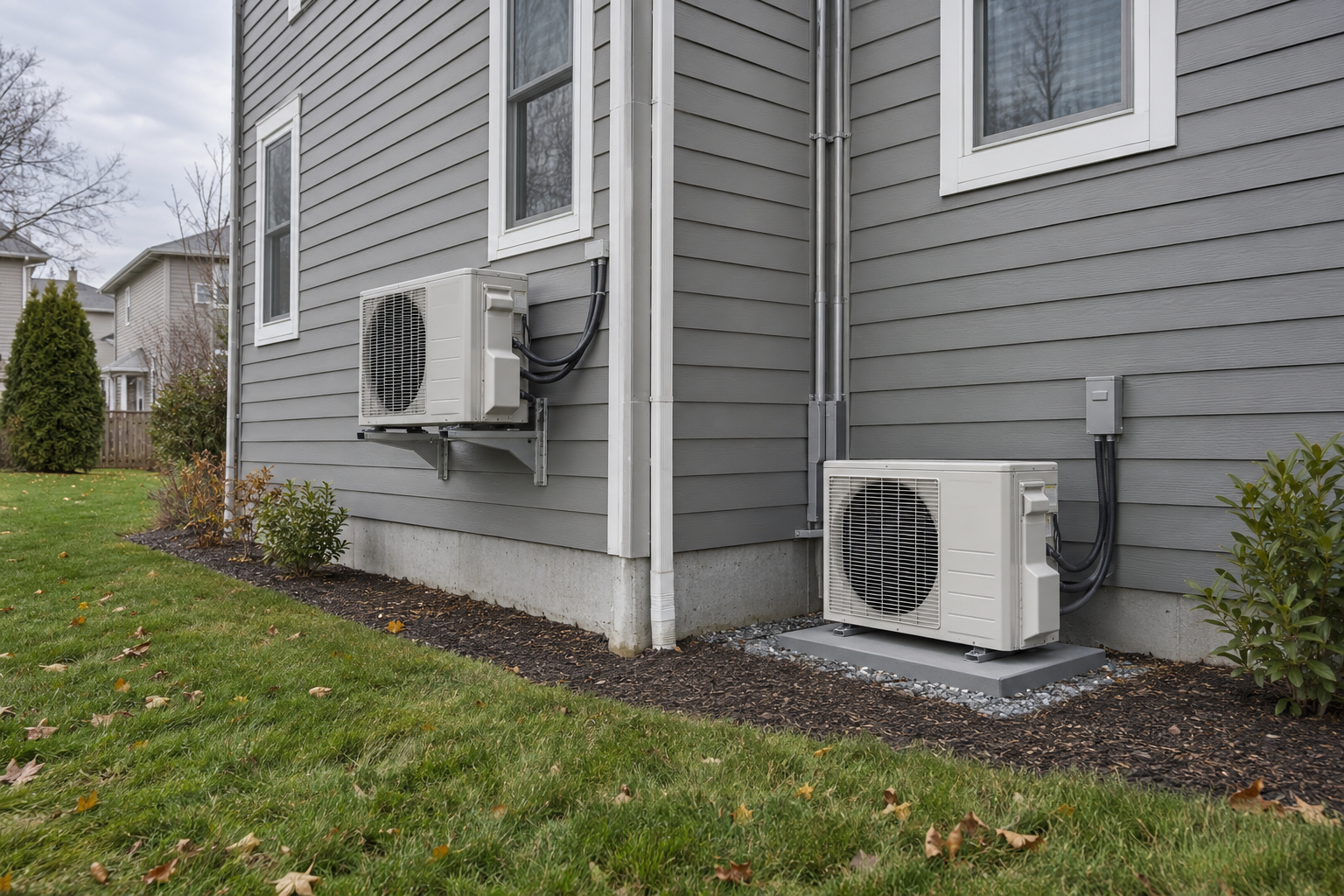
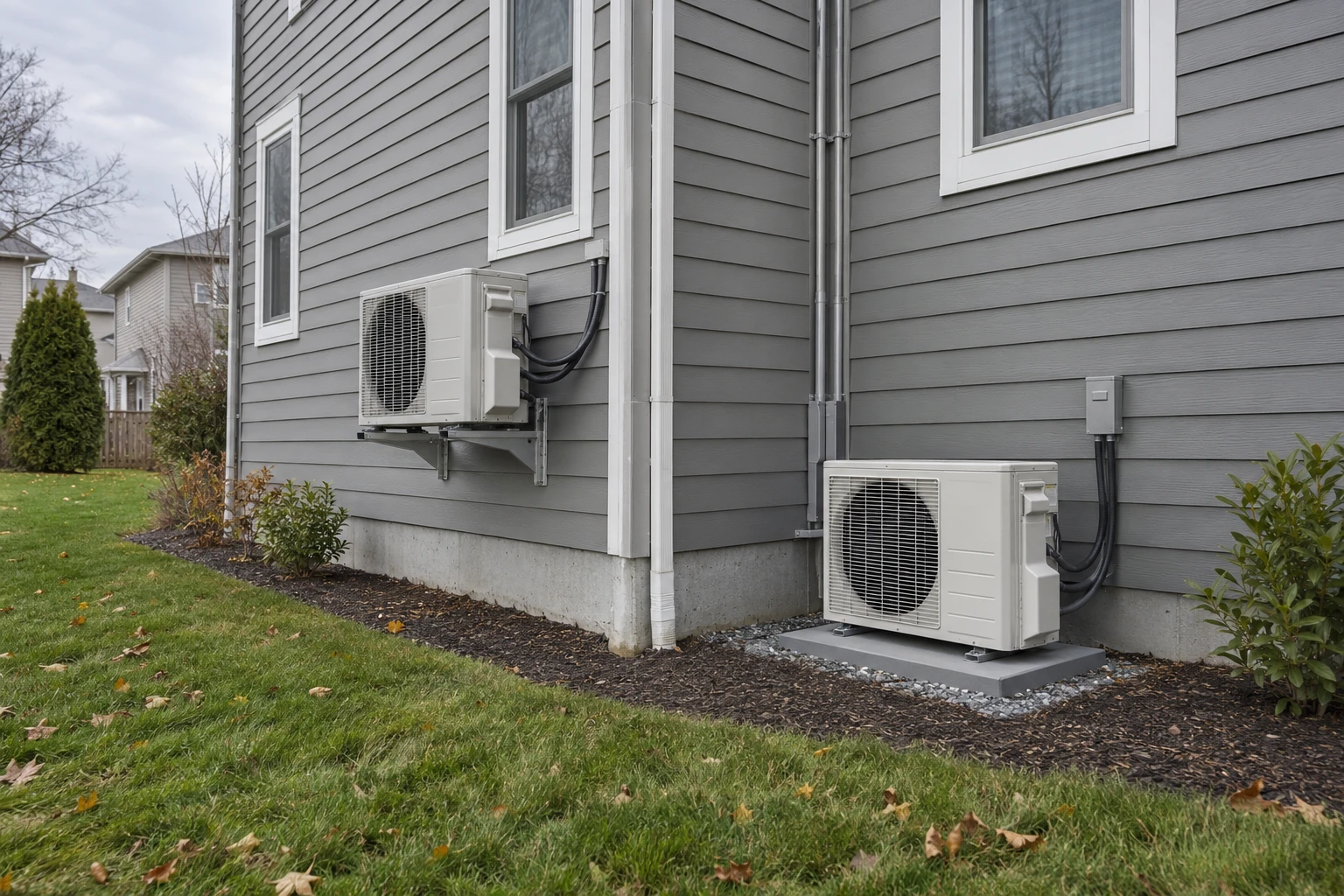
If the outdoor unit will sit beside a vibration-sensitive room, the support's connection to the wall is a practical starting point. A ground pad supports the unit independently of the building wall; a bracket raises it above ground-level obstructions but transfers its weight and operating vibration into that wall. Neither choice is automatically quieter or high enough for snow or flooding. Ground conditions, wall structure, installed height and room to service the unit determine which arrangement makes sense.
What Does Each Support Actually Do?
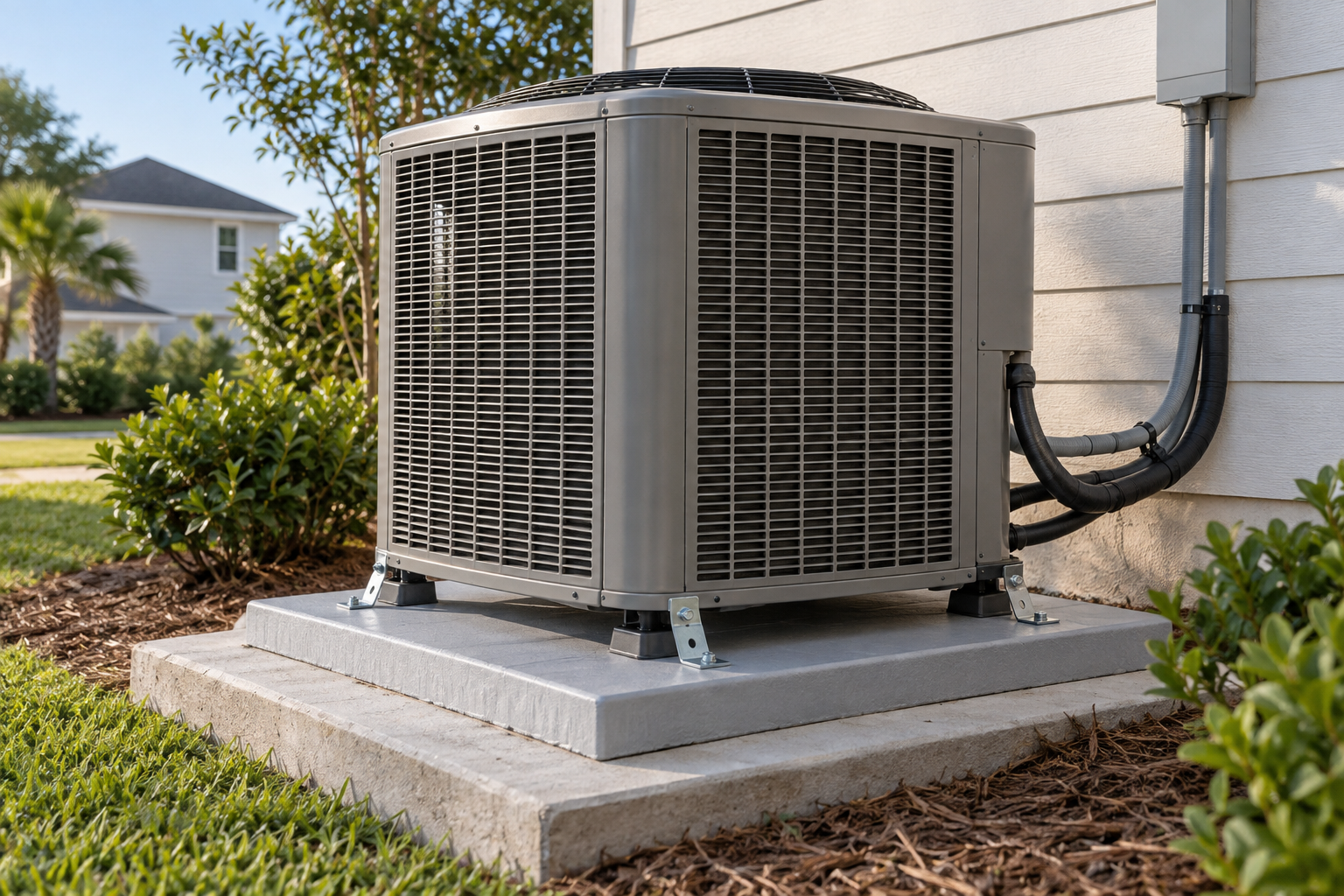
Bracket arms carry the outdoor unit at its mounting feet and fasten to a suitable wall structure. A condenser pad provides a level bearing surface over prepared ground or another suitable foundation. A pad set at grade is not the same as an elevated foundation or a pad used with a raised stand: those arrangements place the unit higher.
The support must fit the particular outdoor unit. Compare its mounting-foot layout and weight with the support's usable bearing area or arm spacing and load capacity. The installation also needs the specified anchoring and room around the unit for airflow and access. A pad that looks large enough overall may still have too little usable area where the feet and anchors must sit; a bracket that carries the weight may still position the unit too close to an obstruction. GREE's outdoor-unit guidance directs installers to the applicable equipment and bracket requirements rather than a single mounting rule for every model.
How Do the Supports Affect Vibration Indoors?
An operating outdoor unit generates vibration. On a wall bracket, its mounting feet, bracket and fasteners form a path into the building structure. A ground-supported pad removes that direct bracket-to-wall path, which can matter when occupants are sensitive to vibration in the adjacent room. It does not remove every possible path: connected piping and other contact with the building can still transmit sound or vibration.
What occupants hear depends on the unit's operation, the wall or ground construction, fastening and any appropriate vibration isolation. Isolation components can reduce transmission when installed as specified, but they do not make a poorly supported bracket soundproof. Conversely, a unit on a pad can make objectionable noise if its base shifts or the equipment vibrates against another surface. GREE's Flexx Eco outdoor-unit manual, for that equipment, calls for a level installation and discusses a rubber cushion when vibration causes noise. Its mounting details are not blanket instructions for other mini splits.
Which Setup Provides Enough Snow and Flood Clearance?
For mini split snow clearance, compare the bottom of the installed unit, not the name of its support, with expected accumulation and the unit's airflow and drain openings. A pad at grade adds little elevation. A raised stand or elevated foundation can provide height without wall mounting; a bracket can do so where ground space is limited. Either arrangement can fail its purpose if drifting snow blocks the coil or discharge, or if melting snow cannot drain away. Daikin's Oterra installation manual, as an example for the models it covers, discusses raising the unit to prevent burial in snow.
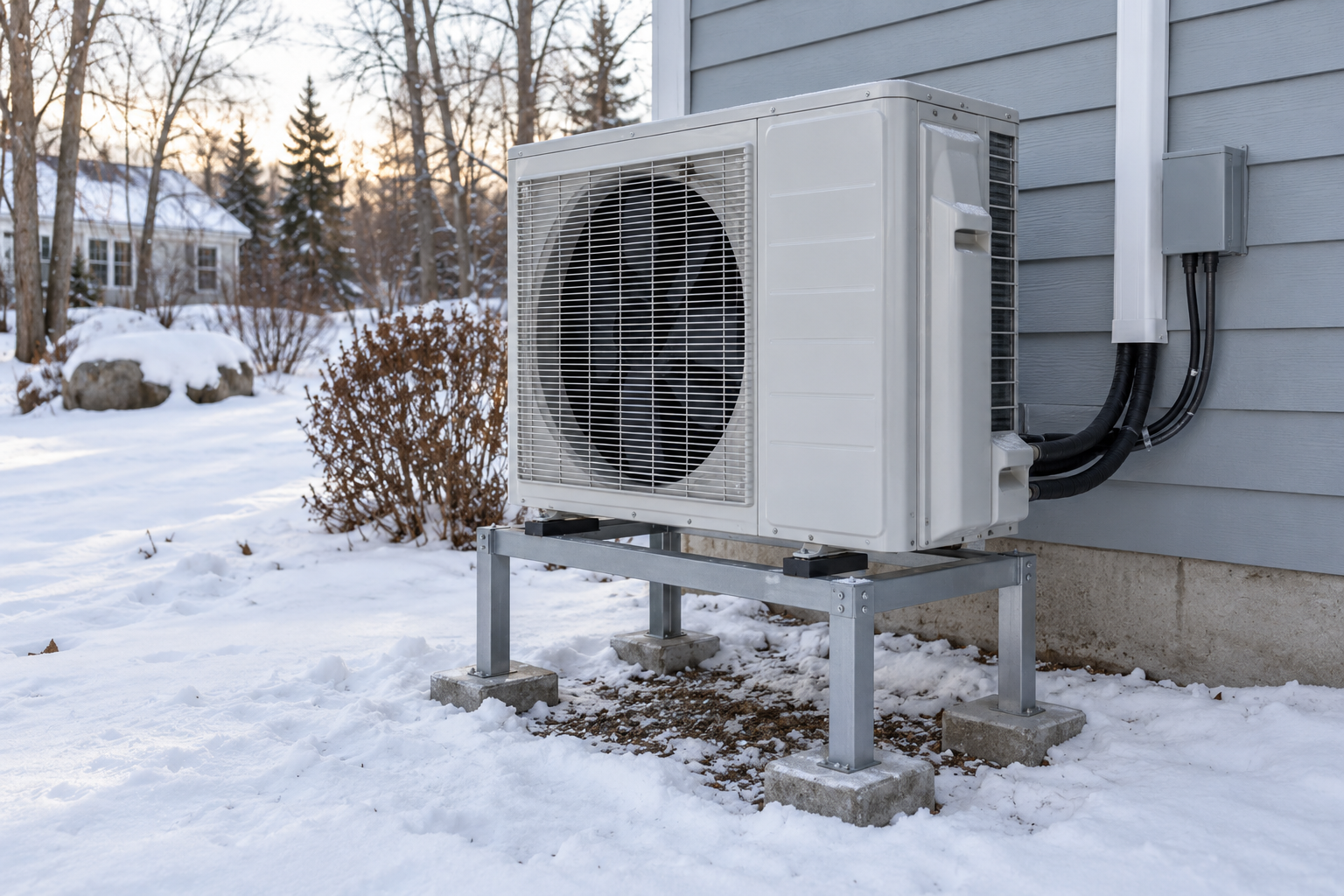
In heating operation, defrost water needs a route away from the unit. Trapped water can refreeze around its base or nearby walking surfaces. For the GREE Rio heat pump, GREE's installation instructions address safe condensate drainage and note that riser legs may help; the applicable unit's instructions should govern its drain arrangement.
Flood elevation is a separate decision from snow clearance. A wall bracket is not automatically above the applicable flood level, and a pad at grade is not flood protection. In flood-prone locations, FEMA guidance calls for elevating and anchoring outdoor HVAC equipment according to applicable local requirements. That may call for an engineered elevated support rather than either ordinary arrangement at its usual height.
What Must Carry and Secure the Outdoor Unit?
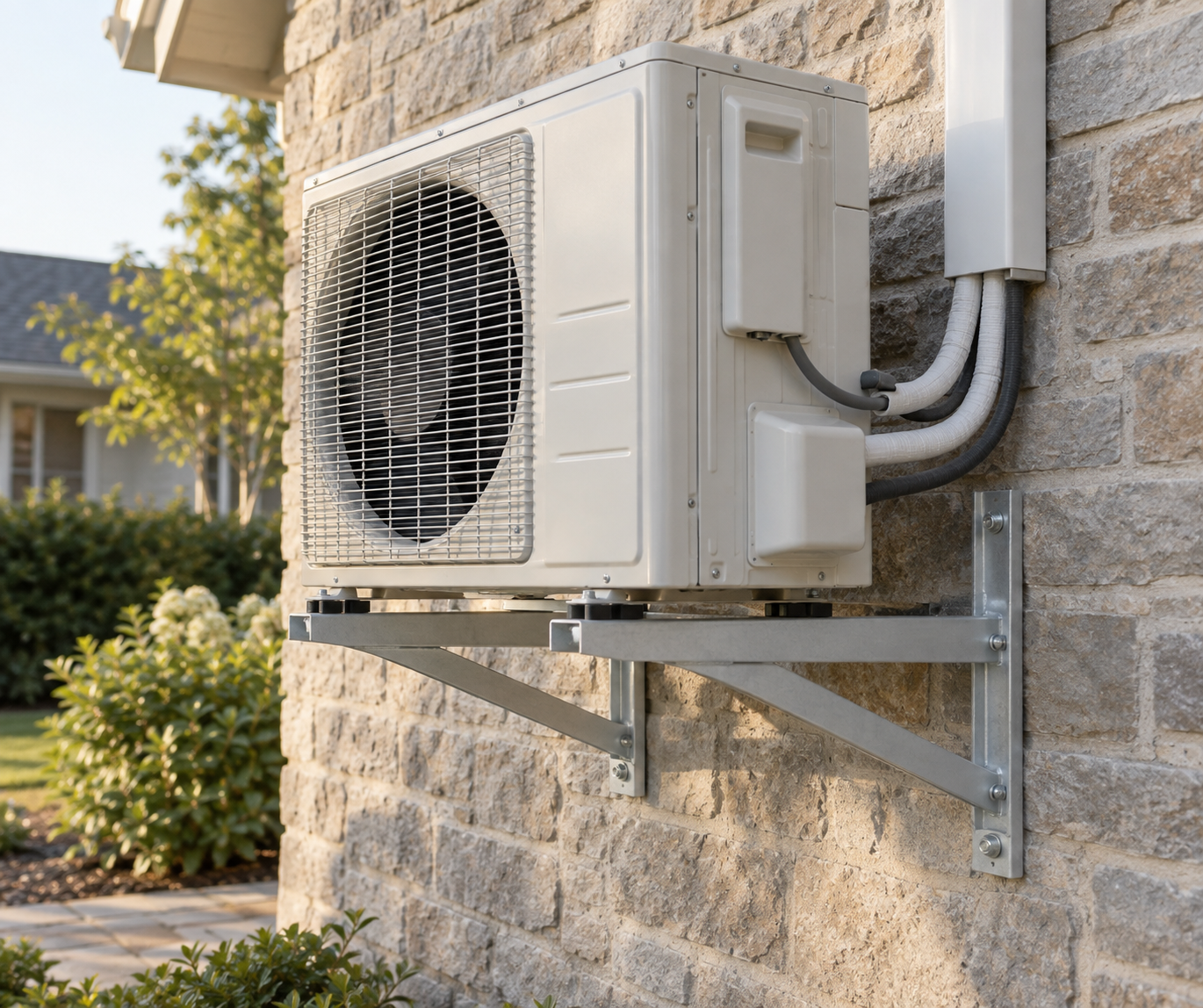
A bracket concentrates the outdoor unit's weight and operating forces at its wall fasteners. Structural fastening must carry those loads into suitable framing or masonry; siding or other cladding alone is not the supporting structure. Check the bracket's load capacity and fastening instructions alongside the unit's weight, mounting points and any site-specific wind requirements. A bracket rating by itself does not establish that the wall and anchors can carry the installed assembly.
A condenser pad sends the load into the ground or foundation beneath it instead. That base must stay level and resist settling, tilting and shifting; a flat-looking patch of loose soil is not equivalent to a stable prepared base. The pad must also support the unit where its feet actually bear and accommodate the specified anchors. Wind exposure, severe weather preparation and local installation requirements may affect how the unit and support are secured, regardless of whether the load goes to ground or wall.
Which Support Makes Maintenance Easier?
Outdoor unit maintenance access means being able to reach panels, piping and electrical connections and to work around the coil, not simply being able to stand beside the unit. A pad often puts those points at a convenient working height, but nearby shrubs, stored items or accumulated snow can take away the available space. A bracket can leave the ground clear yet place a service panel high enough to make routine work awkward.
Orientation matters as much as height. A bracket arm, adjacent wall or narrow passage must not obstruct an air inlet, outlet or removable panel; a pad tucked into a corner faces the same constraint. The service clearance and airflow diagrams in the chosen outdoor unit's installation instructions determine which sides need open space. Those diagrams can differ with the surrounding walls, so preserve the access shown for the actual model rather than assuming one clearance works in every location.
How to Choose Between a Wall Bracket and Ground Pad
Favor a ground-supported arrangement when you have a stable base, enough installed height for local conditions and workable service space, especially if avoiding a direct vibration path into the wall matters. Consider a wall bracket when ground space or ground-level obstructions make elevation useful and the wall can support the complete anchored assembly. If neither meets the needed elevation or access, consider an appropriately designed raised support rather than forcing the choice.
Start with the selected unit's manufacturer installation instructions, then match its mounting layout, weight and clearances to the support and site. Browse Budget Heating's condenser pads, wall mounts and tie downs for current listings; check each listing's dimensions and specifications before choosing a support.
 Heating
 Learning Center
 Money Saving Tips
 Product and Brands Insights
 State by State
 HVAC Systems