





 cooling
 product and brands insights
 state by state
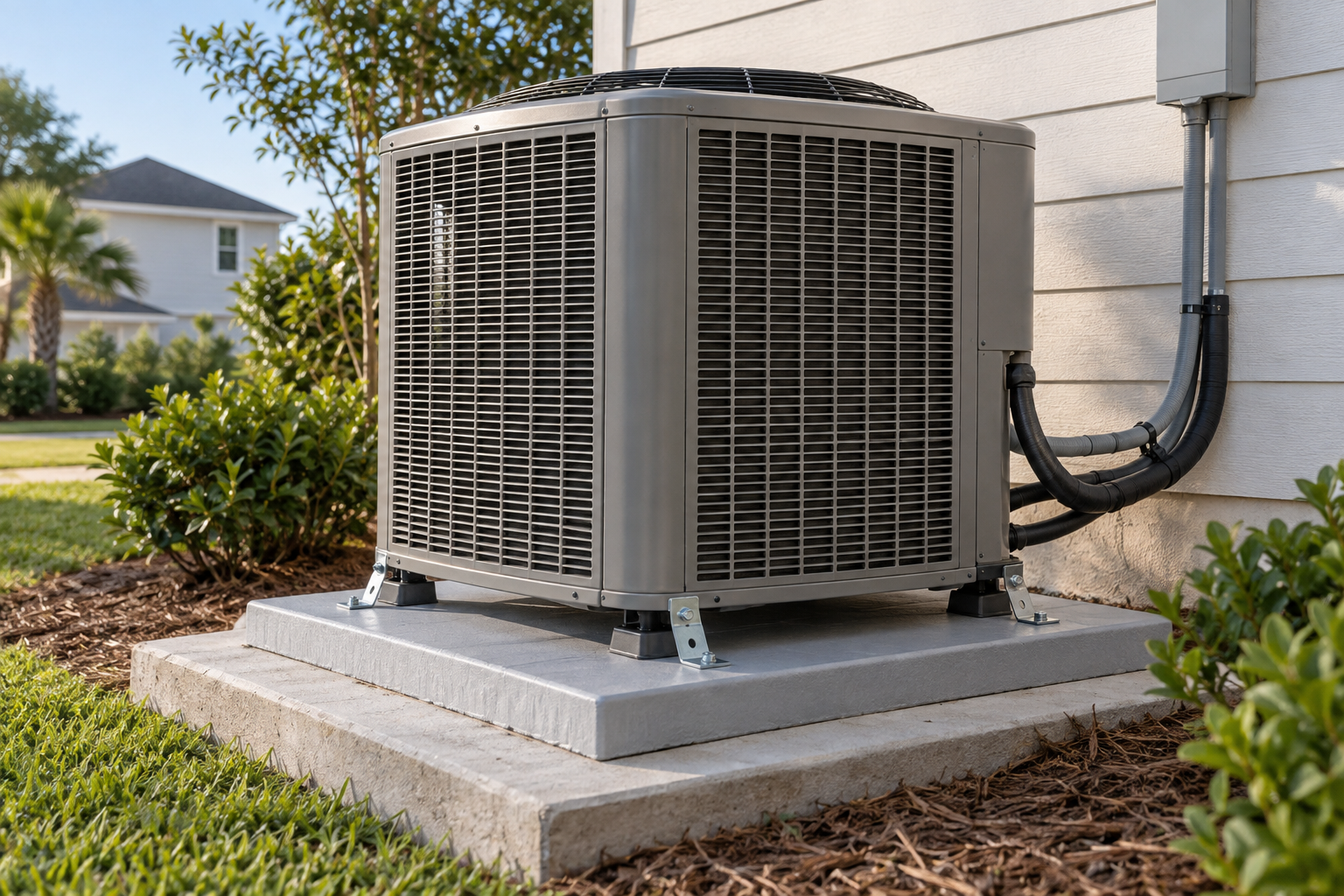
Wind loads must pass from the condenser through its mounting connections and the pad into the supporting surface. CladLite assigns wind designations to specific Hurricane Pad versions and ties their use to installation details. Those designations do not, by themselves, rate the installed air conditioner or make the job code-compliant: the unit connection, any required pad anchoring, and the surface receiving those loads all matter.
What does a hurricane-rated condenser pad rating actually cover?
A hurricane-rated condenser pad rating describes a particular pad version used within its stated design limits, not every pad bearing the same label. CladLite's technical specifications give wind-speed designations for named Hurricane Pad versions and direct installers to the wind tables for complete installation details. The sheet lists allowable equipment loads separately: a pad's weight-bearing capacity is not its wind rating.
Wind can push a condenser sideways, lift it, or try to overturn it. Those forces place different demands on the equipment attachment and its supporting base. To apply a stated rating, match the exact pad version and equipment to the manufacturer's wind tables and fastening detail. A wind-speed figure on a product listing is not a stand-alone limit for an unsecured unit.
Does a hurricane-rated pad eliminate the need for AC unit tie downs?
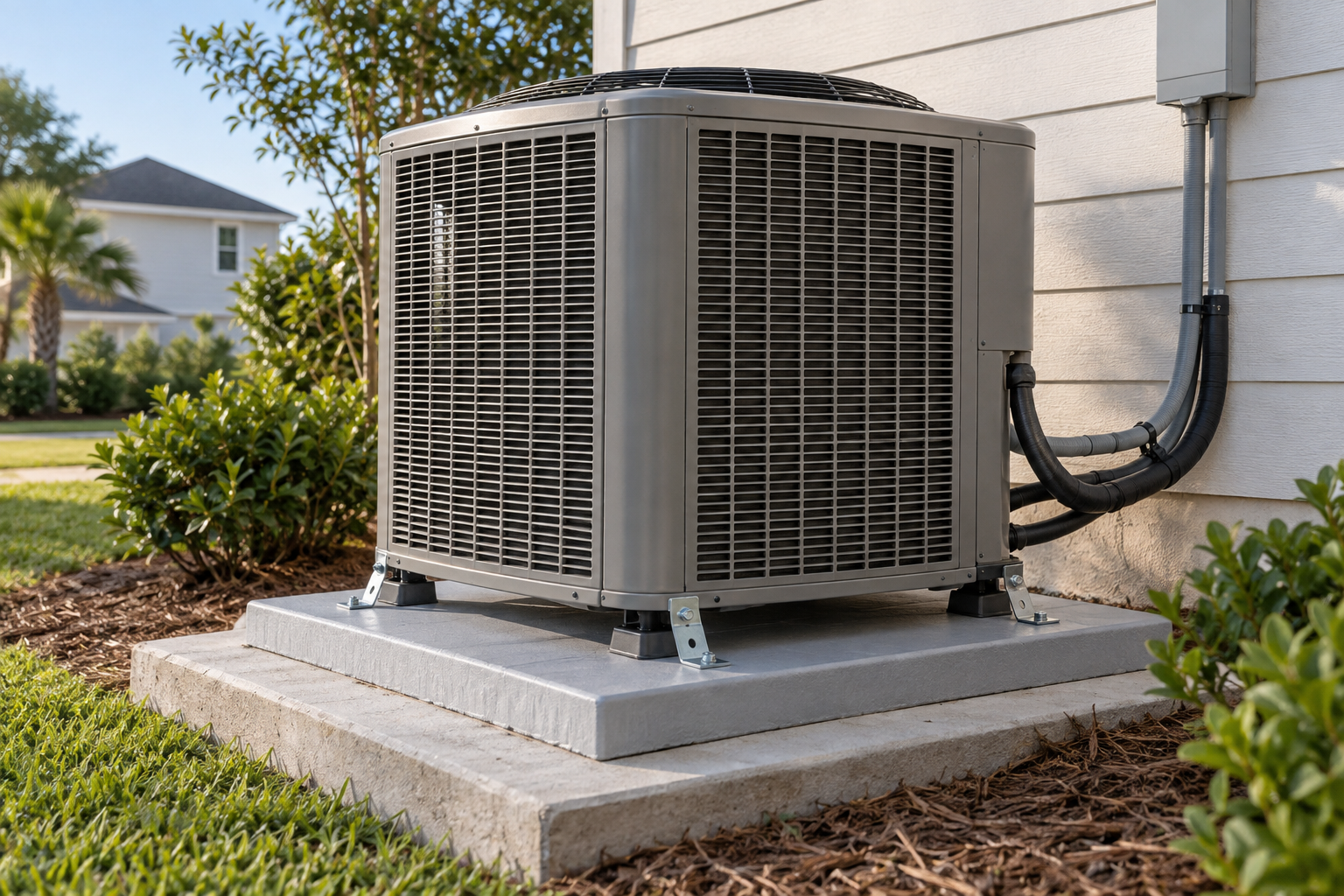
No. AC unit tie downs provide the unit-to-pad connection: they help keep the condenser from sliding or tipping while wind acts on its cabinet. Use mounting points and attachment methods compatible with the actual equipment and pad. For example, Carrier's instructions for the units covered by its manual refer to the unit's mounting holes and call for reinforced anchorage where wind conditions require it; another condenser may have different provisions.
Attaching the condenser to the pad does not necessarily secure the pad to what lies beneath it. The pad-to-substrate connection serves that separate purpose when the specified wind installation calls for ground or foundation anchoring. Tie-down clips, pad fasteners, and ground anchors should not be treated as interchangeable parts.
Can a rated condenser pad sit on soil or gravel?
A rated condenser pad can be placed on soil or gravel where its instructions permit a compacted, level base. Loose fill is different: settlement can tilt the equipment, and erosion can undermine support. CladLite's technical specifications identify compacted, level soil or gravel as a placement condition, not as a substitute for every wind-anchoring detail.
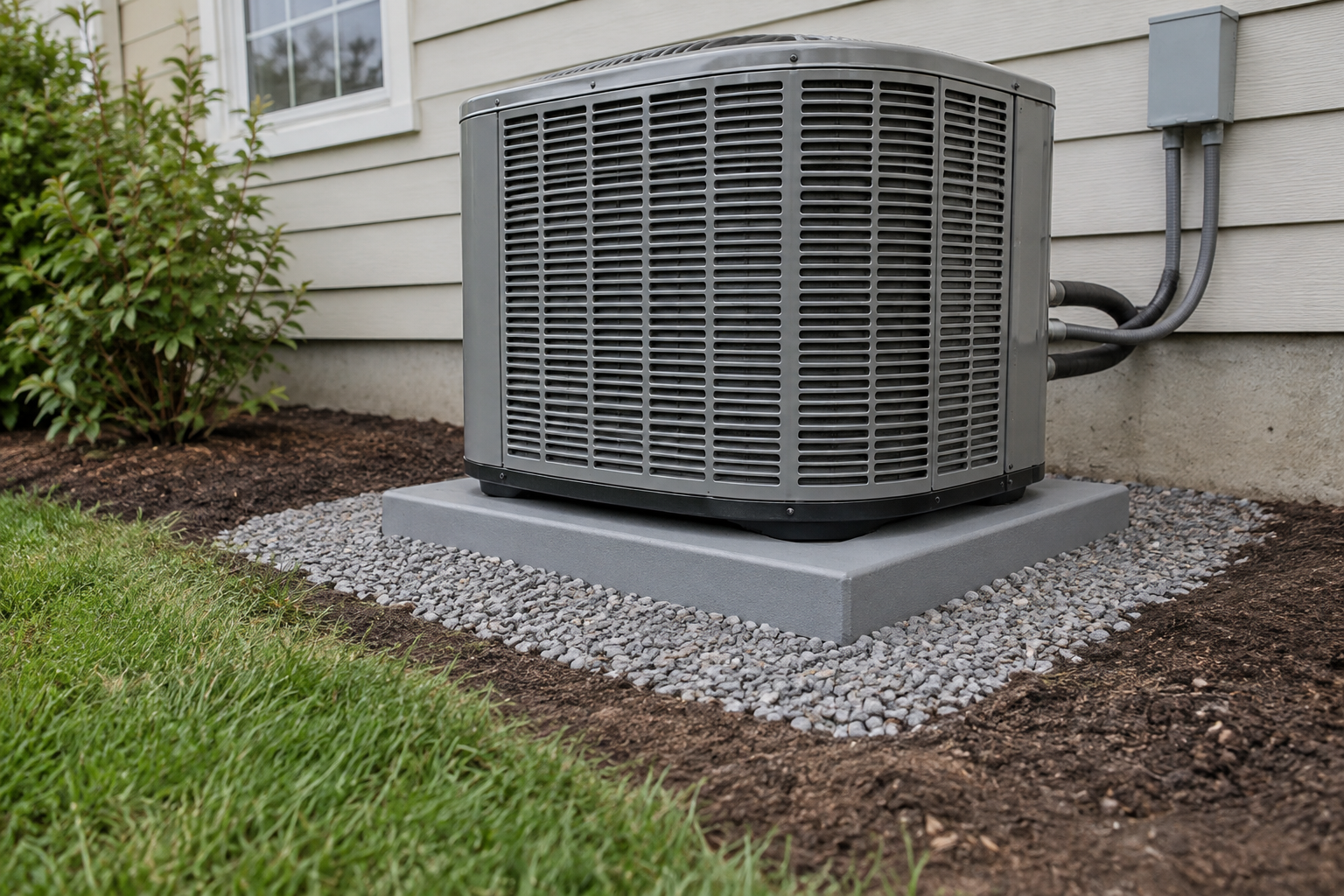
For a wind-resistant installation, the ground conditions must also suit whatever method transfers uplift and sideways forces beyond the pad. Setting a pad on gravel does not reproduce an attachment detail specified for a concrete foundation: anchors must develop the required resistance in the material that holds them. Conversely, a concrete slab is not automatically the required base for every condenser. Where the ground cannot maintain level support or hold the specified anchorage, an appropriately designed ground-support or foundation method may be needed.
Does a hurricane-rated pad satisfy local code by itself?
No. Local requirements address the installed equipment's resistance to wind, including its anchorage. The 2021 International Mechanical Code, as a model-code example, directs wind-pressure resistance to the applicable building-code provisions. Florida's building code addresses anchorage against overturning, uplift, and sliding. Which code and local design wind requirements apply depends on the jurisdiction and site.
That distinction affects condenser anchoring in practical terms: a design may require a particular attachment layout and a substrate capable of holding its anchors. A pad's rated detail is useful only when its conditions match the installation. Confirm the accepted detail and any permit or approval requirements with the local authority before installation.
How do I choose between pad and anchoring options?
Start with the condenser: check its footprint, operating weight, support points, and mounting instructions. Then select a pad version with suitable dimensions and allowable load. Identify a compatible unit attachment, followed by the pad or foundation anchoring detail required for the site's wind conditions. A suitable existing slab and a prepared ground location may call for different attachment designs, even with the same equipment.
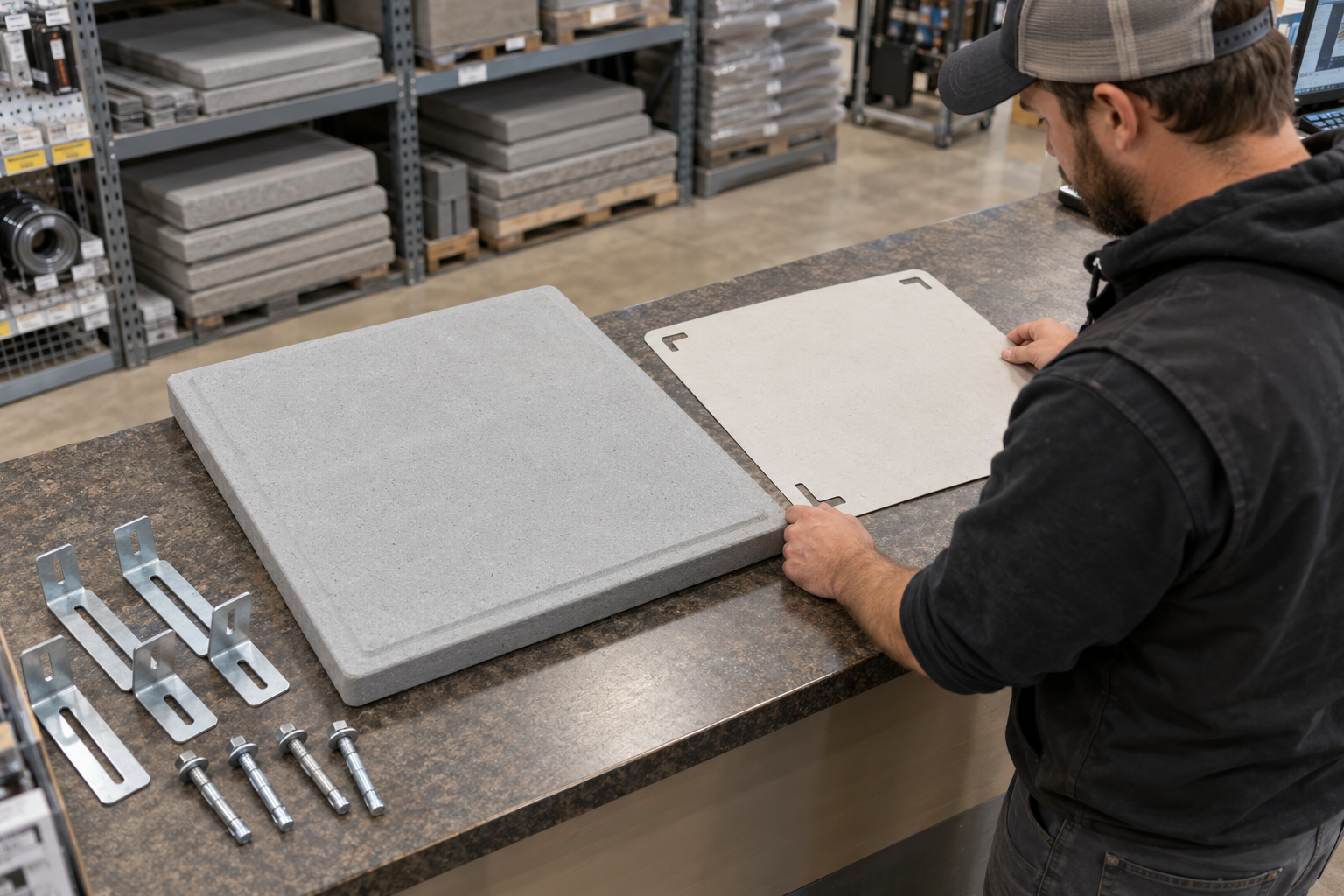
As one shopping example, Budget Heating lists a 40-by-40-inch CladLite Hurricane condenser pad. That footprint helps narrow the size choice; its listing's wind language does not replace the manufacturer's specifications and applicable installation detail. Check the individual listing for current availability, and use the pad's exact model designation when matching it to the manufacturer's tables.
Choose the complete installation, not just the label
Choose a hurricane condenser pad as part of an installation design, not as a stand-alone storm guarantee. Match its rated conditions to the condenser, its tie downs, the anchoring method, the supporting surface, and the wind requirements at the address before selecting the components.
 Heating
 Learning Center
 Money Saving Tips
 Buying Guides
 HVAC Systems