




 learning center
 money saving tips
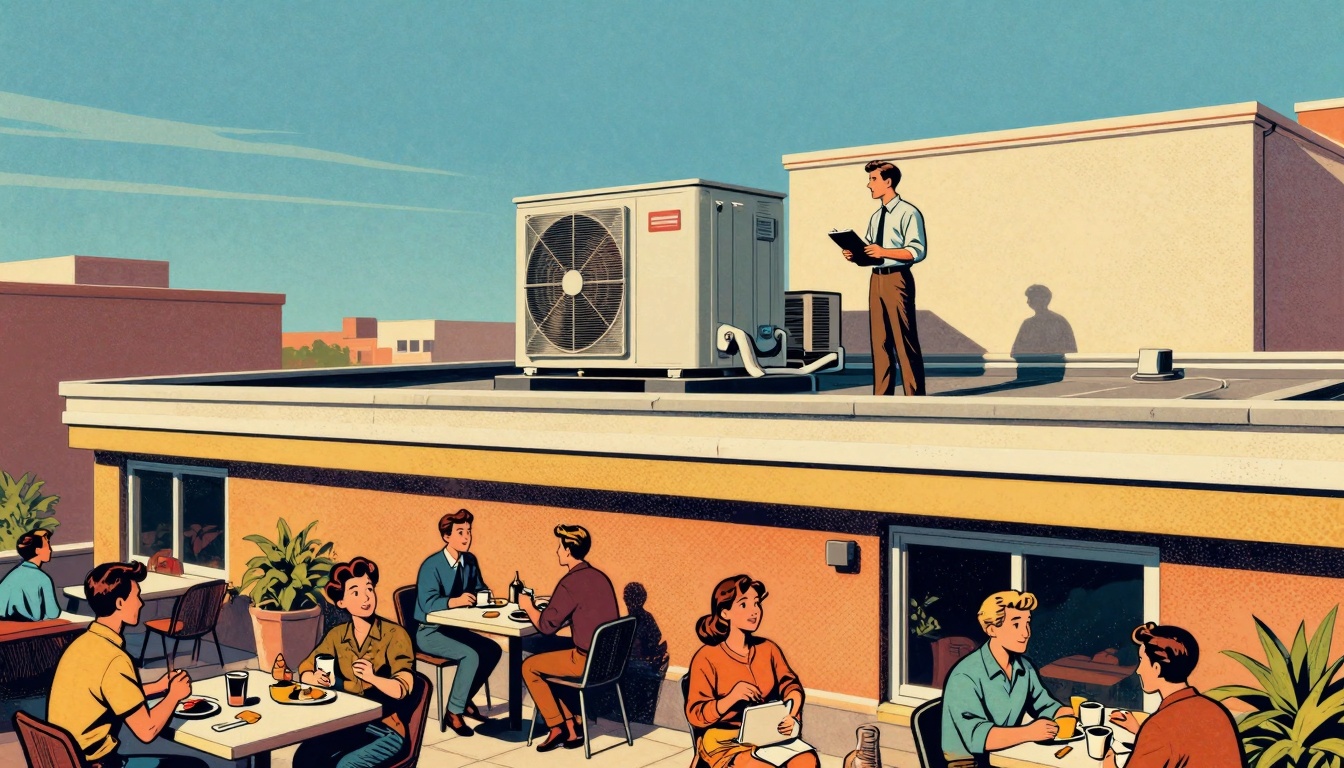
Why a Strategic Commercial HVAC Upgrade Matters in 2026
2026 is a decision point for building owners and facility teams. Efficiency standards tightened this year, raising the baseline for equipment performance and influencing how systems are designed. At the same time, energy prices remain volatile, and occupants expect steadier comfort and cleaner indoor air. In our field experience, that combination turns an HVAC upgrade from a simple swap into a strategic choice that shapes operating results for years.
A well-planned upgrade touches every outcome that matters: monthly energy spend, temperature stability, indoor air quality, and equipment lifespan. It is not only about the nameplate rating, it is about right-sizing, airflow, ventilation strategy, and controls that actually get those ratings in real buildings. Think of it like moving a warehouse from older lighting to LEDs, you lower operating costs and improve the environment people work in. Treating the project as a capital investment, aligned with new standards and real-world usage, sets up the building for predictable comfort and stronger long-term performance.
Executive Summary: Typical 2026 Cost Ranges, Efficiency Benefits and the TCO Picture
Decision makers can group options into three cost tiers: targeted repair for life extension, like for like standard replacements, and high efficiency upgrades paired with advanced controls and zoning. Evaluate all three through a total cost of ownership lens, combining upfront equipment and installation with long term energy, maintenance, reliability, and downtime. Upgrading to ENERGY STAR level or better can reduce heating and cooling energy use by up to roughly 30 percent. Controls and zoning materially increase the value of high efficiency hardware by improving part load performance and matching service to occupancy patterns. Use ENERGY STAR benchmarks as a baseline, then choose repair or full replacement by building size, equipment age and condition, and desired savings.

How to Estimate Commercial HVAC Upgrade Costs: A Practical Methodology
Accurate budgeting starts with measured inputs, not rules of thumb. Treat the process like tailoring, the fit is only as good as the measurements.
- Build a profile: document conditioned square footage, ceiling heights, occupancy patterns, equipment and lighting heat gains, and operating hours by area. This separates daytime hotspots from low-load zones and sets realistic run times.
- Identify the local climate zone. It guides equipment selection, part-load efficiency priorities, and dehumidification needs.
- Map the layout for zoning. Note open offices, server rooms, kitchens, and high-traffic areas that need separate control.
- Require an engineered load calculation using ACCA Manual N or an ASHRAE-based method. Include ventilation calculations to meet code, and evaluate ERV or HRV options where outdoor air drives load and energy use.
- Assess the envelope and ducts. Check insulation, window performance, and air sealing. Inspect ducts for leakage, insulation, and correct sizing. Request duct leakage and static pressure reports, since these directly affect required system size and equipment count.
With these data points, upgrade costs align with actual building needs, not guesswork.


Cost by System Type & 2026 Efficiency Rules: RTUs, Chillers, Boilers and VRF
The DOE’s 2026 rule raised minimum efficiency for commercial rooftop air conditioners and heat pumps from 65,000 to 760,000 Btu/h, effective Jan 1, 2026. It requires roughly a 15 percent increase over 2018 baselines, about 30 percent over pre-2018 levels. This shifts specs toward higher performing RTUs. Chillers, boilers, and VRF remain selected by application, so compare them with the appropriate performance metrics.
Use the right yardstick: SEER and SEER2 indicate seasonal cooling efficiency, EER and IEER capture full and part load, and IEER is crucial for packaged RTUs that operate mostly at part load. Light-commercial systems under 65,000 Btu/h moved to SEER2 and HSPF2 with 2026 baselines near 13.4 SEER2 and 6.7 HSPF2.
- Stepping from SEER 14 to SEER 16 can trim cooling energy about 12.5 percent.
- Raising IEER from 12 to 14 can cut unit energy roughly 14 percent.
Target equipment that meets the new minimums and exceed them where lifecycle economics allow, aim for mid-teens SEER or SEER2 and high IEER for rooftop units.
Procurement Strategy: RFP Best Practices and Contractor Selection Criteria
To get apples-to-apples bids, issue an RFP requiring at least three proposals with identical scope and efficiency targets, plus an alternatives table comparing base and high-efficiency options with incremental cost and estimated annual savings. Require engineered load and ventilation calculations per ACCA Manual N or ASHRAE, and AHRI-certified matched equipment numbers. In our experience at Budget Heating (BudgetHeating.com), this keeps bids honest.
- Standardized scoring: technical compliance, verified efficiency with AHRI numbers, commissioning and performance verification, warranty, detailed price breakdown, and a low-disruption phasing plan.
- Key questions: sizing method with load and ventilation calcs; EER, IEER, SEER or SEER2, HSPF or HSPF2 with AHRI numbers; inclusions and exclusions with line items for equipment, labor, materials, permits, crane fees; phasing and commissioning tests; warranty, maintenance, rebates, and who files.
Cost Breakdown: Equipment, Installation, Controls, Ductwork and Commissioning
Ask every bidder for a clear line item proposal that separates equipment, labor, materials, add ons and contingencies. That makes apples to apples comparisons possible and keeps hidden costs out of your project. In our experience at Budget Heating (BudgetHeating.com), this one step prevents most budget surprises.
- Equipment: model numbers, capacities and included accessories listed explicitly.
- Installation labor and materials: copper or PVC, wiring, insulation, sealants and any duct adjustments called out.
- Controls and zoning: smart thermostats, scheduling, occupancy sensors, BAS integration priced per feature.
- Electrical and structural readiness: service capacity, disconnects, dedicated circuits, roof curb compatibility, structural support and crane or lift logistics.
- Filtration and IAQ: specify MERV 11 to 13 targets, ventilation items itemized.
- Permits and fees: permits, crane time and consumables often add about 500 to 2,000 dollars or more, list them.
Require startup and commissioning in scope: airflow balancing, refrigerant charge verification, controls tuning and documented performance tests. Plan a 30 to 60 day check and a seasonal review. Compare warranty terms for parts, labor and compressor, response times, and include first year maintenance and operator training in the contract.
Risk Management & Tradeoffs: Common Mistakes, When Upgrades Aren't Optimal and Better Alternatives
Plan upgrades carefully. Refrigerant phasedown and A2L transitions, plus supply and labor shifts, can limit availability, permitting and timing. There is no single average price: small full replacements run about $5k to $15k, larger $15k to $30k+.
- Myths: a quick component swap is cheapest, and controls are optional. In our field experience, repeated fixes often cost more, while controls or zoning, typically $1k to $5k+, paired with efficient gear have delivered 25 to 30% cuts and six figure annual savings in large facilities.
- Mistakes: buying only on upfront price, and waiting for failure. Both raise operating cost, risk downtime, emergency premiums and fewer choices.
- When not optimal: if capital is tight, phase in controls or ductwork first; in extreme cold, plan for supplemental heat; where permitting or supply is constrained, use interim measures and schedule replacement later.
Energy Savings, Lifecycle Costs and ROI: Calculating Payback and Total Cost of Ownership
In our experience, the fastest way to justify an upgrade is to turn performance into dollars. Use simple payback for quick screening, then a life cycle cost analysis to select the best long term value.
- Set the baseline: annual energy cost from recent bills or metering.
- Model the upgrade: apply rated efficiency and operating hours to estimate new use.
- Annual savings = baseline cost minus post upgrade cost. Typical outcomes are about $2,000 per year for smaller buildings and $10,000 or more for larger sites.
- Net project cost = equipment plus installation plus controls, minus incentives and rebates.
- Simple payback = net project cost divided by annual savings. LCCA compares the present value of capital, energy, maintenance, replacements, and residual value over service life.
Typical budgets: targeted component swaps run about $1,000 to $5,000. Full system projects are roughly $5,000 to $15,000 for smaller properties and $15,000 to $30,000 plus for larger facilities. Controls often add about $1,000 to $5,000 or more. With those inputs, a $5,000 to $15,000 upgrade yielding about $2,000 per year suggests a 2.5 to 7.5 year payback. Larger $15,000 to $30,000 projects producing $10,000 or more per year often land near 1 to 3 years.
Incentives, utility rebates, and performance based contracting can materially shorten payback. Require bidders to identify programs and include net rebates in the model. Documented results show what is possible: a Chicago office pairing high efficiency equipment with controls achieved about a 30 percent reduction and more than $100,000 per year in savings.
For LCCA inputs, use current local pricing, since 2026 costs reflected supply chain and labor shifts. Escalate utility rates appropriately and apply a consistent discount rate so alternatives can be compared on total cost, not just first price.
Project Timeline, Phasing and Minimizing Operational Disruption
We plan projects to keep your doors open. Lock in crane and lift logistics early, and verify roof curb compatibility and structural support so the swap is a single trip, not two. Require bidders to present a phasing plan: weekend or after-hours changeouts, temporary cooling or heat, and area-by-area sequencing with staged replacements by zone. If capital is tight, phase upgrades: controls, duct sealing, and select components now, full equipment later. Calendar the 30 to 60 day post-install check and a seasonal review to fine tune performance.
Conclusion & Next Steps: Plan, Approve and Execute a Strategic HVAC Upgrade in 2026
A strategic HVAC upgrade works best with a disciplined, data driven plan: start with an energy audit and a life cycle cost analysis, target high impact and low cost measures first, require proper design and commissioning, phase big projects, and seek multiple competitive bids with clear scopes and efficiency targets. This keeps scope tight, savings predictable, and execution smooth.
Treat the upgrade as a long term investment. Higher efficiency equipment and controls may raise upfront cost, yet they typically deliver up to about 30% energy reduction, improved comfort and IAQ, better reliability, and alignment with changing codes and refrigerant rules.
Get a professional assessment and engineered load calculations early to capture incentives and avoid emergency replacements that inflate cost. With 30 plus years in HVAC and 200,000 plus orders fulfilled, our team can help you lock scope, compare options, and move from plan to purchase at wholesale pricing with U.S. based phone support.
- Get a Custom Quote
- Talk to Our Team (U.S. based phone support)
- Shop Heat Pumps
- Ask about free shipping and Affirm financing
 Cooling
 Heating
 Product and Brands Insights
 Buying Guides
 State by State
 HVAC Systems