




 hvac systems
 learning center

This AC System Cools 3 Rooms in 2026: What to Expect
In 2026, you can get true room by room comfort while trimming wasted energy. Most buyers weigh a 2-3 zone mini split or heat pump setup against central AC. The focus is on zoning, inverter compressors, better filtration and ventilation, and getting sizing and placement right, followed by solid installation and upkeep.
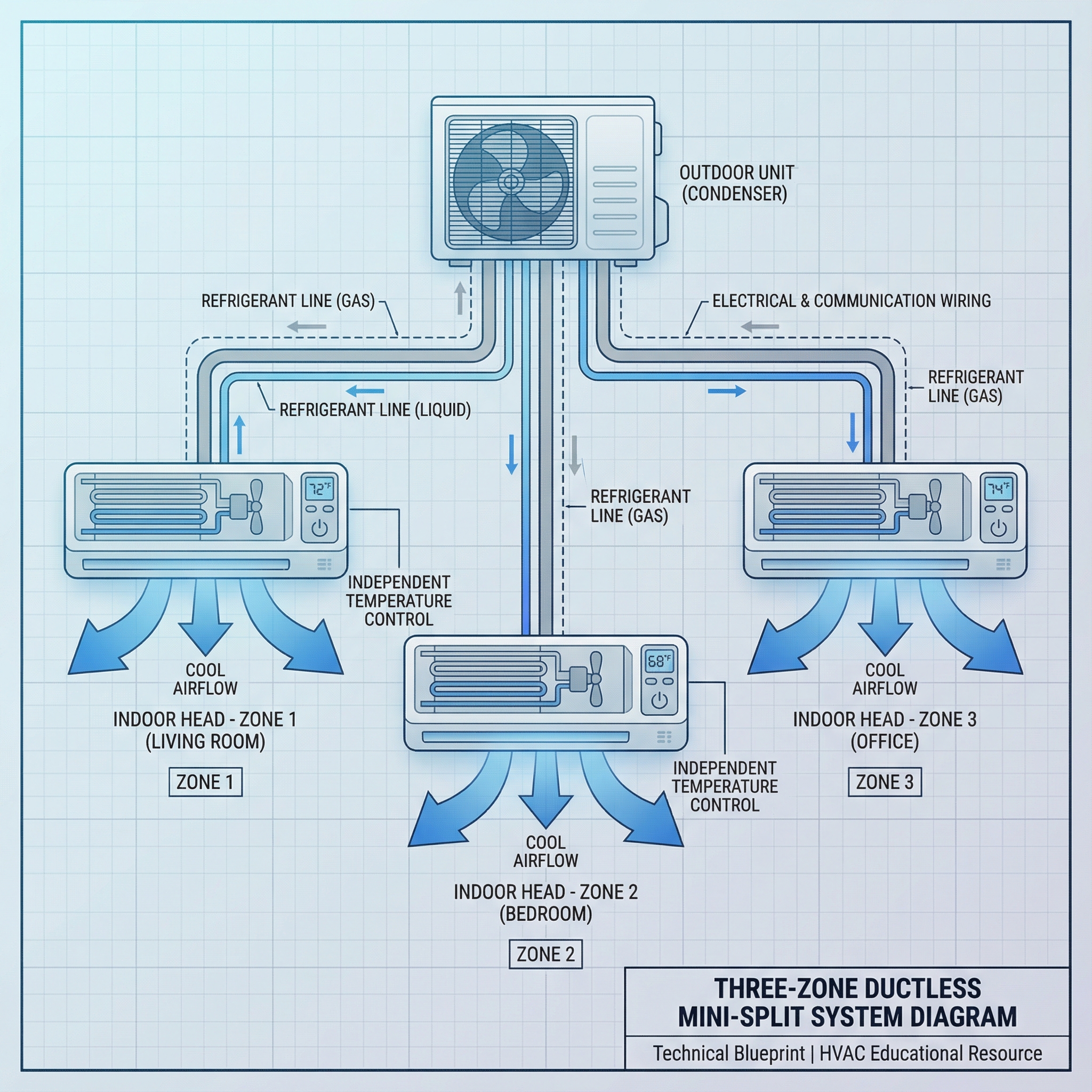
Zoning is the big win. A multi zone system uses one outdoor unit feeding two or three indoor heads, each with its own thermostat. The inverter compressor ramps up or down to match the combined demand. Think of it like dimmer switches for lights, not one master switch. You can keep a bedroom at 72, an office at 76, or idle a guest room. Used this way, we typically see 15 to 25 percent lower energy use compared with a single stage central system, along with steadier temperatures and quieter operation.
Success hinges on details: size each indoor unit to the room's heat load, avoid oversizing, and place heads where air can wash the occupied area, not just a hallway. Keep lineset length and height changes within spec, provide clear outdoor airflow, and manage condensate properly. Maintain clean filters every 4 to 8 weeks and schedule annual coil cleaning. For air quality, use higher MERV filters on central systems or washable filters on mini splits, and add dedicated fresh air if the rooms are tight.
Who Needs a 3 Room AC Solution? Use Cases & Who Benefits Most
A three-room AC system is a practical multi-zone setup that cools three separate rooms with individual controls. Each room gets its own thermostat and schedule, so you can run one space harder, set another back, or turn a room off when it is empty.
- Homes with a primary bedroom, home office, and living area that follow different daily schedules.
- Older houses or additions where extending ductwork is costly or intrusive.
- Townhomes, condos, or tri-levels with hot upper floors or rooms facing different sun exposures.
- Remote workers and shift sleepers who need daytime cooling in one room and setback temperatures elsewhere.
- Small offices or studios with a lobby, workspace, and storage or break room.
- Owners aiming to reduce runtime by avoiding conditioning empty rooms while keeping key spaces comfortable.
Top System Types for Cooling Three Rooms: Why Ductless Mini Splits Often Win
For three separate rooms, you have four common paths: a multi zone ductless mini split, a multi zone heat pump, multiple window or portable units, or a small zoned central system. Window and portable units are simple, but each only serves one space, add noise, and take up window real estate. A small zoned central system can work, but ductwork adds complexity and duct losses, especially in retrofits.
A practical 2026 configuration is a three zone ductless mini split or multi zone heat pump: one outdoor unit feeding three indoor air handlers, each with its own thermostat. Think of it like giving each room its own dimmer switch instead of one switch for the whole house. This delivers true room by room zoning, avoids duct losses, and uses an inverter compressor that matches output to the actual load for smoother comfort. It is retrofit friendly, keeps bedrooms and offices quiet, supports smart controls and indoor air quality accessories, and simplifies upkeep compared to large ducted systems. In our experience at Budget Heating (BudgetHeating.com), this layout consistently balances control, efficiency, and installation practicality for multi room projects.
If you want targeted comfort without the headaches of ducts or a chorus of window units, a three zone ductless solution is often the cleanest answer.
When a 3 Room System Isn't the Best Choice: Tradeoffs & Alternatives
We have supported multi-room systems for decades, but they are not one-size-fits-all. In some homes, a different path works better.
- Uneven room loads: If one room bakes in the sun and another stays cool, a shared 3-room setup can be oversized for the lighter zones. That invites short cycling, uneven comfort, and weak dehumidification. A small zoned central system or separate single-room units usually keep run time and humidity in check.
- Humidity priority: Setting the thermostat extremely low does not cool faster. It can end cycles early and leave moisture behind. Proper sizing and longer, steadier run time matter. Individual room units, or a modest central system, often remove more humidity.
- Intermittent use: Guest or hobby rooms that sit idle can turn a 3-room package into excess capacity. Independent room units let you match capacity to actual use, instead of paying to condition empty spaces.
Installation Considerations: Permits, Refrigerants & 2026 Code Changes
In 2026, installations are evaluated under SEER2 and EER2, and the market is moving to lower GWP A2L refrigerants such as R-32 and R-454B. Regional minimums vary, about 14.3 SEER2 in hotter zones for smaller split systems, while federal incentives often require higher. A2Ls change handling, code compliance, and tools. We treat them like a different fuel, you need the right tools and rules.
- Written confirmation of who will obtain permits and schedule inspection.
- Refrigerant named, A2L classification, and exact model numbers.
- Proof of A2L training and A2L rated gauges and recovery equipment.
- SEER2 and EER2 on submittals that meet regional minimum and incentive target.
- Commissioning and rebate documentation promised in writing.
- Written statement that the plan complies with local code for A2L use.
Energy Efficiency, SEER2 & Inverter Tech to Look For in 2026
SEER2 is the main cooling efficiency yardstick for 2026, think of it like seasonal miles per gallon, while EER2 gauges fixed, peak performance on a hot afternoon. Higher numbers mean lower operating cost. Typical tiers are entry 14.3 to 16 SEER2, mid 17 to 19, premium 20 plus. Many incentives look for about 17 SEER2 and around 12 EER2. Stepping up to an 18 SEER2 system can trim seasonal electricity use by roughly 20 percent compared with a 14.3 SEER2 unit.
To turn those ratings into real savings and comfort, focus on a variable speed, inverter compressor. Inverter systems modulate output to match the load, which boosts part load efficiency, improves humidity control, reduces temperature swings, and keeps sound levels down. Instead of short cycling, they run longer at low speed, squeezing more moisture from the air and using less power.
Practical targets for a three room setup, whether a multi zone ductless or a small multi position system, are a mid tier 17 to 19 SEER2 with about 12 EER2 and an inverter outdoor unit. In hot climates, lean toward the best EER2 you can, in moderate climates, prioritize SEER2. Entry 14.3 to 16 SEER2 will cool, but you may miss rebates and pay more to operate. Premium 20 plus SEER2 delivers the best comfort and lowest bills, with higher upfront cost. In our experience at Budget Heating (BudgetHeating.com), the sweet spot for most buyers is an 18 SEER2 inverter multi zone that clears common incentive thresholds and keeps humidity in check.
Maintenance, Troubleshooting and When to Call AC Unit Repair
Homeowners can handle light care. Check filters monthly in peak use, replace or wash as needed. Keep 2 to 3 feet clear around the outdoor unit and remove debris. Clear the condensate drain and test smoke and carbon monoxide detectors. Note new noises or odors.
Book professional tune ups about twice a year. Certified technicians must do any refrigerant work, deep vacuum or leak repair, electrical circuit work, and system commissioning. With 2026 A2L refrigerants like R-32 and R-454B, special tools and certification are required.
Call a technician if you see warm air, icing, frequent breaker trips, short cycling, water around the air handler, burning or chemical smells, or persistent hissing. Addressing these early can prevent a minor issue from turning into a $2,000 failure.
Cost to Run and Real World Performance (kWh, Seasonal Costs)
Specific cost ranges are not provided here. For a three-room system, operating cost is driven by three things: efficiency (SEER2), your local electric rate, and runtime. Higher SEER2 uses fewer kWh than a lower-efficiency baseline, which lowers seasonal bills and can shorten payback, especially when incentives apply.
- Estimate seasonal runtime hours for each room, then add them.
- Estimate energy use: kWh ≈ (capacity BTU/h × average load fraction × hours ÷ SEER2) ÷ 1000.
- Estimate cost: seasonal cost = kWh × your utility rate.
- Payback: extra upfront cost minus incentives, divided by annual bill savings.
This simple framework matches what we see in real installations and keeps comparisons apples to apples.
Buying Checklist & Next Steps: Load Calculations, Quotes and Incentives
Prepare like a pro so quotes are apples to apples and the system fits your home. In our field experience, a true Manual J and a written commissioning checklist prevent most comfort complaints.
- Document each room: floor area, ceiling height, orientation, window size and shading, typical occupancy. Note your climate zone.
- Require a room by room Manual J. This is the heat loss and gain math that turns your home's materials and sun load into BTU needs per room.
- Size indoor heads and the outdoor unit to those loads to avoid short cycling and cold corners.
- If ducts are used, inspect leakage and sizing, verify available static pressure, and plan fixes.
- Set SEER2 targets that align with local incentive tiers.
- Verify site readiness: correct breaker and wire, outdoor clearances, condensate routing, line set length and lift within limits.
- Commissioning must be written and performed: deep vacuum with a micron gauge, decay test, charge verification per manufacturer, airflow and controls checks.
- Vet contractors: active license, permit handling, Manual J proof, and a signed commissioning sheet.
- Confirm incentives and deadlines, and read warranty terms, including registration window and labor versus parts coverage.
Quick Verdict: Best 3 Room Setups for 2026 and Your Next Move
By 2026, the three setups that consistently work for three rooms are a three head ductless mini split, a multi zone heat pump with matched indoor heads, or in some layouts a small zoned central system. Target proper total capacity, typically 1.5 to 3.0 tons (18,000 to 36,000 BTU), verified by room by room load calculation. Match efficiency to your climate and incentives, and lock in results with correct indoor unit placement, clear airflow paths, and a simple maintenance plan.
Every home is different, so layout, sun exposure, and comfort goals drive the final choice.
- Schedule a room by room load calculation and get a written sizing target.
- Confirm indoor unit locations for each room to ensure proper throw, return paths, and dehumidification.
- Select a qualified pro for design and installation, and set a maintenance schedule.
Share your room sizes and a quick sketch, and we will right size a three zone package and recommend models aligned to your climate and incentives.
- Get a Custom Quote: send your room sizes and layout for a tailored three zone recommendation.
- Talk to Our Team: prefer phone support? Call to discuss placement and installer coordination.
- Shop Ductless & Multi Zone Systems: browse three zone mini splits and multi zone heat pumps at wholesale pricing.
 Cooling
 Heating
 Money Saving Tips
 Product and Brands Insights
 Buying Guides
 State by State