




What a Furnace + Air Conditioner Combo Is and Why It Matters
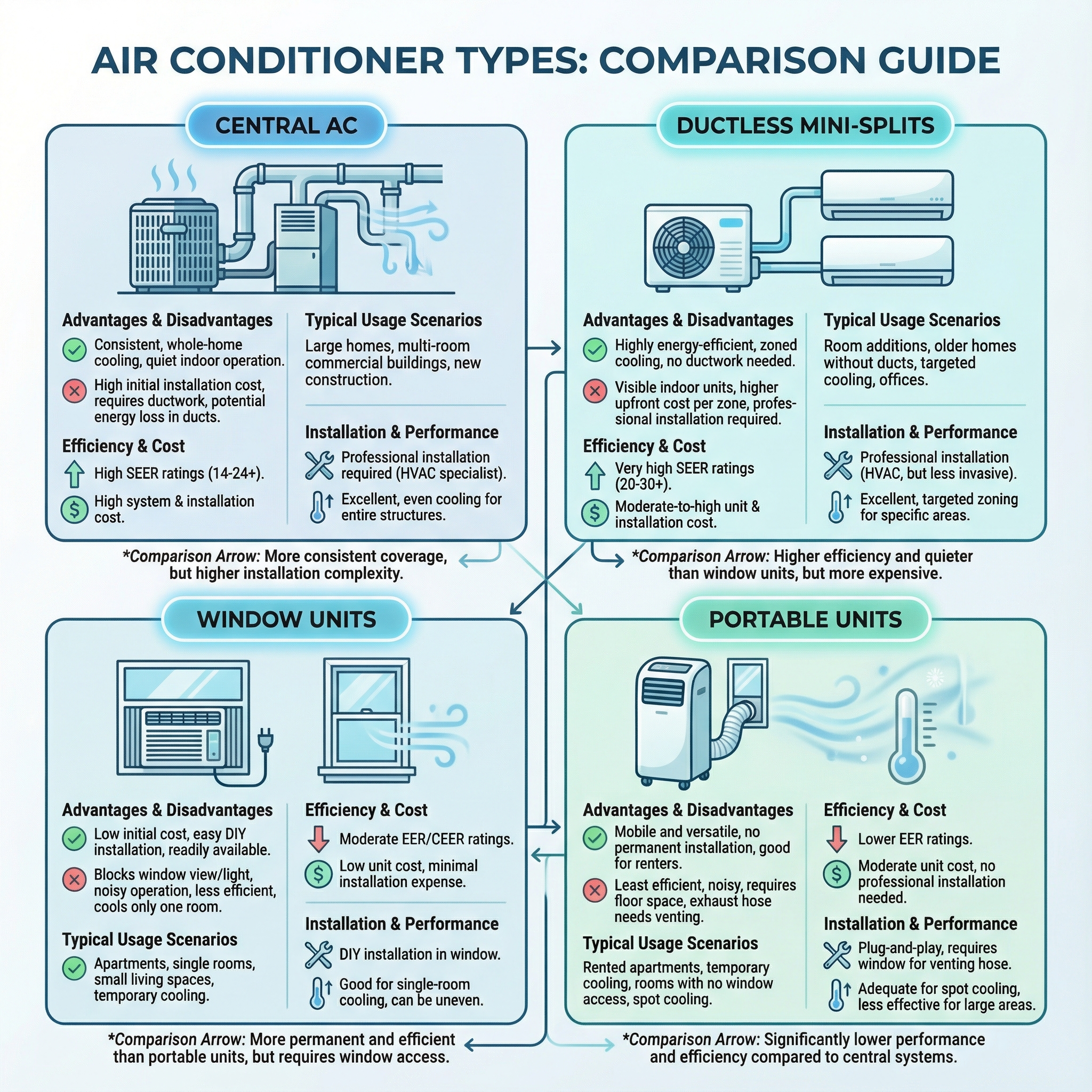
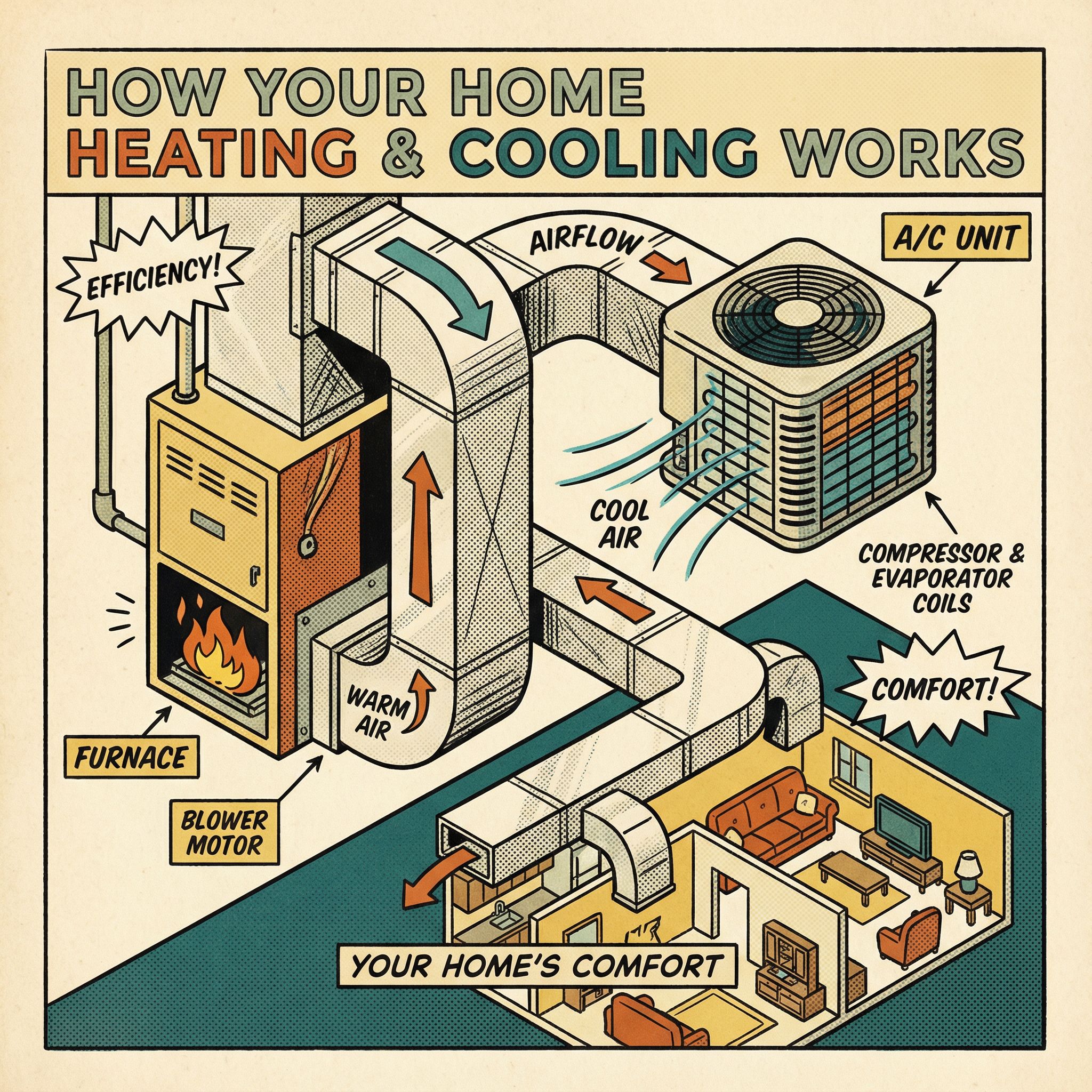
A furnace plus central air conditioner is the standard forced air setup in many North American homes: the furnace provides heat, the outdoor condenser and indoor evaporator coil provide cooling, and one thermostat runs both. The furnace's blower and the same ducts move air in both modes, so the blower, indoor coil, and ductwork function as one system, not separate parts. Think of them as the home's lungs. When equipment is correctly matched, sized, and installed, the combo delivers steady comfort and humidity control. Evaluate options as a system, not as isolated boxes.
Why Choose a Furnace + A/C Combo? Key Benefits for Comfort and Efficiency
A furnace plus central A/C delivers steady comfort year round. The A/C also lowers humidity as warm, moist air crosses the evaporator coil and water condenses and drains, like a cold glass, so many homes feel good at higher summer setpoints. From field experience, two-stage or variable compressors with ECM blowers run longer at low output, stay quieter, stabilize rooms, and reduce short cycling. When equipment is sized by load calculation, hot or cold spots shrink and summer drying improves. Higher SEER or SEER2 and AFUE ratings cut electricity and fuel over a 10 to 30 year life, and balanced airflow matters, so keep supply registers open to support filtration, coil performance, even rooms, and to avoid static pressure spikes.
Climate Fit & Regulations: Where Furnace + A/C Combos Make Sense (and Where to Pause)
Climate drives the choice. Hot-dry Southwest and parts of California: cooling rules, furnaces are often oversized, emphasize A/C efficiency, airflow, and avoiding over-dry air. Hot-humid Southeast: tight A/C sizing and strong dehumidification, sometimes a separate dehumidifier. Mixed-humid Mid-Atlantic and Midwest: a well sized furnace with a matched A/C balances the seasons. In our experience at Budget Heating (BudgetHeating.com), right-sizing beats chasing tonnage.
- Since 2023 use SEER2, EER2, HSPF2, values read lower than old SEER for the same unit.
- A/C minimums vary: North ≈ 13.4 SEER2, South often 14.3 SEER2 for units under 45,000 Btu/h.
- Gas furnaces are slated to move to 95% AFUE minimums by late 2028.
- Split heat pumps carry higher national minimums, about 14.3 SEER2 with new HSPF2 ratings.
- Refrigerants are shifting to lower GWP options, including A2L, which can affect codes and installation.
When a Furnace + A/C Combo Is NOT the Best Choice: Tradeoffs and Honest Limits
A matched furnace and air conditioner is not always the best fit. Consider alternatives in these cases:
- Mild winters or high fuel costs: high efficiency heat pumps or all electric options can lower bills.
- Very cold regions with frequent backup heat: cold climate heat pumps or dual fuel may be more cost effective, depending on fuel prices.
- Only one unit failing while the other is near end of life: mixing old and new invites airflow, control, and refrigerant mismatches and can muddy warranties. Many pros replace both together when both are near end of life.
Tradeoff: combos usually cost more upfront and require careful design and installation, yet when done right they can reduce operating costs, improve humidity control, and run quieter.
Avoid myths: the furnace and A/C share the blower and ducts; bigger is not better; closing vents hurts performance; refrigerant is not a top off item, fix the leak; change filters every 1 to 3 months; maintenance is preventive. Replacing a furnace in the mid to late 2020s? Many markets will require 95% AFUE condensing models by 2028.
Understanding Efficiency Ratings: SEER, SEER2, AFUE and What They Mean
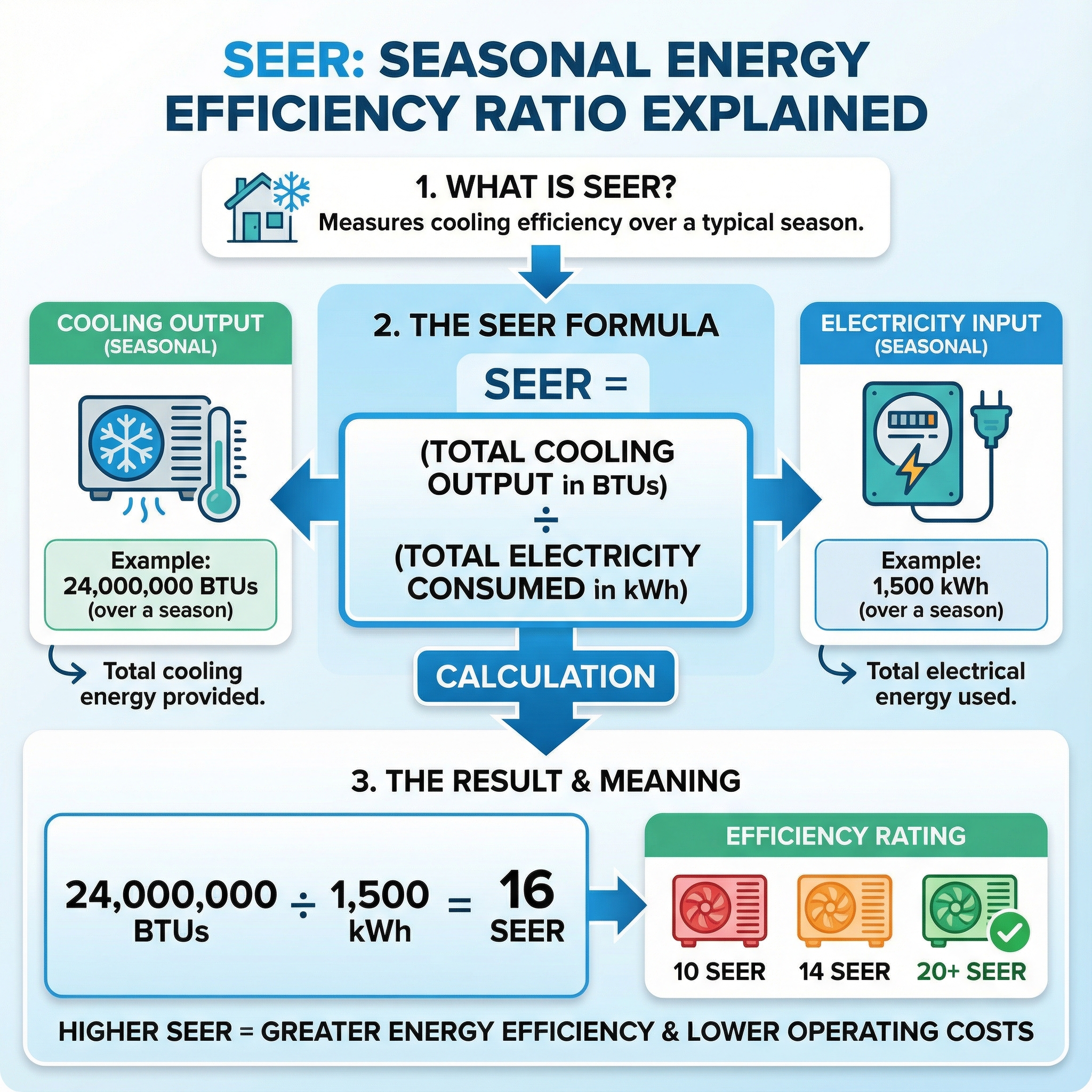
SEER measures seasonal cooling output per electricity used, higher is better. SEER2 is the newer test that uses more realistic external static pressure, so numbers read a bit lower for the same unit, for example 14 SEER is roughly 13.4 SEER2. AFUE is furnace efficiency, 81% means 81 cents of each fuel dollar becomes delivered heat.
- Older systems: about 10 SEER.
- Common new tiers: 13 to 14 SEER, higher tiers 17 to 20+, premium variable speed above 20 SEER.
- Furnaces: 80 to 83% AFUE conventional, 95 to 98% AFUE condensing.
Treat ratings like MPG on a window sticker. To approach them, the furnace or air handler, indoor coil, and outdoor condenser must be properly matched, airflow set correctly, and refrigerant charge dialed in. Mismatch or poor setup quickly cuts real world efficiency.

Sizing and Equipment Selection: Manual J, Manual S and Common Sizing Mistakes
The right system starts with math, not a rule of thumb. Require a full ACCA Manual J load calculation that accounts for insulation, window area and orientation, shading, infiltration, and internal gains. In humid markets make sure latent loads are calculated explicitly. Follow that with ACCA Manual S equipment selection using manufacturer expanded performance data so the chosen model meets both sensible and latent portions of your load at local design temperatures. Confirm the indoor and outdoor units are an AHRI matched set.
Avoid oversizing. Big equipment short cycles, leaves humidity behind, creates hot and cold spots, and costs more to run. Think of it like tapping the gas and brakes repeatedly, you move, but comfort is sloppy. Verify target airflow in CFM per ton per the manufacturer, and ensure your ducts can deliver it without excessive static pressure. If not, plan duct upgrades. In humid climates prioritize longer runtimes, proper sizing, smart blower control, and consider a whole home dehumidifier. In dry or mild climates tune blower staging to avoid over drying.
In our experience at Budget Heating (BudgetHeating.com), these steps consistently deliver steady temperatures and dry, clean air.
- Which outdoor and indoor design temperatures and indoor setpoints were used in Manual J?
- What are the calculated sensible and latent loads, room by room?
- How does the selected system meet Manual S at our local conditions using expanded data?
- Can you provide the AHRI matching certificate?
- What is the target airflow and measured static pressure, and do the ducts need upgrades?
Cost Breakdown & Typical Energy Savings: What to Expect Over 5-20 Years
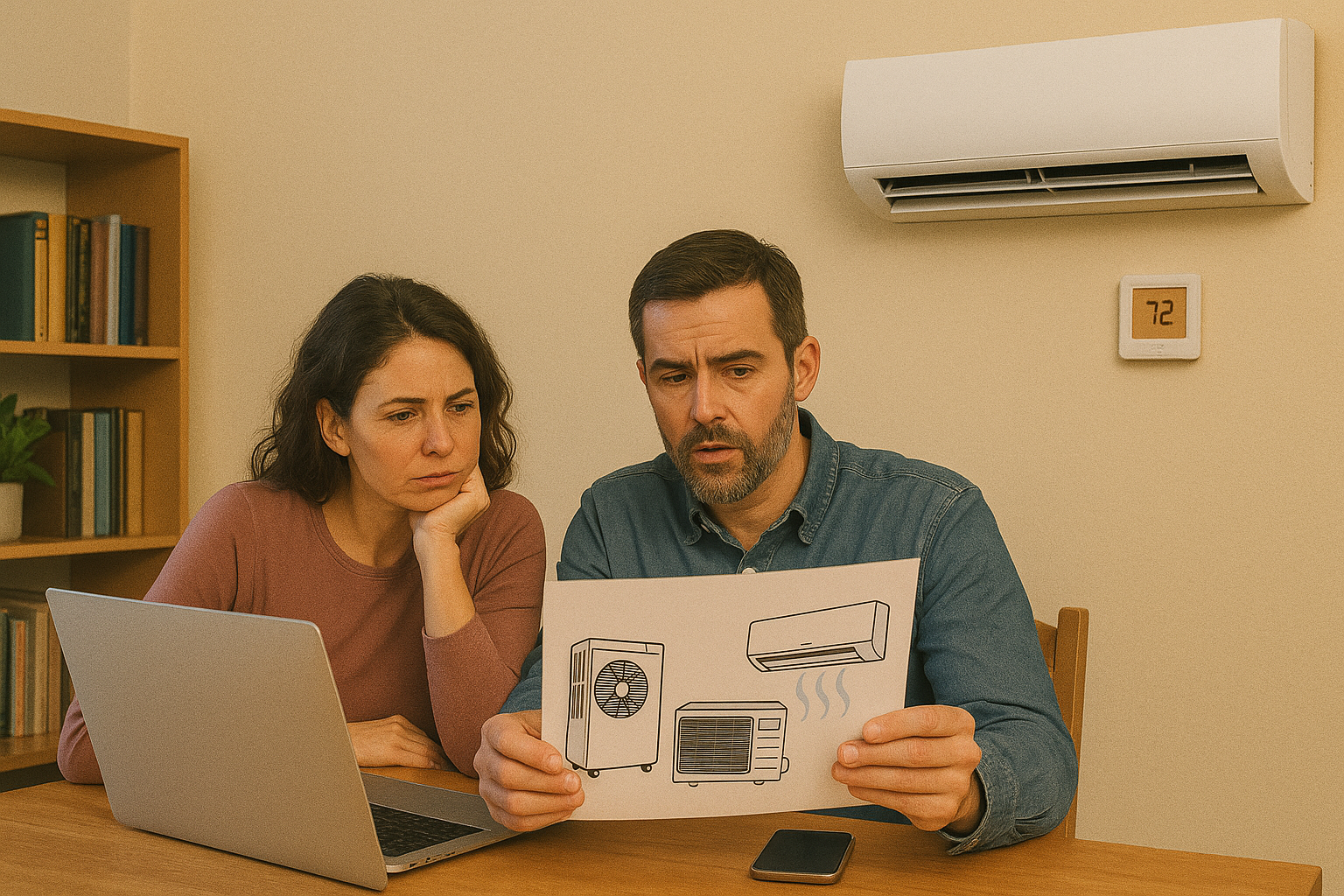
Installed prices vary by market, equipment tier, and job complexity (labor rates, duct changes, permits, line set replacement), so obtain multiple detailed quotes. Ask for itemized pricing to compare bundled furnace plus A/C replacement versus separate installs. Bundling often trims labor and may qualify for incentives. Improving the building envelope can reduce required equipment size and operating costs.
- Cooling savings: convert SEER improvements to percent. 10 to 13 is about 23% (roughly $375 over 5 years, $750 over 10, $1,125 over 15 under typical use). 10 to 15 is about 33%. 10 to 20 is roughly 50%. From a 14 SEER baseline, 14 to 15 is about 6.7% and 14 to 16 is about 12.5%.
- Heating savings: replacing an ~81% AFUE furnace with 95 to 98% typically cuts fuel 15 to 20%, with greater benefit in cold climates.
- Payback and NPV: divide the added upfront cost by annual dollar savings for simple payback. For 10 to 20 years, calculate net present value using local energy prices and expected maintenance.
Installation Considerations: Equipment Matching, Ductwork, Commissioning and Permits
High quality installation and commissioning are what unlock the efficiency you paid for. Think of the system like an orchestra, every component must be in sync. Treat the furnace, blower, coil, condenser, and ducts as one integrated system so published efficiencies and reliability are actually achieved.
- Verify the indoor coil and outdoor condenser are AHRI matched, set the refrigerant charge, and measure temperature split across the coil.
- Inspect ducts for leakage, undersizing, and restrictions. Seal, repair, or resize to reach target airflow.
- Commissioning should confirm delivered airflow and static pressure, test condensate drainage and safety controls, and verify safe ignition, combustion, and venting.
- Major work such as equipment sizing and installation, new line sets, flue or combustion air changes, electrical updates, and duct resizing must be performed by licensed professionals to satisfy code and manufacturer requirements.
Maintenance Checklist: Seasonal Tasks, Owner Safe Steps and When to Call a Pro
- Filters: check monthly, replace or clean every 30 to 90 days to preserve airflow and protect coils.
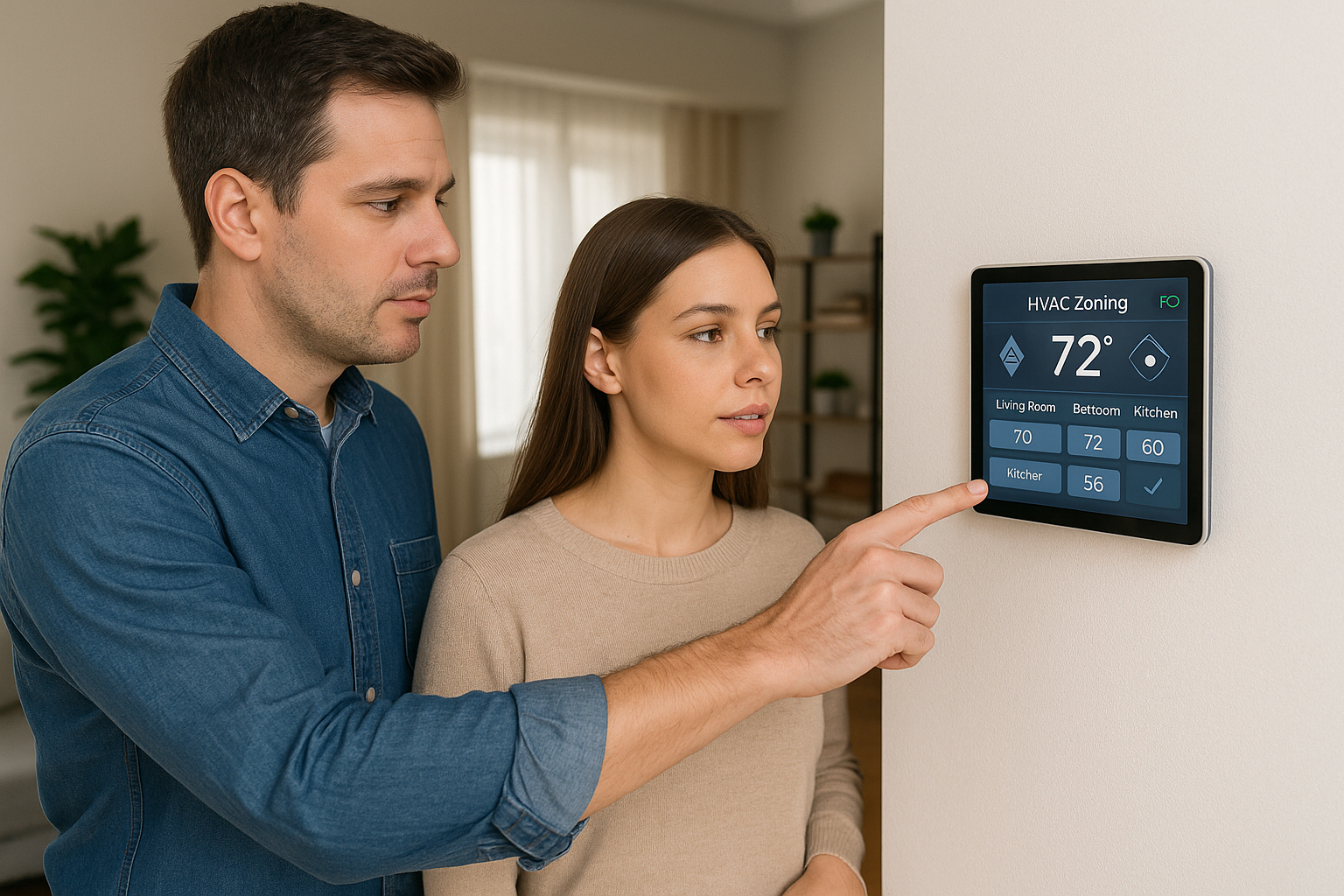
- Thermostat and registers: verify mode, setpoints, and batteries. Keep supply and return registers open and unobstructed.
- Condensate: inspect accessible drain and pan for clogs or standing water.
- Outdoor unit: shut power, clear debris and keep several feet of clearance. Gently rinse fins. Deep coil cleaning is for pros.
- Safety: isolate power at the breaker. Do not open electrical compartments, touch capacitors, or handle refrigerant.
- Monitor symptoms: new noises, short cycling, weak airflow, ice on lines, or unusual odors.
- Call a licensed pro for any performance issue, electrical hazard, refrigerant signs, combustion or gas concerns, or internal service.
- Pro tune ups: at least annually per side, ideally pre cooling and pre heating. Includes coil cleaning, electrical checks, blower or burner inspection, refrigerant leak testing, condensate drain cleaning, and combustion safety tests.
Conclusion: Is a Furnace + A/C Combo Right for Your Home: Next Steps
Matched and right sized furnace plus central A/C, installed correctly, delivers robust whole home comfort across many climates, especially mixed and cold. Tradeoff: higher upfront cost, lower operating costs, better humidity control and sound, and stronger long term reliability with quality install and care. Next steps: request Manual J and Manual S, verify AHRI match and commissioning, compare multiple itemized quotes, and schedule yearly tune ups and filter changes. With 30+ years and 200,000+ orders, our team can guide you end to end.
- Get a Custom Quote
- Talk to Our Team by phone, U.S.-based support
- Shop Furnace + A/C Systems with wholesale pricing, free shipping on many models, and Affirm financing