




Why State Choice Matters When Choosing a Mini Split
Mini splits shine when climate, housing, and energy prices align. In our experience, states with moderate temperatures, many older homes where duct retrofits are costly, and higher utility rates get the best value. The goal is simple: understand how state climate, electricity versus other fuels, and housing stock drive performance and cost. This section explains where they fit and what to weigh before you commit.
Mini splits are heat pumps that transfer heat rather than generate it. Picture a pump moving water instead of making new water. Moving heat takes less energy than creating it with electric strips or combustion, so mini splits often deliver 2 to 3 units of heat for each unit of electricity under typical conditions.
State context matters because these factors can swing results:
- Local climate: temperature range and humidity.
- Ducts: presence, condition, and retrofit difficulty.
- Energy prices: electricity vs gas, oil, or propane.
- Incentives and codes: rebates, standards, permitting.
How We Evaluated States: Climate, Costs, Incentives, and Rules
We weigh what truly changes ownership cost and model fit in each state: climate extremes, local utility rates, rebates, and enforceable rules. Climate sets sizing and cold performance needs, prices drive payback, incentives narrow choices to qualifying tiers, and codes determine what can be installed or rebated.
- Climate severity and design temperatures.
- Electricity and gas prices.
- State, utility, and federal incentives with their qualifying tiers.
- Enforced minimum efficiencies for split AC, heat pumps, and ductless.
- Installed cost and availability under regional enforcement.
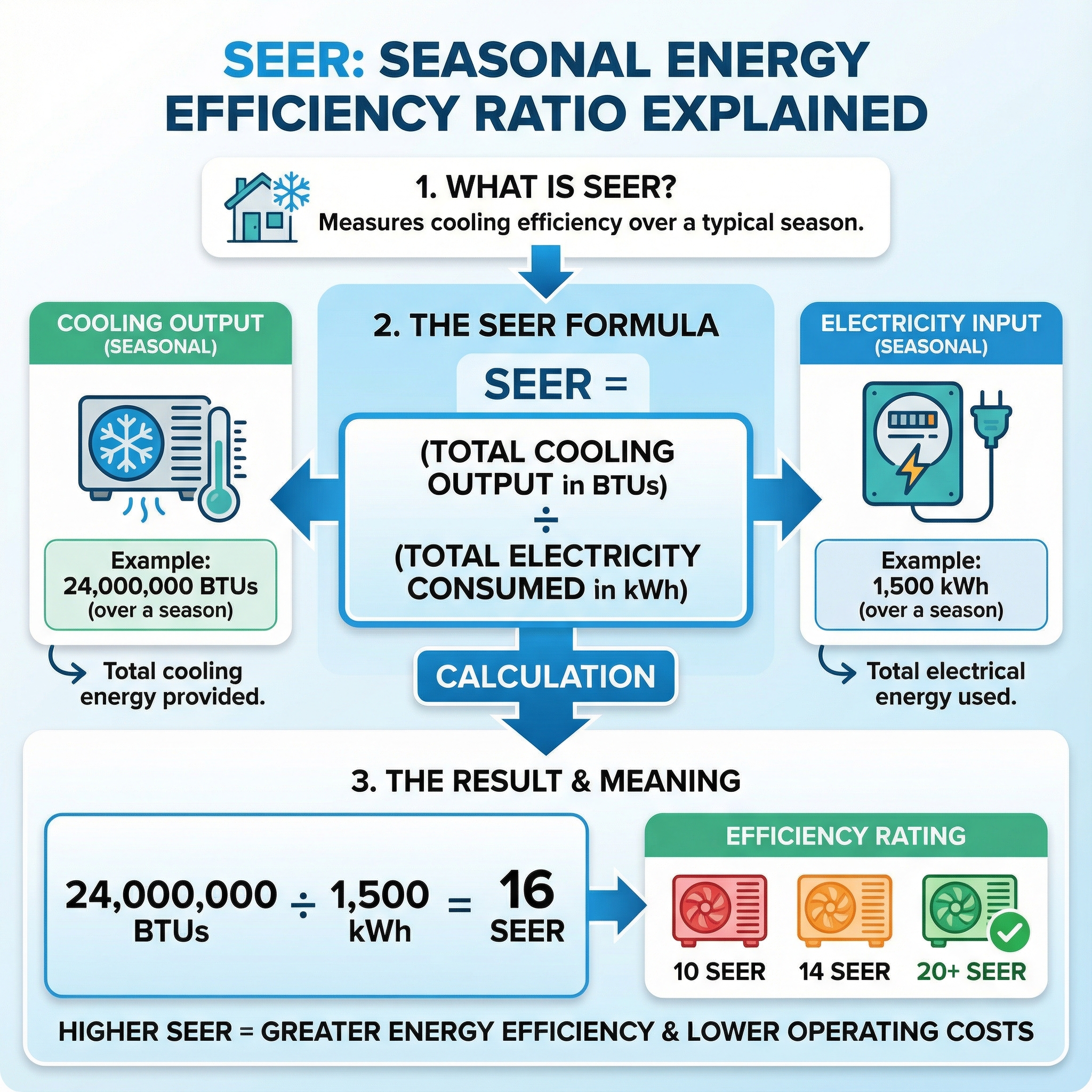
Efficiency metrics matter. In 2023 DOE moved to SEER2/HSPF2 with tougher tests, roughly 14 SEER is about 13.4 SEER2. Federal minimums differ by region and equipment type, and higher baselines shift pricing and availability in 2023 and 2026. Ductless minimums rise in 2026, often cited as SEER16 North and SEER17 South. ENERGY STAR and ENERGY STAR Cold Climate labels help flag top performers for cold states. We also factor the A2L refrigerant transition to R 32 or R 454B from 2026, which affects product design, codes, and installers. Modern ductless commonly runs high teens to 20 plus SEER.
Top States for Mini Split Systems: Quick List and Categories
Mini-splits shine where climate, housing stock, and incentives line up. Use these quick categories to gauge fit by state.
- Cooling-dominant or mild climates: Efficient zonal cooling with low installation disruption in California, Arizona, Nevada, Florida, Texas, Oregon, and Washington.
- Cold-climate expanders: Modern cold-climate models, properly sized and specified, now serve Maine, Vermont, New Hampshire, Minnesota, Wisconsin, and Michigan.
- Electrification incentive leaders: Rebates and higher power costs often improve lifetime economics in California, New York, Massachusetts, and parts of the Pacific Northwest.
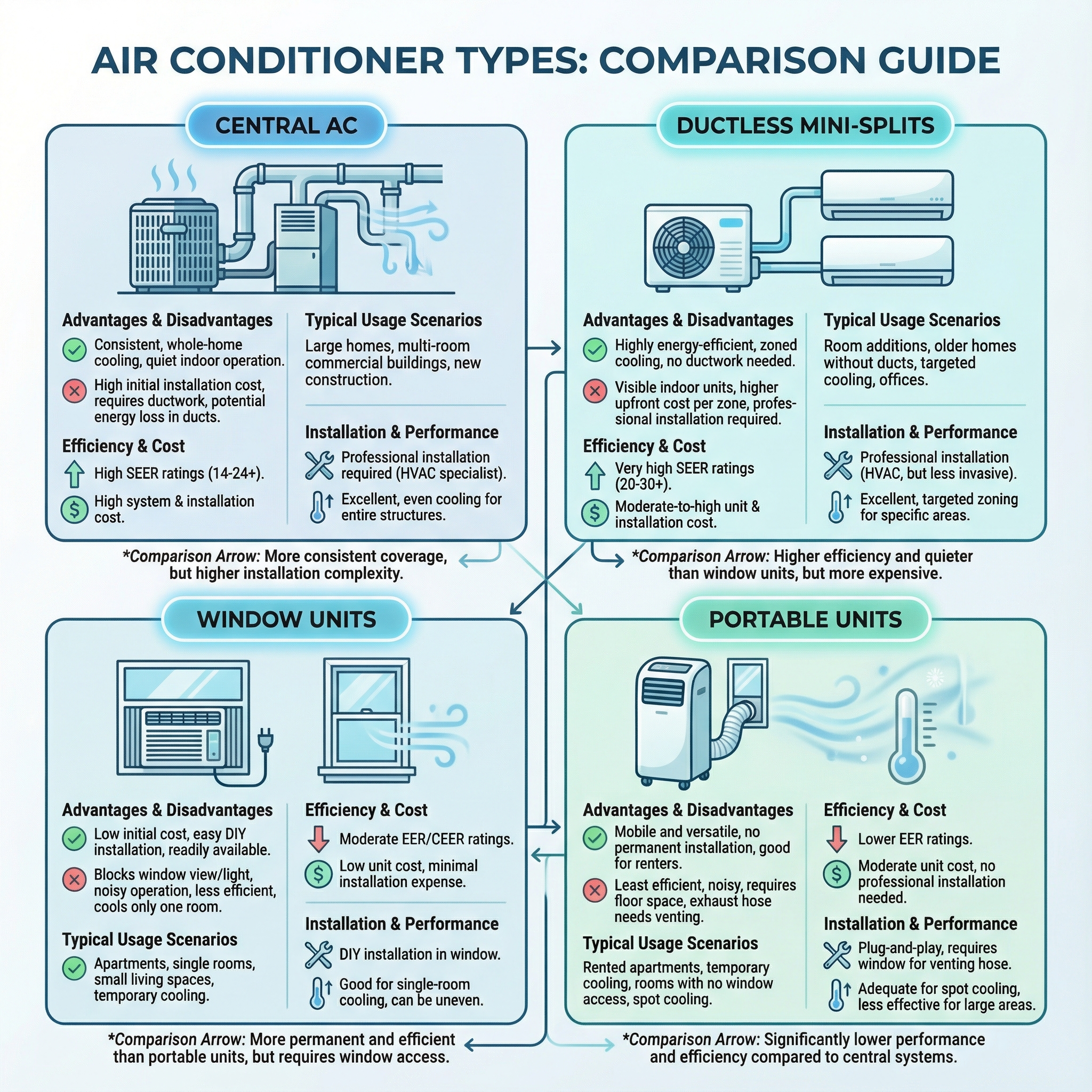
- Retrofit-heavy markets: Older homes where adding ducts is costly, common in Massachusetts, Connecticut, New York, and New Jersey.
Best States and Guidance for Cold Climate Mini Split Heating
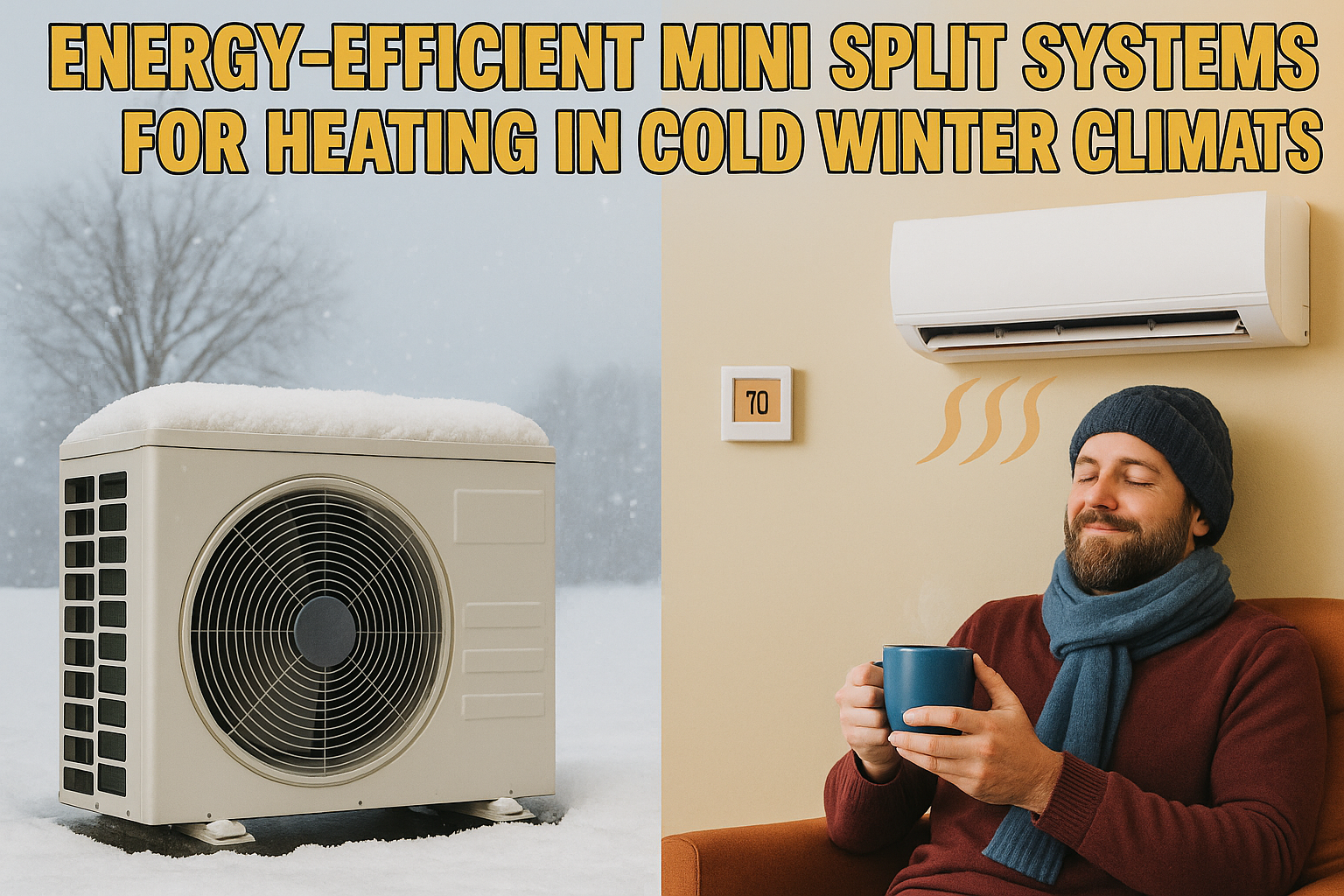
Cold rated mini splits can serve as primary heat across much of the Upper Midwest and New England, including Minnesota, Wisconsin, Michigan, New York, Vermont, New Hampshire, and Maine, as well as colder pockets of the Rockies. The key is choosing a true cold climate or hyper heating model. Standard units shed capacity quickly once outdoor temps drop below about 25 F, so they may not keep up during cold snaps.
Right sizing is non negotiable. Verify the unit's published heating capacity at your local design temperature, not just the nominal rating. In many northern areas that means checking output at 5 F or 0 F. Think of it like buying a winter coat for the coldest day, not a mild afternoon. In our experience at Budget Heating (BudgetHeating.com), matching capacity to design temp is what separates comfortable systems from rooms that never quite reach setpoint.
Plan the install for snow. Mount the outdoor unit high enough to clear drifts, keep it out of roof slide paths, and allow room for shoveling and airflow.
When a Mini Split May NOT Be the Best Choice (Tradeoffs & Alternatives)
Mini splits solve a lot of problems, but there are cases where other approaches fit better. A few common pitfalls and clearer alternatives:
- Whole home with one head: Trying to heat or cool an entire house with a single indoor unit usually disappoints. For even comfort, plan proper zoning with multiple heads, a ducted mini split air handler, or a traditional central system tied to existing ducts.
- Ignoring local math: Nameplate SEER alone does not predict savings. Real ROI depends on your climate hours and kWh rate. In areas with low electric costs and long cooling seasons, inverter systems shine. Where electricity is expensive or heating load dominates, a high efficiency gas furnace or dual fuel setup can be a better value.
- Very cold regions: In sustained sub zero weather, choose cold rated equipment or keep a reliable backup heat source. In some homes, a high efficiency furnace remains the primary heat.
- Upfront budget limits: Incentives often help, but initial cost can still be a hurdle. Phased installs, reusing existing ductwork with a central heat pump, or a right sized conventional AC replacement can control spend.
Common myths to skip: Older homes do not require major renovation since no ducts are added, and mini splits are not only for temperature extremes. They often excel in moderate climates and retrofit projects.
Why These States Rank Well: Housing Stock, Policy, and Local Economics
States that rank well share three practical traits: the right housing stock, supportive policy, and favorable local economics. Where there are many older or ductless homes, mini-splits shine. They slip in without invasive ductwork, reduce disruption during retrofit, and avoid duct losses that waste energy. That makes them a natural fit for dense urban housing and historic neighborhoods.
Zoning is the other lever. With room-by-room control and multi-zone setups, you condition only the spaces you occupy, which improves comfort and trims run time. Think of it like a dimmer switch for each room, not a single on or off for the whole house.
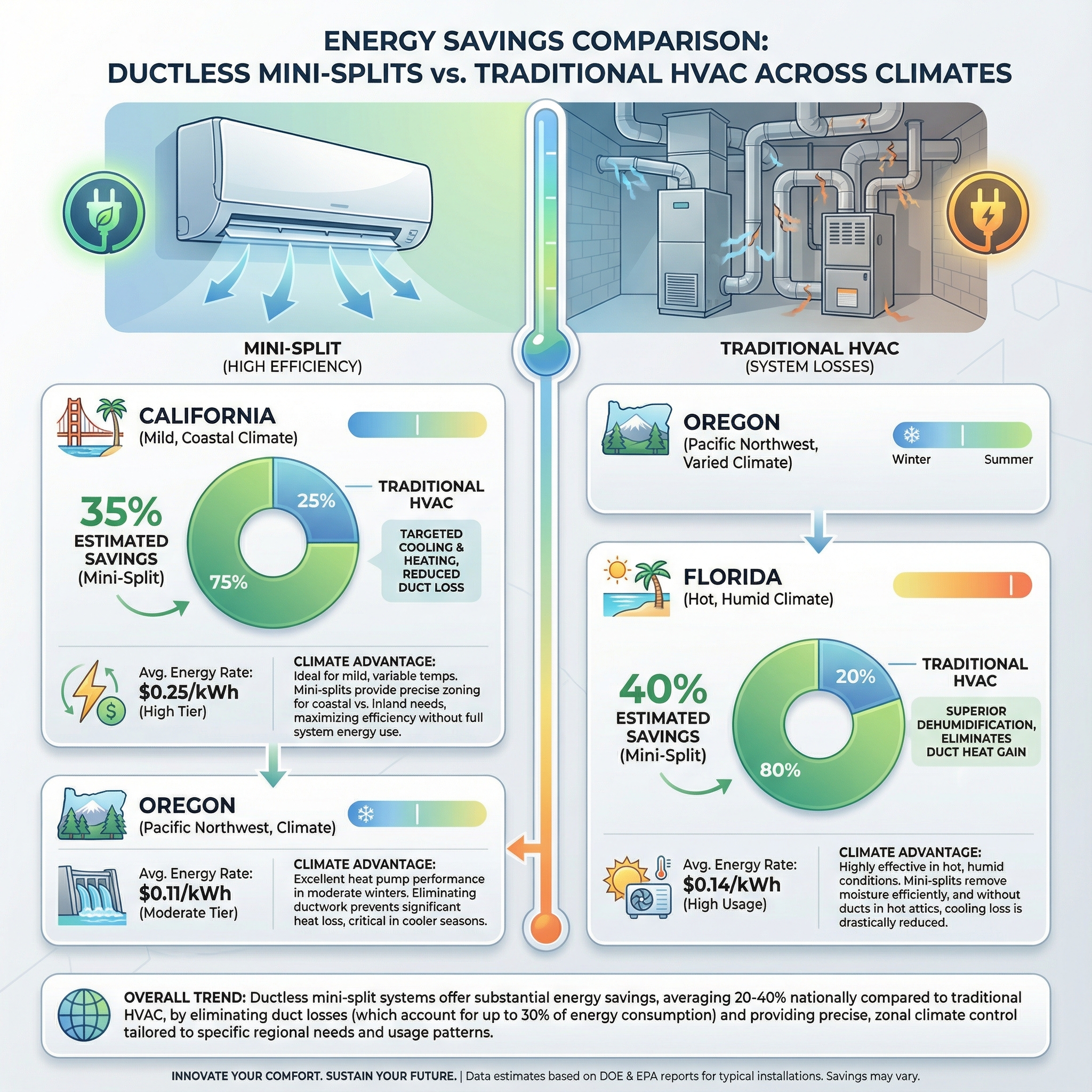
Economic signals matter. High electricity prices amplify the operational savings of high-efficiency mini-splits, shortening payback. California, Oregon, Massachusetts, and New York keep appearing on short lists because they combine those rates with strong incentives and codes that favor electrified, variable-speed heat pumps. In our experience at Budget Heating (BudgetHeating.com), that alignment means projects get approved faster and pencils sharpen on total cost of ownership.
Best States for Cooling Dominant Climates: Hot, Humid, and Desert Areas
In hot humid regions such as the Southeast and Gulf Coast, choices hinge on moisture removal as much as temperature. In hot dry parts of the Southwest, sensible cooling is the priority. From our field experience, inverter mini splits run longer at lower speed, like cruising instead of stop and go, keeping the coil cold so it pulls more water from the air. That steadier operation improves comfort and typically holds indoor humidity near 45 to 55 percent without overcooling. Avoid oversizing to preserve long runtimes. In humid states, prioritize high SEER models with robust dehumidification tools: DRY mode, auto fan, and very low minimum capacity. In desert states, favor high SEER systems that maintain capacity at high outdoor temperatures. Where cooling hours and electricity prices are high, stepping up several SEER points can materially reduce bills.
States and Utilities with the Most Generous Mini Split Rebates and Tax Credit Opportunities
We consistently see the richest offers in California, Oregon, Massachusetts, New York, and among certain Pacific Northwest utilities. Policy support in these markets favors high efficiency heat pumps, which lowers net installed cost and speeds payback. Most utility rebates land around $200 to $1,000 for qualifying mini splits and can stack with the federal 25C tax credit, up to $2,000 for qualifying high efficiency units. Incentives are usually tiered: pick models several SEER or HSPF points above minimums and the rebate climbs. That extra incentive often offsets the price jump to premium efficiency, so the higher tier can deliver a shorter payback. Think of it like a step ladder, each efficiency step unlocks a bigger check and a quicker path to breakeven.
Sizing, Typical Costs, Permitting, and Contractor Tips by State
Right sizing starts with a room by room load calculation, not a square foot shortcut. Match capacity and zone count to your layout and how you use each space. In our field work, attics, sunrooms, workshops, and poorly insulated rooms often need a dedicated unit or shell improvements like air sealing and insulation.
Before you sign, compare SEER or SEER2 and HSPF or HSPF2, sound levels, smart features, low ambient heating specs, and the warranty. Upgrading from SEER10 to SEER18 mini split efficiency can cut cooling energy roughly in half.
Contractor verification matters. Ask for the load report, confirm low ambient ratings in cold climates and dehumidification in humid ones. To reduce surprise costs, confirm local permit and inspection steps, who files them, and exactly what work and materials are included.
Action Plan: Decide If a Mini Split Is Right for Your Home (Next Steps & Resources)
Bottom line: mini splits fit most homes, shine for zoned comfort and retrofits, and in cold regions perform well when you pick a cold rated model. With proper installation and maintenance, many systems run 15 to 20 years, and incentives plus efficiency can make the lifecycle math work in your favor.
If you are weighing the decision, keep it simple with this plan:
- Identify your state's climate profile and winter lows.
- Check local, utility, and federal incentives you can stack.
- Request a room by room load calculation to size correctly.
- Choose cold rated equipment if you see freezing temps.
- Hire an experienced installer and schedule maintenance.
Our team has 30+ years in HVAC and has fulfilled over 200,000 orders. We size, match, and quote systems daily as a factory authorized dealer, so you get the right equipment and full manufacturer warranties.
- Get a Custom Quote for sizing, model options, and accessories.
- Talk to Our Team by phone or chat, U.S.-based technical support.
- Shop Ductless Mini Splits at wholesale pricing with optional Affirm financing.