




 hvac systems
 learning center

Why Prepping Your HVAC for Severe Weather Pays Off
Severe weather, whether cold snaps, extreme heat, windstorms, wildfire smoke, or flooding, pushes HVAC systems to their limits. We have watched well-maintained equipment ride out storms while neglected systems fail at the worst moment. Smart prep protects safety and comfort, keeps indoor air cleaner when outside air is hazardous, trims avoidable repair costs, and helps the system bounce back faster. It also supports longevity by reducing stress, moisture intrusion, and corrosion.
Think of it like boarding up windows before a storm, you are shielding one of the most expensive appliances in your home. Simple steps reduce outages and damage, which can mean a basic pre-storm check and filter plan instead of a compressor or control failure that runs into the thousands. Over 30 years of hands-on HVAC work and hundreds of thousands of supported orders have shown us what matters most before weather hits.
This guide lays out practical, safety-first steps you can take before, during, and after a storm. You will learn how to protect outdoor units from debris, keep drainage and filtration ready, safeguard power and electronics, maintain indoor air quality during smoke events, and restart safely when conditions improve.
Know Your System: Quick HVAC Components Checklist for Homeowners
Before seasonal prep, we suggest matching names to parts. Picture the system like a relay team passing comfort along.
- Furnace or boiler: Indoor heat source. Check power, gas or water lines, filter access.
- Air handler or blower: Moves air. Find the blower door and filter slot, listen for smooth start.
- Outdoor condenser or heat pump: Outside unit. Keep 2 ft clear around coils, note fan direction.
- Thermostat and controls: Wall control. Verify display, batteries, mode and schedule.
- Supply and return ducts and vents: Grilles and registers. Vacuum returns, confirm vents open and sealed.
Pre Storm Inspection: The 48-72 Hour Checklist
In the 48 to 72 hours before a severe event, focused prep protects comfort and eases recovery, like pre-chilling a cooler so it holds longer.
- Pre condition the home: slightly cool or heat so thermal mass helps maintain livable temperatures if power is lost.
- Unplug and remove window AC units, store them indoors, and seal openings to block wind and water.
- Replace or clean air filters, keep spares on hand, and make sure returns and registers are unobstructed.
- Replace thermostat batteries. Where appropriate, close or seal attic and crawlspace vents or dampers to limit intrusion.
- Confirm seasonal service and clear minor repairs so equipment is tuned before the storm.
- Use ceiling fans and close blinds or shades to cut immediate cooling load and reduce run time during grid strain.
How to Secure and Protect Your Outdoor Condenser Unit
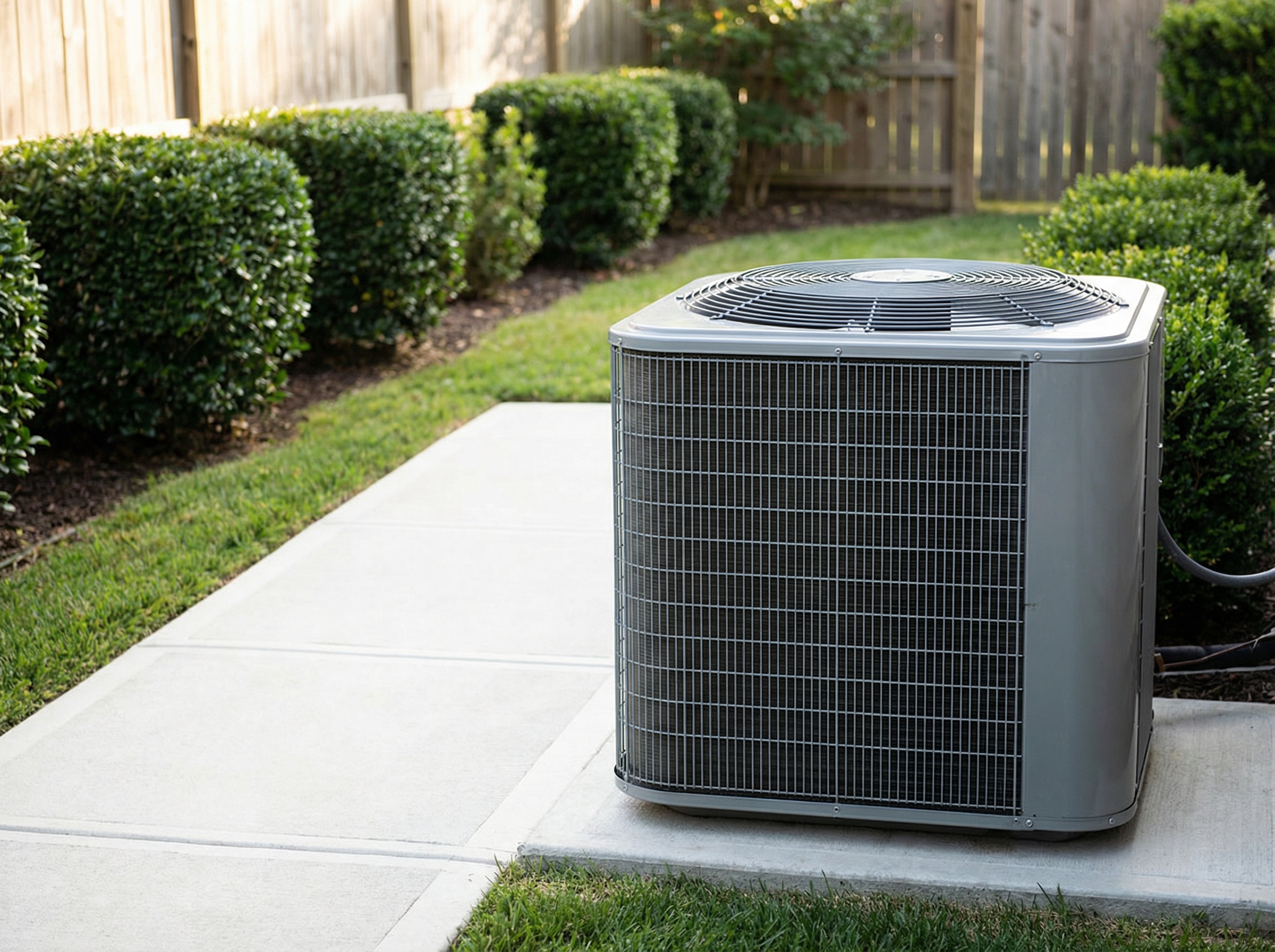
Protection starts with clear space and safe operation. Airflow is the unit's breathing, block it and performance drops.
- Clear leaves and branches and keep 2 to 3 ft open on all sides and above for airflow and service.
- Prep the yard: trim nearby branches and remove loose items that could strike the cabinet during storms.
- In high wind or hurricane zones, secure the unit with manufacturer approved straps, anchor kits, or a protective cage. In our experience at Budget Heating (BudgetHeating.com), this keeps units from shifting or toppling.
- Shield from wind blown debris with a securely tied tarp or temporary barrier, used correctly so it does not choke airflow.
- For winter, maintain 1 to 2 ft clearance from snow and gently remove heavy buildup so defrost cycles and drainage can work.
- Ensure water drains away from the pad. Do not operate any unit that has been submerged or was underwater.
- Before restarting after a storm, remove any temporary cover or barrier to avoid restricted airflow and trapped moisture.
Common Problems, Limitations and Honest Tradeoffs (When DIY Isn't the Answer)
Storm prep and recovery invite well-meant shortcuts, but HVAC gear has limits. From decades of field work, we see the same pitfalls:
- Myth: It is okay to cover the unit with any tarp while running. Reality: Non breathable covers trap moisture, covers are for storage only and must be removed before restarting.
- Myth: Restarting immediately after the storm is safe. Reality: Inspect first, never power up submerged or visibly damaged equipment. When in doubt, a licensed technician should evaluate it.
- Myth: Surge protection alone makes running through a storm safe. Reality: Protectors reduce risk but can be overwhelmed. Shutting down and preconditioning still matters.
- Myth: Interior vents do not matter during storms. Reality: Blocked returns choke airflow, like trying to jog while breathing through a straw, which can cause freezing or overheating.
- Myth: Leaving window AC units installed is fine. Reality: Remove and store them before storms to prevent water intrusion and damage.
Honest tradeoffs and where DIY stops:
- If floodwater reached electrical or motor components, do not attempt to dry and restart. Replacement or professional remediation is the safer path.
- Damaged coils or suspected refrigerant loss require EPA certified service. As a temporary alternative, use portable cooling or heating until repairs are made.
- Homes with frequent outages may need a properly sized generator and whole home surge suppression. Relying on basic plug in strips is a partial measure at best.
Safety First: Power Shutdowns, Surge Risk, and When to Call a Pro
When an HVAC system stops or acts odd, start with safe checks we use in the field: confirm thermostat mode and setpoint, replace thermostat batteries, and inspect the dedicated HVAC breakers. If a breaker is tripped, reset it once. If it trips again, stop and call a licensed technician.
During brownouts or frequent flickers, turn the system off at the thermostat, wait for power to stabilize, then wait 5 to 10 minutes before restarting. Before major storms or repeated grid instability, turn the system off at the thermostat, and at the breaker if advised, to lower surge risk. Whole home surge protection and proper grounding help, but any protector can be overwhelmed by a direct or close strike.
Never open panels or probe live circuits. HVAC equipment involves 240 volt circuits and arc flash risk, high refrigerant pressures, and combustion systems that can create carbon monoxide hazards. If flooding is possible, turn off HVAC power at the breaker only if you can reach the panel safely. Otherwise follow local safety or evacuation orders.
- Generator use: have a licensed electrician install a transfer switch. Never backfeed a panel.
- Preparedness: keep a battery radio for weather updates, spare filters, system make and model info, and contractor contacts.
- Call a pro for refrigerant work, electrical diagnostics or repairs, combustion inspections, and major mechanical servicing.
Protecting Indoor Equipment: Filters, Vents and Duct Sealing
In the field, we see simple indoor filtration and airflow steps protect coils, blowers, and indoor air when smoke, dust, or outages hit.
- Inspect filters often, keep spares, and change more during wildfire smoke, heavy pollen, or extended storm recovery.
- Keep supply and return registers clear of furniture, rugs, and boxes to maintain airflow and prevent coil freeze or overheating.
- Consider system-compatible IAQ add-ons, such as HEPA media or UV-C, to improve air during smoke or dust events.
- Improve attic and wall insulation and air sealing, including at duct penetrations, to cut load and help hold conditions if power is lost.
Testing Critical Components: Compressor, Fan and Thermostat Checks You Can Do
- Thermostat: Set mode to heat or cool and change the setpoint by 3 to 5 degrees. Confirm the display is clear, replace batteries if used, and listen for a click then system response.
- Indoor fan: Set fan to On. Check for steady airflow at several vents and even sound. Power off before clearing any visible debris at returns.
- Outdoor fan and compressor: After a brief delay the outdoor unit should start with a steady hum, not grinding. The larger refrigerant line should feel cool in cooling mode. Frequent starts and stops indicate a fault.
- Post storm: Look for bent fins, loose panels, debris in the fan, and confirm condensate drains are clear. If there was flooding or any electrical damage, do not operate. Arrange professional inspection. After a safe check, restart and monitor for unusual noise, odors, leaks, or weak output. Shut down and call a pro if you notice problems.
- What a tech should handle in-season: verify refrigerant charge, tighten electrical connections, lubricate moving parts, calibrate the thermostat, inspect accessible ductwork for damage or disconnections, and confirm heat pump defrost cycles and heating components.
Backup Power, Upgrades and Long Term Prep: Generators, SEER2, and Maintenance Plans
Plan generator backup with a licensed electrician, a transfer switch, and whole home plus HVAC circuit surge protection. List critical loads. Maintenance plans cost $120 to $300 yearly, often save 10 to 20% energy, extend life 15 to 50%, and avoid $400 to $1,200 repairs. In our experience at Budget Heating (BudgetHeating.com), those payoffs are real. Heat pumps need service twice a year. SEER2 and HSPF2 are seasonal efficiency ratings. Know 2024 DOE minima. Demand a Manual J, seal ducts, size to climate, use high SEER in hot regions, high HSPF or cold climate heat pumps in cold, and add a smart thermostat.
Post Storm Recovery & A Printable Pre Storm Checklist
Safety comes first with storm recovery: do not attempt to restart any HVAC equipment that was submerged. Shut off power at the breaker and call a licensed technician. After the storm, clear visible debris from the outdoor unit, dry any wet insulation and ductwork, and replace wet or saturated air filters. If you smell burning or hear unusual sounds, keep the system off and schedule service. Before storm season, arrange or confirm a professional tune up. Document your system with photos, model and serial numbers, and keep emergency HVAC contractor contacts ready.
- Before: schedule a tune up, photograph labels, record model and serial numbers, save service records, add emergency contacts.
- During: stay clear of equipment in rising water, do not start any unit that becomes submerged.
- After: clear debris, dry insulation and ductwork, replace wet filters, keep the system off if anything smells or sounds wrong, document damage and call a pro.
The one thing to remember: restart only when a licensed tech says it is safe. We know these choices can feel urgent when comfort and safety are on the line. With 30 plus years of hands on HVAC experience, our team can help you recover quickly and correctly.
- Get a Custom Quote
- Talk to Our Team, U.S. based phone support available
- Shop Heat Pumps & AC Systems, wholesale pricing with free shipping options and Affirm financing
 Cooling
 Heating
 Money Saving Tips
 Product and Brands Insights
 Buying Guides
 State by State