




How Much Space Can a 12,000 BTU Air Conditioner Cool? A Quick Overview
A 12,000 BTU air conditioner delivers about one ton of cooling capacity, roughly 3.5 kW. BTU per hour measures how much heat the unit can remove. We think of it like buckets of heat carried out of a room each hour. At 12,000 buckets, you are in the mid-size residential class, a common choice for a single large room or a compact open area. In plain terms, it moves a noticeable amount of heat without jumping to a larger, costlier system, making it a practical middle ground for many homes.
What space will it cover? Expect strong room-by-room performance rather than whole-home coverage. Actual reach depends on the room's heat load and layout, so performance can swing up or down. As a rule of thumb for expectations, treat 12,000 BTU as a solid starting point for a large bedroom, living room, or small open concept, not a multi-room floor. Proper sizing checks are still important, but this gives you a realistic baseline.
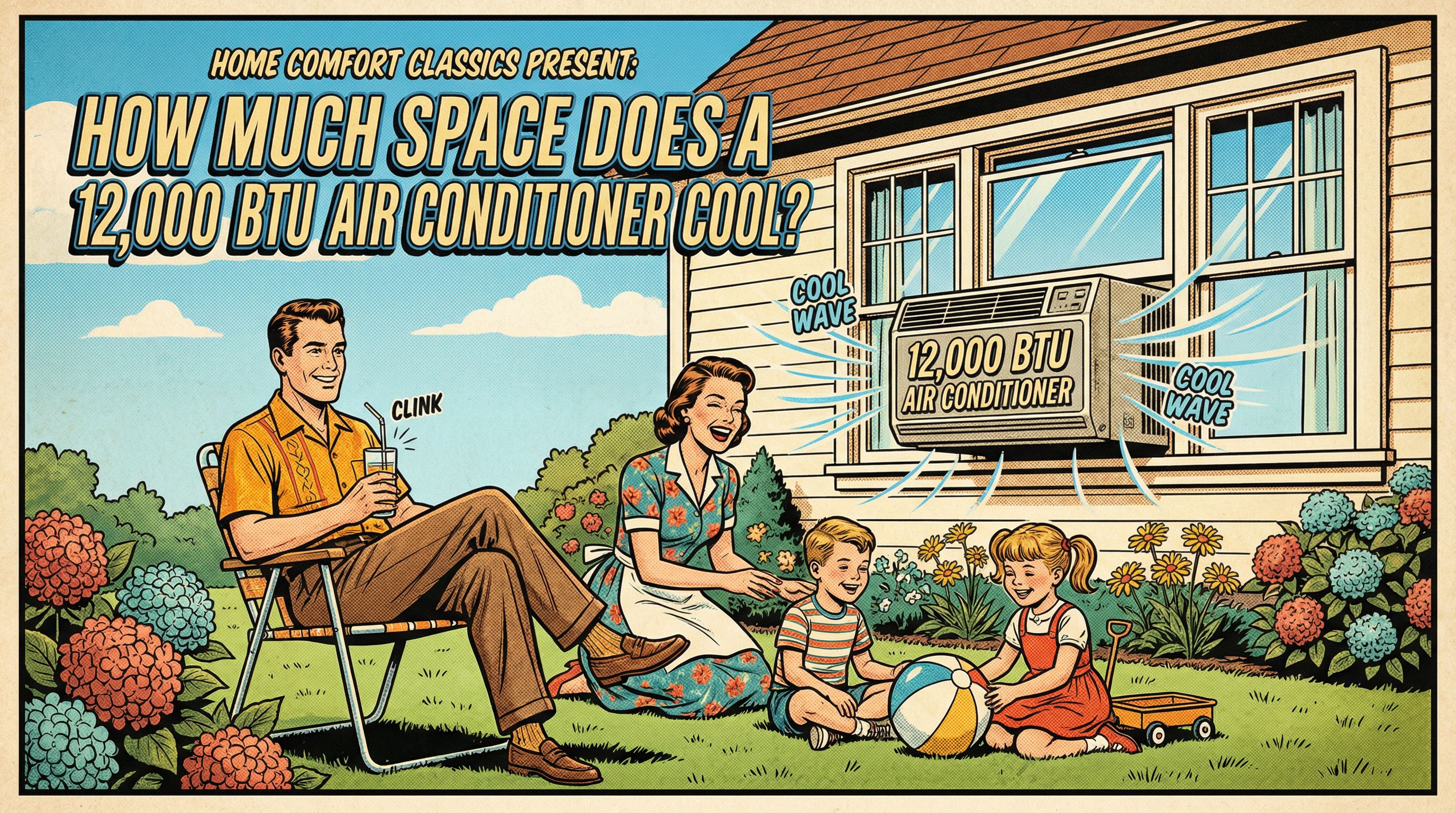
Quick Answer: How Many Square Feet Will a 12,000 BTU Unit Cool?
Rule of thumb: a 12,000 BTU air conditioner cools about 450 to 550 square feet under typical home conditions. That estimate fits a standard room layout and keeps comfort steady without overworking the unit.
This range assumes the following baseline conditions:
- Ceilings around 8 feet
- Reasonable wall and attic insulation
- Limited direct sun exposure
- Normal people, lighting, and appliance heat loads

BTU to Square Foot Rule of Thumb: A Simple Step by Step Calculation
Here is a quick, practical way to size capacity before a detailed load calculation. It starts with floor area, then a simple ceiling height tweak to account for room volume.
- Measure the space: length times width for square footage. Note the ceiling height so you can adjust for volume when ceilings are taller than standard.
- Apply the starting rule: 12,000 BTU typically serves about 400 to 500 sq ft under average conditions. That equates to roughly 24 to 30 BTU per sq ft.
- Adjust for ceiling height: Most quick guides assume 8 ft. Add about 10 percent capacity for each foot above 8 ft. For example, a 10 ft ceiling is about plus 20 percent.
- Work an example: 600 sq ft at 8 ft ceilings lands around 14,400 to 18,000 BTU. With 10 ft ceilings, add 20 percent, which brings it to about 17,000 to 21,600 BTU.
- Round to the nearest available size, and plan to verify with a full load calculation when possible.
When a 12,000 BTU Air Conditioner Isn't the Best Choice (Tradeoffs & Alternatives)
A 12,000 BTU air conditioner is not a one size fits all solution. In our field experience, it underperforms when the actual load exceeds what the simple square footage rule suggests. Common mistakes include assuming 12,000 BTU always covers 500 sq ft, sizing by floor area alone, ignoring solar gain, treating a garage like a normal room, and believing bigger is always better.
- Hot, humid regions: the same room often needs more capacity, many homes are more comfortable at 14,000 to 18,000 BTU for comparable spaces.
- Poor envelopes or garages: uninsulated or leaky areas, older homes, and sun soaked rooms can overwhelm a 12,000 BTU unit unless the envelope is improved.
- Tall or vaulted ceilings: added volume typically pushes requirements beyond 12,000 BTU.
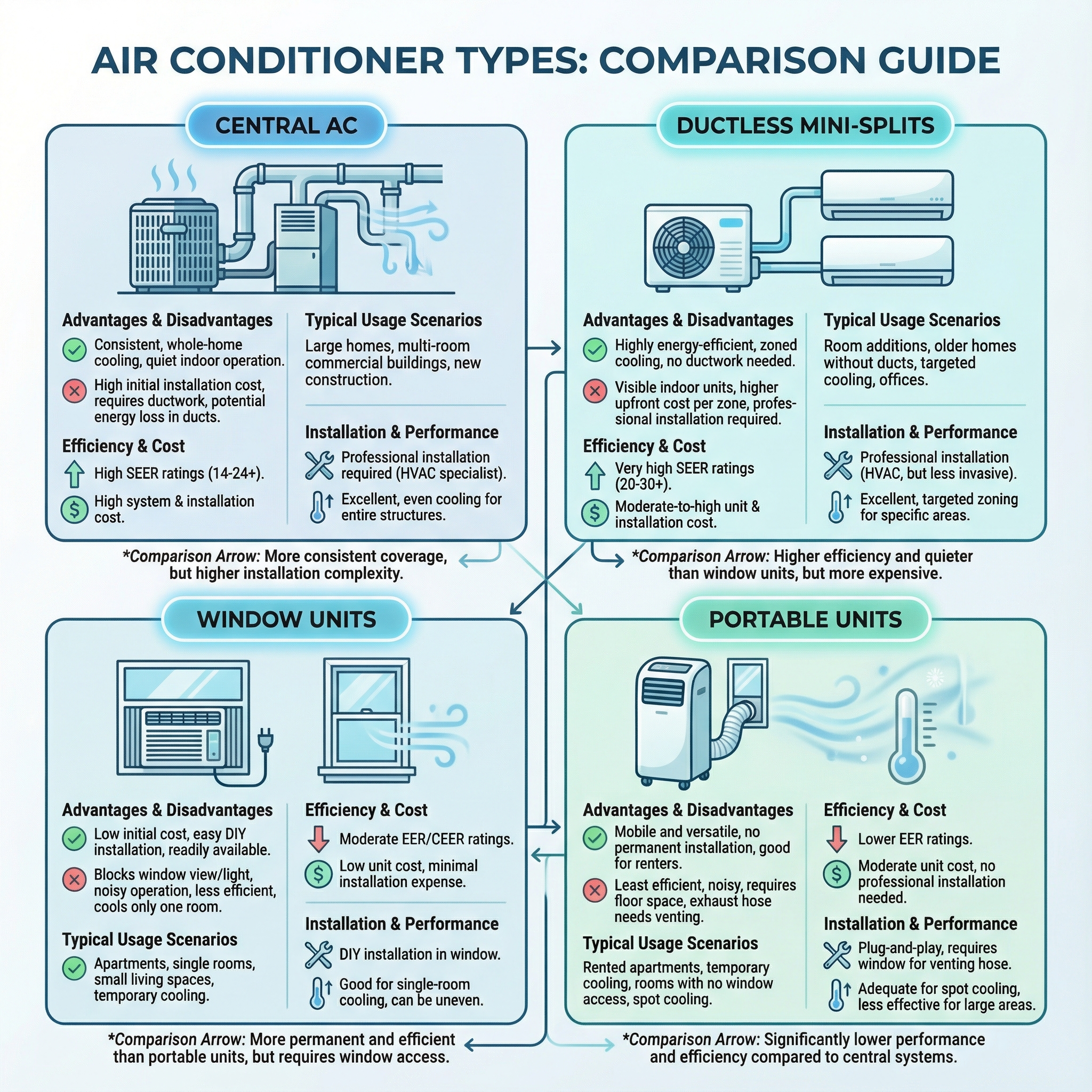
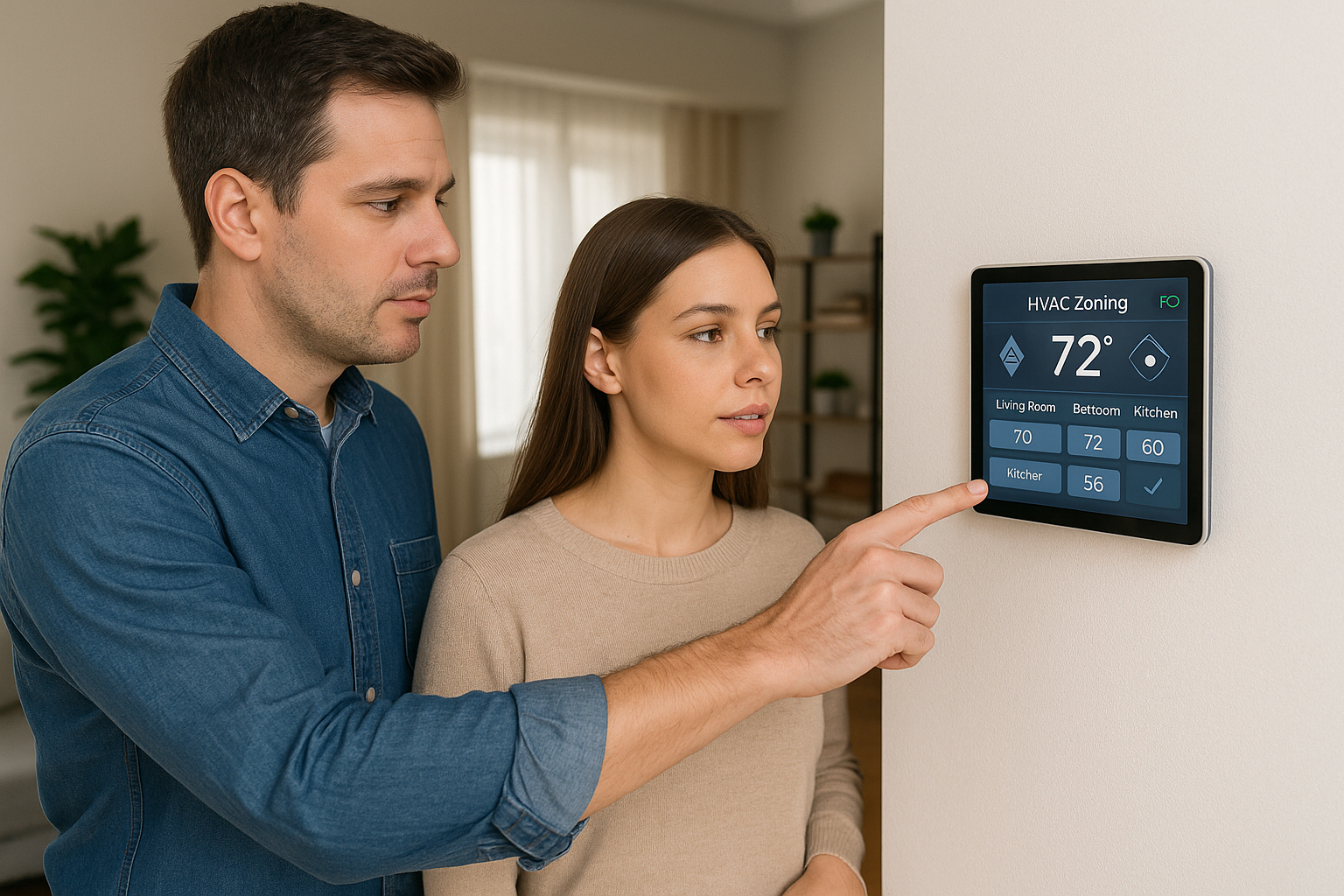
- Open plans: multiple smaller units or a zoned mini split layout distributes capacity more effectively.
Practical alternatives include modest upsizing to 14,000 to 18,000 BTU for high loads, multiple zones for open layouts, or addressing insulation and shading before relying on a 12,000 BTU unit. Avoid oversizing to prevent short cycling and weak humidity control.
Choosing the Right Size: Why Oversizing and Undersizing Both Cause Problems
Right sizing keeps temperature steady, manages humidity, and avoids excess on and off cycling. Oversized equipment short cycles, leaves rooms clammy, and increases wear. Undersized units run nonstop, may never catch up on peak days, and struggle to maintain comfort.
As a quick guide, if your space has an 8 ft ceiling, moderate insulation, and low sun, a 12,000 BTU unit generally fits about 450 to 550 sq ft. If conditions are harsher, step up in capacity or add zones rather than forcing a single unit to do it all. In humid climates, favor models with strong dehumidification and avoid gross oversizing or you will not pull moisture out effectively. Open plans or multiple rooms typically perform better with multiple smaller units or a zoned setup than a single undersized 12,000 BTU.
- Check ceiling height, insulation, window area, and sun exposure.
- Factor in occupants, internal heat loads, and whether the layout is open or multi room.
- If uncertain, get a Manual J style load calculation that reflects local climate and construction.
Common Factors That Change How Much a 12,000 BTU Unit Can Cool
A 12,000 BTU unit is a starting point, not a guarantee. Real-world variables shift the cooling load. In our experience at Budget Heating (BudgetHeating.com), identical 12k units can feel overpowered in one room and stretched thin in another because the space, envelope, and usage differ.
- Floor level and room volume: upper floors run hotter, and volume matters more than area. Taller ceilings increase cubic footage.
- Insulation and air sealing: poor insulation and leaks raise the load and may require more capacity.
- Internal gains and room type: kitchens, gyms, media rooms, electronics, and more people add heat.
- Open plans and airflow: open-concept or connected rooms may need extra capacity or zoning to stay even.
- Window size, orientation, and sun: large or west/south windows and strong afternoon sun boost solar gain.
Layout and the building envelope set the baseline. Sunlight acts like a space heater through glass, and people and appliances add more. If cubic volume is high or the envelope is weak, expect to upsize or use zoning for steady comfort.
Example Scenarios: What 12,000 BTU Can Cool in Cool vs. Hot Climates
Climate, insulation, sun exposure, and humidity tilt the real coverage of a 12,000 BTU unit.
- Cool, well insulated, shaded windows: expect 500 to 550 sq ft with steady temperatures and good humidity control.
- Hot and humid, same home: expect closer to 300 to 400 sq ft. Open plans or lots of glass will feel undercooled without better dehumidification.
- Room types: large primary bedroom, big living room, or an open studio fit well when the envelope and sun are favorable. South or west sun, kitchens, or high ceilings cut the effective area. In our experience at Budget Heating (BudgetHeating.com), north facing or shaded rooms deliver the high end.
Converting BTU to Watts & Amps: Efficiency, Power Draw, and Electrical Needs
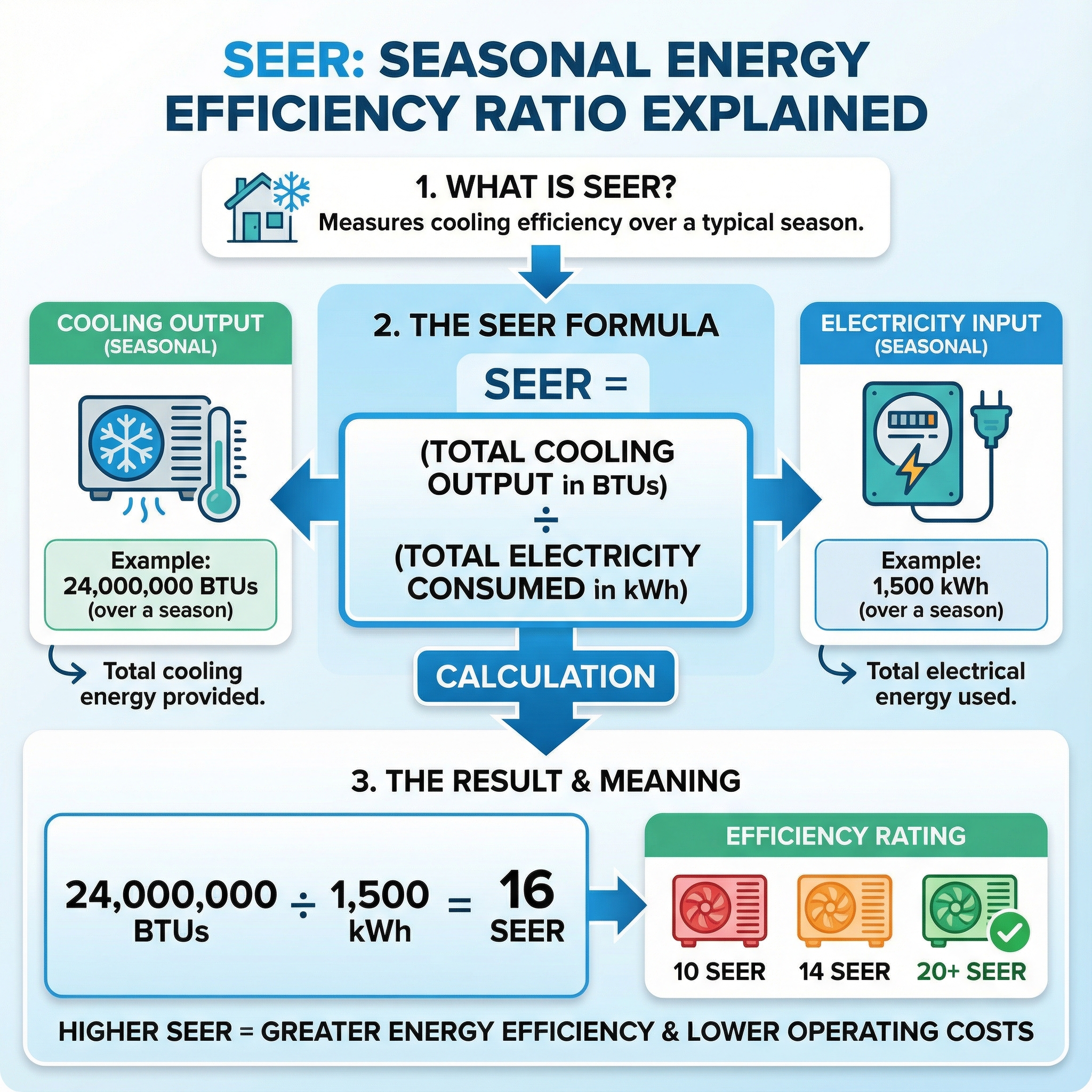
To translate capacity into power, use 1 W = 3.412 BTU per hour. A 12,000 BTU unit equates to about 3,517 W of cooling output. Electrical draw depends on efficiency: input watts ≈ BTU per hour divided by EER or seasonal average BTU per hour divided by SEER or SEER2.
Example for a 12,000 BTU unit: at 16 SEER the average input is roughly 12,000 ÷ 16 ≈ 750 W. At 120 V that is about 6 to 7 A. At 208 to 230 V that is about 3 to 4 A. Over a season, energy use scales inversely with SEER. A 1 ton system might use about 1,800 kWh at 14 SEER versus about 1,575 kWh at 16 SEER, roughly a 12 to 13 percent reduction with modest annual dollar savings.
SEER or SEER2 express seasonal efficiency, higher is less energy used. SEER2 is the newer test and the numbers differ slightly. Modern split systems often land in the mid teens, about 14 to 16 SEER, with premium models above 18 to 22. Window and through the wall 12,000 BTU units list CEER or EER, and CEER better reflects standby and cycling losses for apples to apples comparisons.
Before buying, confirm full load amperage, recommended breaker size, and voltage. Proper circuit capacity and protection are required. Note that 2023 DOE rules use SEER2 with regional minimums, lower in Northern regions and higher in hotter Southeast and Southwest areas.
Room Measurement & Installation Tips: Placement, Insulation and Maintenance
After you measure your space and account for ceiling height, aim for smart placement and simple upkeep. DIY prep: clear 2 to 3 feet of vegetation around condensers, level the pad, keep a clear service path, replace filters regularly, and keep vents and coils clean. Use shading, window treatments, and programmable thermostats to trim load. Always shut off power at the breaker or outdoor disconnect before work; capacitors can hold a charge. Leave refrigerant, sealed system work, high voltage wiring, brazing, and charging to certified technicians. Refrigerant handling is illegal and dangerous for unlicensed people.
Bottom Line: Is a 12,000 BTU Air Conditioner Right for Your Space?
A 12,000 BTU unit, about 1 ton, is usually a good fit for roughly 400 to 550 square feet under average conditions. In shaded, well insulated rooms you can expect coverage near the upper end. In hot, sunny, or leaky spaces plan on closer to 300 to 400. Use 450 to 550 square feet as a starting point, then adjust for ceiling height, insulation, and sun load. Choosing a higher efficiency model also trims operating costs, for example moving from about 14 SEER to 16 SEER often saves 12 to 13 percent over the season.
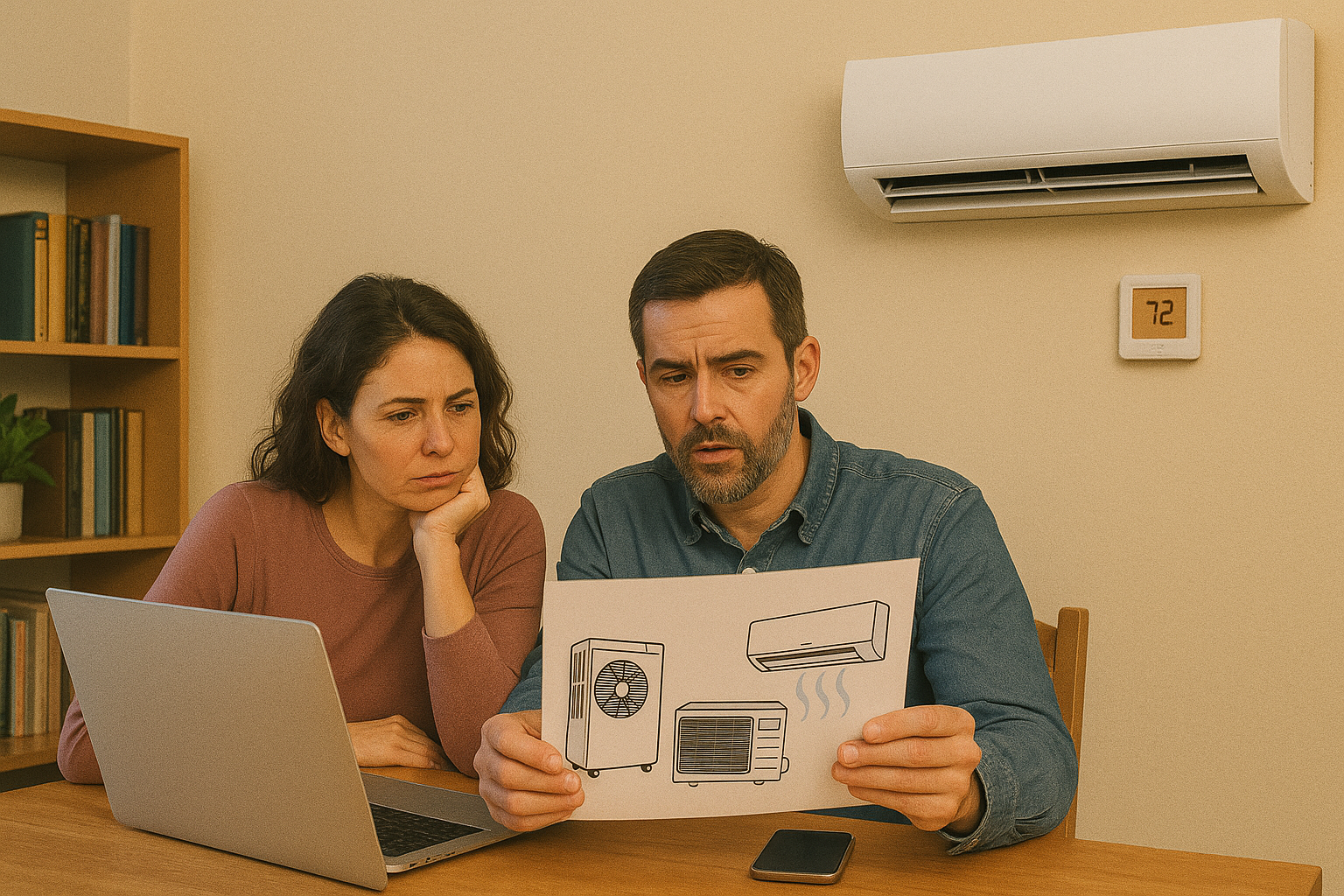
If you are on the fence, verify electrical capacity, count internal heat gains, and get a Manual J load calculation. Our team has 30 plus years of hands on HVAC experience and has fulfilled over 200,000 orders, so we can help you size and select with confidence.
- Get a Custom Quote
- Talk to Our Team by phone or chat, U.S. based support
- Shop 12,000 BTU Air Conditioners at wholesale pricing
- Ask about free shipping on many models and financing with Affirm