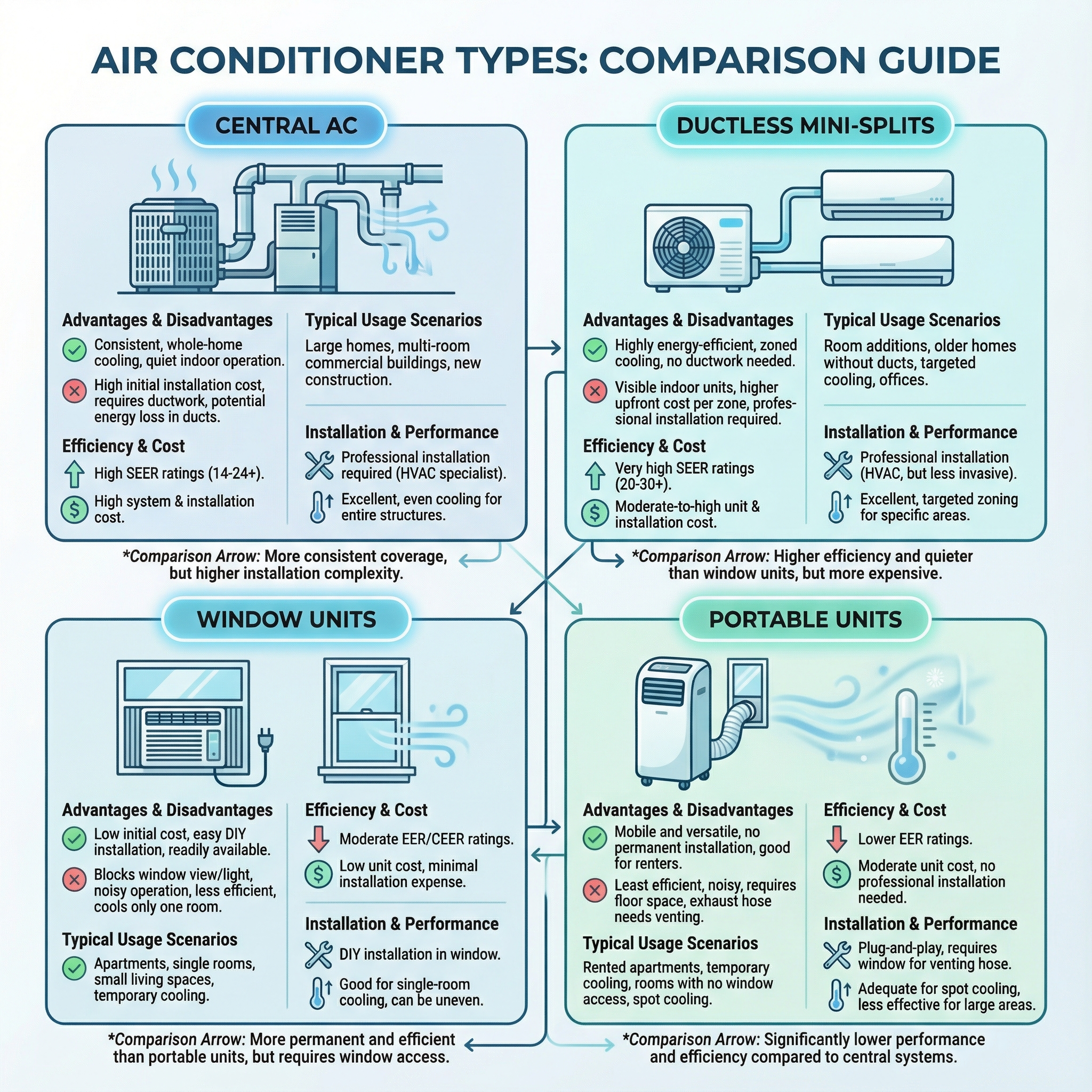





Why Air Conditioner Energy Use Matters for National Electricity Systems
Air conditioning is a rapidly expanding driver of electricity consumption globally and already a large electrical load in the U.S. Over three decades in HVAC, we have watched cooling shift from a luxury to a system-level force. ACs keep homes livable in hot months, but the comfort we enjoy also shapes utility demand patterns, often pushing afternoon and evening peaks that raise grid risk during heat waves. It is like traffic: when everyone cools at once, the electrical highway clogs.
This report maps the role of AC in national electricity, showing how household cooling drives daily and seasonal patterns, why that affects reliability and costs, and how smarter choices reduce strain without sacrificing comfort. Policymakers can use it to inform standards and planning. Utilities can apply it to operations and programs. Homeowners will see how equipment and use habits connect to bills and comfort, all within the bigger grid picture.
Key Findings at a Glance: How Much Cooling Costs and Who Pays
Here are the headline numbers that shape planning and budgets for cooling in the U.S., along with what they mean for households and the grid.
- Prevalence: About 88% of homes have some form of AC, and roughly 66% use central systems.
- Cost footprint: Air conditioning accounts for roughly 12% of household electricity use and about $29 billion in annual residential spending.
- Peak impact: AC's contribution to summer and heatwave peaks is disproportionately large compared with its annual kWh share, which drives grid stress and capacity needs.
- Equity trend: Adoption is lowest but growing fastest in some lower-income, hotter regions, raising concerns about inefficient equipment lock-in and equity.
National significance and household impact: Cooling is a national-scale load that touches nearly nine in ten homes. For a typical home, roughly one out of eight kilowatt-hours goes to AC, so equipment choices and operating patterns directly shape summer bills.
Peak demand effects: Think of the grid like a highway during rush hour. AC use spikes on the hottest afternoons, and the system must be sized for that surge. Even with a modest annual energy share, air conditioning sets the bar for capacity during heatwaves, influencing infrastructure requirements and long-term cost pressure.

Regional Patterns: Which States and Climates Drive Cooling Demand
Cooling demand clusters where summers are long and intense. The hottest, most humid southern states, such as Texas and Florida, show the highest air conditioner adoption and the largest cooling electricity use. Hot dry areas like Arizona also log heavy runtime. By contrast, mixed climates in the Midwest and Northeast have shorter cooling seasons and fewer full-load hours.
Performance priorities shift with climate. In humid regions, moisture control is critical, so equipment that can dehumidify at low fan speeds and maintain proper airflow delivers better comfort. In hot dry regions, high-temperature EER performance is key for peak afternoons. Mixed climates benefit from balanced seasonal efficiency and good part-load control. At a policy level, 2023 DOE actions updated test methods and applied regionally calibrated efficiency requirements to target gains where cooling loads are greatest, especially in the South.

Costs, Savings and the Math of Upgrading Your Air Conditioner
Think of SEER2 like miles per gallon for cooling. Higher SEER2 means fewer kWh to deliver the same comfort, which lowers your bill. A practical rule of thumb is about 7% less cooling energy for each SEER or SEER2 point. In our field experience, going from about 13.4 SEER2 to 16 SEER2 typically trims roughly 16% of cooling use. If your summer baseline at 13.4 SEER2 is $300, that upgrade saves around $48 per season.
Older systems see bigger gains. Jumping from an aging ~10 SEER unit to a modern 16 SEER2 can cut cooling costs by more than 40%, often $200 to $400 per year, depending on climate and run hours. Pairing efficient equipment with variable-speed compressors and a smart thermostat compounds the effect, commonly yielding about 20% to 40% lower electricity for cooling.
Thermostat habits matter as much as hardware. Every degree Fahrenheit cooler raises AC energy by about 6% to 8%. For example, holding 75 F instead of 78 F can increase cooling costs 18% to 24%, roughly $50 to $150 per year for a typical home. Multiplied across millions of homes, the avoided kWh are substantial.
Safety, Maintenance and Honest Tradeoffs: When Air Conditioning Isn't the Best Option
We treat comfort and safety as a package. Before any DIY task, shut power off. Replace or inspect filters every 1-3 months, keep vents clear, gently rinse outdoor coils, check condensate drains, and verify thermostat schedules. Think of upkeep like rotating your tires: small, regular steps prevent bigger failures. Do not open high-voltage compartments, do not bypass safety switches, and stick to mild, approved cleaners. Schedule periodic professional maintenance to keep efficiency and safety intact.
- Low-use or mild climates: a full AC replacement may deliver low ROI; use ceiling fans, tighten the envelope, or choose modest, targeted cooling rather than whole-house systems.
- Hot-dry regions: evaporative cooling or a highly efficient smaller DX system can use far less energy than an oversized conventional AC.
- Extreme cold or mixed climates: if heating dominates, a gas furnace or a cold-climate heat pump with backup heat is often the better investment.
Leave electrical work, refrigerant repairs, compressors and major mechanical issues, combustion appliances, duct redesign, and persistent drainage problems to licensed professionals.
SEER, SEER2, EER and EER2: What Those Ratings Mean for Bills and the Grid
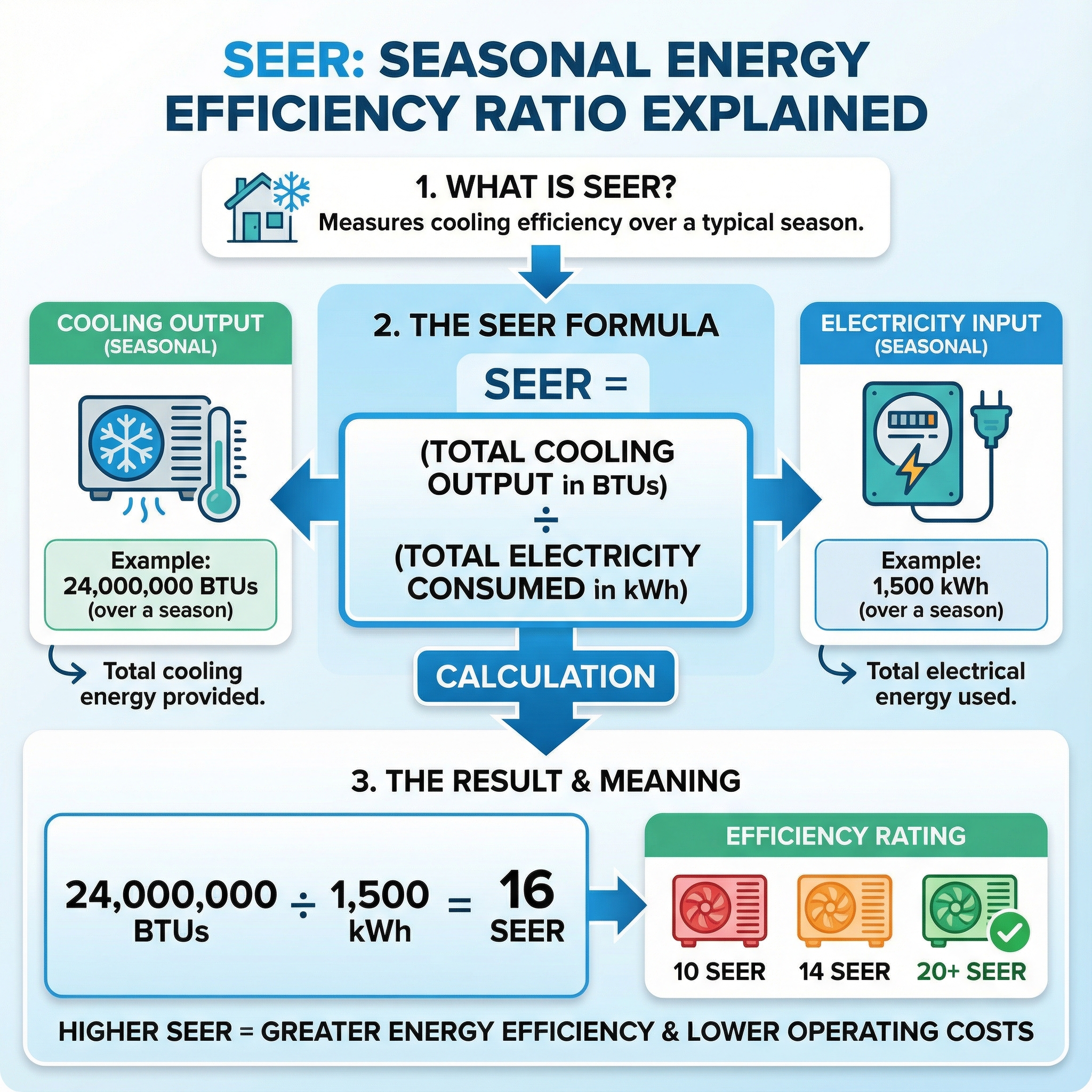
SEER measures how efficiently an air conditioner cools over a season, while SEER2 uses an updated test that better reflects real-world ductwork and external static pressure. EER and EER2 rate efficiency at a single peak-condition point, typically the kind of scorching afternoon that stresses the grid. Higher numbers in all four mean more cooling per kilowatt-hour. On January 1, 2023 the DOE shifted to SEER2 and EER2 procedures and adopted regionally tiered minimums for split systems.
Minimums now vary by climate: the Northern region maps to roughly 13.4 SEER2. The Southeast and Southwest require higher minimums, roughly 14.3 SEER2 for smaller splits, and the Southwest also adds EER2 requirements to ensure strong peak performance. In our experience at Budget Heating (BudgetHeating.com), most new systems cluster near these minimums, with high-efficiency models in the 16 to 20 plus SEER2 range and premium variable-speed systems above that. To translate ratings to bills, use simple ratio math: a 16 SEER2 unit uses about 11 percent less energy than a 14.3 SEER2 unit for the same cooling load. Strong EER2 also trims peak-hour draw, which eases grid strain during heat waves and can lower demand charges where they apply.
A Practical Homeowner Checklist to Reduce AC Energy Use and Bills
Use this prioritized checklist to lower AC energy use and bills without sacrificing comfort. Think of your home like a bucket: fix the leaks before pouring in more cooling.
- Seal the envelope and ducts: seal and insulate ductwork, add attic insulation, weatherstrip doors and windows, and add exterior shading. Reducing the load allows smaller, cheaper-to-run systems.
- Right-size the equipment: require a professional Manual J load and Manual D duct calculation. In our experience at Budget Heating (BudgetHeating.com), this prevents oversizing that short-cycles and leaves humidity high.
- Choose high efficiency: favor higher SEER2, strong high-temperature EER, variable-speed or inverter compressors, efficient ECM blower motors, and ENERGY STAR models when possible.
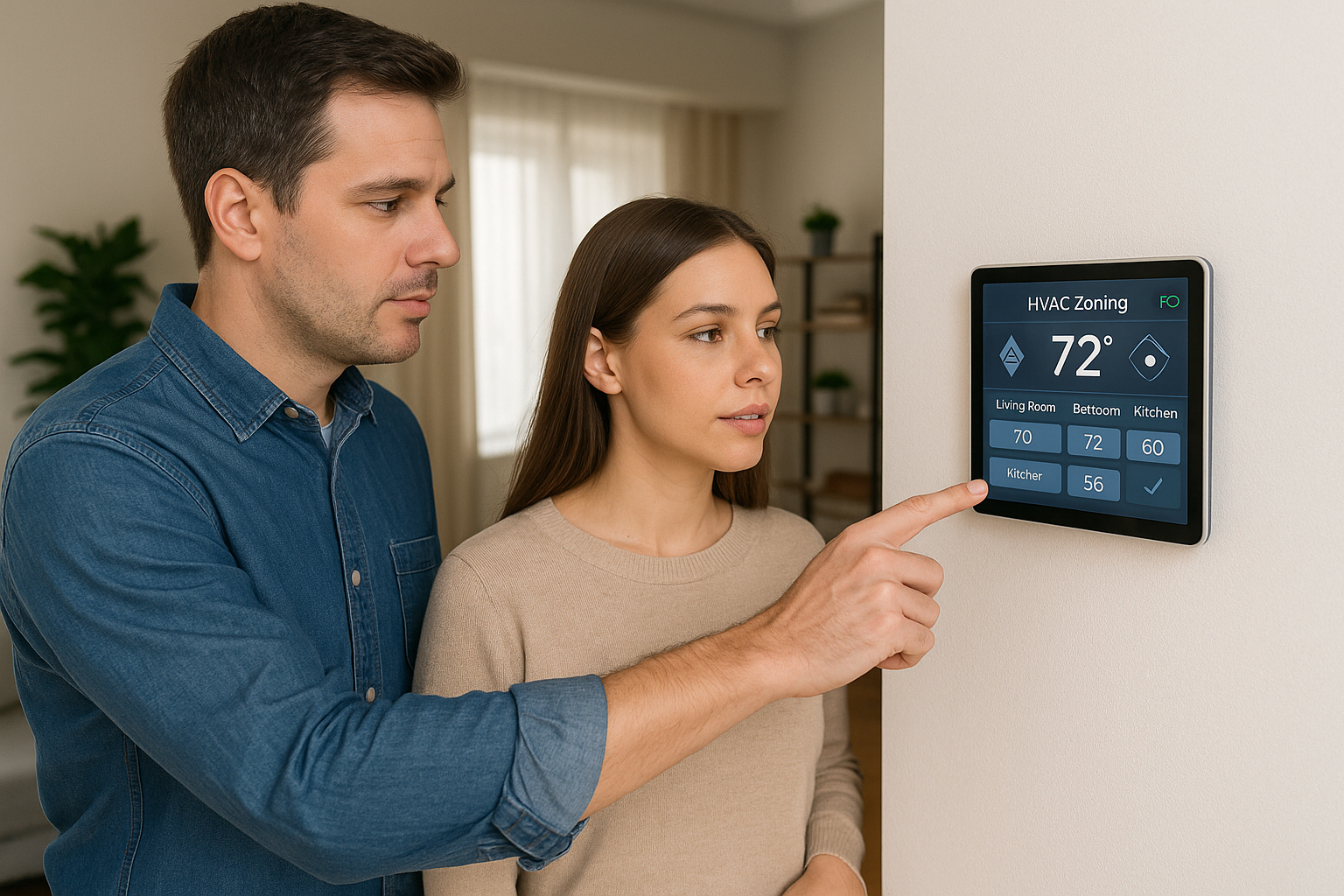
- Smart controls and peak management: install and program a smart thermostat, set scheduled setbacks, pre-cool before peak utility hours, and enroll in demand-response where available.
- Match to your climate: hot and humid areas should prioritize dehumidification and longer, lower-speed runs. Hot and dry areas should target high-temperature EER and consider whole-house evaporative coolers. Mixed climates often benefit from high-efficiency heat pumps that balance heating and cooling.
- Maintenance matters: replace or clean filters regularly, keep the outdoor unit clear of debris and vegetation, and schedule professional tune-ups to preserve efficiency.
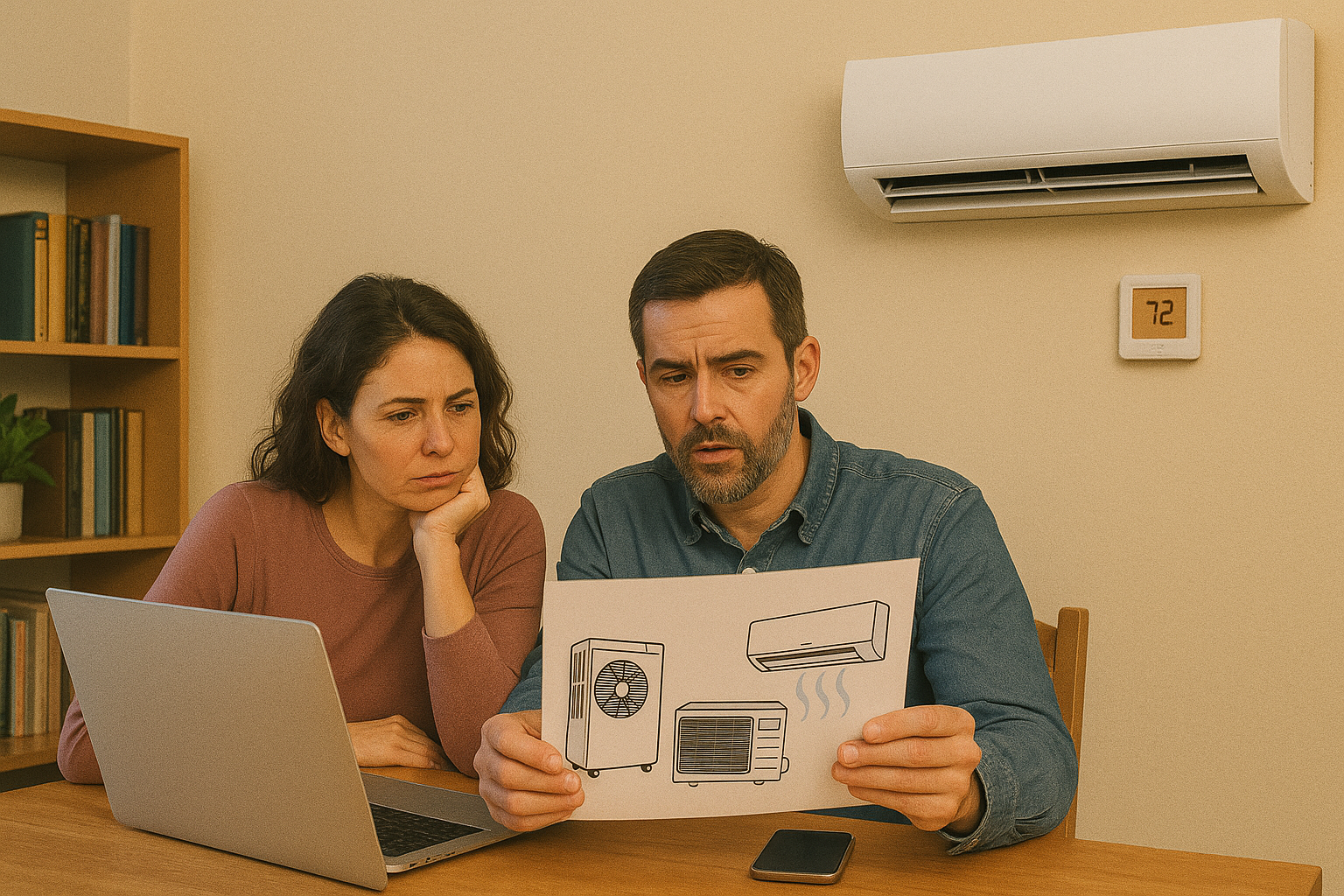
- Compare proposals and monitor: ask for model numbers and SEER2 ratings from contractors, compare life-cycle cost instead of price alone, and verify results with utility bills or an energy monitor.
Common Myths and Mistakes That Raise Cooling Bills
After decades installing and servicing systems, these myths raise bills:
- Closing vents saves energy. Reality: it raises duct pressure and leakage.
- Filters only affect air. Reality: dirty filters choke airflow and spike usage.
- Maintenance is optional. Reality: skipped tune-ups cut efficiency and boost failures.
- Turn it fully off when away. Reality: frequent cycling erodes savings and comfort.
- Bigger AC is better. Reality: oversizing short-cycles and hurts dehumidification.
- Add refrigerant annually. Reality: low charge means a leak, repair first.
- Higher SEER guarantees big savings. Reality: climate, runtime and install quality decide.
- Single-stage is most efficient. Reality: inverter systems usually use less energy.
- Thermostat location is irrelevant. Reality: bad placement triggers needless cycling.
- Lower setpoint cools faster. Reality: it only runs longer and costs more.
Grid Impacts and Forecasting Cooling Demand: Peaks, Capacity and Flexibility
As AC use climbs, afternoon and early evening demand surges like traffic at rush hour. To keep reliability, utilities must carry extra generation, transmission, and distribution capacity that may sit idle most days, which pushes up prices during heat events. Forecasting those peaks is tricky. Future cooling demand under climate change hinges on AC penetration, evolving efficiency standards, consumer comfort habits, the rollout of flexible resources, and the pace of grid decarbonization. In practice, a few hotter hours or a small shift in thermostat settings can move planning margins noticeably.
- Storage: batteries and thermal storage shift cooling from late afternoon to earlier periods, shaving the peak.
- Demand-response cooling: smart thermostats, pre-cooling, and brief compressor cycling trim load with minimal comfort impact.
- Time-of-use and critical peak pricing: price signals steer usage away from stressed hours.
- Smarter controls and interoperability: coordinated setpoints and staging reduce simultaneous starts on feeders.
- Flexible generation and renewables paired with storage: fast, dispatchable capacity to backstop extreme spikes.
Recommendations and Next Steps: How to Meet Rising Cooling Needs Efficiently
To keep up with rising cooling demand, combine higher-efficiency equipment (higher SEER2 and EER2 with variable-speed compressors), tighter building envelopes, and smarter controls, supported by strong standards and utility programs. Per-unit gains of 20 to 40 percent can be erased by more AC ownership and runtime unless enforcement, incentives, and retrofit funding scale. Whether you are replacing one system or planning multiple properties, your choices now shape comfort, lifetime cost, and grid impact. Our team has 30+ years in HVAC and has fulfilled over 200,000 orders, so we can spec high-SEER2 options, align with rebates and time-of-use rates, and make sure the system you buy performs in the real world.
- Get a Custom Quote: Right-size SEER2/EER2 equipment, confirm rebates, and access wholesale pricing with free shipping on many systems and financing through Affirm.
- Talk to Our Team: Call our U.S.-based technical sales for sizing, ductwork, and control guidance, no pressure, just straight answers.
- Shop High-SEER2 Air Conditioners & Heat Pumps: Compare variable-speed and inverter systems ready for demand-response and smart thermostats.