









Our price:
$2,913.00
Sale price:
$2,225.00List price:
$3,444.00Our price:
$2,913.00
List price:
$3,981.00Our price:
$2,950.00
Our price:
$3,644.00Sale price:
$3,020.00List price:
$4,053.00Our price:
$3,644.00
Our price:
$3,772.00Sale price:
$3,115.00List price:
$4,177.00Our price:
$3,772.00
List price:
$4,728.00Our price:
$3,650.00
List price:
$5,036.00Our price:
$4,020.00
List price:
$5,283.00Our price:
$4,235.00


The Complete Guide to Buying Cooling Equipment Online
How to choose the right air conditioner, heat pump, or cooling system for your home or commercial project
Choosing the right cooling equipment affects your comfort, energy bills, and system longevity for the next 15–20 years. Whether you are replacing a failed condenser, installing a complete split system for new construction, or upgrading a hotel property with PTAC units, understanding the differences between system types, efficiency ratings, and refrigerant options ensures you buy the right air conditioner the first time and avoid costly sizing mistakes.
Split Systems vs. Package Units: Which Is Right for Your Building?
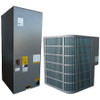
A split system air conditioner separates the components into an outdoor condenser and an indoor air handler or furnace, connected by refrigerant lines. This is the most common residential configuration and offers the widest range of efficiency options, typically from 14 to 20+ SEER2. Split systems are ideal for site-built homes with mechanical closets, attics, or basements where indoor equipment can be installed and connected to existing ductwork.
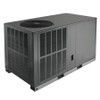
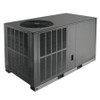
An AC package unit combines the condenser, compressor, and air handler in a single outdoor cabinet. Package systems connect directly to ductwork through the wall or roof, eliminating the need for indoor equipment space. They are the standard choice for manufactured homes, mobile homes, slab-on-grade construction, and commercial rooftop applications. While package units generally carry slightly lower SEER2 ratings than top-tier split systems, their simplified installation and lower labor costs make them an extremely cost-effective solution.
Ductless Mini Splits: Zoned Cooling Without Ductwork
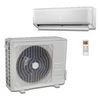
Ductless mini split systems deliver heating and cooling to individual rooms or zones through compact wall-mounted, ceiling-mounted, or concealed duct indoor units. Each indoor unit connects to an outdoor compressor via a small conduit — typically 3 inches in diameter — carrying refrigerant lines and a condensate drain. Single-zone systems pair one indoor unit with one outdoor unit. Multi-zone systems connect multiple indoor units (up to 5 or more) to a single outdoor compressor, providing independent temperature control for each space.
Mini splits are especially popular for room additions, converted garages, older homes without ductwork, sunrooms, and commercial spaces like server rooms and retail shops where precise zone control is required. Modern inverter-driven mini splits achieve SEER2 ratings above 20, making them among the most energy-efficient cooling systems available. Not sure if a mini split is right for your project? Read our guide: What Is a Mini Split and How Does It Work?
PTAC Units: Single-Room Cooling for Hotels, Apartments & Healthcare Facilities
Packaged Terminal Air Conditioners (PTACs) are self-contained, through-the-wall units that provide individual room heating and cooling without ductwork. Installed in a standard 42" wall sleeve, PTACs are the industry standard for hotels, motels, assisted living facilities, dormitories, and apartment buildings. They offer per-room temperature control, straightforward installation, and easy chassis replacement. PTAC units range from 7,000 to 15,000 BTU and are available in cooling-only with electric heat or heat pump configurations suited to milder climates. For a full breakdown of how these units work and where they perform best, see our complete PTAC guide.
Bard Wall-Mount Units: Through-the-Wall Cooling for Specialized Applications
Bard Manufacturing produces self-contained, through-the-wall HVAC units engineered for applications where conventional split systems or package units are impractical. Bard wall-mount units are widely used in telecom shelters, modular buildings, portable classrooms, guard shacks, and small commercial spaces requiring reliable, unattended climate control. Unlike PTACs, Bard units are available in higher capacities — from 1.5 to 5 tons — designed for 24/7 operation in harsh environments. They are manufactured in the USA and supported by an extensive dealer and parts network.
| System Type | Best For | Capacity Range | Ductwork Required? |
|---|---|---|---|
| AC Split System | Site-built homes, new construction | 1.5–5+ Tons | Yes |
| AC Package Unit | Manufactured homes, rooftops, slabs | 2–5 Tons | Yes (wall/roof) |
| PTAC Air Conditioner | Hotels, apartments, healthcare | 7,000–15,000 BTU | No (42" sleeve) |
| Ductless Mini Split | Additions, older homes, zone control | 9,000–48,000 BTU | No |
| Bard Wall-Mount AC | Telecom, modular, small commercial | 1.5–5 Tons | No (through-wall) |
| AC Condenser (Replacement) | Replacing existing outdoor unit | 1.5–5+ Tons | Existing system |
| Commercial AC System | Offices, retail, warehouses | 3–25 Tons | Yes |
| Commercial Refrigeration | Food service, cold storage | Varies | N/A |
Understanding SEER2 Ratings and Air Conditioner Efficiency
SEER2 (Seasonal Energy Efficiency Ratio 2) replaced the original SEER metric in January 2023 under updated U.S. Department of Energy testing standards. The updated test procedure applies higher external static pressure to better simulate real-world duct conditions, so SEER2 numbers are slightly lower than the equivalent SEER rating for the same equipment. A system previously rated at 16 SEER, for example, may carry a 15.2 SEER2 rating under the new standard. Higher SEER2 numbers still indicate greater efficiency, and the federal minimum for new residential equipment is 14 SEER2 in the Southeast and Southwest regions.
For homeowners in warm climates with extended cooling seasons — including Florida, Texas, Arizona, and the Gulf Coast — investing in equipment rated 16 SEER2 or higher typically recovers the additional upfront cost within 3–5 years through lower monthly utility bills. Variable-speed and inverter-driven systems deliver the highest SEER2 ratings (18–20+) while providing quieter operation and superior humidity control. For a full breakdown of current efficiency standards, refrigerant rules, and available tax credits, see our 2026 Air Conditioner Buying Guide.
Refrigerant Types: R-410A, R-32, and R-454B Explained
The HVAC industry is actively transitioning from R-410A to lower global warming potential (GWP) refrigerants. R-32 and R-454B are the two primary replacements being adopted across residential and light commercial product lines. R-32 has a GWP of 675, approximately 68% lower than R-410A's GWP of 2,088. R-454B has a GWP of 466, roughly 78% lower. Both are classified A2L (mildly flammable), requiring updated installation practices and compliance with current local building codes. Goodman, Rheem, Bosch, Daikin, and other major brands have released complete R-32 and R-454B product lines across their split systems, package units, and ductless mini splits. R-410A equipment remains available and fully serviceable, but new installations are increasingly shifting to these next-generation refrigerants.
How to Size a Cooling System Correctly
Correct system sizing determines long-term performance, energy efficiency, and equipment lifespan. An oversized air conditioner short-cycles, wastes energy, and leaves indoor humidity uncomfortably high. An undersized system runs continuously without reaching the set temperature. The industry standard is a Manual J load calculation, which accounts for square footage, ceiling height, insulation values, window area and orientation, occupant count, and local design temperatures. Skipping this step is the most common — and most costly — mistake buyers make when purchasing cooling equipment online. You may also qualify for rebates and tax credits on qualifying high-efficiency equipment — visit our Rebate Center to explore available offers before you order.
Cooling Equipment FAQ
Answers to the most common questions about buying air conditioners, heat pumps, and cooling systems online.
-
What is the difference between a split system and a package unit?
A split system separates the condenser (outdoor) and air handler (indoor) into two units connected by refrigerant lines, and requires ductwork inside the building. A package unit combines both components into a single outdoor cabinet that connects directly to ductwork through the wall or roof. Split systems offer more efficiency options (up to 20+ SEER2), while package units eliminate the need for indoor equipment space and are standard for manufactured homes and commercial rooftops.
-
What size air conditioner do I need for my home?
A general starting point is 1 ton of cooling capacity per 500–600 square feet in moderate climates. For hot, humid regions like Florida or Texas, you may need 1 ton per 400–500 square feet. These are rough guidelines only. For accurate sizing, a Manual J load calculation is recommended. Our technical team provides free sizing assistance at (813) 885-7999.
-
What is SEER2 and what rating should I look for?
SEER2 is the updated federal standard for measuring cooling efficiency, adopted in 2023. Higher numbers mean lower operating costs. The federal minimum is 14 SEER2 for the Southeast and Southwest. For warm climates with long cooling seasons, 16 SEER2 or higher is recommended for meaningful energy savings. Variable-speed inverter systems can reach 18–20+ SEER2.
-
Should I choose R-410A, R-32, or R-454B refrigerant?
For system replacements where you are keeping the existing refrigerant infrastructure, R-410A equipment remains available and fully supported. For new installations and complete system replacements, R-32 and R-454B are the recommended path forward, offering lower environmental impact (68–78% lower GWP) with equal or improved performance. Both require installation per current A2L refrigerant handling codes. Our team can advise on the best choice for your specific project.
-
Can I buy a condenser only if my indoor unit still works?
Yes. We sell standalone condensers (outdoor units) separately. The condenser must be matched with a compatible indoor air handler or evaporator coil to form an AHRI-rated system. Mismatched components can void warranties and reduce efficiency. Call us with your existing indoor unit model number and we can recommend compatible condensers.
-
What is a PTAC unit and where is it used?
A PTAC (Packaged Terminal Air Conditioner) is a self-contained, through-the-wall unit that provides heating and cooling for a single room. They install in a standard 42" wall sleeve and range from 7,000 to 15,000 BTU. PTACs are the industry standard for hotels, motels, assisted living facilities, dormitories, and apartment buildings. They offer individual room temperature control, quiet operation, and easy chassis swap-out for maintenance.
-
What makes Bard wall-mount units different from a standard PTAC?
Bard wall-mount units are heavier-duty, higher-capacity through-the-wall systems designed for commercial and industrial applications. Unlike PTACs (which typically max out at 15K BTU and target hospitality), Bard units are available up to 5 tons and engineered for 24/7 unattended operation in environments like telecom shelters, modular buildings, and equipment enclosures. They are manufactured in the USA and meet more demanding performance and durability standards.
-
Do you sell commercial cooling equipment?
Yes. We carry commercial split systems, commercial package units, and commercial condensers for offices, retail, restaurants, warehouses, and multi-unit properties. Commercial equipment is available in 3-phase power configurations and higher tonnages than residential systems. Contact our sales team for commercial project quotes, especially for multi-unit or large-tonnage orders where volume pricing applies.
-
How fast does cooling equipment ship?
Most in-stock residential cooling equipment ships same-day or next business day from our Tampa, FL headquarters. Standard delivery takes 1–5 business days depending on your location. Florida and Southeast customers typically receive orders in 1–3 days. Commercial equipment and oversized orders may require freight shipping with slightly longer transit times. In-store pickup is available at our Tampa warehouse (6217 Anderson Rd., Tampa, FL 33634).
-
Do all cooling systems include a manufacturer warranty?
Yes. Every air conditioner, heat pump, mini split, PTAC, and commercial system we sell ships with the full manufacturer warranty. Warranty coverage typically includes parts for 5–10 years and compressor coverage up to 10 years, depending on brand and product line. Some manufacturers offer extended warranty terms when the system is registered online within 60 days of installation. We provide warranty registration details with every order.
Recent posts
All Articles
Why Many US Households Don't Have Air Conditioning - Causes
Why Many U.S. Households Don't Have Air Conditioning: a quick snapshot Air conditioning is not univ ...
Protect Your HVAC with Surge Protectors | Budget Heating
Protect Your HVAC with Surge Protectors: Why It Matters We view HVAC-specific surge protection as e ...
Should You Turn Off Your AC If It's Not Cooling? Quick Guide For 2026
AC Running but Not Cooling? What to Know First AC running but the house still feels warm? We see th ...
Window Upgrades to Enhance Home Energy Efficiency | Guide For 2026
Window Upgrades to Enhance Home Energy Efficiency: What to Expect Window upgrades matter because th ...
Sign up to receive exclusive deals, news, and more!
