





 learning center
 money saving tips
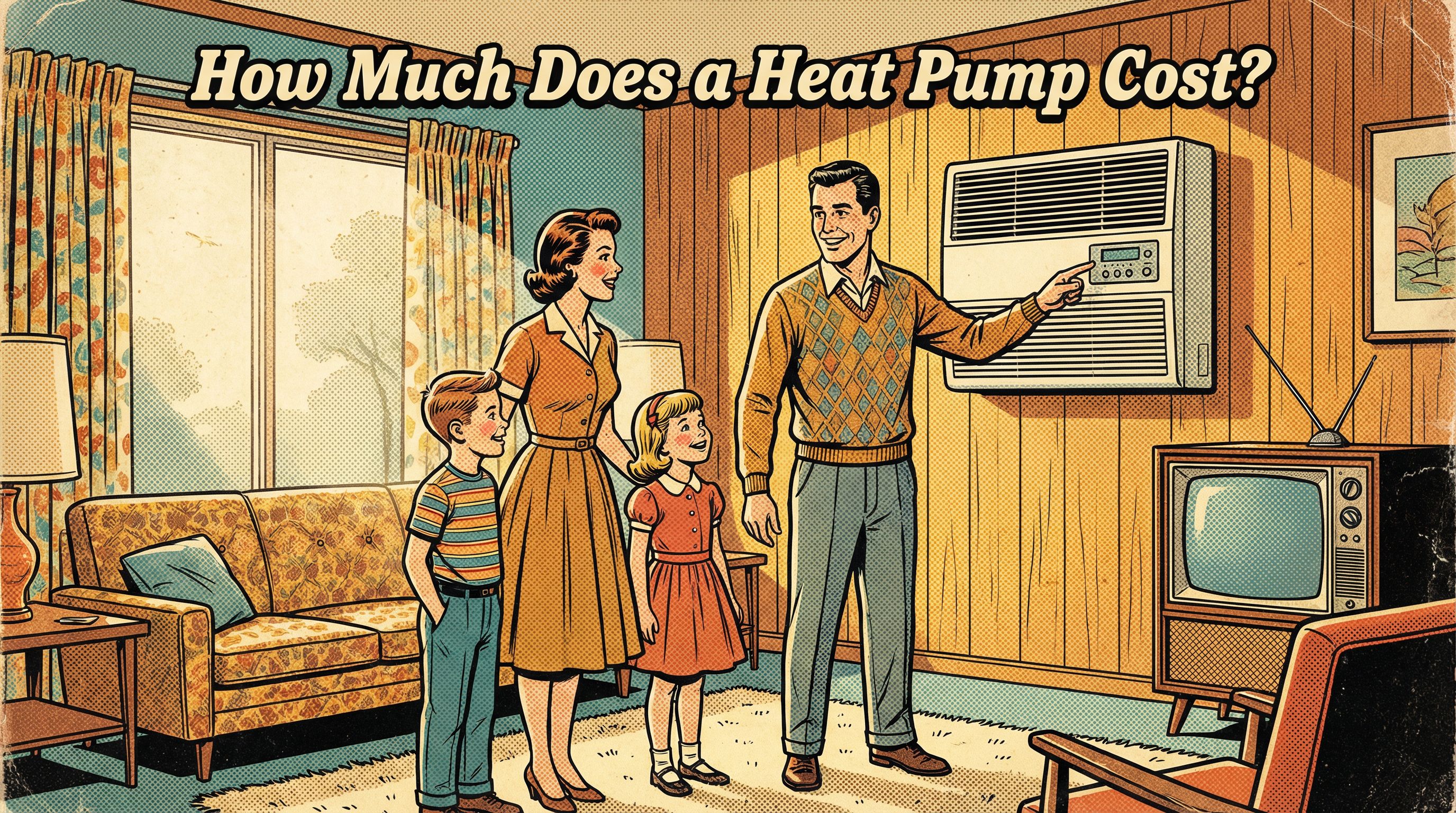
How Much Does a Heat Pump Cost? A Quick, Realistic Answer
There is no single price for a heat pump. Total cost depends on the type of system, the size needed for the home, the efficiency rating, local climate, and how complex the installation is. A straightforward replacement in a mild climate can land very differently from a new install that requires electrical upgrades, duct modifications, or multiple indoor zones. The better way to think about it is cost versus value: what you pay up front versus the comfort, efficiency, and flexibility you get year after year.
A heat pump is a single system that both heats and cools. It works like a two-way refrigerator, using refrigerant and a compressor to move heat from one place to another. In summer it moves heat out of the house, in winter it gathers heat from outdoors and brings it inside. That is heat transfer, not heat generation. Because it relocates existing heat rather than burning fuel or pushing current through resistance coils, it can deliver more heating and cooling per unit of energy. Expect improved comfort, better humidity control, zoning options, and a lower carbon footprint compared with combustion or resistance heat.
Average Installed Price Ranges: Ductless, Air-Source, and Geothermal
With 30+ years in HVAC and over 200,000 fulfilled orders, we consistently see installed prices fall into the ranges below. Use these as realistic budget anchors, then adjust up or down based on scope, efficiency level, and site conditions.
- Ductless mini-split, single zone: typically $1,500 to $5,000 installed for one room or area. Multi-zone systems scale with each added indoor head, and a full-home ductless layout can surpass the cost of a ducted system once many heads are required.
- Central or whole-house air-source heat pump: commonly $8,000 to $15,000 installed. Premium equipment, larger homes, or complex duct or electrical work can push totals past $20,000.
- Ground-source geothermal: typically $10,000 to $25,000+ installed. Soil conditions, loop type, and drilling length can move costs higher.
Capacity example: a straightforward 3-ton heat pump installation often runs about $3,900 to $6,200 including labor. In real-world projects, many contractor-cited jobs land between $4,500 and $10,000, depending on home size, efficiency targets, and how much ancillary work is included.
Across a wide set of homeowner installs, a common installed price clusters near $6,000, with a frequent working band of $4,000 to $8,000 and extremes from roughly $1,500 to $12,000+. Think of multi-zone ductless like adding branches to a tree, each added head brings line sets, brackets, controls, and labor, which is why totals climb as zones multiply. Final pricing reflects factors such as duct condition, refrigerant line length, electrical panel capacity, condensate routing, and access.
Full Cost Breakdown: Equipment, Labor, Ductwork, and Extras
Installed price is two buckets: equipment and labor. Many folks budget for the box, but labor and design can be just as large. Labor covers placement of indoor and outdoor units, line set runs, condensate handling, roof or wall penetrations, and any crane or tight access time. In our experience at Budget Heating (BudgetHeating.com), that scope often rivals the equipment line.
Equipment step ups matter too. Mid or high efficiency models and variable speed compressors typically add hundreds to a few thousand. Ductwork is the wild card. Adding new ducts, major changes, sealing, or resizing can add thousands and may even drive a different system selection.
- Electrical upgrades: panel work, new 240V circuits, disconnects, control wiring, surge protection.
- Controls and extras: smart thermostats, pads or stands, snow guards, condensate and drain routing.
Running Costs & Energy Use: SEER/HSPF Explained (Includes kWh Examples and a 3 Ton Case)
SEER and SEER2 rate seasonal cooling efficiency, HSPF and HSPF2 rate seasonal heating. SEER2 and HSPF2 are the 2023 U.S. test updates, so the numbers can read slightly lower than older labels for the same unit. ENERGY STAR units are often around 15.2 SEER2 and 7.8 HSPF2, while top residential models reach about 24 SEER2 and 11 HSPF2.
Think of SEER like miles per gallon for cooling: higher rating, fewer kilowatt hours for the same comfort. A useful rule of thumb is about 7 dollars per SEER point per month in cooling savings. Going 13 to 16 SEER is roughly 21 dollars per month, about 252 per year. Jumping 13 to 24 SEER can be about 77 dollars per month, around 924 per year, depending on climate and use.
3 ton case, average use: a minimum efficiency system may consume about 11,300 kWh per year (roughly 1,200 to 1,300 dollars). A top efficiency unit can drop that to about 7,000 to 7,700 kWh (roughly 770 to 850 dollars). That gap can yield multi thousand dollar lifetime savings.
In heating, replacing electric resistance or very low efficiency gear with a heat pump often cuts energy cost 40 to 50 percent. Typical annual bill savings are around 300 to 650 dollars, and can exceed 1,000. Variable speed or two stage compressors run longer at low output, reducing starts and improving humidity control, which boosts real world efficiency. In our experience at Budget Heating (BudgetHeating.com), these gains show up on real bills, not just spec sheets.
How to Get an Accurate Quote: Questions to Ask and What to Provide
To compare proposals fairly, line up the same scope, sizing, and assumptions across all bids. Use this checklist:
- Insist on Manual J and Manual S. Provide details the contractor needs: room by room dimensions, insulation levels, window types and orientation, typical occupancy and thermostat setpoints. Skip rule of thumb sizing, it often overshoots and hurts comfort.
- Request at least three itemized quotes that separate equipment, labor, ductwork, electrical work, permits, accessories, and haul away. Ask for good, better, best efficiency options.
- Ask for multiple efficiency tiers with a rough payback estimate for each so you can weigh initial price against operating cost.
- Confirm who handles permits, inspections, incentive paperwork, and final sign offs. Verify licensing and local heat pump experience.
- Compare warranties and service: manufacturer and labor terms, registration steps, recommended maintenance, and who provides emergency support.
How to compare: match the Manual J results and selected capacity, ensure scopes are identical, and review payback and warranty apples to apples before deciding.
Factors That Drive Price: Size, Efficiency, Climate and Regional Rules (and When a Heat Pump May Not Be Best)
We see installed costs vary widely by market, with a typical whole house project around $10,000 in warmer regions and about $25,000 in some colder, higher cost areas. The number on the box is not the full job.
- Home size and load, plus ductwork condition or redesign needs
- Efficiency level, SEER and HSPF are like miles per gallon, higher ratings usually cost more up front
- System type, ducted vs ductless vs geothermal
- Electrical work, new circuits or panel upgrades
- Local labor rates and material availability
Cold climates often require cold climate rated equipment, larger capacity, or backup heat, which adds cost and complexity. Recent rules also matter. The 2023 change to SEER2 and HSPF2 altered ratings and raised baseline prices, and refrigerant transitions have pushed many units up roughly $350 to $1,500. Common myths to skip: there is no single national price, ductless is not always cheapest at whole house scale, federal credits have caps, and SEER alone does not tell the whole story. Geothermal is a different calculus, very high upfront cost, much lower operating costs and long life, best when you plan to stay long term and site conditions allow.
When a heat pump may not be best:
- Very cold regions with inexpensive natural gas. Better fit: dual fuel heat pump with a gas furnace or a high efficiency furnace alone.
- Limited electric capacity where panel upgrades are costly. Better fit: gas or propane furnace paired with a standard AC.
- Short ownership horizon or sites unsuited to drilling. Better fit: avoid geothermal, or choose mid tier equipment with lower upfront cost.
Repair, Replacement and Maintenance Costs: Life Expectancy and Typical Service Prices
Air-source heat pumps typically last 15-20 years, geothermal systems 20-30 plus with a sound loop field and proper care. Routine maintenance such as annual tune-ups, filter changes, and inspections usually runs $100-$300 per year and helps preserve efficiency. In our experience, spending on maintenance is the cheaper path compared with a neglected unit that faces a premature compressor or control failure.
Repair and replacement costs vary widely by failure and system. Major components or full system swaps can be substantial, so review contractor estimates and confirm warranty terms. Follow the manufacturer and installer maintenance schedule to protect both performance and coverage.
Incentives, Rebates, and Tax Credits That Cut Upfront Cost
We see heat pump incentives cut upfront cost before the first kilowatt hour is saved. Qualifying systems may receive a federal tax credit of 30% of project cost, capped at $2,000, for eligible equipment and installation. Verify current rules and caps. States and utilities add rebates from a few hundred to several thousand dollars, often for ENERGY STAR or cold-climate models and replacements of electric resistance, oil, or propane heat. Stacking these benefits lowers out-of-pocket cost and shortens payback.
- Verify eligibility early, including model ratings and scope of work.
- Confirm the installer will handle paperwork and check caps, funding, and deadlines before you sign.
Heat Pump vs Furnace + AC: Which Costs Less Over Time?
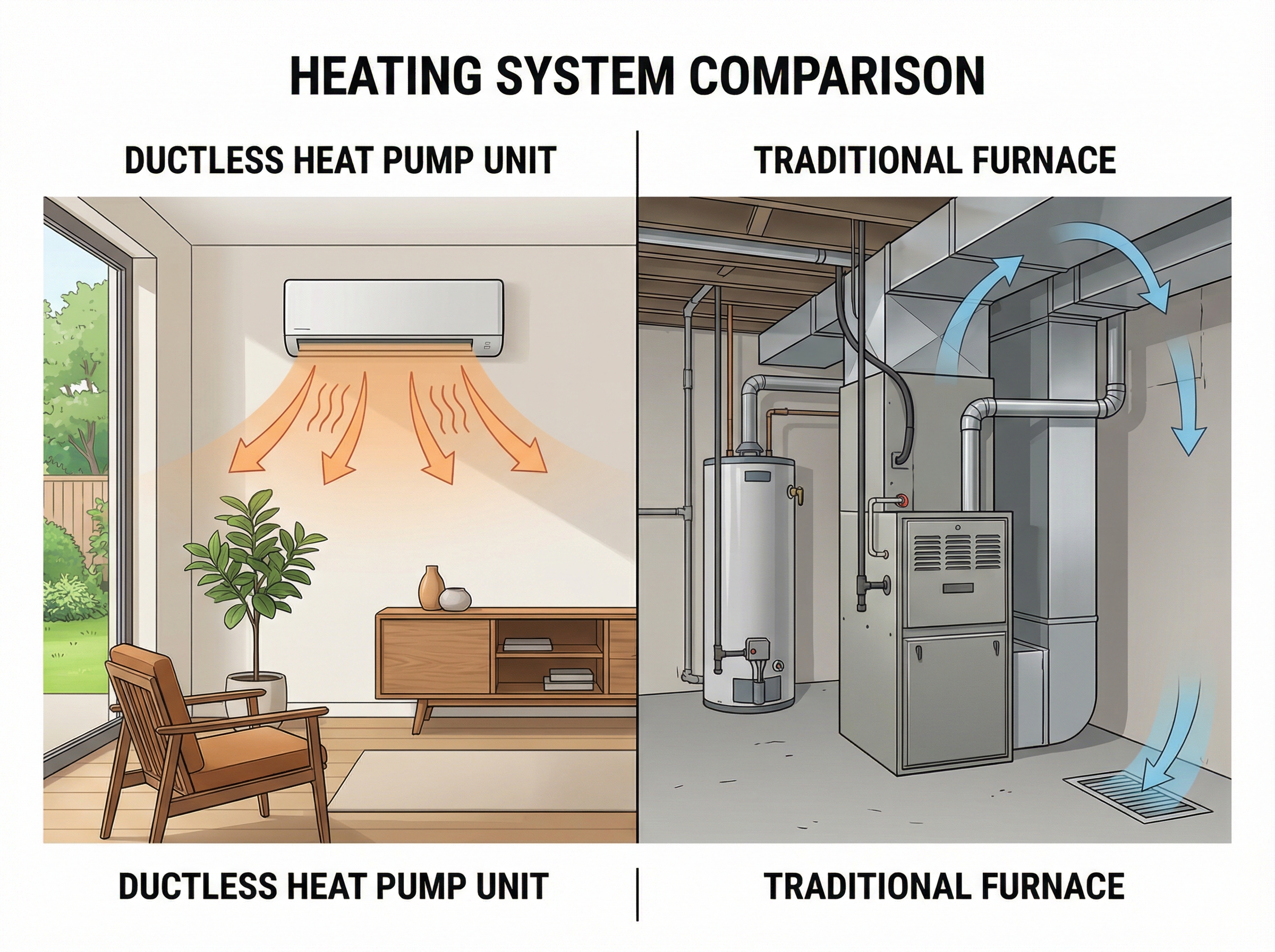
In our experience, a single heat pump often wins on total cost when it replaces electric baseboards, oil heat, or very old equipment, and for owners planning to stay long term. Ductless options avoid major ductwork, trimming costs. One system means fewer components to maintain and simpler service compared with separate furnace plus AC. In very cold or specialized applications, consider a hybrid heat pump with backup heat or a high capacity furnace, matched to climate and usage.
Is a Heat Pump Worth It? Payback, Next Steps and a Practical Checklist
Bottom line: a properly sized heat pump often pays you back. We routinely see utility savings of about 300 to 650 dollars per year, and when replacing old electric resistance, oil, or propane heat, savings can top 1,000 per year. Sample math: if your net upgrade cost after incentives is 3,500 and you save 500 per year, simple payback is roughly seven years, with 15 to 20 years of service life left to keep saving. Add lower maintenance and you offset a meaningful slice of the upfront investment.
- Get two to three local quotes that include Manual J load sizing and a duct assessment.
- Verify current federal, state, and utility incentives and what documentation is required.
- Factor electrical needs, like panel or circuit upgrades, plus any duct sealing or right sizing.
- Include basic weatherization, air sealing and insulation to right size the system and reduce costs.
Choosing HVAC is a big decision, and your numbers should fit your home, not a template. Our team has 30+ years in HVAC and we make the math clear before you buy, with U.S.-based phone support and factory-authorized gear.
- Get a Custom Quote
- Talk to Our Team by phone for sizing and payback guidance
- Shop Heat Pumps at wholesale pricing with free shipping options
- Ask about financing with Affirm
 Cooling
 Heating
 Product and Brands Insights
 Buying Guides
 State by State
 HVAC Systems