




Variable-Speed Furnaces: A Quick Overview
A variable-speed furnace is the label for a furnace that can vary its indoor blower speed instead of running at one fixed pace. Think of it like a dimmer switch for airflow, ramping up and down to match what the home needs. The quick payoff is comfort: quieter starts, steadier room temperatures, and smoother air mixing from room to room. You also tend to get better filtration and more consistent humidity control when the system can cruise at lower speeds. In our field experience, what homeowners notice first is how even the house feels, then the softer sound profile. Expect gentler airflow, longer low-speed cycles, and fewer hot or cold swings during changing weather. This overview frames the basics so you know what the term means, what it tries to solve, and what to listen for when comparing models, without diving into specs or brand claims.
What Is a Variable Speed Furnace and How Is It Different?
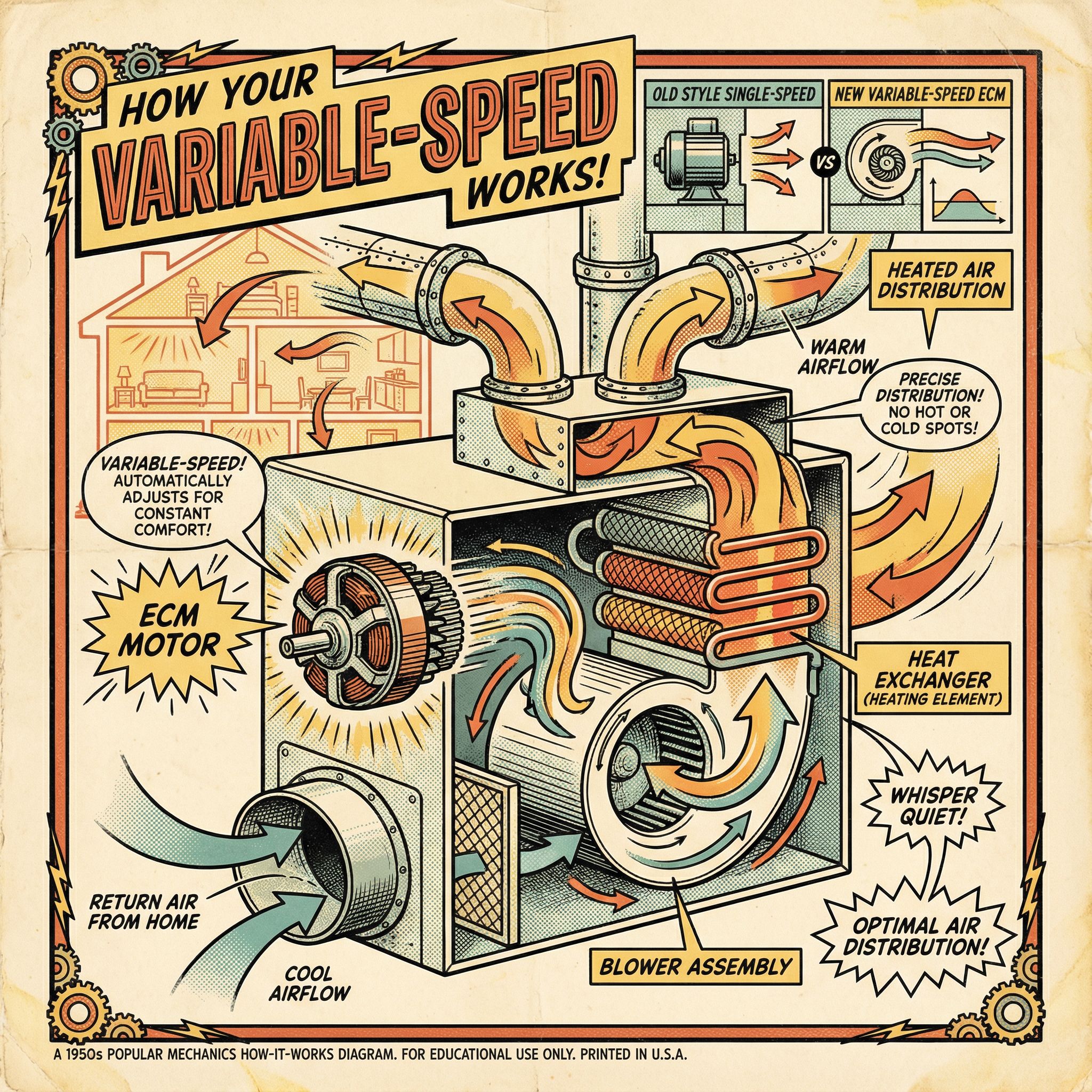
A variable-speed furnace is a gas furnace that uses an electronically commutated motor (ECM) on the blower to precisely ramp airflow up or down to match real-time heating needs. Instead of the loud, full-blast starts and abrupt stops of a single-speed unit, it runs longer at lower speeds to keep temperatures steadier from room to room. Think of it like a fan on a dimmer: gentle adjustments deliver just enough air. The results are noticeable in everyday comfort, fewer hot and cold swings, quieter operation, and better circulation that helps filtration and humidity control. Because it avoids wasteful on and off cycling, it can lower energy bills and reduce mechanical stress, which supports a longer service life. Pairing the furnace with a smart or programmable thermostat can enhance those benefits.
How a Variable Speed Furnace Works: The ECM Motor, Blower and Airflow Controls
A variable speed furnace uses an ECM blower motor that adjusts RPM to deliver a target airflow as duct pressure changes. Think of it like a dimmer switch for airflow. Instead of blasting on and off, it ramps up and down, running longer at lower speeds to keep the indoor coil in its sweet spot for temperature and moisture removal. ECMs also draw less wattage than standard PSC motors, so the blower itself uses less electricity.
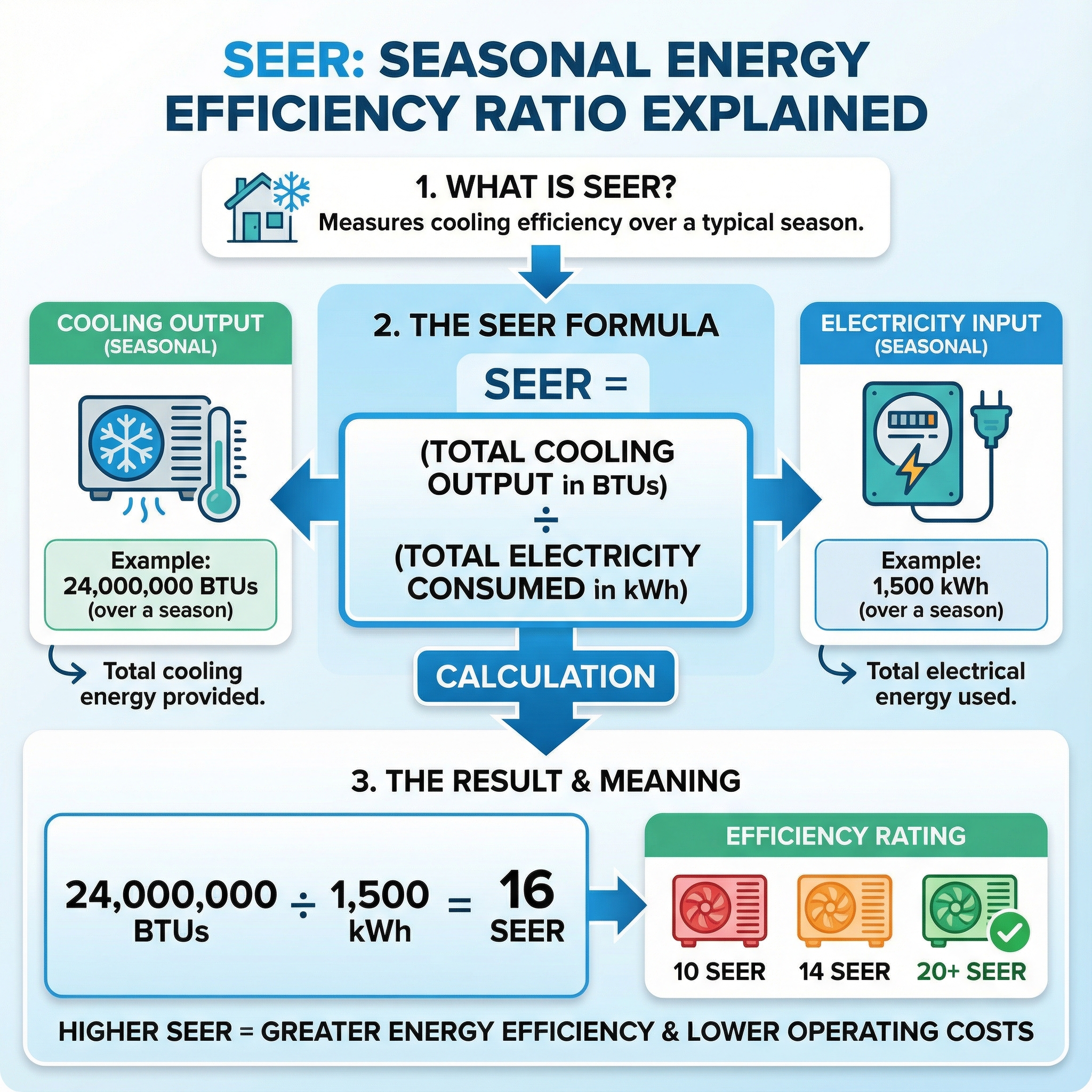
SEER and SEER2 rate the cooling system that shares this blower, not the furnace. SEER2 is the newer test using higher external static pressure, so numbers look lower for the same performance. With proper matching, variable speed setups commonly start around 15.2 SEER2 and can reach 18 to 20 plus. Running longer on low can improve real world performance by about 15 to 25 percent versus single stage. A 15.2 SEER2 system uses about 65 percent of the energy of an old 10 SEER unit, and moving from roughly 14 SEER2 to 20 SEER2 can cut cooling energy 40 percent or more in high load climates.
Heating efficiency is AFUE. Modern variable speed furnaces are typically 90 to 98 percent AFUE, while older units are around 80 percent. The ECM does not change AFUE, but steadier low speed airflow helps extract heat evenly and reduces temperature swings, while the blower's lower watt draw often pays back in roughly 4 to 5 years.
Variable Speed vs Single Stage and Two Stage Furnaces: Key Differences and Common Myths
We often see these terms mixed up. Variable speed describes the indoor blower that adjusts airflow smoothly. Single-stage and two-stage describe the gas valve that sets heat output. Think of the blower as the transmission that selects airflow, and the burner staging as the throttle that sets flame. They are separate features, though high-end models commonly pair them.
Common myths to clear up: running longer at low speed is not wasteful, these motors use less electricity while holding steadier temperatures and they improve cooling dehumidification. Thermostat placement matters a lot: avoid drafts, direct sun, near supply registers, kitchens, or isolated rooms, or the system will short cycle and comfort will suffer. Bigger is not better, oversizing causes noise and uneven rooms, so size by a proper load calculation. And remember, AFUE rates furnaces, while SEER applies to cooling equipment.
Top Benefits: Comfort, Efficiency, Humidity Control and Quieter Operation
Think of a variable-speed furnace as a dimmer switch for comfort, not an on/off spotlight. In our experience at Budget Heating (BudgetHeating.com), the change homeowners feel is immediate: steadier temperatures, quieter starts and fewer drafts.
- More even comfort: The blower gently ramps up and down to match demand, so rooms warm steadily and hot or cold spots fade, especially in multi-story or open layouts.
- Lower energy use: It runs longer at lower speeds, often around 40 to 60 percent capacity in mild weather, cutting electrical draw. Many households see up to about 30 percent lower utility costs, especially with a smart or programmable thermostat.
- Quieter operation: Soft starts and low-speed circulation make operation nearly whisper quiet compared to older single-speed systems that roar on and off.
- Less wear, fewer repairs: Reduced on/off cycling means less stress on motors and controls, which lowers the chance of breakdowns and supports a longer service life.
- Cleaner air and better humidity control: Continuous low-speed airflow keeps air moving through filters for improved capture. With central AC, slower airflow can enhance dehumidification for a less clammy feel.
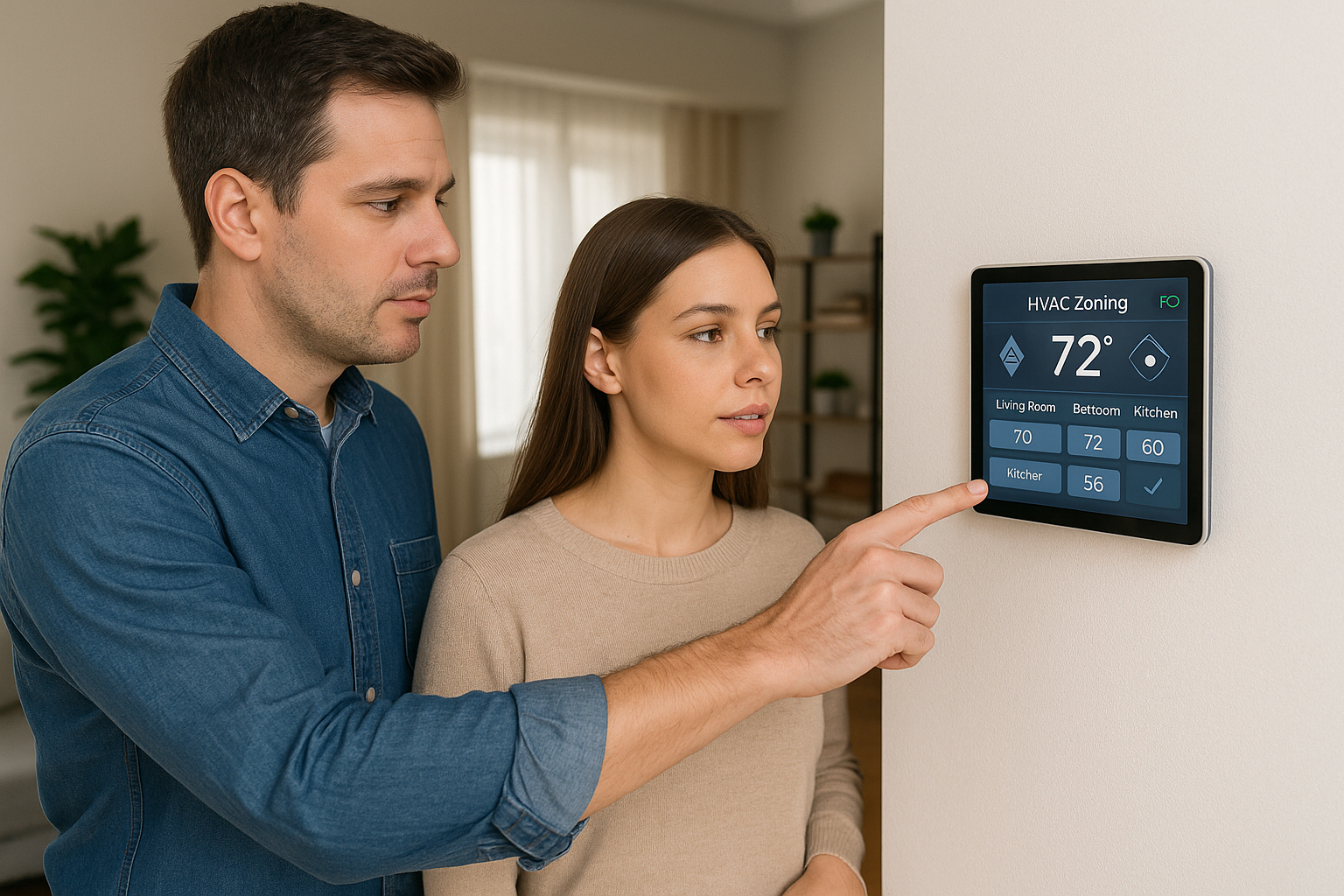
- Better customization and payback: Works well with zoning and higher-MERV filtration. Upfront cost is higher than single speed, but energy and repair savings often repay the difference in a few years, and rebates may help. Proper sizing, ductwork and thermostat setup are key to getting the full benefit.
Compatibility: Ductwork, Controls, ECM Motors and Thermostat Needs
Variable speed furnaces shine only when the system around them is designed and set up correctly. Here is how we approach compatibility so the ECM motor delivers quiet comfort and efficiency.
- Sizing and selection: Require Manual J for loads, Manual S for equipment, and Manual D to verify ducts. Avoid oversizing. Target a furnace whose low-fire output tracks typical loads while meeting design-day heat.
- Ductwork and airflow: Measure total external static pressure before quoting. Confirm returns, supplies, and grilles can carry required CFM at low and high speeds. Seal and insulate ducts. For zoning, use bypass-less designs and confirm minimum safe airflow.
- Filtration and IAQ: Use a 4-5 inch media cabinet with MERV 11-13. Check the filter's pressure drop at design airflow to protect the ECM and keep noise down.
- Controls and thermostat: Choose a thermostat that supports staging or modulation and dehumidify control, or a communicating control if the furnace requires it. Program gentle fan ramps, proper on/off delays, and optional low continuous circulation.
- Commissioning to document: Supply, return, and total static. Airflow with filter and coil pressure drops. Combustion analysis, temperature rise at low and high fire, gas valve setup, inducer and safety checks. Confirm staging or modulation and dehumidify operation.
Maintenance, Common Issues and Repair Tips for Variable Speed Furnaces
Variable-speed furnaces rely on steady airflow and clean components. Homeowner-safe care:
- Replace or clean the air filter every 1-3 months. Use the correct size and a manufacturer-appropriate MERV rating to avoid excessive restriction.
- Keep supply and return vents open and clear. Do not close multiple registers.
- Maintain 2-3 feet of clearance around the furnace. Keep flammables away.
- Observe operation: thermostat settings and batteries, new noises, frequent cycling, and LED error codes.
- Condensing models: ensure exterior PVC intake and exhaust are unobstructed, and that the condensate line is unkinked and the trap primed.
Call a licensed technician for electrical odors or trips, gas smells, soot or yellow flames, ignition lockouts, icing or refrigerant signs, loud grinding or a blower that will not start or stop, water around the unit, or any internal adjustments. Always cut power before opening the cabinet, never bypass safety switches, install CO detectors, and do not run a flooded furnace.
Professional cadence: schedule an annual pre season tune-up to verify combustion and venting, gas pressure and safeties, heat exchanger, clean blower wheel and flame sensor, confirm condensate drainage, measure duct static pressure and airflow, and set variable-speed parameters per specifications.
Cost, Energy Savings Estimates and Typical Payback for Variable Speed Furnaces
In our field experience, variable-speed furnaces and blowers cut energy use 15 to 25 percent versus single-stage. Many households report up to about 30 percent lower bills when paired with a smart thermostat and long, low-speed cycles. On the cooling side, replacing a 10 to 12 SEER unit with a matched 15.2 SEER2 variable-speed setup can trim summer electricity around 35 percent, and stepping from about 14 SEER2 to 20 SEER2 can top 40 percent in high-use climates. On the heating side, moving from 80 percent AFUE to 95 percent AFUE slashes fuel losses from about 20 percent to about 5 percent. Upfront cost is higher, but blower-related savings alone often pay back in roughly 4 to 5 years. To estimate payback, apply these percentages to your bills, total the annual savings, then divide by the price premium.
When a Variable Speed Furnace Might NOT Be the Best Choice (Tradeoffs and Alternatives)
Variable-speed furnaces shine in many homes, but there are cases where a different path fits better.
- Mild-climate homes with short heating seasons: When run-hours are modest, the comfort gain leans toward quieter operation and lower blower energy. If payback is your deciding factor, consider an all-electric heat pump with a compatible air handler that meets SEER2 and HSPF2, or a simple constant-torque ECM furnace paired with a right-sized AC.
- Areas shifting away from gas: Several California jurisdictions limit new gas appliances, and SCAQMD Rule 1111 requires low NOx furnaces. In these cases, a high-efficiency heat pump that is labeled to the SEER2 and HSPF2 standards can be the cleaner, simpler path than a new gas furnace, even a variable-speed model.
- Very cold regions with venting constraints: Condensing furnaces at 95 percent AFUE and above need PVC venting and condensate freeze protection. If routing or freeze protection is not feasible, a cold-climate heat pump or a dual-fuel setup can avoid flue and condensate issues while aligning with upcoming efficiency trends, including the 2028 federal 95 percent AFUE requirement.
In our experience, matching equipment to climate, codes, and the paired cooling system's SEER2 obligations delivers better outcomes than defaulting to variable speed every time.
Should You Choose a Variable Speed Furnace? Final Recommendations and Next Steps
Variable-speed shines when comfort, quiet, and air quality matter most. The ECM blower varies airflow smoothly, and in some models a modulating gas valve adds finer heat control. You get steadier temperatures and higher efficiency in low demand than fixed or two-stage setups, with a higher upfront cost and more complex installation.
If you value those gains and your home, ductwork, and thermostat are ready to use variable airflow, it is the right move. Our team has seen this upgrade pay off for comfort-focused homes over 30+ years, with 200,000+ orders fulfilled and factory-authorized support behind every sale.
- Choose it if you want even temps, quieter operation, and better humidity control.
- Pair with a compatible thermostat and confirmed ductwork for best results.
- Choose standard staging if immediate budget matters more than long-term comfort.
Ready to compare options and wholesale pricing, with full manufacturer warranties and U.S.-based phone support?
- Get a Custom Quote
- Talk to Our Team by phone or chat
- Shop Variable-Speed Furnaces
- Ask about free shipping and Affirm financing