




Mobile Home Electric Furnace Models: Must-Have Features
Choosing the right electric furnace for a mobile or manufactured home affects day-to-day comfort, monthly energy bills, indoor air quality, and system lifespan. We see the difference every winter: the correct model heats evenly, runs quietly, and keeps costs predictable.
An electric resistance furnace is straightforward heat. Power flows through heating elements, the elements get hot like a large toaster, and a blower moves air across them into the ductwork. With no combustion byproducts, these furnaces deliver nearly 100% point-of-use heating efficiency, and where compatible they are typically simpler to install and maintain than gas equipment.
Mobile and manufactured homes are different from site-built houses. Space is tighter, duct trunks are shallower, and airflow paths are shorter and more sensitive. That means the furnace must fit a compact cabinet, align with existing duct connections, and deliver the right airflow to avoid hot and cold spots.
Key features to focus on include:
- Correct capacity for the home and climate
- Blower strength tuned for short, shallow ducts
- Element staging for steadier temperatures
- Reliable safety controls and clear service access
- Filter location that is easy to maintain
- Duct and cabinet compatibility with manufactured-home layouts
Why Choose an Electric Furnace for Your Mobile or Manufactured Home?
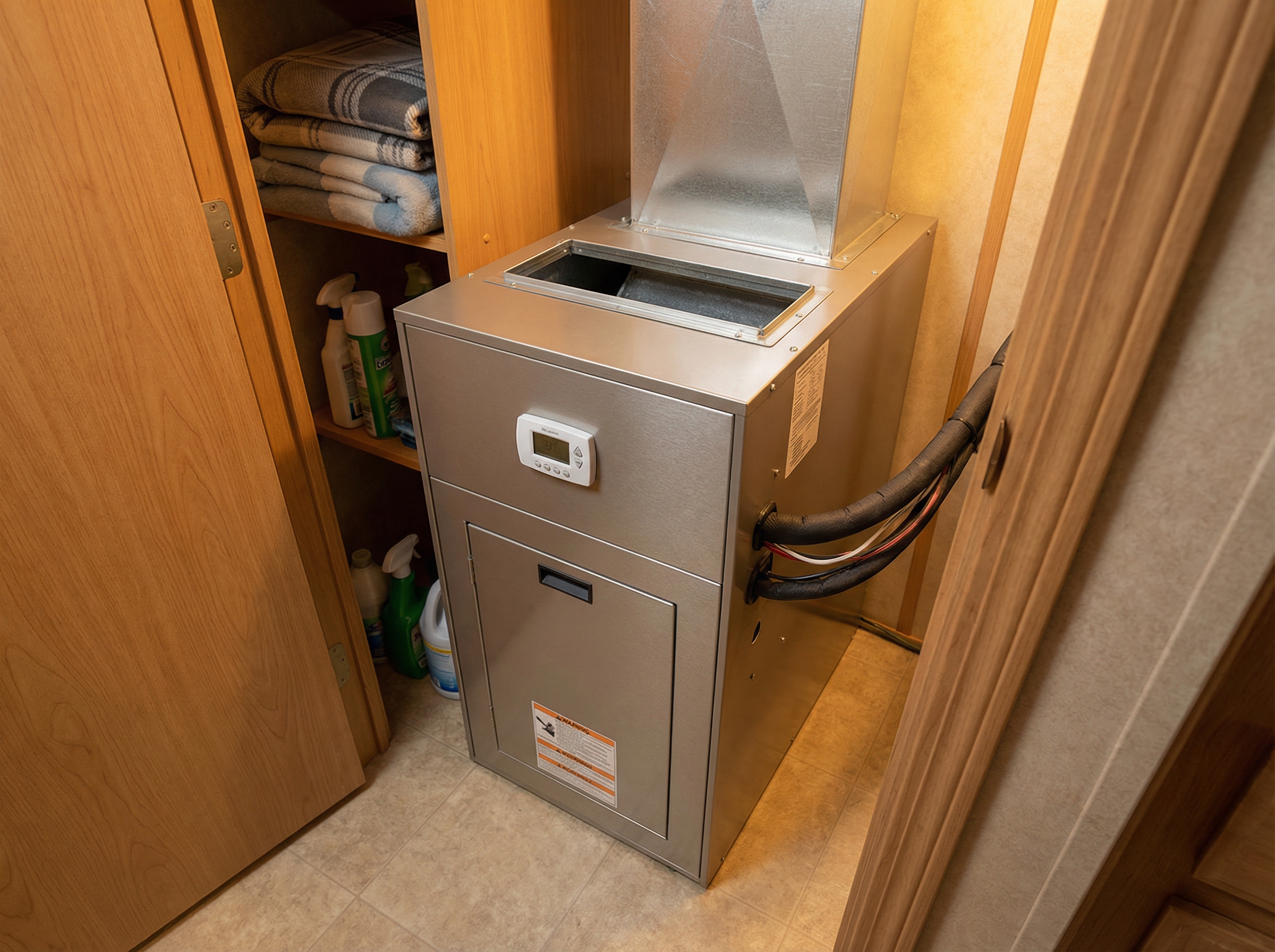
In manufactured housing, an electric furnace paired with a true downflow design fits the home's layout. Downflow means the blower sends warm air downward into a bottom supply plenum that mates cleanly with under-floor ducts, the standard trunking in mobile homes. Quiet operation also matters more in compact floorplans, so cabinet insulation and low sound levels keep living areas comfortable.
- Choose a downflow cabinet with a bottom supply plenum connection.
- Require models specifically listed for manufactured/mobile homes and downflow closet installation to satisfy HUD and local code.
- Verify HUD/mobile-home labeling, published clearances, and the manufacturer's installation guidance.
- Prioritize quiet cabinets and sound control due to close room proximity.
Electric vs Gas for Mobile Homes: Quick Comparison (Coleman, Miller and others)
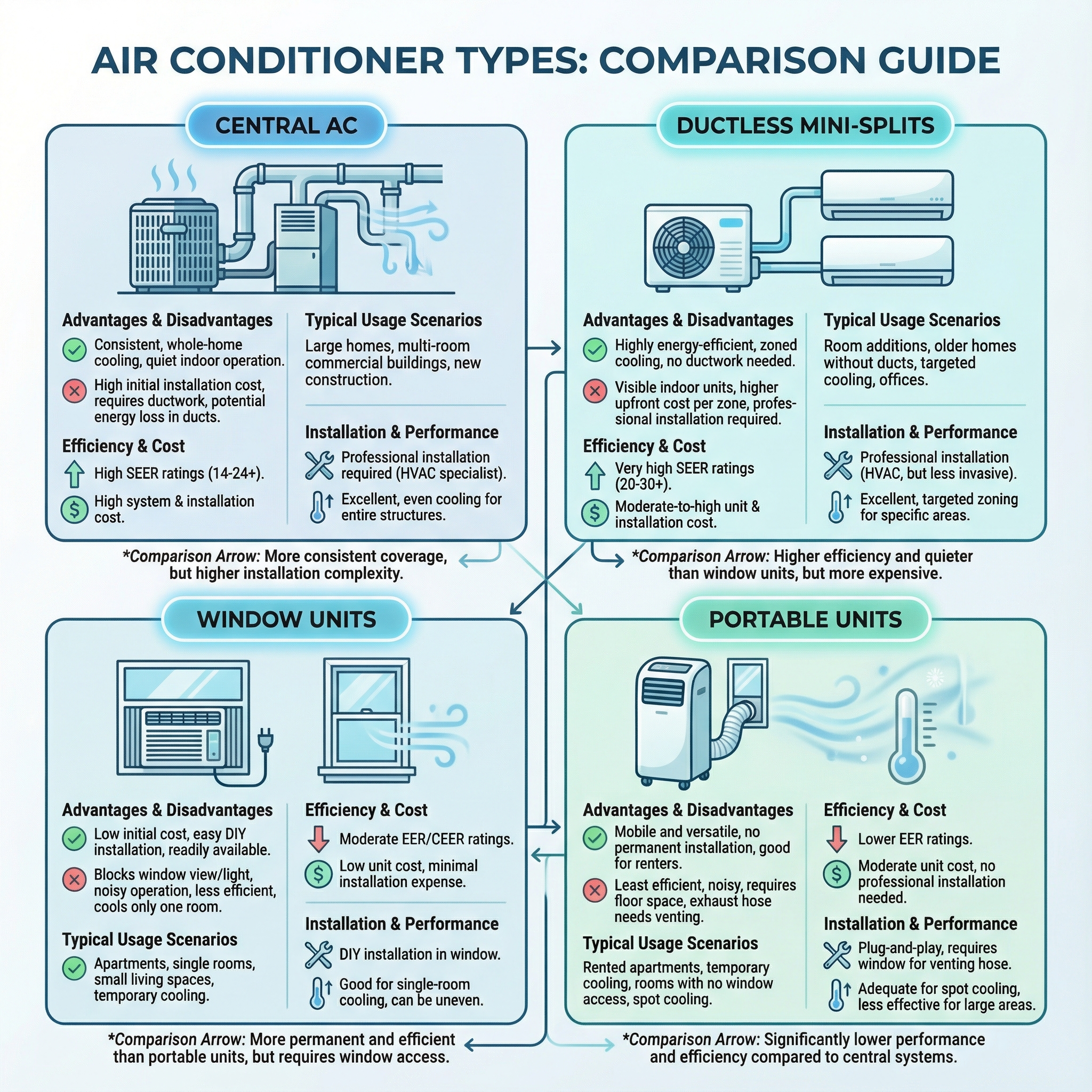
Mobile home furnaces generally fall into two categories: electric and gas. Gas models, including popular lines like Coleman and Miller, introduce combustion, venting and gas piping that must be designed and installed correctly. Electric units avoid those items, produce no carbon monoxide and do not require a flue, which is why many owners choose them for installation simplicity and safety. Myths to ignore: electric is not maintenance free, cabinet and return sealing still matters, and clearances and proper electrical work are always required.
- Installation: electric is typically simpler; gas requires venting, combustion air and gas piping.
- Safety: electric avoids flue gases and CO; gas must be vented and leak-checked.
- Utilities: choose based on available fuel and adequate electrical service.
- Upkeep: both need periodic inspection, secure cabinet sealing and correct clearances.
Energy Efficiency & Operating Cost: What to look for (kW, COP, estimated monthly cost)
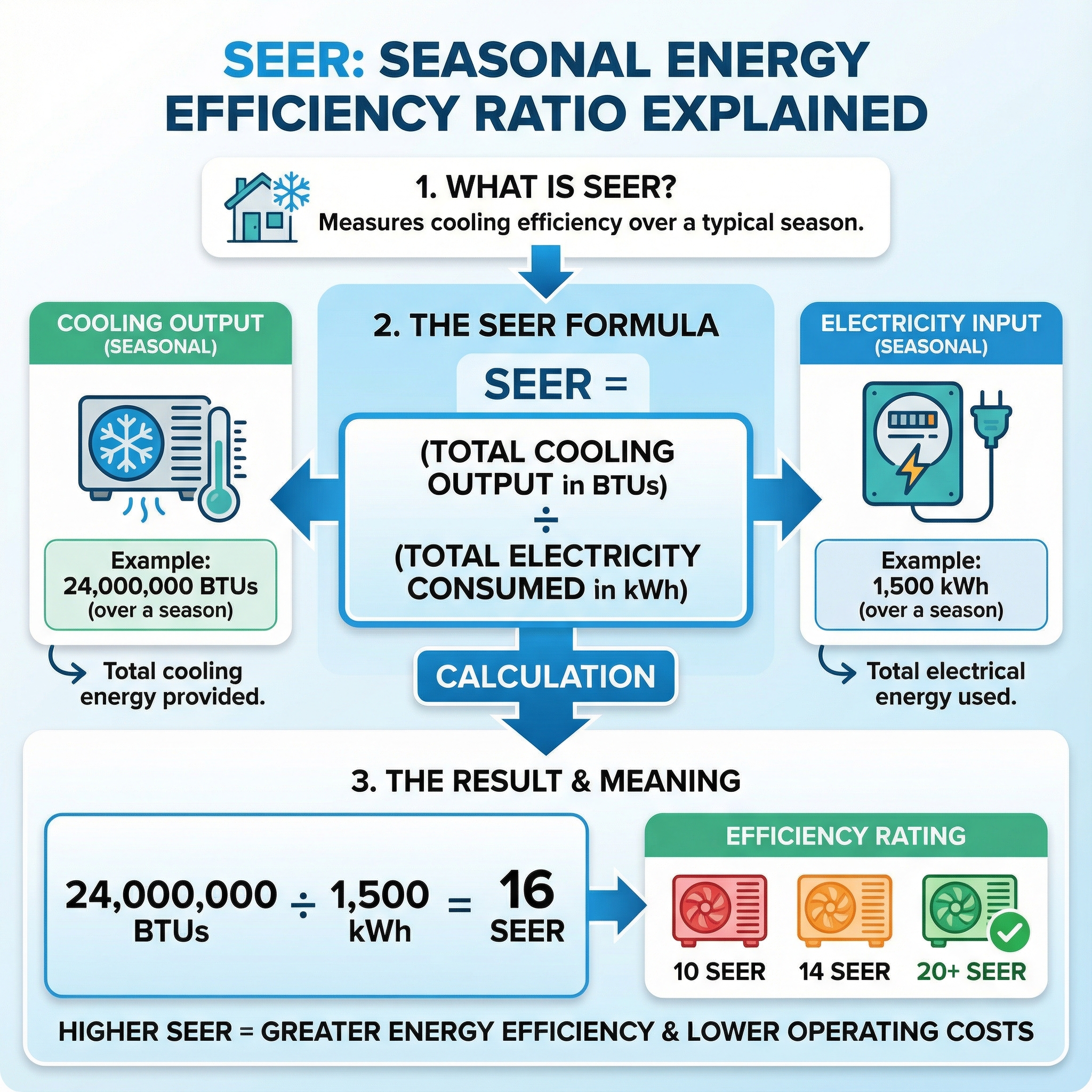
An electric furnace air handler does two things: it moves air and, if equipped, provides electric resistance heat. The air handler itself is not rated by SEER. SEER2 and HSPF2 apply to the matched cooling or heat pump outdoors, which now use the M1 test. Your operating cost depends on both the blower's power draw and the efficiency of the paired outdoor unit.
- Blower motor: Look for ECM or variable speed. DOE FER rules pushed the industry away from older PSC motors because ECMs use far less wattage and improve comfort at low speed.
- Heat kit size: Resistance heat is listed in kW. Budget your cost with a simple formula, kW × hours × utility rate. Example: 10 kW × 4 hours × $0.15 ≈ $6 per day of strip heat.
- Heat pump ready: Pairing with a compliant heat pump cuts winter kWh versus strips. A heat pump with a COP near 3 delivers about three units of heat for each unit of electricity, roughly one third the energy of resistance.
- Regional compliance: Minimum SEER2 and HSPF2 levels vary by region, so confirm local rules before you buy.
In our experience at Budget Heating (BudgetHeating.com), the biggest savings come from an ECM blower plus a properly matched heat pump, with strips sized only for backup or extreme cold.
Safety Features to Require: Overheat Protection, Electrical Safeguards and Code Compliance
In manufactured housing, electric furnaces stay reliable and safe when core protections are present and maintenance is simple and regular. From our field experience, these items are non negotiable, think of them like seatbelts and airbags for the heater.
- Overheat protection: require high limit switches, thermal cutoffs, properly sequenced relays and correct overcurrent protection, all matched to the manufacturer's specifications and local code.
- Electrical safeguards: never bypass limit switches or install non OEM fuses or breakers. Do not alter wiring, panels or clearances, the cabinet and door fitments are part of safe operation. You may reset a tripped breaker once after it cools, repeated trips require professional diagnosis.
- Homeowner maintenance: inspect filters monthly and replace or clean every 30 to 90 days. Lightly vacuum supply and return grilles and keep registers unobstructed. Keep the furnace closet and return area clear, and maintain working smoke and CO detectors. Check thermostat settings and batteries. With power off at the disconnect, look for loose panels, excess dust, or water near an indoor coil. If you smell burning, turn power off and have a licensed pro inspect. If a coil is present, keep the condensate drain clear. Keep vegetation and debris away from any outdoor unit.
- Professional only: leave installation, high voltage work, refrigerant handling and performance or safety issues to licensed technicians. Schedule annual checks to tighten electrical connections, inspect elements and sequencers, verify blower performance and test safety controls.
Sizing Matters: How to Pick the Right Capacity (BTU/kW) for a Mobile Home
Getting furnace size right is about matching the home's heat loss, not just picking a big number. Think of capacity like the right-sized pair of winter boots, too small and your feet are cold, too big and you trip. In heating terms, oversizing causes short cycling and uneven rooms, undersizing leaves you chasing the thermostat.
Capacity is listed in kilowatts or BTU per hour. The conversion is simple: 1 kW is roughly 3,412 BTU per hour. Use climate as a starting point, then refine with your home's specifics:
- Mild climates or smaller homes: around 10 kW.
- Larger homes or colder regions: around 17 kW.
- Harsh winters: often 20 to 23 kW.
Layout matters. Confirm if your home is single-, double-, or triple-wide. Floorplan, room count, and long duct runs change airflow needs and can push you up or down a size. In our experience at Budget Heating (BudgetHeating.com), two homes with the same square footage can land on different capacities once ducting and insulation are accounted for.
Always size by a professional heat-loss calculation, not rules of thumb. Insist your contractor models insulation levels, window type and area, air leakage, and the local climate. The right kW or BTU keeps cycles stable, rooms even, and equipment stress low, which protects comfort and helps your furnace operate as intended.
Compact Design & Installation Flexibility: Closet, Wall, and Convertible Orientation Models
In mobile-home closets every inch matters. Look for compact cabinets built for closet, wall, or convertible orientation so the footprint fits tight openings and lines up with existing ductwork or an indoor coil. Before ordering, measure the closet and confirm the manufacturer's service clearances on the front, sides, and top, plus room to pull the filter. Think of it like ensuring a refrigerator door can open in a narrow kitchen.
- Pick A/C-ready cabinets that accept cased coils, with an accessible drain pan and condensate connection, and match the indoor coil dimensions.
- Verify return-air grille sizing and bottom-plenum compatibility to avoid airflow bottlenecks.
- Choose accessible service panels with tool-less or simple latches and standard filter sizes for easy homeowner maintenance.
- Favor corrosion-resistant materials and clear documentation to streamline installation and future service.
Compatibility: Thermostats, Ductwork and Electrical Requirements for Manufactured Homes
Before choosing an electric furnace for a manufactured home, confirm the electrical, duct, and control details align. In our field work, most surprises come from panel capacity, leaky ducts, or thermostat mismatches.
- Electrical service: Match the furnace kW to available service capacity. Check the main rating, open breaker spaces, and whether an upgrade or subpanel is needed.
- Dedicated circuit: Verify a 240V supply, correct breaker size, proper wire gauge, and a nearby disconnect. Confirm lugs are rated Al/Cu to match the conductor used.
- Ductwork: Inspect under-floor supply and return, including the crossover, for size, damage, and sealing. Leaks or crushed runs starve airflow. Airflow is the furnace's fuel.
- Thermostat and controls: Use a thermostat that supports the furnace's staging, any heat pump integration, and smart features if desired. Confirm low-voltage wire count and location.
New vs Used Units: Risks, Savings and What to Inspect Before Buying
Buying used can lower the upfront price, but it comes with real tradeoffs. It fits best for mild climates, short-term ownership, or secondary spaces where peak performance is not critical. In very cold regions or where electricity is expensive, resistance-only heat can be costly and may struggle. In those cases, consider a gas furnace where safe and available, or a heat-pump-ready air handler paired with a cold-climate heat pump. If you stay electric, plan for staged heat strips and adequate kW so the system keeps up. Before choosing a used or low-capacity unit, estimate expected kWh use by climate to avoid surprises. Think of it like a used car, look under the hood before you commit.
- Heating elements: check for hot spots, breaks, or sagging.
- Blower motor: age, noise, smooth spin, and signs of wear.
- Cabinet and coil area: corrosion or moisture staining.
- Documentation: model, serial, wiring diagrams, and service history.
- Warranty status: expect shorter or none on used equipment.
- Parts availability: confirm controls, elements, and motors can still be sourced.
Actionable Checklist: Must-Have Features Before You Buy
Before you buy, lock in the essentials: a unit approved for your home, an apples to apples quote, and a simple commissioning plan so day one performance matches the spec.
- Confirm the system is marketed for manufactured housing and meets HUD and local code to protect safety and warranty.
- Request itemized quotes listing model number, kW/BTU, included accessories (coil, filter rack, disconnect), permits, labor, and optional IAQ or control upgrades.
- Costs vary by region and installer, ask for local operating cost estimates and compare long term energy savings when reviewing options.
- After installation verify temperature rise, even airflow, correct heating stage operation, quiet running, and that manuals and warranty registration are provided.
Choosing HVAC can feel like a lot. We pair 30 plus years of experience with U.S.-based phone support to make the decision and commissioning straightforward.
- Get a Custom Quote
- Talk to Our Team by phone for fast, practical guidance
- Shop Electric Furnaces at wholesale pricing, with free shipping on many models and financing through Affirm