




How Many Watts Does a Gas Furnace Use? A Quick Reality Check
Here is the quick reality check: a gas furnace makes heat by burning gas, not electricity. Electricity is there to run the support cast that moves and manages that heat. Think of the flame as the campfire and the electrical parts as the bellows and the traffic cop, pushing air and keeping everything coordinated.
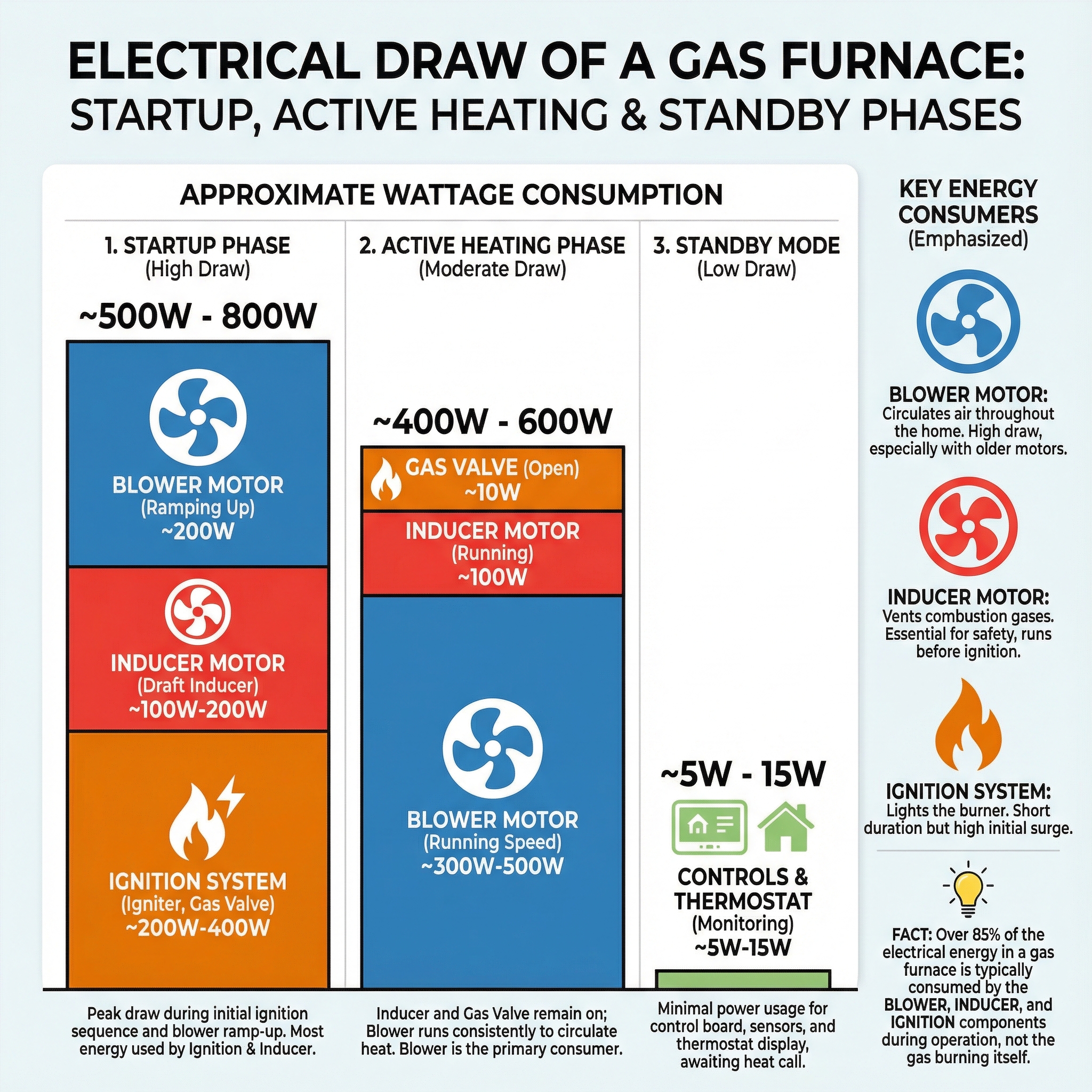
- Blower motor: moves heated air through the ducts, usually the largest electrical load.
- Ignition: lights the burners, typically a hot surface igniter or spark, short bursts of power.
- Controls: the board, relays, and safety sensors, a small continuous draw during operation.
Understanding this split helps you estimate electricity costs for winter bills, pick the right size for backup power, and troubleshoot issues like burners lighting but no airflow. We focus on the electrical side, what drives wattage up or down, and how to read equipment labels and settings to arrive at realistic numbers for your home.
Why Gas Furnaces Use Far Less Electricity Than Electric Heaters
Gas furnaces make heat with combustion, so electricity only handles the support jobs: the blower that moves air, the small inducer fan, electronic ignition, and the safety controls. In real homes we service, the running draw typically lands in the hundreds of watts, often about 400 to 800 W. By contrast, electric resistance heaters must create all the heat with power-hungry coils, so their draw jumps into the thousands of watts. Think of it like a match lighting a campfire: the flame does the heating, the blower just circulates it.
Homeowner Checklist: Identify Your Furnace, Motor Type, and Nameplate Ratings
To estimate furnace electrical use accurately, collect the details below. This grounds your numbers in your equipment's real behavior.
- Confirm fuel type and capture the full model and serial from the data tag.
- Identify staging: single stage, two stage, or modulating.
- Blower motor: note PSC or ECM, then record nameplate volts and amps. These anchor watt estimates and indicate whether the motor is high efficiency.
- Document AFUE and input BTU. AFUE reflects combustion efficiency, and input BTU shows burner size, which helps interpret runtimes and staging.
- Log runtimes and fan speeds over a few typical days. Use thermostat reports or a simple timer. Note percent of time in each stage or speed.
- Capture supply fan tap or percent settings if your control shows them.
- When sizing or replacing, consult Manual J, Manual S, and Manual D.
Safety and Maintenance: Keep Wattage Low and Equipment Reliable
Set clear boundaries for what you can do safely and what a licensed technician should handle. Smart upkeep lowers electrical draw and keeps components out of the danger zone.
- Replace or wash air filters regularly. A clogged filter is like breathing through a straw, it makes the blower pull higher amps.
- Keep supply and return vents open and unblocked to reduce static pressure and runtime.
- Power off, then do simple visual checks for water around the cabinet, loose vent pipes, or scorch marks.
- Confirm the condensate drain is clear and the trap has water. A gentle vinegar flush is acceptable if the line is accessible.
- Test CO and smoke detectors monthly and refresh batteries yearly.
- If a breaker trips, wait a few minutes and reset once. Repeated trips mean stop and call a licensed pro.
- Leave gas lines, burners, heat exchangers, inducer assemblies, control boards, and internal wiring to a licensed technician.
- Schedule annual professional service to clean burners and blower, verify venting, check the condensate pump, and confirm motor amp draw is within the nameplate rating.
When a Gas Furnace Isn't the Best Option (Common Misconceptions and Alternatives)
Gas furnaces work well, but not always best. If you want all-electric, face high gas rates, live in a mild climate, or heat a small home, a cold-climate heat pump often costs less to run. In outage-prone areas, a battery-backed heat pump, a generator, or dual-fuel can be more resilient. Electric resistance heat fits limited off-grid or backup use.
- Myth: they use no electricity. Modern furnaces need power for controls, igniter, inducer, and blower, so they will not run in a blackout without backup.
- Myth: wattage equals heat. Capacity is in BTU. Input BTU and AFUE set output. Electrical draw is usually a few hundred watts, often fine on a 15A circuit, but wiring must meet code. Electric furnaces use far more watts.
How Much Electricity Does a Gas Furnace Actually Use? Typical Wattage and Hourly Cost
Most gas furnaces draw a few hundred to about 1,200 watts while running. A common real-world average is around 800 W. To estimate cost, use: watts / 1000 × run hours × your $/kWh. Example: 800 W / 1000 × 3 hours = 2.4 kWh. At $0.15/kWh, that is about $0.36 per day.
Stretch that over a month of steady heating and you are usually talking tens of dollars in electricity, while the bulk of operating cost comes from the gas side and the furnace AFUE. In our experience at Budget Heating (BudgetHeating.com), customers are often surprised that the electric add-on is modest compared to fuel.
AFUE vs SEER and Why Blower Motor Type Matters for Electric Use
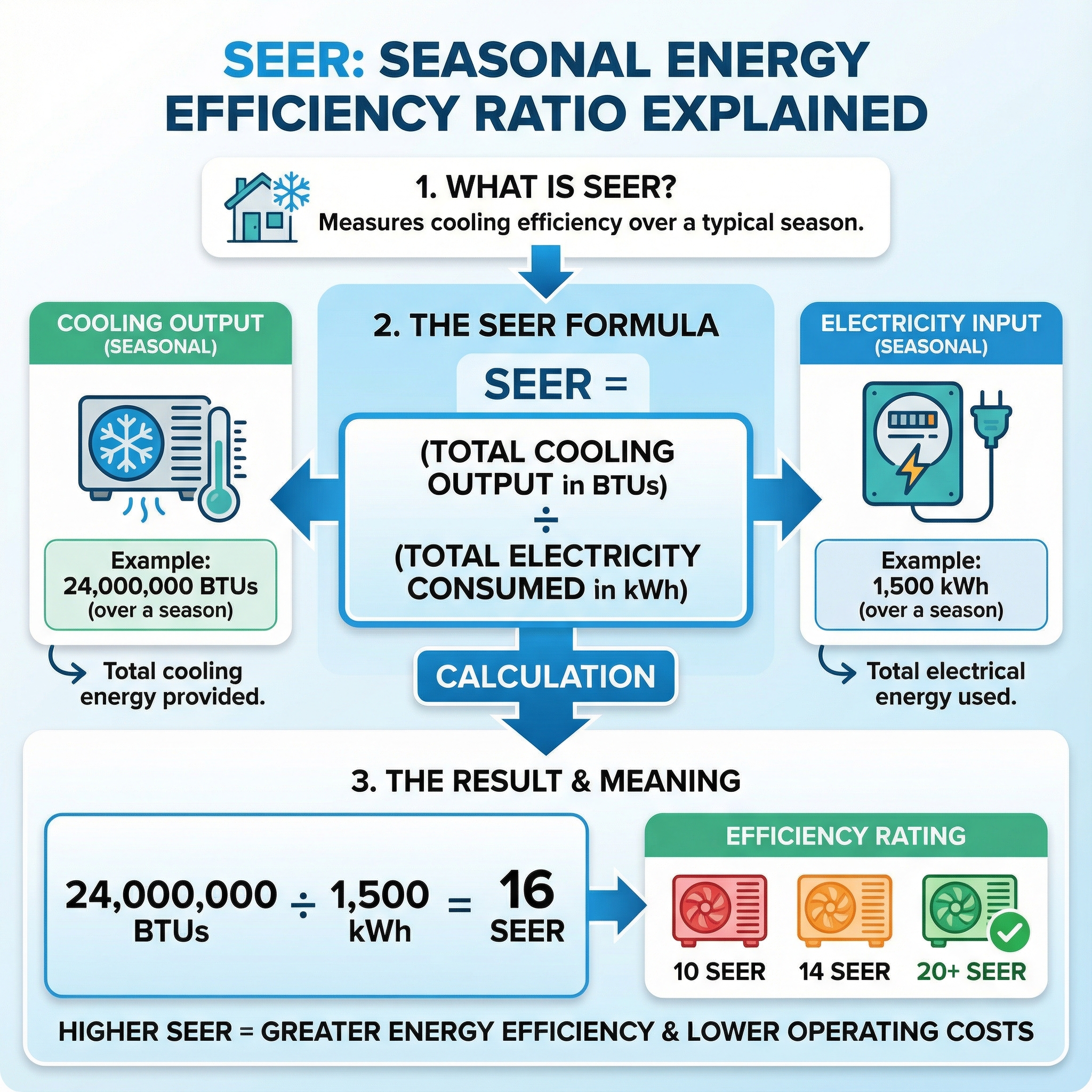
AFUE is a heating metric, it tells you how much of the fuel burned becomes heat in the home. Older furnaces commonly sit around 80% AFUE, while high efficiency condensing models reach about 90 to 98%. SEER is a cooling metric, it describes seasonal efficiency for air conditioning and heat pump cooling, not fuel use.
Fuel efficiency and electric draw are separate bills. The blower motor sets a big part of the electric side. ECM or variable speed motors use substantially less electricity at partial speeds compared to older PSC motors, and they are often required for ENERGY STAR in certain regions. In our experience at Budget Heating (BudgetHeating.com), choosing ECM tightens comfort and trims blower electricity without sacrificing airflow.
Regional Rules, ENERGY STAR, and How Climate Affects Furnace Runtime
Federal and ENERGY STAR criteria focus on AFUE and blower efficiency. ENERGY STAR furnaces use ECM motors and must hit higher AFUE, with colder regions held to stricter thresholds. Proper Manual J sizing ties capacity to local climate. In colder zones the heating season is longer, so the furnace cycles more and the blower runs more hours, increasing seasonal electric use even when gas efficiency is high.
Measuring Your Furnace's Electricity Use: Kill A Watt, Clamp Meter, and Simple Math
Plug any 120 V plug-in component, like an air handler or condensate pump, into a Kill A Watt to read watts or kWh. For hardwired furnaces, use a clamp meter on the branch circuit. Clamp around one insulated hot conductor, never on a bundle or bare wires. Note amps, multiply by supply volts to get watts, then watts ÷ 1,000 × run hours = kWh. Example: 8 A × 120 V = 960 W, run 3 hours = 2.88 kWh. In our experience at Budget Heating (BudgetHeating.com), this approach tracks utility bills within a few percent.
Bottom Line: Gas Furnaces Use Modest Electricity, Here's What To Do Next
Gas furnaces make heat with gas and use modest electricity for the blower, inducer, ignition, and controls, typically 300 to 1,400 watts while running. Annual kWh comes down to runtime and AFUE. To pin down your number, verify with a clamp meter or a whole home monitor, then use the watt to kWh method with your local rate. For savings, consider an ECM blower and higher AFUE when due, seal ducts, change filters, and schedule pro service. Our 30+ year HVAC team can size, quote, and ship fast.
- Get a Custom Quote, ECM and high AFUE options at wholesale pricing.
- Talk to Our Team by phone for sizing and safety.
- Shop Gas Furnaces, free shipping on most orders and Affirm financing.