




How Furnace Filters Protect Your Heater This Spring
Spring is the moment to catch issues that heavy winter runtime created. Your filter is the heater's first line of defense, sitting upstream to catch particles before they reach sensitive parts. After months of cold-weather cycles, many filters are at the end of their useful life, so a quick check now can prevent trouble from snowballing into a repair.
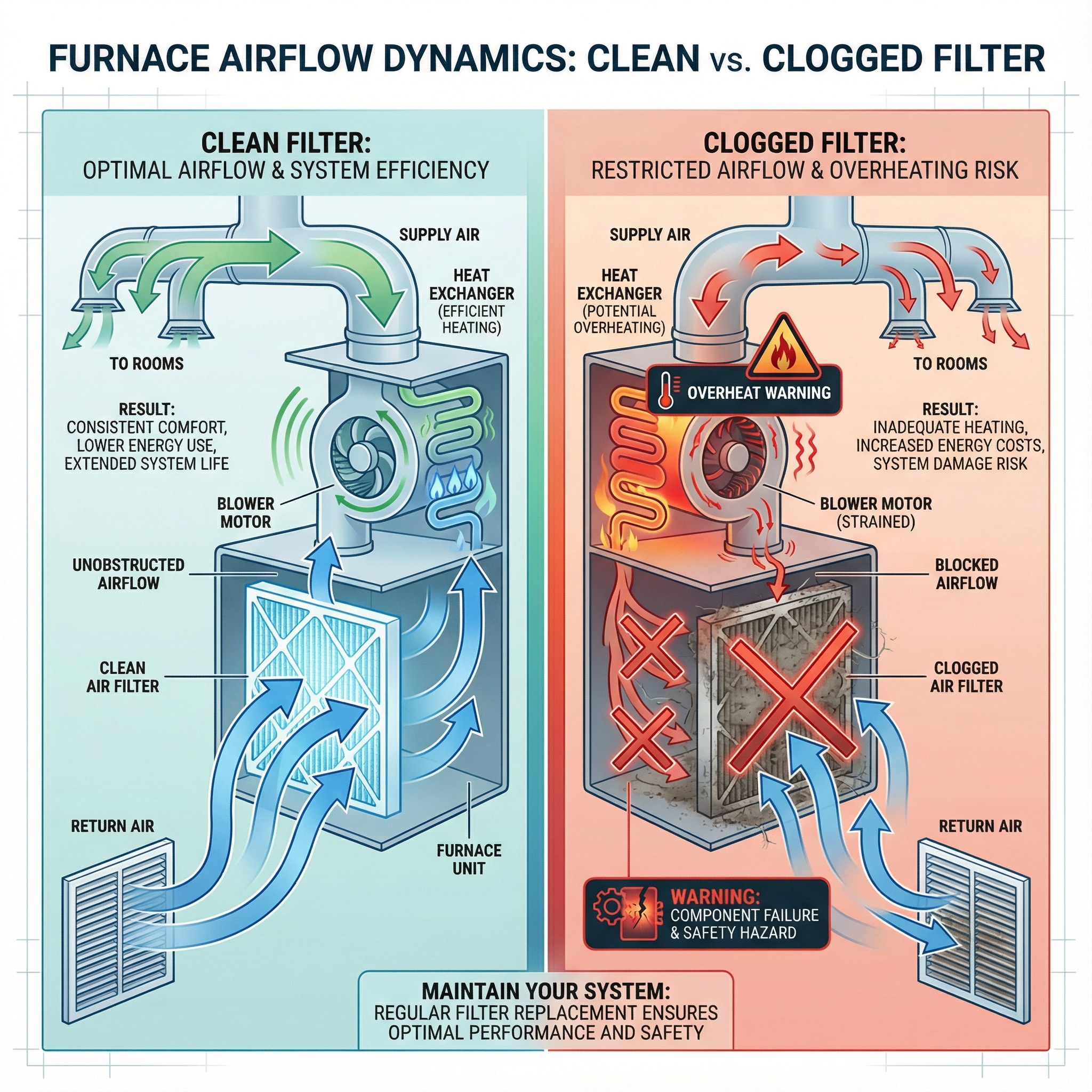
When a filter is clogged, airflow is choked off. The furnace has to work harder to move the same air, which increases wear, raises operating temperature, and pushes the system toward overheating and unexpected shutdowns. Restoring a clear path for air helps the heater breathe easily and maintain stable temperatures. In our field experience, that simple step is the difference between an easy shoulder-season start and a surprise breakdown caused by winter build up. Treat the filter like the dryer's lint screen, small and inexpensive, but the barrier that keeps the whole machine safe.
Why Spring Is a Critical Time for Furnace Care
Winter's sustained runtime typically leaves filters packed with dust, lint, pet hair and allergens, which makes spring the moment when replacement most matters to avoid post-season failures. We call this seasonal runtime accumulation: hour after hour of cold-weather operation loads the media until resistance climbs and airflow falls. Spring inspection catches that buildup at its peak, like emptying a lint trap after a marathon laundry day. Addressing the filter now restores designed airflow, eases wear on components, and sets the system up for smoother starts next season. Because the filter is the front line defense, letting winter debris ride into spring invites avoidable problems when the weather swings.
6 Ways a Clean Filter Protects Your Furnace (and Your Wallet)
Your furnace is built to move a lot of air. When the filter is clean, air glides through, parts stay cooler, and the system works the way it was engineered. Restriction feels like trying to jog while breathing through a scarf, performance drops and stress climbs. In our experience at Budget Heating (BudgetHeating.com), many nuisance issues trace back to airflow, not a bad board or sensor.
- Preserves design airflow: A clean filter keeps static pressure in check, so the blower and heat exchanger are not pushed past their comfort zone. That lowers mechanical and thermal stress and keeps electricity use in check.
- Prevents nuisance shutdowns: Clogged filters spike temperatures and trip limit switches. Swapping in a fresh filter restores airflow and helps avoid surprise lockouts and emergency repair calls.
- Shields critical components from fouling: The filter intercepts dust, lint, pet hair and allergens before they stick to the blower wheel, indoor coil and heat exchanger. Cleaner surfaces transfer heat better and need fewer cleanings.
- Protects the heat exchanger: Steady airflow pulls heat off the exchanger evenly. That reduces hot spots and the risk of overheating that can shorten equipment life.
- Supports efficiency and longevity: With clear airflow, the furnace reaches setpoint faster and runs smoother, which supports efficient operation and extends equipment life.
- Avoids the wrong filter penalty: Filters that are too restrictive can choke airflow, driving up motor wear and energy use. Use a filter that balances capture with airflow, not the tightest media you can find.
How Often Should You Change Your Furnace Filter in Spring?
Start spring with a fresh filter. If the winter filter is overdue, replace it right away, then check monthly through spring when pollen and dust climb. A practical cadence is every 1 to 3 months, or per the filter manufacturer. Think of the filter like sunglasses in pollen season: on hazy days it gets dirty faster. In high pollen or dusty regions, expect shorter intervals. In humid climates, favor synthetic media and sturdy frames because moisture speeds up loading and can deform weaker filters.
After installing a new filter, listen and feel: a persistently loud blower or weak airflow can signal a mismatched filter or a seating issue that needs correction. Keep return grilles clear and vacuum around them to reduce debris reaching the filter. Keep at least one spare on hand for quick swaps during peak spring periods. If you are unsure about allowable MERV, pressure drop, or moving to a deeper media cabinet, ask your HVAC contractor for the system's maximum recommended MERV and allowable static pressure.
Cost Savings and Longevity: How Filters Lower Repair & Replacement Risk
A clean filter is cheap insurance for any HVAC system. Replacing or washing it every 1 to 3 months trims energy use roughly 5 to 15%, a monthly savings that often covers the small filter cost. More importantly, timely filter care prevents an estimated 70 to 95% of breakdowns, and homes that change filters consistently see about 40% fewer service calls.
Put numbers to it: minor furnace fixes often run $250 to $300, while major repairs like a blower motor or coil can cost $1,000 to $3,000. One avoided emergency visit can pay for years of filters. For example, a $15 filter changed six times a year costs $90. If the system's average energy bill is $150 per month, even a 5% reduction returns about $90 per year. Some manufacturers promote related efficiency products, such as EnergySmart heaters, with claimed savings. Consider those separately, since filter care stands on its own ROI.
Understanding Filter Ratings: MERV, HEPA and Which to Use in Spring
MERV is the Minimum Efficiency Reporting Value, a simple scale that tells you how well a filter captures particles. HEPA is a separate classification, typically used in specialty filtration, while most home furnaces and air handlers are built around MERV-rated filters. For spring, the goal is to catch pollen and household dust while keeping the system breathing freely. For most existing residential furnaces, a practical choice is MERV 8 to 11, which targets many spring allergens without excessive pressure drop.
In our experience at Budget Heating (BudgetHeating.com), the filter's build and fit matter as much as the rating. A well-made filter keeps its shape, seals tightly, and performs consistently all season.
- Fit matters: confirm the exact length, width, and thickness your unit specifies. A wrong-size filter can leave gaps or refuse to seat, which defeats protection.
- Choose the right size and construction: a rigid or reinforced frame with durable media resists warping in humidity and prevents air bypass.
- Durability example: commercial-style or reinforced designs, such as rigid MERV 8 filters, hold their shape better than flimsy store-bought options and maintain a tighter rack seal.
- Rating selection: stick with MERV 8-11 for spring to balance allergen capture with steady airflow.
Think of the filter like a snug lid on a container: the right rating, a rigid frame, and an exact fit keep unwanted particles where they belong.
Step-by-Step: Replacing Your Furnace Filter Safely
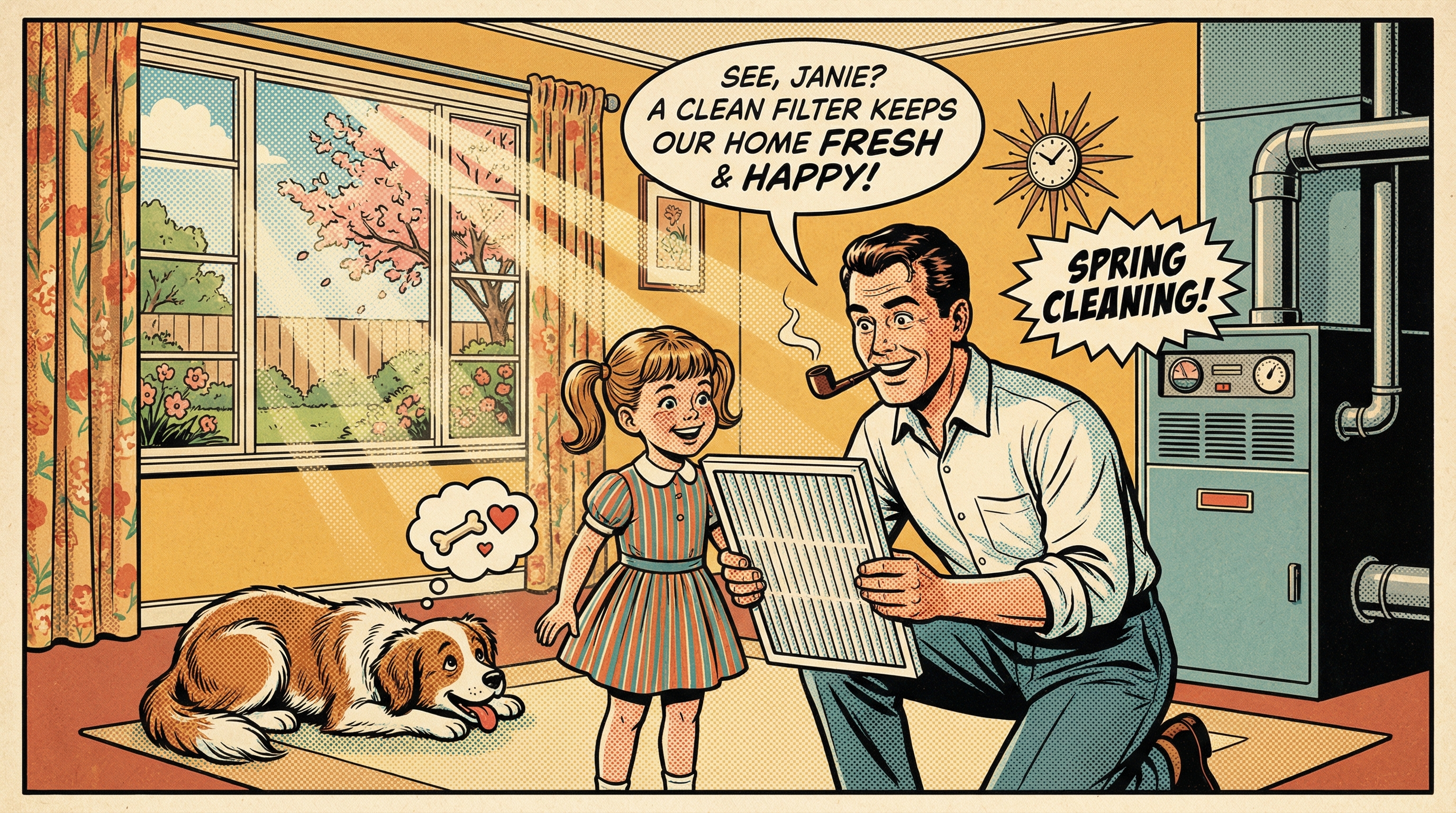
Homeowners and renters can replace furnace or air handler filters safely if they follow a few basics. Here is the procedure we use in the field:
- Turn the system off at the thermostat, then shut the service switch or breaker before removing any panel.
- Locate the filter slot in the return duct or blower cabinet. Note the airflow arrow on the new filter.
- Remove the old filter, bag it immediately, and discard. If you are dust sensitive, wear gloves and eye protection.
- Insert the correct size filter with the arrow pointing toward the furnace or blower. Ensure a snug fit with no side gaps. Do not run the system without a filter.
- Reinstall panels, restore power, and restart the thermostat.
Keep DIY to filter changes. Leave internal cleaning of blowers, coils, heat exchangers, burner or ignition work, refrigerant handling, and any electrical or gas repairs to licensed HVAC professionals.

Signs a Clogged Filter Is Harming Your Heater (including why your furnace may blow cold air)
A clogged filter starves airflow. The blower still runs, but reduced volume can make supply air feel cool in distant rooms. The heat exchanger may overheat and trip a limit, causing short cycling and bursts of lukewarm or cold air. If you install a fresh filter and the furnace still blows cold, that signals a deeper issue. In our experience, the following symptoms mean it is time to look beyond a dirty filter:
- Persistently weak airflow even after a new filter
- Short cycling
- Unusually loud blower noise
- New mechanical noises
- Burning or electrical odors
- Water around the furnace or air handler
- Frequently tripped breakers
- Visible rust or cracks on the heat exchanger
Any of these should prompt inspection or service.
Common Myths About Furnace Filters: Debunked (and When Filters Aren't the Right Fix)
We see a few myths trip up otherwise solid maintenance routines. Here are the big ones to clear up:
- Myth: filters are only about air quality. Reality: a clogged filter chokes airflow, raises static pressure, and stresses motors and heat exchangers.
- Myth: any filter that fits is fine. Reality: poor fit allows bypass that coats coils and burners with dust.
- Myth: cheap flimsy filters are acceptable. Reality: they can warp in humidity and collapse under suction.
- Myth: wait until it looks dirty. Reality: by the time you see it, airflow has likely been restricted for weeks.
- Myth: spring is an off-season. Reality: after winter duty, many filters are due right at season's end.
Tradeoffs matter: ASHRAE favors MERV 13 and higher for particle capture, but higher MERV raises pressure drop and can exceed blower capability. There is no single nationwide code, so target the highest MERV your system can support without surpassing allowable static pressure. Systems with tight ducts or modest blowers often struggle with high MERV at 1 inch. Alternatives: use a deeper pleat, low pressure drop media cabinet, or stick with MERV 8 to 11 and change more often. In heavy pollen, wildfire smoke, or dusty regions, a temporary upgrade is helpful only if the system allows, paired with shorter intervals. In humid areas, choose reinforced frames to prevent warping.
When a filter swap is not enough: if airflow issues persist with a clean filter, prioritize a blower and duct static pressure evaluation rather than pushing to a higher MERV or thicker 1 inch filter.
Quick Spring HVAC Checklist: Filters and Beyond
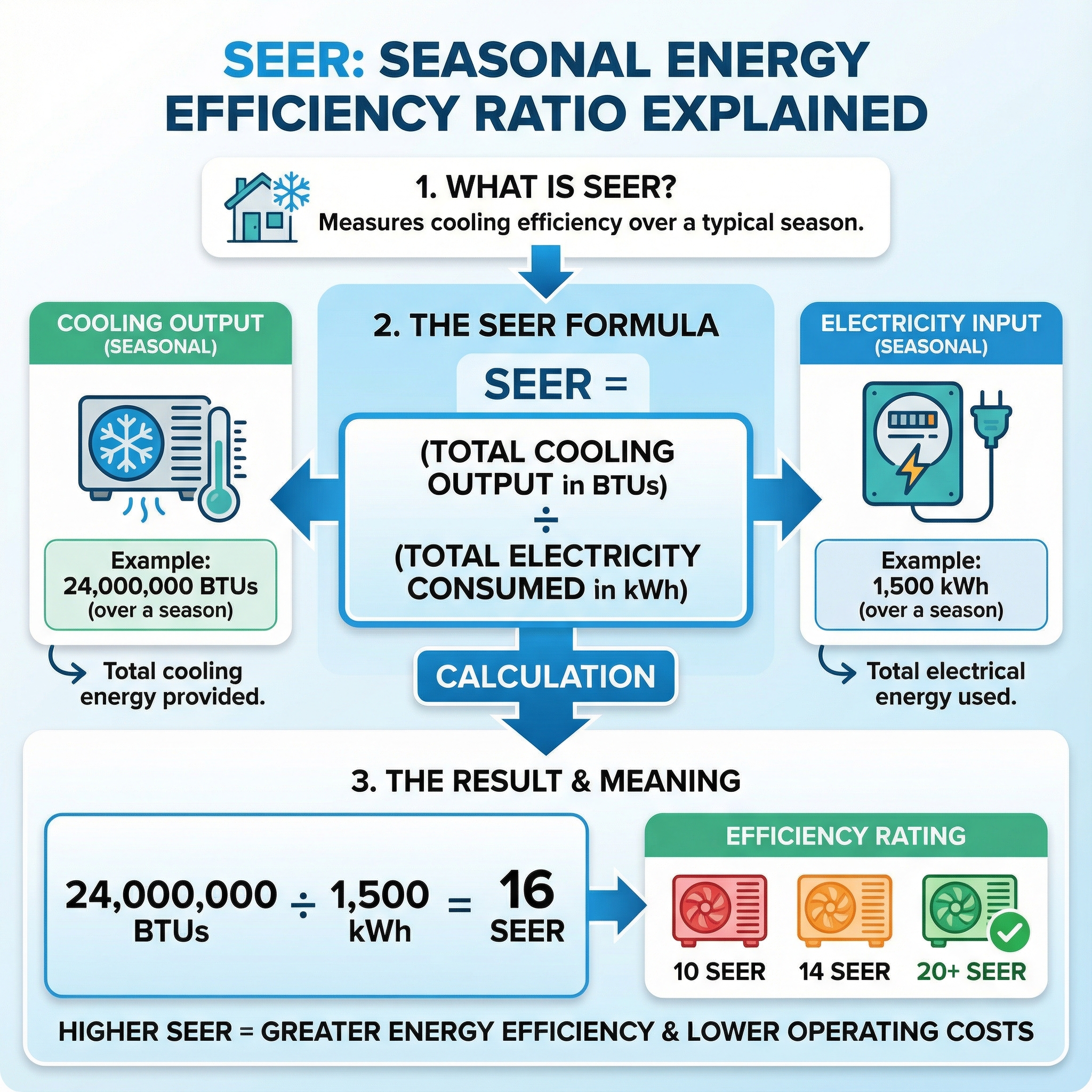
Start spring with a fresh, correctly sized filter, keep a spare, and vacuum returns. Book a pro tune-up to clean coils, check controls, and verify blower and duct performance. Under SEER2, systems are tested at higher external static pressure that mirrors real ducts and filters. Dirty or overly restrictive filters raise that pressure, cut airflow, and drive up fan energy, which erodes efficiency and can jeopardize rebate tiers around 14.3 SEER2 above the ~13.4 code minimum.
Key point, protect airflow and pair filter care with an annual tune-up. If choosing filters or timing service feels unclear, we make it simple. Our U.S.-based team does this daily with 30+ years of hands-on HVAC.
- Get a Custom Quote
- Talk to Our Team by phone
- Shop Air Filters