




Central Air vs Mini Split Systems: How to Choose
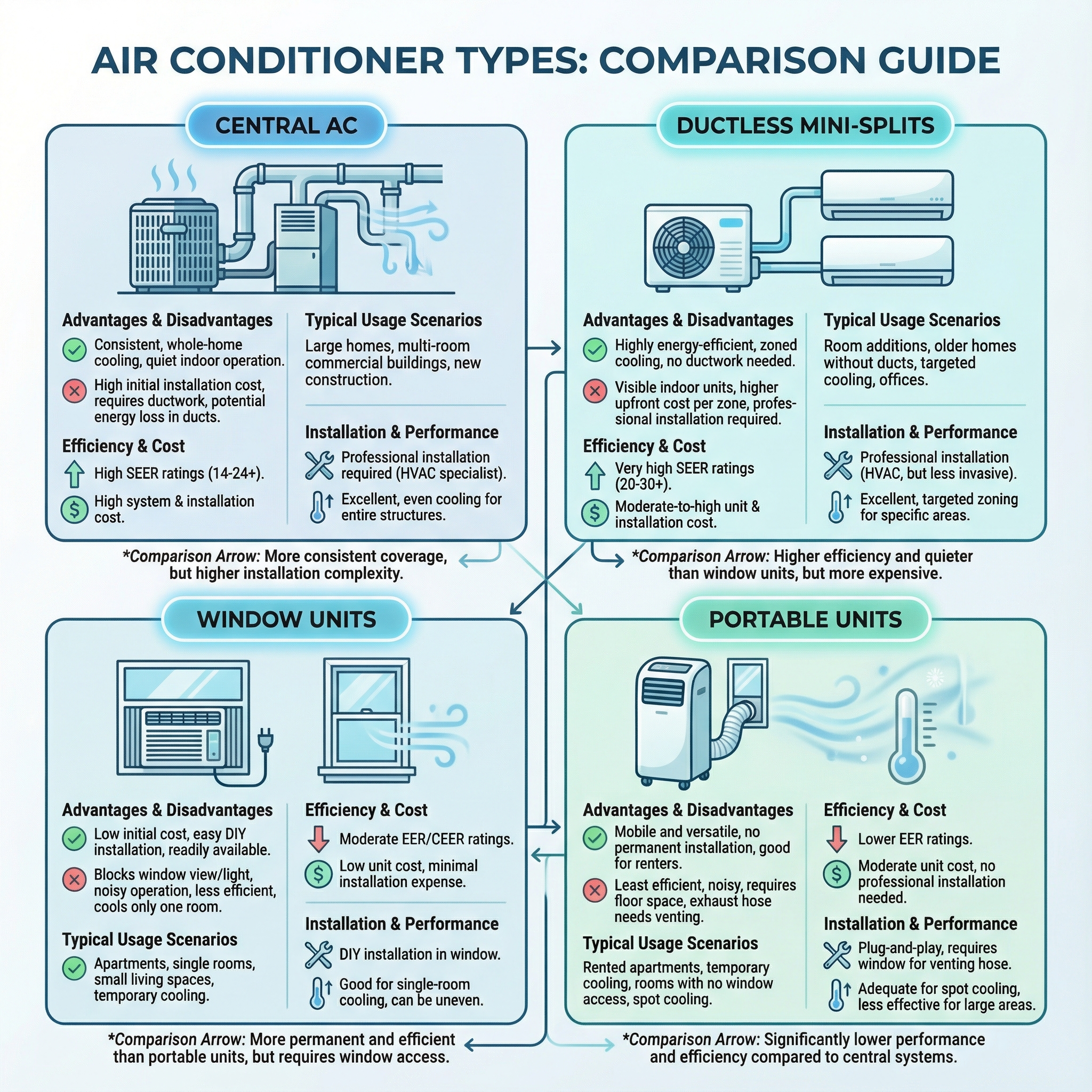
Central air conditions the whole home through ductwork using one outdoor unit with an indoor coil or air handler. Mini splits place compact indoor units in selected rooms, connected to an outdoor unit by refrigerant lines, so no ducts are needed. The choice influences comfort, energy bills, indoor air quality, expected lifespan, and how complex the install will be, particularly in retrofits versus new construction.
Central air favors homes with solid ducts and a single thermostat approach. Mini splits excel at zoning, additions, and older homes without ducts. We have worked with both for decades, and the right fit usually comes down to layout, climate, and how you use each space. This section sets a clear framework so you can weigh costs, efficiency, IAQ, and installation tradeoffs with confidence.
Quick summary: Which system is best for which home?
Here is a quick, skimmable cheat sheet we use in the field to help homeowners self qualify:
- Central air: ducts are already in good shape, you want whole home coverage with one thermostat, mid to large homes, replacing an aging central unit, even temperatures are the priority.
- Ductless mini splits: no ducts or leaky ducts, additions or bonus rooms, older homes, room by room control, mixed schedules or partial occupancy, small to medium spaces.
- Hybrid: keep central for most areas, add one or two ductless heads for hotspots, sunrooms, finished garages, phased renovations, or future expansion.

How central air systems work (ducts, distribution, and whole home control)
Central systems move air through a supply and return duct network. The thermostat calls for heating or cooling, the air handler's blower pulls air through return grilles and a filter, conditions it across a coil or heat exchanger, then pushes it into a main trunk. From there, branch ducts feed room registers. Think of the air handler as the hub and the ducts as highways that split into neighborhood streets.
Whole home control is typically one thermostat targeting an even temperature. Balance comes from proper duct sizing, sealed joints, insulation, and simple damper adjustments at branches or registers. In the field we see comfort and efficiency hinge on leakage, long runs, and high static pressure. Filtration at the return treats the entire home's air, and retrofits depend on available paths for trunks and returns.
Cost comparison: installation, operating, and maintenance
Upfront installed cost is the biggest swing. It varies with home size, number of zones, and how much finish work is needed. Plan for potential hidden items, especially electrical panel upgrades at $800 to $1,500 and any ductwork or line-set concealment to keep finishes tidy.
- Typical operating cost per year: mini-splits $200 to $400, central air $300 to $600.
- Routine maintenance per year: mini-split $75 to $150, central air $100 to $200.
- Typical payback window: mini-split 5 to 8 years, central air 8 to 12 years.
- Estimated property value impact: central air adds about 5 to 10 percent, mini-split about 3 to 7 percent.
Think of payback as the extra upfront cost divided by your yearly savings. Climate, utility rates, and how many rooms you condition most often drive the result. If you seldom cool the whole house, a zoned mini-split can reach the shorter payback. If you want whole-home uniform cooling, central air may return more in resale. In our experience at Budget Heating (BudgetHeating.com), right-sizing and realistic usage patterns move the needle more than brochure ratings.
Pros, cons, and honest tradeoffs: when each system is NOT the right pick
In our experience, neither approach fits every home. If you want discreet vents and integrated IAQ options like high MERV filtration, humidification, or UV, a mini split is not the right pick. If ducts are leaky or run through hot attics, central air is the wrong tool until losses are fixed, because mini splits deliver air directly to rooms.
- Need room by room control, a single zone central system will frustrate. Multi zone mini splits are a better fit.
- Dislike visible wall heads or indoor fan noise, avoid mini splits. Choose central ducts or a concealed ducted mini split.
- Have tight, insulated ducts and prefer one thermostat, many mini split heads are unnecessary. Central air fits better.
Common misconceptions: you do not need ducts for whole home AC, multiple mini split heads can serve an entire house; mini splits can be more efficient, often about 30 percent lower electricity use; duct losses are not negligible; mini splits are not maintenance free, filters, coils, and drains need regular care. Hybrid setups are common, for example central for main areas with a mini split for an addition or a hard to condition room.
How mini split (ductless) systems work and the basics of zoning
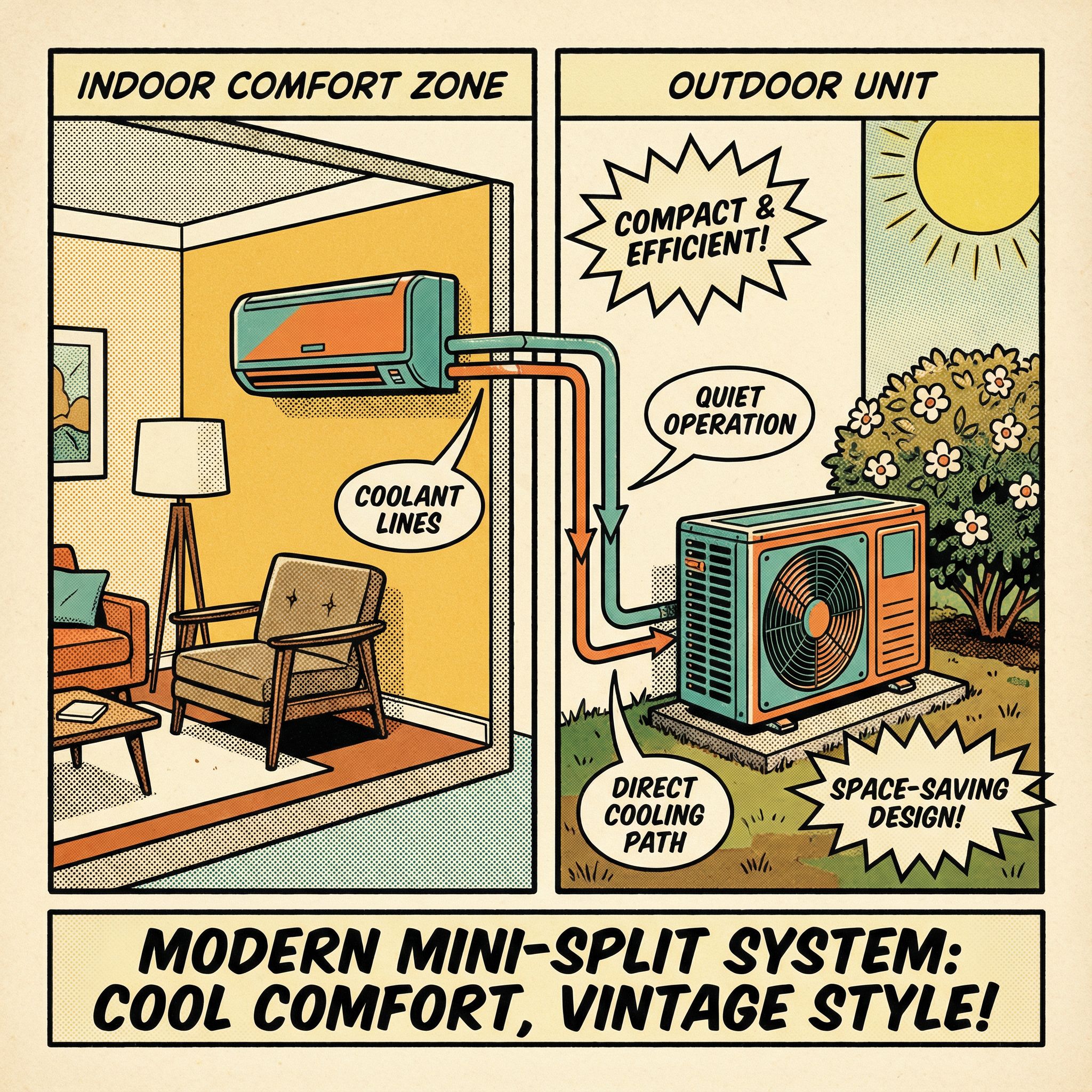
Mini split systems use a compact outdoor unit connected to one or more indoor air handlers by small refrigerant line sets and a control cable. The outdoor inverter compressor varies speed to match demand, like dimming a light instead of flipping it on and off. Each indoor head has its own fan and sensor, so it conditions only its room, and you can set different temperatures in different zones. The refrigerant moves heat between indoors and outdoors for cooling or heating, and because there is no ductwork, losses are low and placement is flexible. One outdoor unit can serve several rooms, and you can add heads as needs change, creating true room by room zoning with quiet, targeted comfort.
Efficiency & performance: SEER2, heat pumps, refrigerants, and real world savings
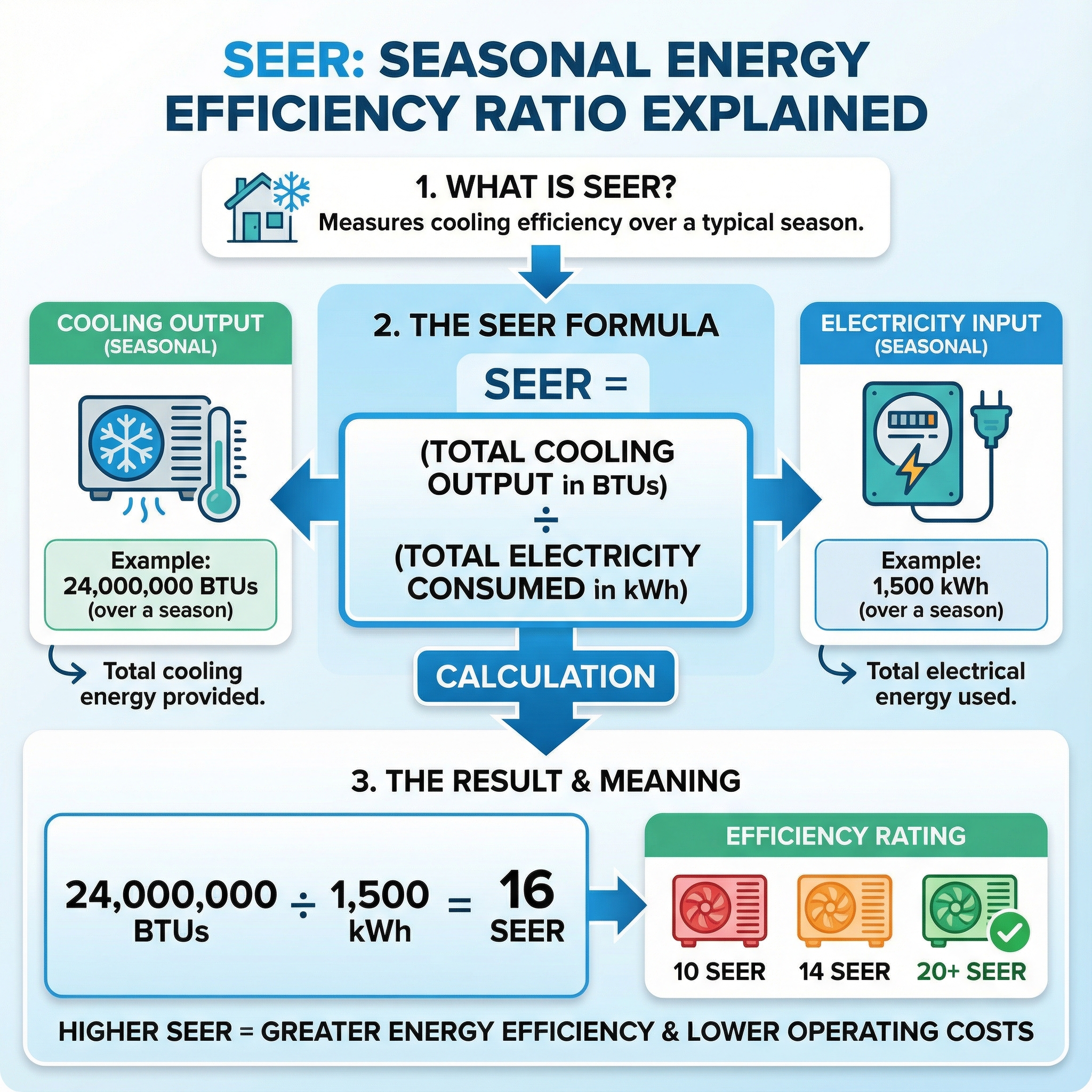
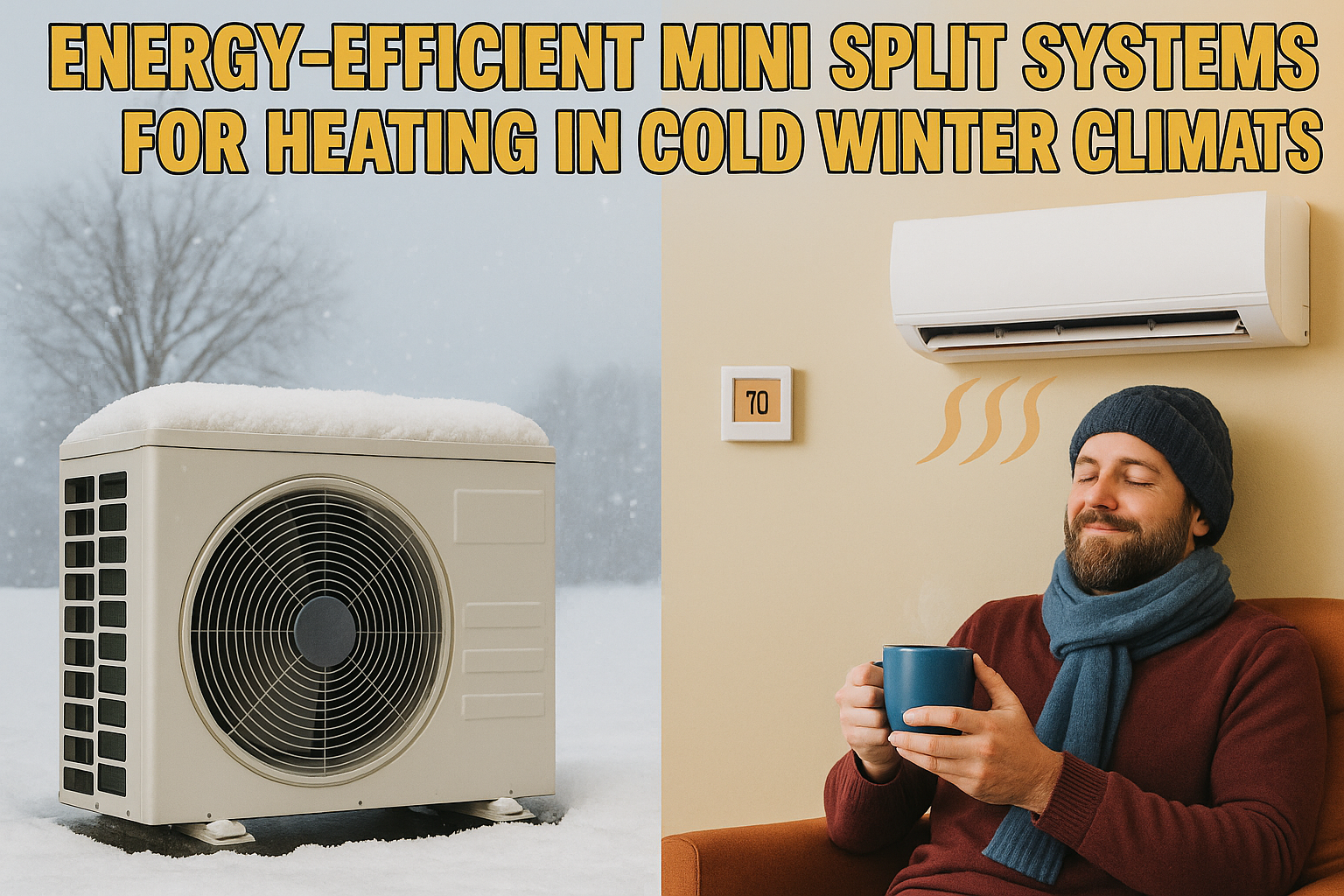
Starting in 2023, the DOE shifted to SEER2, EER2, and HSPF2 test methods that better reflect duct losses and external static pressure. Think treadmill vs trail: SEER2 values are not one to one with old SEER, but they give a truer read of performance in homes. In mixed humid and hot dry regions, higher SEER2 and EER2 matter for long cooling seasons. In cold regions, focus on HSPF2 and low temperature capacity for steady winter heat from a heat pump.
In our experience at Budget Heating (BudgetHeating.com), many utilities and current tax credits prioritize heat pumps and high efficiency SEER2 models, which can offset a meaningful portion of total project cost, though amounts vary by location. ENERGY STAR continues to set higher bars under the new metrics.
Refrigerants are also transitioning to lower GWP A2L blends. That brings code and handling implications, including approved installation practices and materials. Plan for matched indoor and outdoor components, confirm line set suitability, and make sure your installer is A2L ready for safe, compliant operation.
Installation complexity, timeline, permitting, and electrical needs
Ducted additions mean running trunks, branches, and returns, plus patching ceilings or closets. That often takes 3 to 7 working days, longer in finished spaces. Multi zone ductless work is usually faster: mount indoor heads, run line sets and condensate, set the outdoor unit, then pressure test and evacuate. A typical 2 to 3 head system is 1 to 2 days, add roughly a day for each extra head. Permits are commonly required for mechanical and electrical, and inspectors will check disconnects, clearances, and A2L refrigerant labeling and handling requirements.
Plan for dedicated circuits and local service disconnects at the outdoor unit and air handlers. If panel capacity is tight, budget about $800 to $1,500 for upgrades or new circuits. Think of your panel like a parking lot: every new system needs an open, properly sized space.
- Ask about panel capacity, breaker size, wire gauge, and dedicated circuits.
- Confirm permit handling, A2L compliance steps, and inspection timing.
- Clarify finish work: wall penetrations, line hide covers, drywall and paint.
- Homeowner tasks: keep 12 to 24 inches clear around the outdoor unit and gently rinse the coil each spring. Pros should handle refrigerant and electrical work.
- Maintenance cadence: professional check once a year, or twice in harsher climates.
Decision checklist: the questions to ask before you buy
Treat the process like a preflight checklist, simple items that prevent costly surprises when comparing quotes.
- Comfort goals: hot and cold spots, humidity, noise, IAQ.
- Home and ducts: size, leakage test, static pressure, returns.
- Climate: design temps, humidity load, low ambient needs.
- Efficiency target: SEER2 and HSPF2, staging or variable speed.
- Electrical and install: panel capacity, breakers, line set, pad or stand.
- Load calculation: require Manual J, S, and D.
- Filtration and IAQ: MERV, media cabinet, UV, ERV or dehumidifier.
- Controls and aesthetics: thermostat, zoning, sound, line hide.
- Total ownership and expandability: rates, rebates, future zones.
- Contractor questions: permits, startup checklist, warranties, who commissions.
- Post install: filter schedule, coil cleaning, drain treatment, annual tune up.
Conclusion: Recommended approach based on your priorities
If you have solid ducts and want whole home simplicity or lower installed cost per ton in a new build, keep or upgrade central air. Choose mini splits for ductless homes, retrofits, additions, or when zoning, high efficiency, and eliminating duct losses matter. Many homes do best with a hybrid, central for main areas with a mini split to tame hot or cold spots.
Every house and budget is different, and the right call balances climate, installation complexity, aesthetics, and maintenance.
We can run or translate a Manual J, design zones, and price both paths so you can compare clearly, backed by 30+ years of experience, factory authorized warranties, and U.S.-based phone support.
- Get a Custom Quote, wholesale pricing, free shipping on many systems, Affirm financing
- Talk to Our Team by phone for fast guidance from real HVAC pros
- Shop Central Air Systems
- Shop Ductless Mini Splits