




California's Move to Ultra Low NOx Furnaces: What Homeowners Need to Know
California's strict air quality rules are reshaping home heating. Ultra low NOx gas furnaces are modern units engineered to dramatically cut nitrogen oxide emissions that contribute to smog and respiratory risks, while delivering familiar whole home comfort. In plain terms, they burn cleaner than older models and release far less NOx, yet the warmth coming out of the registers feels the same. Think of NOx like exhaust from the burner, and an ultra low NOx furnace like a cleaner muffler that reduces what leaves the flue.
Why it matters: many jurisdictions in California now expect replacement furnaces to be certified as ultra low NOx. From decades in the HVAC industry, the upgrade is about emissions, not a new way of heating. Installation basics, sizing, ducts, and controls remain familiar. The meaningful differences are in the combustion system that achieves the lower output at the vent. This overview sets expectations so homeowners and contractors know what qualifies, how comfort is affected, and what to consider when planning a compliant replacement.
What NOx Emissions Are: Why They Matter for California's Air and Health
NOx refers to nitrogen oxides created during gas combustion in furnaces. Once released, NOx contributes to ground level ozone and fine particulate formation, two pollutants that make up much of the smog visible in many cities. Think of NOx as the spark in the chain of reactions that turns clear air into a brownish haze.
These pollutants affect respiratory health, which is why California targets NOx reductions in smog prone basins with persistent air quality challenges. Cutting furnace NOx reduces the pollution load that builds up regionally and helps reduce smog formation, benefiting community air and health. This focus on lowering NOx is a core driver behind state and local air quality rules in those areas. In short, lowering NOx is not only a compliance issue, it is a public health fix that reaches beyond the property line.
How California Regulates Furnace NOx: Air Districts, Rules and What That Means for Installations
Think of California like a patchwork of traffic zones, where each air district sets the speed limit. There is no single statewide furnace NOx rule. South Coast AQMD Rule 1111 and San Joaquin Valley Rule 4905 require ultra low NOx performance at or below 14 ng per joule for new and replacement central residential furnaces. The Bay Area follows a three step path that begins at 14 ng per joule and moves toward scheduled zero NOx milestones, which will steer many replacements toward electric heat pumps. Other regions are watching and pursuing similar frameworks.
In practice, permits hinge on district compliance. We routinely see reviewers verify the model's certified ng per joule rating and matching documentation. If a compliant gas furnace is not available, a heat pump path may be required. DOE efficiency updates, including SEER2 baselines, also apply, so paired cooling components must meet the new minimums. A simple furnace swap can become a matched system update, with venting checks and lead time planning.
What 'Ultra Low NOx' Actually Means: Metrics, Thresholds and Certification
Ultra low NOx is about how much nitrogen oxide a furnace emits per unit of heat it delivers. The metric is nanograms per joule, written ng/J. Think of it like miles per gallon, but flipped for pollution per heat output. Ultra low NOx furnaces are certified around 14 ng/J or less. Older low NOx models typically test near 40 ng/J, so ultra low represents a major reduction in emissions, not just a marketing label. In our experience at Budget Heating (BudgetHeating.com), the practical line in the sand is 14 ng/J for ultra low versus roughly 40 ng/J for low NOx.
For compliance, regulators look for the unit to be certified to the applicable air district rule, not merely advertised as low NOx. If your area requires ultra low, a non certified low NOx model will be rejected. When evaluating equipment, confirm the model's stated emission rate in ng/J and its specific certification to the district's rule so the paperwork matches what inspectors expect.
Installation & Placement: Sizing, Venting, Ducts and Permits in California Homes
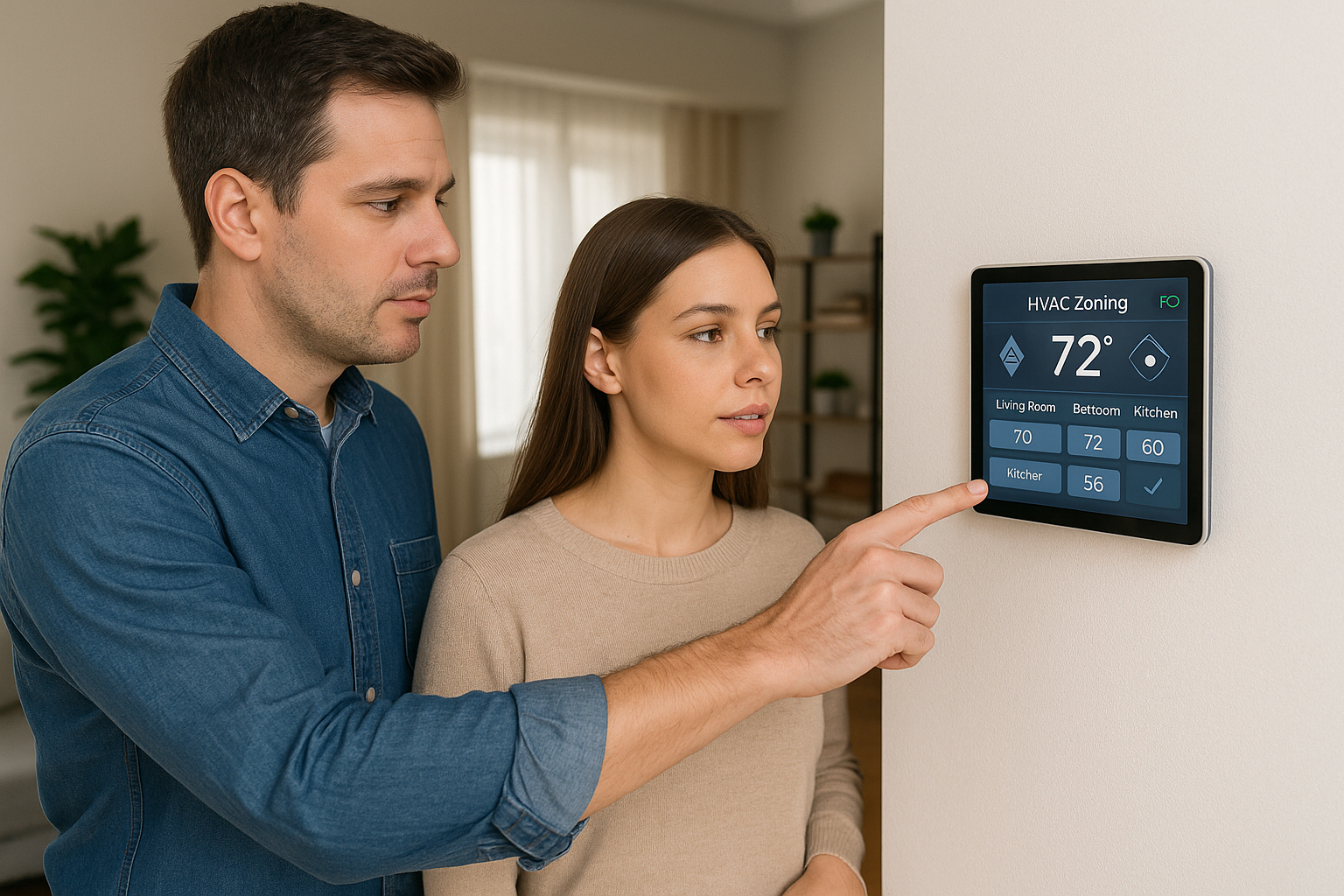
Before signing a proposal, require a Manual J room-by-room load and a Manual S equipment match to avoid oversizing. We treat total external static pressure like blood pressure for the duct system, so have the contractor measure it. Repair, seal, or resize ducts and verify return air is adequate.
- Venting and placement: Condensing ultra-low-NOx furnaces typically use PVC intake and exhaust with proper terminations, clearances, and service space around the unit.
- Condensate: Provide a trapped drain to an approved location, or a condensate pump if gravity will not work.
- Gas/electric: Confirm gas line sizing, shutoff and sediment trap. Provide a dedicated 120V circuit. Check thermostat compatibility and C-wire or smart control needs.
- Permits and HERS: Pull local permits. In California expect HERS verification and duct-leakage testing where required.
- Commissioning: On start-up verify temperature rise, static pressure, blower configuration, and gas input settings.

When an Ultra Low NOx Furnace May Not Be the Best Choice (Honest Tradeoffs)
Ultra low NOx furnaces cut emissions, but they are not always the smartest path. In our experience, the better choice depends on local policy, climate, electrical capacity, and what you want from the system over 15 to 20 years.
- Regions pivoting to zero NOx electrification soon, such as areas following BAAQMD timelines, often favor all electric heat pumps. A new gas furnace may have a shorter useful policy window.
- Homes in mild climates with adequate electrical service are strong heat pump candidates. Operating costs and incentives can tip the lifecycle math toward electric.
- If electric upgrades are impractical today, consider a dual fuel hybrid system. It lets a heat pump handle most hours while gas covers cold snaps, preserving resilience.
Common misconceptions we see on jobsites:
- Any new furnace is compliant. Not true, some models are only low NOx for other markets.
- Low NOx equals ultra low. Low is roughly 40 ng per joule, ultra low is about 14 ng per joule.
- High AFUE means clean emissions. AFUE is miles per gallon, NOx is tailpipe pollutants, different metrics.
- The cheapest non compliant unit will pass. It can fail inspection, or be rejected by a district.
- Contractors always pick certified gear. Verify model numbers and certification for your district.

How Ultra Low NOx Furnaces Achieve Cleaner Exhaust: Burners and Combustion Control
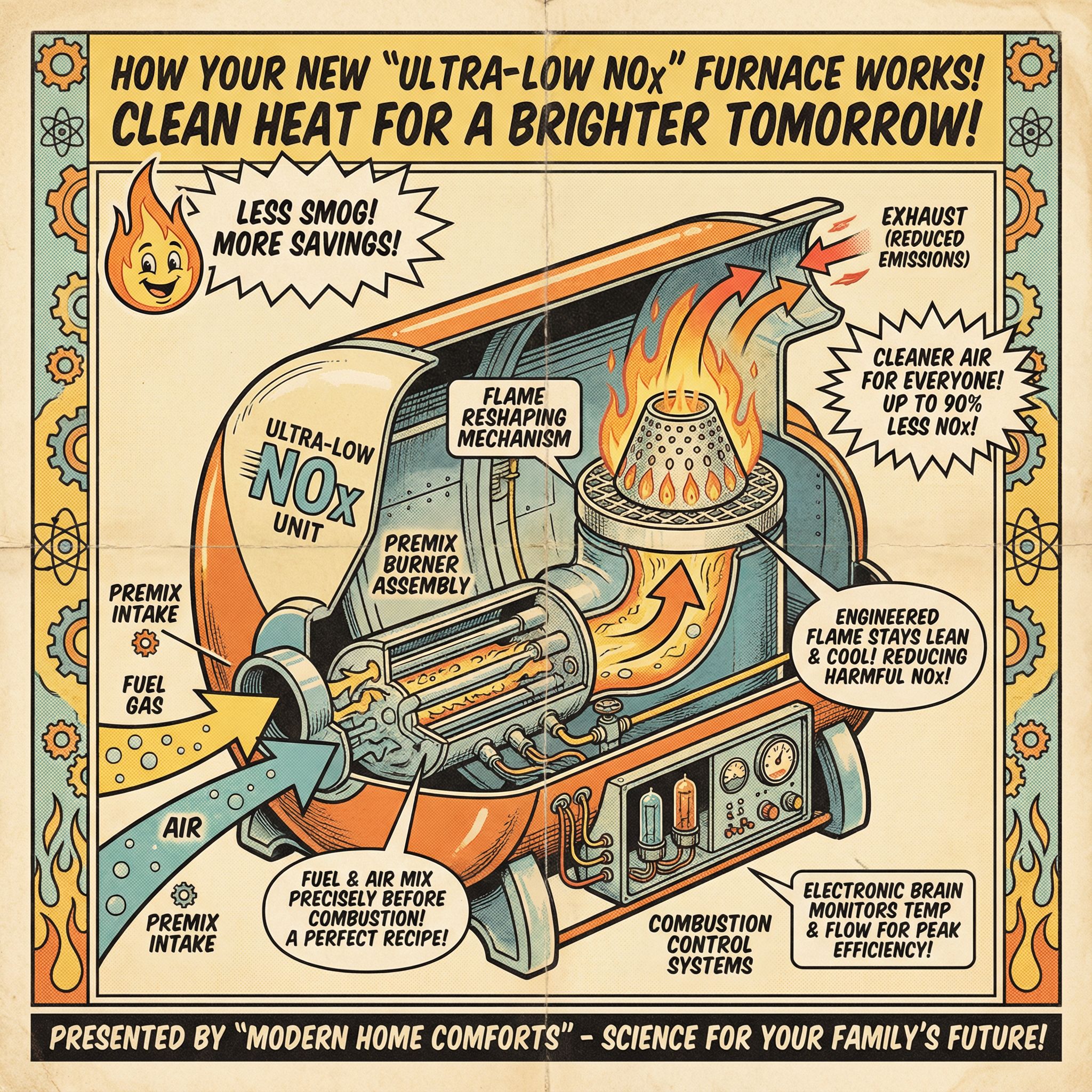
Ultra low NOx furnaces cut emissions by reshaping the flame and gas path. Premix or staged burners blend fuel and air precisely, then route the flame through shaped ports and baffles so peak temperatures and time in hot zones drop. Advanced combustion controls manage pressure, airflow, and gas valve trim to hold the air fuel ratio steady as conditions change. The result is cleaner exhaust chemistry that meets strict ng/J limits, not weaker heat output.
In our experience at Budget Heating (BudgetHeating.com), clean burn cores are often paired with comfort upgrades: ECM variable speed blowers for quiet ramps and better filtration, plus multi stage or modulating firing for steadier room temps. Think of the flame like a tight blue line on a cooktop, efficient and calm. Emissions improvements are separate from delivered comfort, but modern ULN designs usually give you both quieter operation and smoother heat.
Performance & Efficiency: AFUE, SEER/SEER2, and What Upgrading Really Saves
Start by separating emissions from efficiency: NOx limits deal with exhaust, not how much fuel or power your system uses. Efficiency is measured by AFUE for furnaces and SEER or SEER2 for air conditioners and heat pumps.
AFUE is the share of your gas that becomes usable heat. Moving from a typical 80% AFUE furnace to a condensing model around 95% AFUE, when properly sized, can trim space heating gas use roughly 15 to 20 percent. Many ultra-low-NOx furnaces are sold as condensing units at about this AFUE level, so you can address emissions requirements while improving fuel use.
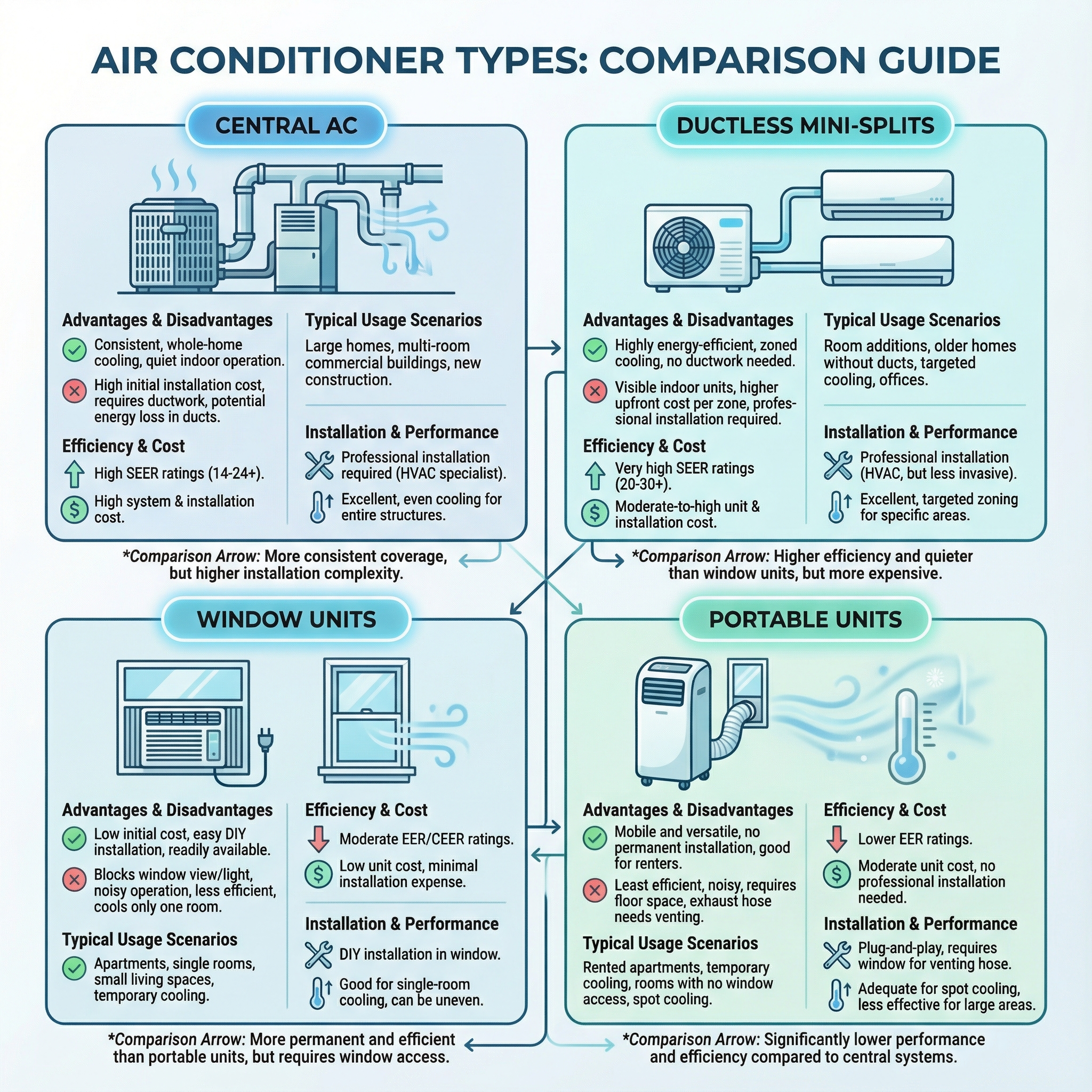
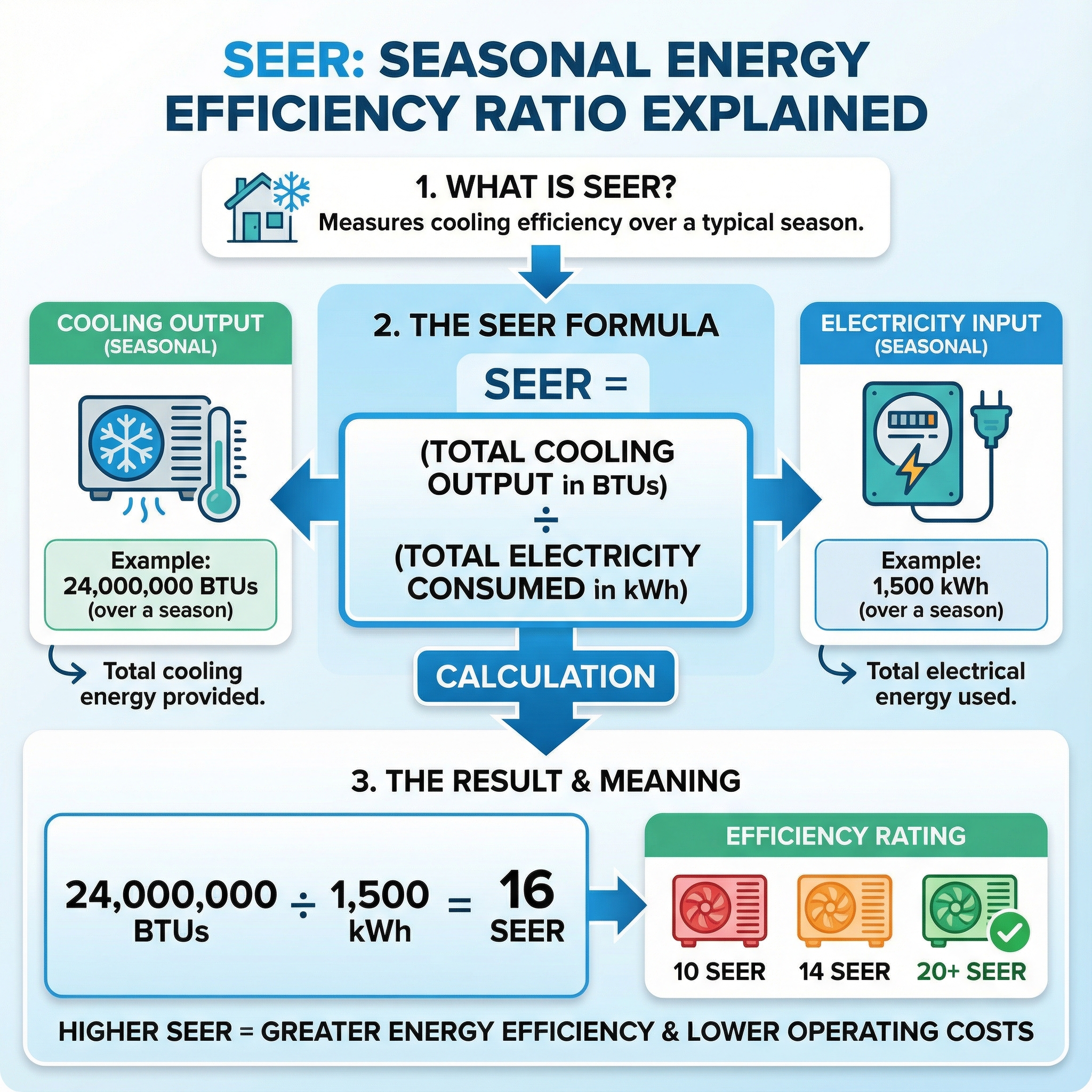
SEER and SEER2 rate cooling efficiency. Higher numbers mean less electricity per unit of cooling. Pairing your furnace or air handler with a modern high-SEER2 system in the mid-teens, or SEER 15 to 18 plus, commonly reduces cooling electricity by about 20 to 35 percent compared with older setups.
What it costs and what you save balance out differently by home. Ultra-low-NOx models usually carry a modest equipment premium over standard or low-NOx units. Condensing, high-AFUE designs cost more than non-condensing, yet the fuel savings help offset part of the upfront difference. Actual installed cost and payback hinge on local gas and electric rates, climate, duct condition, and any incentives available. In our experience, right sizing and good airflow are what let the rated numbers show up on your bill.
Rebates, Documentation & Maintenance: Find Incentives and Keep Emissions Low
Confirm with your air district if ultra-low NOx, 14 ng/J or less, is required. We verify compliance by matching the model's spec sheet, data plate, certification listings, then keep copies of permits, inspection sign-offs, HERS report, and the AHRI certificate. Ask for an itemized quote separating equipment, labor, duct corrections, permits, and testing. Check air-district and utility rebates for ultra-low-NOx furnaces, high-AFUE models, and heat pump incentives.
Homeowners: check or replace filters every 1 to 3 months, keep vents and outdoor terminations clear, test smoke and CO alarms monthly, and keep combustion air openings unblocked. Pros: yearly tune-ups for combustion safety, gas pressure, heat-exchanger inspection, condensate drain flushing, and refrigerant and electrical checks. If you smell gas or suspect CO, evacuate and call emergency services. Do not attempt DIY repairs.
Next Steps: Choosing a Compliant Furnace or an Electrification Path in California
Ultra low NOx furnaces cut emissions to about 14 ng/J or less while keeping familiar comfort. To stay compliant in California, confirm your air district rules, demand written proof of certification, pair emissions with smart AFUE or SEER choices and sound ductwork, and plan proper permitting, installation, and maintenance. With zero NOx targets expanding, compare ULN gas, high efficiency heat pumps, and dual fuel for lifecycle cost, comfort, and resilience. We can help you select equipment and coordinate with a licensed installer.
- Get a Custom Quote: we size, spec, and price a compliant package for your address.
- Talk to Our Team: call for fast phone support or share plans, we will verify compliance.
- Shop Ultra Low NOx Furnaces or High Efficiency Heat Pumps.