




Why Air Quality Is Critical in Underground Bunkers
In a bunker, HVAC is life-safety, not comfort. Below grade and often sealed, the space behaves like a closed jar: exhaled CO2 rises, oxygen effectively falls, humidity spikes, and any off-gassing or combustion byproducts linger. Without the right strategy, smoke or chemical plumes can push inward, and radon and mold thrive. From years working with sealed spaces, we treat bunkers as sealed high risk occupancy. Every design choice affects survivability, not just how it feels.
Start with an occupancy and mission profile. Size ventilation, filtration, and backup power to the maximum headcount and the longest time you might stay sealed. Build protection in layers: ventilation for dilution and pressure control, filtration for particulates and gases, continuous monitoring for CO2 and pressure, and redundancy so a single fault does not end the shelter stay. Multi-stage filtration is covered later, but the framework above is what keeps air breathable when the outside air is not.
Unique Air Quality Challenges of Underground Spaces (radon, moisture, pests and thermal quirks)
In our field work, underground rooms behave like boats in soil. Radon is the headline risk. Test routinely and mitigate at or above 4 pCi/L per EPA with sub-slab depressurization and sealed penetrations. Below grade, soil moisture drives humidity that feeds mold, so capillary breaks, drainage, vapor barriers, and balanced dehumidification are essential. Earth coupling smooths temperatures, yet equipment heat and occupants can still overheat the space. Poorly screened intakes invite yellow jackets and silverfish, so place and filter inlets carefully. Build a local threat list, wildfire smoke, industrial chemicals, or biological hazards, to set filters and emergency modes.
Designing Ventilation for Bunkers: ACH, Fresh Air, Pressurization and Emergency Modes
Even with strong filtration, a bunker needs robust ventilation to control CO2 and odors. Think in terms of air changes per hour: enough outdoor air to match occupancy, with recirculation handling most particle removal. As a design baseline, align outdoor air targets with ASHRAE 62.1 or 62.2 principles, then apply ASHRAE 241 concepts for equivalent clean air delivery so filtration and air cleaning can reduce how much outdoor air is needed during poor outdoor conditions. Keep this separate from any radon system.
Fresh air intake matters as much as airflow rate. Provide a dedicated, filtered intake and a separate exhaust, each on controllable dampers. In normal mode, balance supply and exhaust while maintaining a slight positive pressure, which helps keep unfiltered air from leaking in through cracks.
- Normal mode: dedicated intake open, balanced exhaust, slight positive pressure, outdoor air scaled to occupancy for CO2 control, recirculation running high filtration for particles.
- Emergency mode: reduce outdoor air to the minimum necessary, close or modulate the intake via dampers, shift to high filtration recirculation, and maintain controlled pressurization to limit contaminated infiltration until conditions clear.
Limitations and Tradeoffs: When Bunker Grade HVAC Is Not the Right Choice
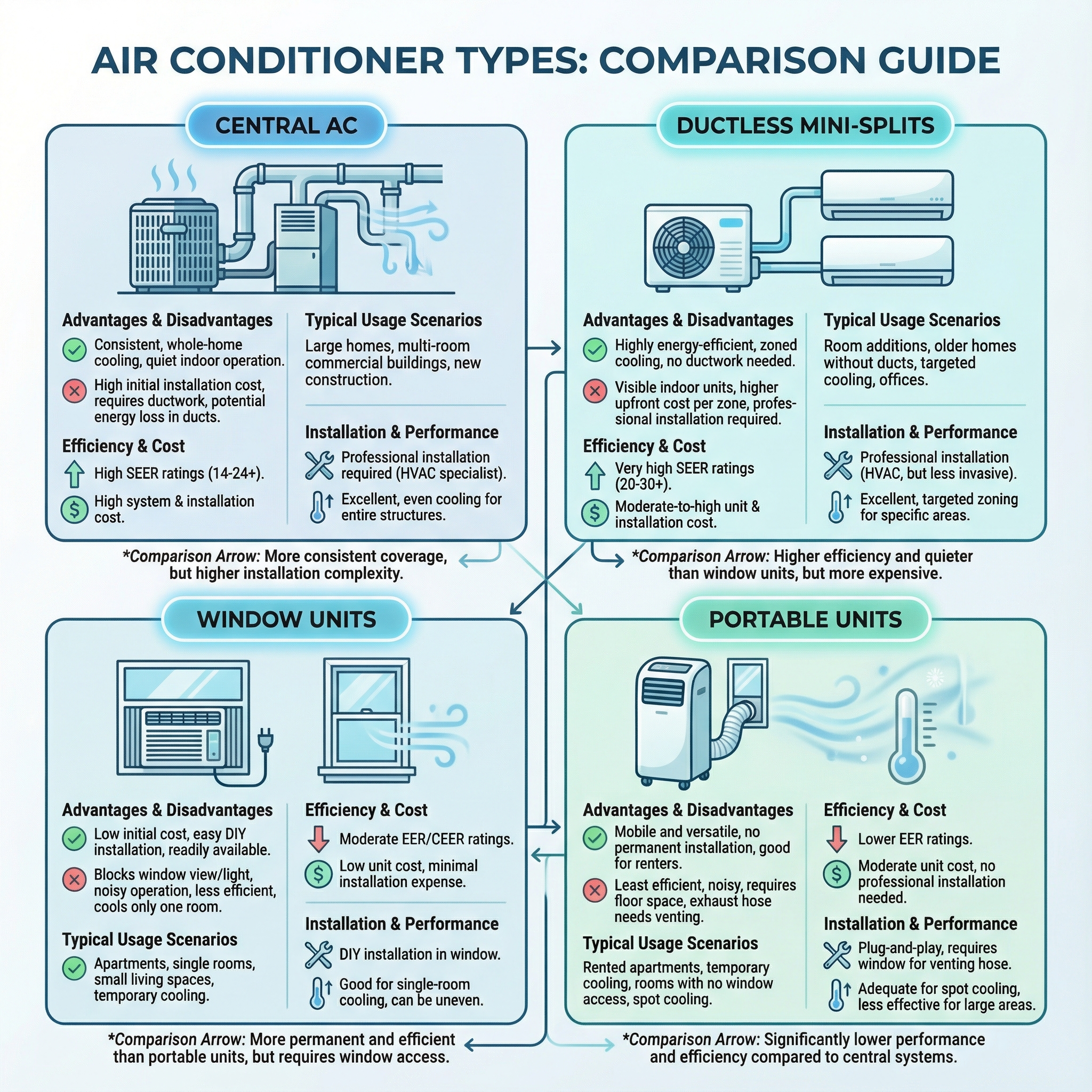
Bunker grade HVAC is not a cure all. In our experience, three misconceptions cause the most trouble: a standard home HVAC or portable AC is adequate, filtration can replace ventilation, and bigger equipment means safer. Bunkers need multi stage filtration, sealed ducting, CO2 control, and redundancy. Filters do not remove CO2, so you still need outside air exchange or a scrubber. Oversizing leads to short cycling, poor humidity control, and unstable temperatures.
There are also situations where full bunker systems are excessive or the wrong tool:
- Very short term, low occupancy use: a high quality portable HEPA unit plus temporary, controlled ventilation can be more cost effective than a permanent bunker system.
- Large communal or institutional shelters: a commercial, engineered central air handling unit with dedicated life support, designed by mechanical engineers, fits better than retrofitted residential gear.
- Extreme cold climates: consider dual fuel or a properly integrated combustion backup, with combustion safety and code compliance verified.

Ductwork, Sealing and Preventing Ingress (bees, yellow jackets, silverfish)
A duct system should act like a sealed drinking straw, air only moves where you intend. Tight ducting, gasketed filter racks, and sealed penetrations reduce unfiltered infiltration and block bees, yellow jackets, and silverfish. Where the design allows, maintain slight positive pressure so conditioned air pushes out, not drafts in. Insulate ducts to prevent sweating, and include access points for inspection and cleaning. Place supplies and returns to avoid dead zones, then balance room by room for even distribution. Protect outdoor or attic intakes with screening and smart location, and keep exhaust paths segregated from intakes to limit contaminant and pest ingress.
Filtration Options for Bunkers: MERV, HEPA and Activated Carbon Explained
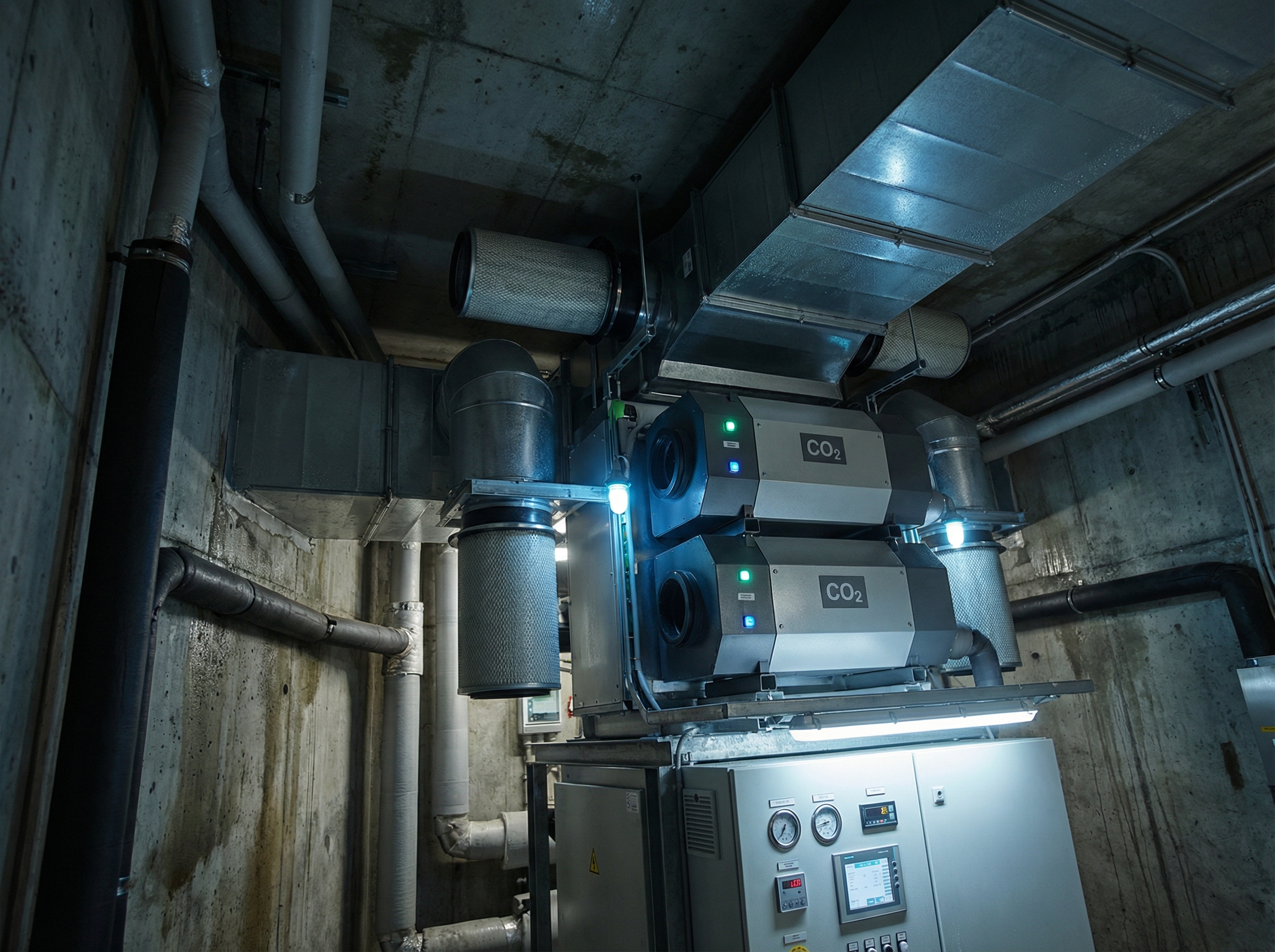
In sealed, high risk occupancy, multi stage filtration is the core protection strategy. Think of it like a three gate checkpoint. First, a coarse prefilter strips out hair, lint and larger dust to protect the finer media. Second, a high efficiency particulate stage, MERV 13 or higher or true HEPA, captures fine smoke, bio aerosols and respirable particles. Third, a gas phase stage, typically activated carbon or specialty sorbents, targets chemical vapors that particle filters cannot touch.
MERV ratings come from ASHRAE 52.2 and indicate how well a filter captures specific particle size ranges. MERV 8 to 11 works as a durable prefilter. MERV 13 and above is recommended where smoke or biological risks are a concern. HEPA goes further, capturing 99.97 percent of 0.3 micron particles when the filter and housing are properly sealed. Gas phase media does not have a MERV rating because it removes molecules, not particles, using adsorption or chemisorption. In our experience at Budget Heating (BudgetHeating.com), the most common performance killer is bypass, so tight, gasketed racks matter as much as the media you choose.
- Specify at least three stages: MERV 8 to 11 prefilter, MERV 13 plus or HEPA, and activated carbon or other gas phase media.
- Use gasketed, rigid filter racks and blank offs to eliminate leakage around filters.
- Obtain pressure drop data for each stage at design airflow, then size the fan to handle the total static.
- Stock spare filters for extended occupancy and plan change out intervals based on loading.
Keep face velocity and dwell time within manufacturer limits, especially across carbon, to balance capture efficiency, smoke removal and fan power.
CO2 Scrubbing and Life Support Options for Long Term Occupancy
CO2 is a metabolic gas, not a particulate, so filtration does not remove it. In sealed or low intake conditions, CO2 and odors rise when air looks clean. We size fresh air rates to occupancy, but when outside air is limited or unsafe, mechanical ventilation is not enough for extended sheltering, so consider CO2 scrubbers or equivalent life support measures.
CO2 scrubbing vs ventilation: ventilation dilutes with measured outdoor air, scrubbing removes CO2 in a closed loop. Picture a window versus a sponge that soaks up CO2. For long term occupancy, systems should support sustained recirculation with scrubbing or controlled fresh air, and hardware must be physically protected from debris, weather, and accidental shutoffs.
Humidity, Temperature and Thermal Load Control to Prevent Mold and Pests
In below-grade rooms, hold indoor relative humidity near 40 to 60 percent. Above that, mold and mildew thrive, condensation forms on cool surfaces, and metals corrode. Below about 40 percent, materials can dry and crack. Think of humidity as fuel for mold: reduce the fuel and growth stalls. Dampness also attracts pests. Earth-coupled walls steady temperature, but they do not remove heat. People, lights, and electronics add continuous internal gains, so equipment sizing and controls must handle those loads to prevent slow overheating.
- Include integrated dehumidification, either HVAC based or dedicated units, with reliable condensate drains and pumps.
- Verify dehumidification runs during standby or light-cooling conditions.
- Prefer variable-speed compressors and blowers for low-speed continuous circulation that stabilizes humidity and supports filtration.
Monitoring, Redundancy, Maintenance and Cost Tradeoffs for Bunker HVAC
Start with instrumentation that acts like a dashboard. Install CO2, CO, and O2 sensors for life safety, humidity sensors for mold control, plus PM2.5 and VOC sensors for air quality. Add differential pressure indicators across filters to confirm loading and detect bypass. Test all alarms monthly and keep a written log.
Commissioning matters: document delivered airflow in CFM with filters installed, verify room pressure stability with minimal filter bypass, then simulate degraded outdoor air to confirm high filtration and recirculation performance. Build redundancy where it counts: spare sensors for life safety, backup power for controls, and a stocked kit of prefilters, specified HEPA or CBRN cartridges, a backup condensate pump, belts, batteries, PPE, and your maintenance log.
Homeowner rhythm: during occupancy do weekly visual checks, replace prefilters on schedule, bag and dispose of contaminated prefilters safely, and test alarms monthly. Pros should handle refrigerant, electrical, and combustion appliances, HEPA or CBRN cartridge servicing, and any post incident remediation. Book a professional inspection every 6 to 12 months, with annual generator and combustion service and sensor calibration. Respect confined space risks from O2 or CO2, refrigerant hazards, electrical and fire risks, and evacuate for any CO event.
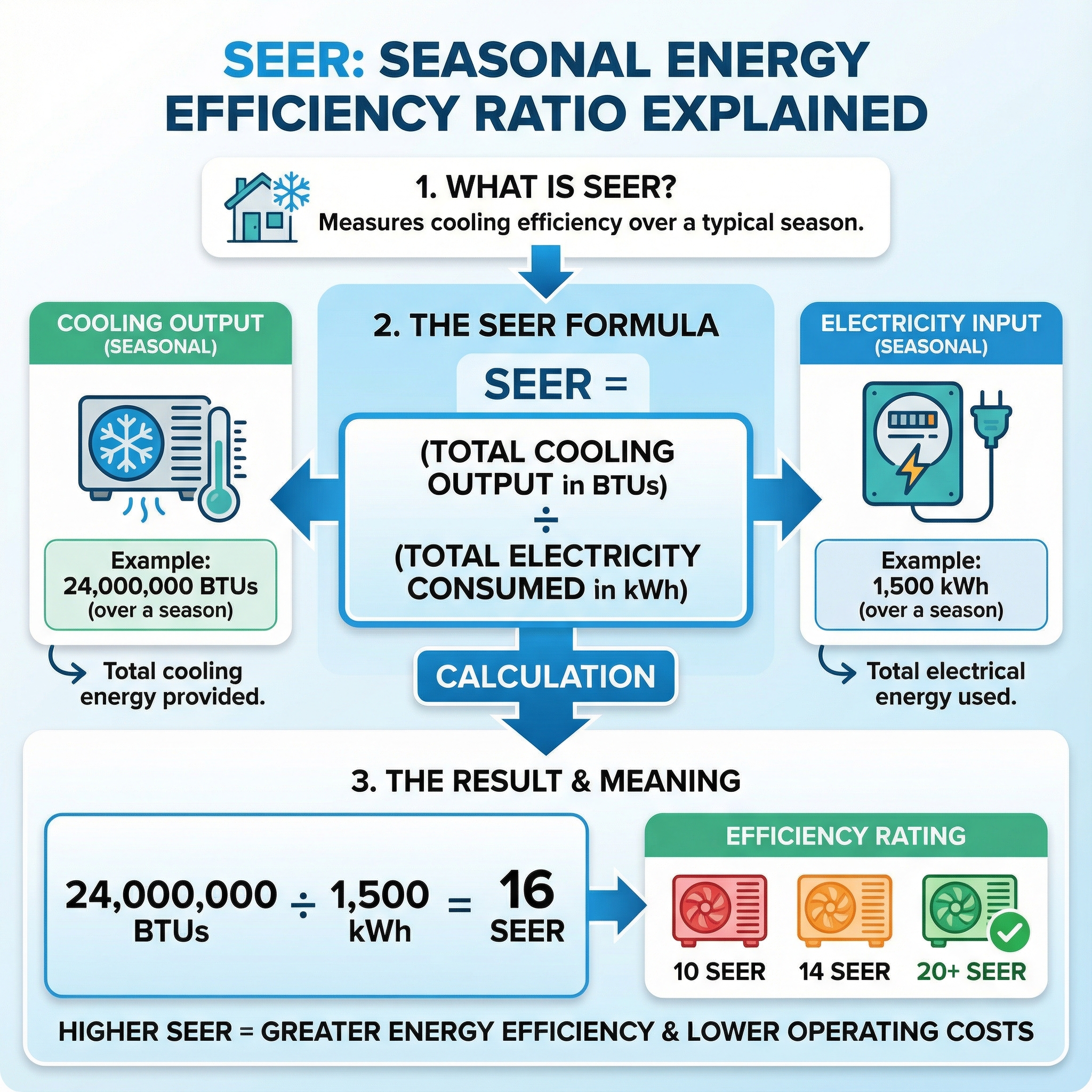
Efficiency and cost: SEER and SEER2 rate seasonal cooling efficiency, with 2023 DOE regional minimums now based on SEER2. Higher SEER2 models often use variable speed compressors that hold pressure and quality better during long runtimes. In our experience at Budget Heating (BudgetHeating.com), that translates to steadier air and lower noise. A rough rule is about 7 dollars per SEER point per month in typical use, often higher with continuous operation. Preventive maintenance can cut energy up to 30 percent, save about 4 dollars for every 1 dollar spent in avoided repairs, and extend equipment life 5 to 7 years.
Putting It Together: A Practical, Resilient Plan for Bunker Air Quality
Treat the bunker as a sealed, high risk space where ventilation, filtration, monitoring, and redundancy protect life. Build layers you can test: redundant fans, spare filters, and backup power for fans, controls, and dehumidification. Use a one page playbook for smoke or chemical events, close dampers, recirculate on high filtration, verify pressure, and log it. Label shutoffs, keep a maintenance log, and stock spares. With a contractor, confirm filter ratings and sealing, humidity plan, fresh air per person, filter pressure drop, backup power, and commissioning.
You are balancing safety with practicality. We have 30+ years building resilient HVAC, with U.S. phone support and wholesale pricing made accessible.
- Get a Custom Quote
- Talk to Our Team
- Shop Filtration and Ventilation
- Prefer phone support? Call our U.S.-based specialists