





 learning center
What Is a PTAC Unit? A quick definition and where they're used
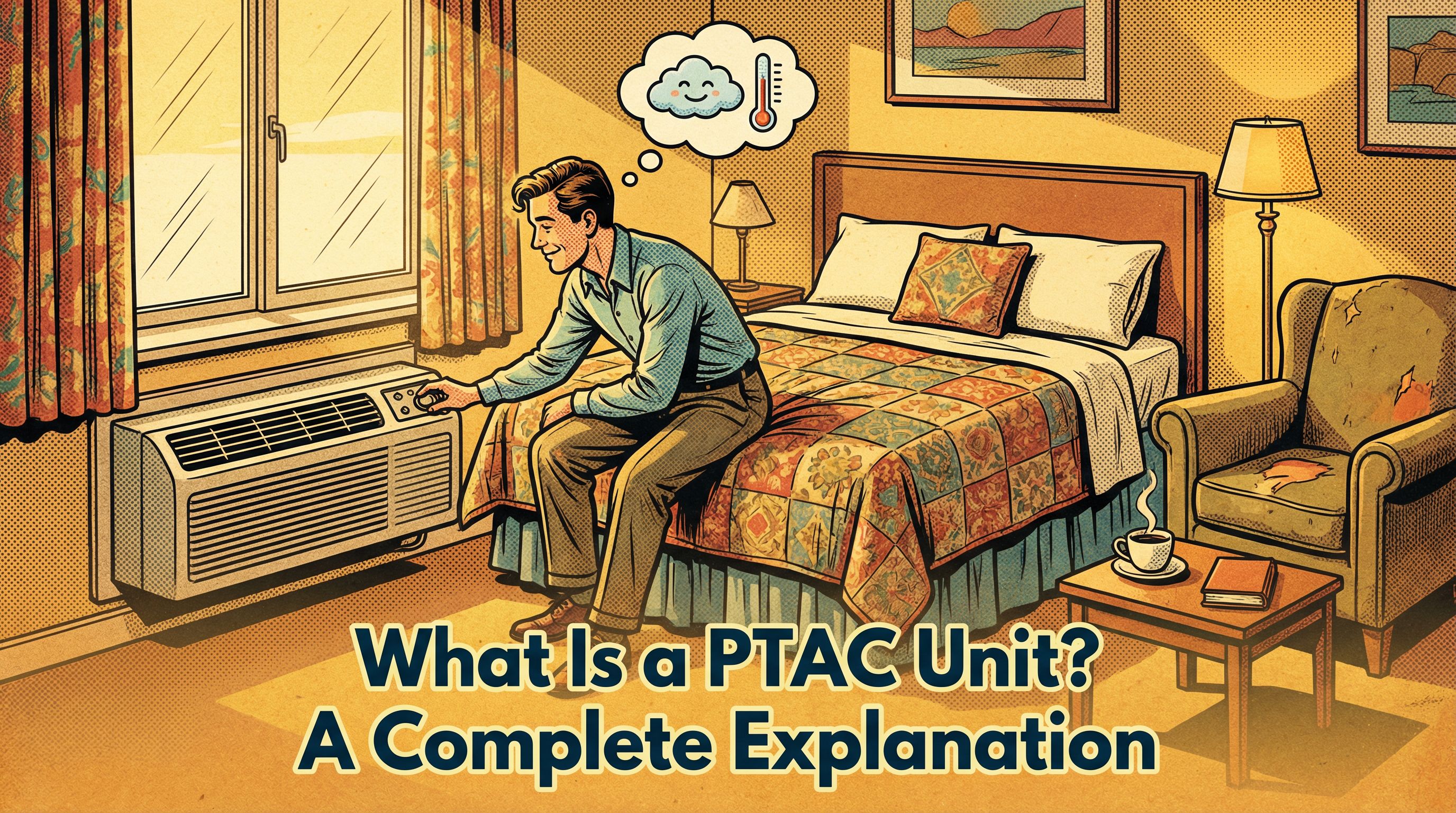
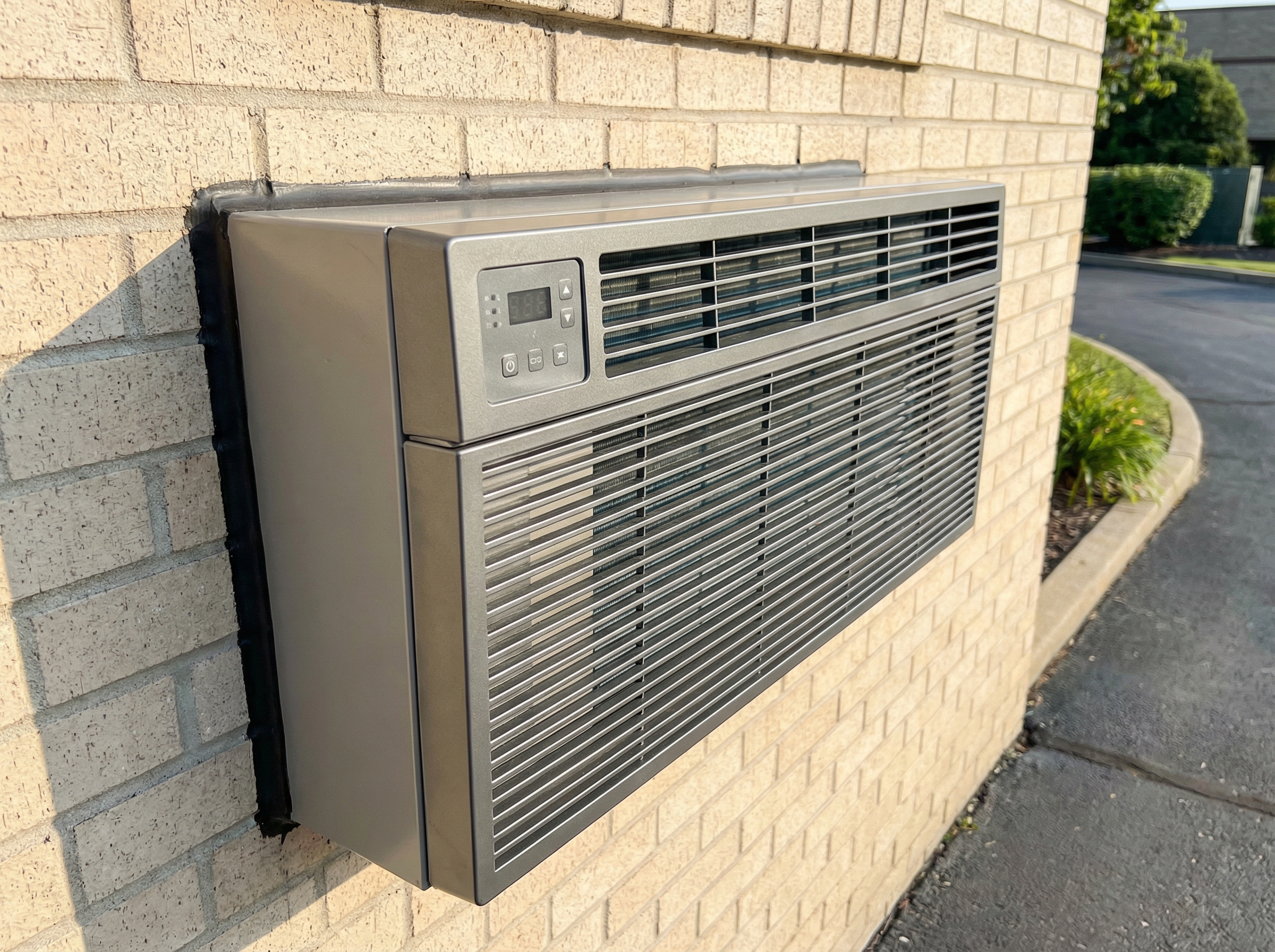
A PTAC, short for Packaged Terminal Air Conditioner, is a self-contained HVAC unit that installs through an exterior wall and serves a single room. It is the classic under-window unit you see in many hotel rooms. Because everything is packaged in one chassis, there is no ductwork, just direct room conditioning and simple controls right at the space.
PTACs are common in hotels and motels, senior housing, hospitals, multi-family apartments, and residential add-ons like sunrooms and tiny homes where running ducts is impractical. In our experience, performance and longevity come down to three things: correct sizing for the room, a properly installed wall sleeve with solid sealing and reliable drainage, and routine maintenance to keep airflow and condensate paths clear. The advantages are straightforward: fast replacement, room-level control, and predictable operation. Compared with central systems, you trade whole-home coverage for simplicity and independence in each space.
This article will outline what sizing really means for PTACs, what a good wall sleeve installation looks like, the maintenance that keeps them working, and where PTACs make the most sense compared with central equipment.
Why choose a PTAC? Benefits for individual rooms and small additions
PTACs shine in single rooms and small additions. Each chassis cools and heats in one package (electric heat or heat pump), so no separate systems. Installed cost is often lower for one room, since you need only a framed wall opening, sleeve, and exterior grille, not ductwork. In our experience, for isolated loads they can be more efficient in practice, because you avoid duct losses and only run the unit you occupy. The big win is room-by-room zoning: every PTAC has its own thermostat and modes, like a light switch for comfort. They are also modular: buildings can add units as needed and swap a chassis into an existing sleeve for quick replacement with minimal downtime.
PTAC vs mini-split, central and window units: key differences
Choosing between room-by-room and whole-home approaches comes down to layout, noise tolerance, and energy goals. Here is how the common options differ in practice.
- Installation and footprint: PTACs slide through an exterior wall as a self-contained chassis, no ductwork. Mini-splits pair an indoor wall or ceiling head with an outdoor condenser. Central systems rely on a duct network. Window units sit in a window and are typically less robust and lower capacity than standard PTACs.
- Noise: PTACs usually run louder than mini-splits and central systems because the compressor and indoor fan are in the room, while the others move the compressor outdoors.
- Whole-building efficiency: For multiple rooms, several PTACs are often less efficient than a well-designed central system or a multi-head mini-split that shares outdoor equipment or optimized ducting.
How a PTAC unit works: components and the refrigeration cycle (simple explanation)
A PTAC cools by moving heat from the room to the outdoors. Room air passes over the evaporator coil, which acts like a sponge for heat as refrigerant inside boils into vapor. The compressor raises the vapor's pressure and temperature, then the outdoor-facing condenser coil releases that heat to outside air. Fans keep air moving on both sides. In heat pump models, a reversing valve flips the flow so the outdoor coil gathers heat and the indoor coil releases it. Units with electric heat use a built-in resistance strip to warm air directly.
- Compressor: pumps refrigerant, creates the pressure difference that drives heat movement.
- Evaporator coil: indoor coil that absorbs room heat for cooling.
- Condenser coil: outdoor-facing coil that rejects heat.
- Indoor and outdoor fans: move air across each coil.
- Heating elements: electric strip or heat pump components.
- User controls: onboard thermostat and mode settings.
- Outside-air intake: small, adjustable vent for limited ventilation.
- Wall sleeve and slide-out chassis: all parts in one serviceable module.
Because major components sit in the room-facing chassis, access is straightforward, though sound levels are higher than systems with remote compressors.
Where PTACs are installed and installation basics: sleeves, wiring and drainage
- Exterior wall, often under a window. Keep intake and discharge clear, allow outdoor service space.
- Chassis slides into a metal wall sleeve. Size, flash and seal it. Common: 42×16, 36×15, 40×15 in.
- Pitch the sleeve outward so condensate drains outside. Follow the drain instructions and local codes.
- Order matched sleeve, exterior grille, sub-base if needed, filters, insulation kit. Check HOA and permits.
- Electrical: verify 208/230 V or 115 V, 265 V in commercial. Dedicated circuit. Match 15, 20 or 30 A and plug, or sub-base hardwire.
- Install day: confirm voltage and breaker, set pitch, seal, insert with gaskets, then test heat, cool and fan.
When a PTAC may not be the best choice (honest tradeoffs and better alternatives)
We use PTACs for simple, single rooms, not as whole building solutions. Here is where other options fit better.
- Whole-home or very quiet rooms: choose mini-splits or central systems for low noise and even comfort.
- Humidity and ventilation: PTAC latent capacity is limited, and small outside-air intakes rarely meet code. Use ERV/HRV or DOAS and add a dedicated dehumidifier in humid climates.
- Fresh air myth: routing outdoor air through a PTAC raises cooling and moisture load.
- Extreme cold: electric heat gets expensive; prefer a gas furnace or a properly sized hybrid system.
- Oversizing: short cycling, temperature swings, more noise and energy. Size to the room load, and remember trickle vents are not code ventilation.
Heating options for PTACs: PTHP (heat pump), electric strip, hydronic and gas
A PTHP is a PTAC with a heat pump that moves heat instead of making it, like a conveyor belt shifting warmth. In moderate winters it cuts electric use versus resistance heat. In very cold climates confirm the unit's low ambient rating and plan on electric backup. ENERGY STAR is developing new PTHP criteria, so watch for qualified models as they arrive. In our experience at Budget Heating (BudgetHeating.com), choosing the heat source by climate and building utilities prevents surprises. In extreme cold, a different system such as a gas furnace may be the better choice.
- Electric strip: lowest first cost and simplest, but highest operating cost. Often used as backup.
- PTHP: best for mild to cool regions, reduces winter energy use.
- Hydronic: pairs with a building boiler, quiet and steady, but needs piping.
- Gas: common in some light commercial sites, quick heat, requires venting and gas service.
PTAC capacity & sizing: BTUs, tonnage and choosing the right size
Size the PTAC to the room, not the model on sale. Start with about 20 BTU per sq ft, then adjust for room height, insulation, window area and internal heat. Add roughly 10% in very hot or humid climates, but in damp regions a slightly smaller unit can improve dehumidification. In our experience at Budget Heating (BudgetHeating.com), mild undersizing often feels better than a large unit that short cycles.
- 300-450 sq ft: ~9,000-10,000 BTU
- 450-600 sq ft: ~12,000-14,000 BTU
- 550-700 sq ft: ~14,700-15,000 BTU
PTACs typically run 9,000 to 15,000 BTU. For quick conversion, 1 ton equals 12,000 BTU. Avoid oversizing, it causes short cycling, poor humidity control, more noise and wasted energy. When in doubt, get a load calculation.
Efficiency is rated by EER and CEER, not SEER. EER is a steady snapshot, CEER includes standby and cycling, so use CEER for real-world cost comparisons. Modern CEER runs ~8.5 to 10+, with premium models above 10. Upgrading CEER from 8.5 to 9.4 cuts cooling energy about 9 to 10 percent, roughly 50 kWh per year on a 9,000 BTU unit used 500 hours at $0.15 per kWh.
Know your codes. DOE minimums for PTACs and PTHPs use EER, CEER and COP. Some jurisdictions, including parts of California, set capacity-based EER minimums and require formal load calculations. Confirm local code and AHRI listings before purchase.
Maintenance checklist: filters, coils, seals, safety and seasonal care
In our experience, poor maintenance trims efficiency about 15 to 25 percent and shortens a typical 7 to 10 year PTAC service life. Use this schedule to keep performance steady and avoid failures.
- Monthly: Remove and wash reusable intake filters, vacuum the intake grille, confirm exterior louvers are clear.
- Quarterly: Lightly clean room-side coil fins, verify sleeve seals and exterior grilles are intact.
- Condensate: Inspect and clear the condensate pan, weep holes and drain paths to prevent clogs, leaks and growth.
- Annually by a professional: Deep-clean indoor and outdoor coils and the blower wheel, check electrical connections and capacitors, verify operating amperage, clear condensate systems, test cooling, heating, defrost and safety controls.
- Safety: De-energize before DIY work. Use licensed electricians for circuits or hardwiring and EPA 608 certified HVAC techs for refrigerant or compressor issues. Shut down for burning smells, visible arcing, repeated icing, oil stains, interior water intrusion or sudden loss of heating or cooling.
Is a PTAC right for your space? Cost, replacement considerations and a quick buying checklist
PTACs shine when each room needs its own thermostat, like hotels, multifamily, offices and sunrooms. Budget for the unit, matched wall sleeve and grille, any sub-base or hardwiring, electrical work, proper sealing or flashing, possible permits, annual maintenance, and your local utility rates. Efficient units can start under about $1,000 in some markets, while higher CEER models cost more but can pay back in high-use spaces. Replace around 7 to 10 years, with frequent repairs, or to step up to a higher CEER model.
- Confirm chassis and sleeve size compatibility
- Verify voltage, amperage and dedicated circuit
- Prioritize CEER, then review EER
- Quiet or sleep modes for bedrooms
- Heating type: PTHP versus electric strip
- Accessories: filters, grille, sleeve kit
- Warranty and parts availability
After purchase, record model and serial numbers, register the unit with the manufacturer, keep the manuals, and confirm warranty and parts support to streamline future service.
Bottom line: pick the correct power, fit, and CEER, and plan for total cost over the life of the unit. If you are replacing or outfitting multiple rooms, the choices can feel complex. We have done this daily for 30+ years and can help you get it right.
- Get a Custom Quote
- Talk to Our Team by phone for sizing and power requirements
- Shop PTACs at wholesale pricing with full factory warranties
 Cooling
 Heating
 Money Saving Tips
 Product and Brands Insights
 Buying Guides
 State by State
 HVAC Systems