





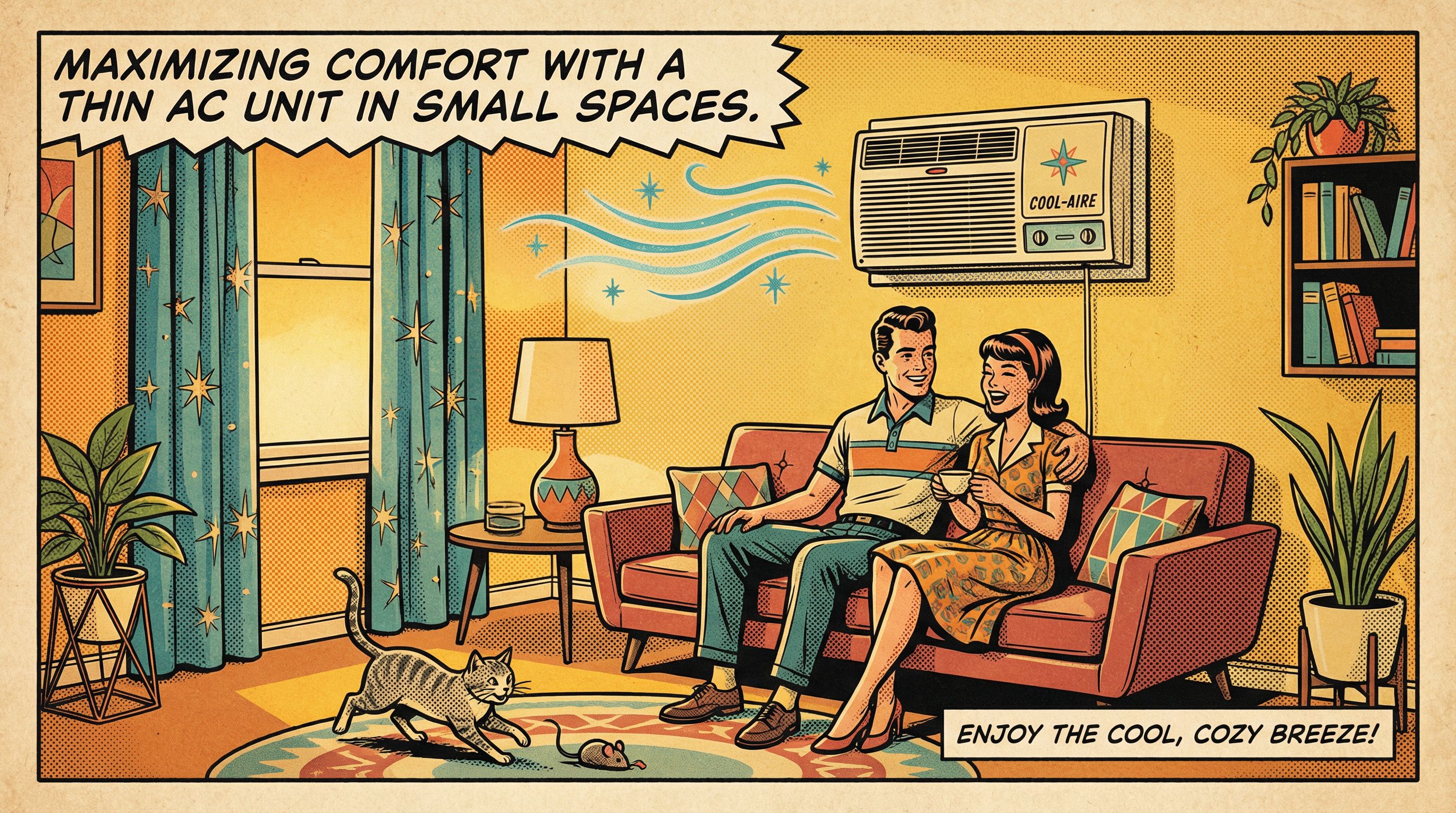
Maximizing Comfort with a Thin AC Unit in Small Spaces
Cooling studios, tiny homes, and compact condos is tough when every inch counts. Thin AC units solve this by delivering full-room cooling in a slim body that fits where traditional systems will not. In our field experience, they are a smart match for tight floor plans that need quiet, efficient comfort without bulky ductwork.
What is a thin AC unit? It is a space-saving air conditioner built with a shallow depth and low-profile form. Most often, this means a ductless mini-split with a slender wall-mounted indoor unit and a compact outdoor condenser, or a slim window or through-the-wall unit designed for narrow openings. The design lets you mount high on a wall, tuck above a doorway, or slide into a narrow sleeve without crowding furniture. The benefits are practical: quieter operation, strong efficiency, and simplified installation compared to large central systems. Think of it like a laptop that does the job of a desktop while taking up a fraction of the space.
This guide will cover the essentials for small-space comfort: correct sizing, smart placement, practical installation tips, what to look for in efficiency features, and the maintenance that keeps performance steady season after season.
Why Choose a Thin (Slim) AC for Small Rooms?
Thin ACs shine in compact homes and rentals because they solve space, noise and retrofit challenges without tearing the place apart. They tuck in neatly, run quietly, and deliver steady comfort with straightforward upkeep.
- Space saving design: low profile indoor heads preserve floor area, windows and sightlines, and the slim casing fits tight walls or niches without crowding furniture.
- Aesthetics and flexible placement: discreet refrigerant line routing helps units blend with décor and reach locations that bulky air handlers cannot.
- Ductless with minimal disruption: small line sets thread through walls, avoiding demolition, dust and duct energy losses. Skipping new ductwork often trims project cost and complexity on retrofits.
- Inverter variable speed advantage: like a dimmer switch for cooling, the compressor modulates to match the room load, reducing on off cycling and keeping temperature and humidity remarkably stable.
- Quiet operation: modern slim heads operate at low sound levels, a good fit for bedrooms, nurseries and home offices.
- Smart controls and zoning advantage: remotes and app control enable room by room scheduling and setpoints, so you condition occupied spaces while leaving empty rooms idle.
- Simple upkeep: accessible filters make routine cleaning easy, and with no ducts there is no duct cleaning to plan.
- Sizing and placement matter: selecting the right capacity and siting the head to avoid dead zones helps prevent short cycling and uneven comfort.
How to Size a Thin AC: BTU, SEER2 and Room Measurements
Start with the room itself. Measure length, width and ceiling height, then note insulation quality, window size and orientation, shading, and internal heat gains from people and electronics. A practical starting point is 20 to 30 Btu per square foot. Use the low end for well insulated, shaded rooms and the high end for spaces with weak insulation, large south or west windows, or noticeable internal gains. Adjust upward for ceilings taller than 8 feet. In our experience at Budget Heating (BudgetHeating.com), a quick rule of thumb plus a few room specific adjustments gets you close, then a Manual J confirms the load precisely.
- Increase BTU for high ceilings, sun exposed glass, many occupants or cooking/equipment loads.
- Decrease BTU for excellent insulation, tight windows and consistent shading.
- Request a contractor's Manual J room by room calculation to prevent oversizing or undersizing.
- Consider modest upsizing only when internal gains or solar exposure are consistently high.
Efficiency guides operating cost and model choice. SEER and SEER2 measure seasonal cooling efficiency, and SEER2 is the newer, stricter test you should use for comparisons. Think of SEER like miles per gallon, higher numbers mean less electricity for the same cooling. Energy use is roughly inversely proportional to SEER, so moving from 10 to 13 SEER can cut energy about 23 percent, and 10 to 16 SEER about 38 percent. Thin units follow the same percentages, though the absolute dollars are smaller. Over the system life, higher SEER2 trims bills, so weigh the extra upfront cost against your electricity rate and expected run hours.
When a Thin AC May Not Be the Best Choice (Honest Tradeoffs & Alternatives)
Thin, wall mounted ACs can be excellent in the right setting, but there are cases where another approach works better. Here are the common limits we see and practical alternatives.
- Extended sub freezing weather: Many thin or ductless units lose capacity as outdoor temperatures plunge. Cold climate heat pump models are designed for this, or pair the system with a supplemental electric or gas backup for reliability.
- Multiple closed rooms: One slim head rarely conditions several rooms with doors shut. Consider a multi zone mini split with additional heads, or a small ducted system to distribute air evenly.
- Outdoor placement constraints: If you cannot meet clearance, airflow, or noise requirements for the outdoor unit, look at permitted window units for isolated spaces, or a centrally sited ducted system that fits the lot and neighbor concerns.
Common misconceptions to avoid: more BTUs are not always better, oversizing causes short cycling and poor dehumidification. A thin unit is not weak when correctly sized. Setting the thermostat far below target does not cool faster. Needing refrigerant top ups yearly points to a leak that must be repaired.

Seal, Insulate, and Direct Airflow: Simple Steps to Boost Comfort
In our field experience, small envelope tweaks can make a compact AC feel bigger, like parking a car in shade instead of full sun. Seal obvious drafts at windows, doors and attic hatches, add insulation where practical, and use reflective or blackout window coverings on sun-facing glass to cut heat gain. Run a small ceiling or circulation fan to improve mixing so you can raise the setpoint by about 2 to 3 F and stay comfortable. Manage interior doors: keep them open when one head serves nearby rooms, or plan another head if rooms stay closed.
Top Thin AC Types: Slim Portable, Wall Mounted, Through the Wall and Mini Splits
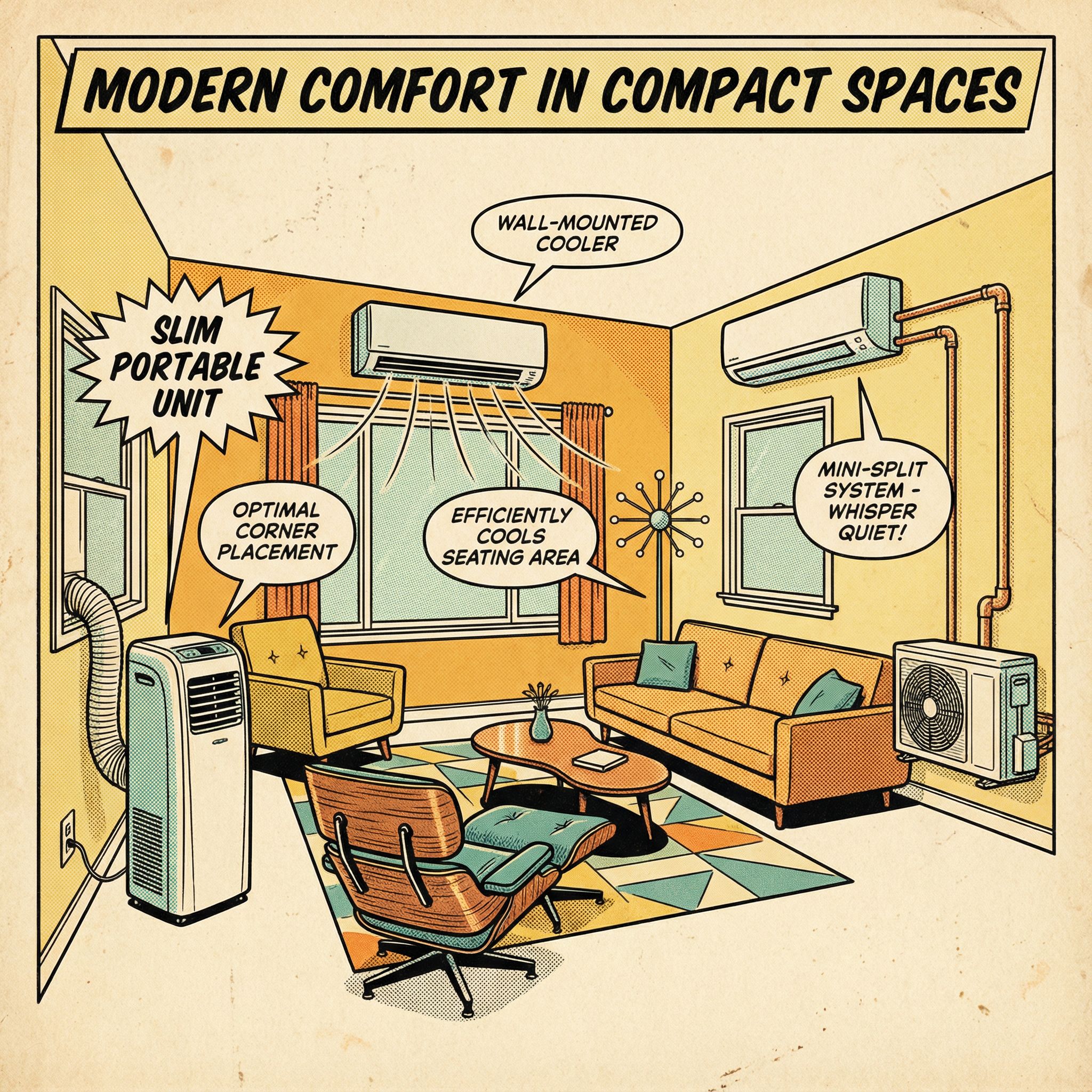
Thin options break down into four camps: slim portables, narrow room/window units, through the wall units, and wall mounted mini split heads. Portables and window units are quickest to deploy, but they need short, well sealed exhaust runs to prevent heat creep. They are typically rated with EER or CEER. Through the wall models use a sleeve and a sealed perimeter, which improves permanence and sound control compared to a window install.
Wall mounted mini splits avoid ducts by running small refrigerant line sets and a condensate drain through the wall. Plan the drain path first, either gravity or a condensate pump, and site the outdoor unit with proper clearances. In our experience at Budget Heating (BudgetHeating.com), good condensate planning prevents most callbacks.
Regional rules matter. SEER2 minimums vary by U.S. region, and hot humid climates favor systems with strong dehumidification at low speeds. Cold regions need cold climate models or backup heat. Under the AIM Act, many new systems use R 32 or R 454B, so follow manufacturer and code guidance.
Best Placement and Mounting Options in Tight Spaces
In compact rooms, mount the indoor head high on a wall so supply air travels across the main occupied area, then recirculates naturally. Maintain manufacturer clearances, often 6-12 inches from the ceiling and the specified side gaps, to keep the intake and discharge unobstructed. Think of airflow like a flashlight beam: aim it across the room, not straight at faces. In narrow rooms, place the unit on a short wall and blow along the long dimension to reduce hot and cold pockets. Avoid alcoves, soffits, or above doors where air can short cycle. Do not block the top intake or front discharge with furniture, curtains, or shelving. In bedrooms, avoid mounting directly over the pillow; set vanes to throw air above occupants so it mixes before descending.
Installation Tips for Renters and Homeowners: Electrical, Drainage and Line Set Best Practices
Small spaces reward careful planning. Use this checklist and ask your contractor. We recommend getting approvals before drilling.
- Suitability and location: Is the wall sound for the indoor head with airflow and service space? Are HOA or condo rules met? Is the outdoor spot accessible with required clearances?
- Electrical: What voltage and amperage are needed? Will a dedicated circuit or panel upgrade be required? Where will the code compliant outdoor disconnect be mounted?
- Condensate: Gravity drain or condensate pump? Where will the line terminate safely?
- Line set: How many wall penetrations? Will sharp bends be avoided, length limits respected, and line hide covers used?
- Outdoor unit: Level pad or wall bracket, full service clearances, protection from debris, snow, and roof runoff?
- Commissioning and warranty: Will temperatures, quiet operation, and condensate flow be verified, and will you provide itemized quotes, warranty terms and coverage, manuals, and serial numbers?
Noise, Maintenance and Longevity: Keep a Slim AC Running Smoothly
In small rooms, acceptable indoor noise is roughly 25 to 45 dB. A steady fan whoosh and a brief compressor ramp up are normal. Rattling, buzzing that rises and falls, or grinding hints at looseness or wear and should be checked.
- Clean or replace indoor filters monthly during heavy use, otherwise every 1 to 3 months.
- Keep the indoor intake and discharge clear of furniture and dust.
- Outside, remove leaves and maintain 2 to 3 ft of open space around the unit.
- De energize power before any cleaning. Address condensate leaks quickly to prevent mold.
Plan an annual professional tune up. Technicians should clean coils, test electrical components, check the refrigerant circuit, and calibrate controls. Leave refrigerant and electrical repairs to qualified techs, since improper handling risks frostbite, asphyxiation, and flammability with some blends.
- Shut down and call a pro for burning or plastic odors, smoke, repeated breaker trips, ice on lines or coils, loud grinding, or persistent error codes.
This routine keeps noise in check, preserves efficiency, and supports a long service life.
Putting It All Together: Quick Setup & Optimization Checklist for Slim ACs
Dial in comfort by aligning capacity, airflow, and install quality with the room. Measure the space and get a Manual J when possible, choose a right sized SEER2 inverter, place the head for cross room airflow, seal and shade windows, use a small fan, and keep filters clean with routine service. If it still struggles, reassess capacity and zoning, or step up to a multi zone mini split.
Our team can size it, set the layout, and ship fast. With 30+ years and 200,000+ orders, you get U.S. based tech support, wholesale pricing, and full warranties.
- Get a Custom Quote
- Talk to Our Team by phone or chat
- Shop Slim ACs
- Ask about free shipping and Affirm financing
 Cooling
 Heating
 Learning Center
 Money Saving Tips
 Product and Brands Insights
 Buying Guides
 State by State
 HVAC Systems