




 learning center
UV Light: Your HVAC's Secret Weapon: What It Is and Who Should Care
When it comes to cleaner, healthier air and a smoother-running system, UV light can be your HVAC's secret weapon. UV-C is the shortwave band that targets microbes on coils and in drain pans, disrupting their DNA so they cannot multiply. Think of it as a toothbrush for your evaporator coil, keeping surfaces clean between service visits. From our field experience, UV-C is a complementary tool, not a universal fix, and works best with good filtration, ventilation, humidity control, and routine maintenance. Here is what to know and who should care.
How UV C Works: The Science Behind Germicidal UV
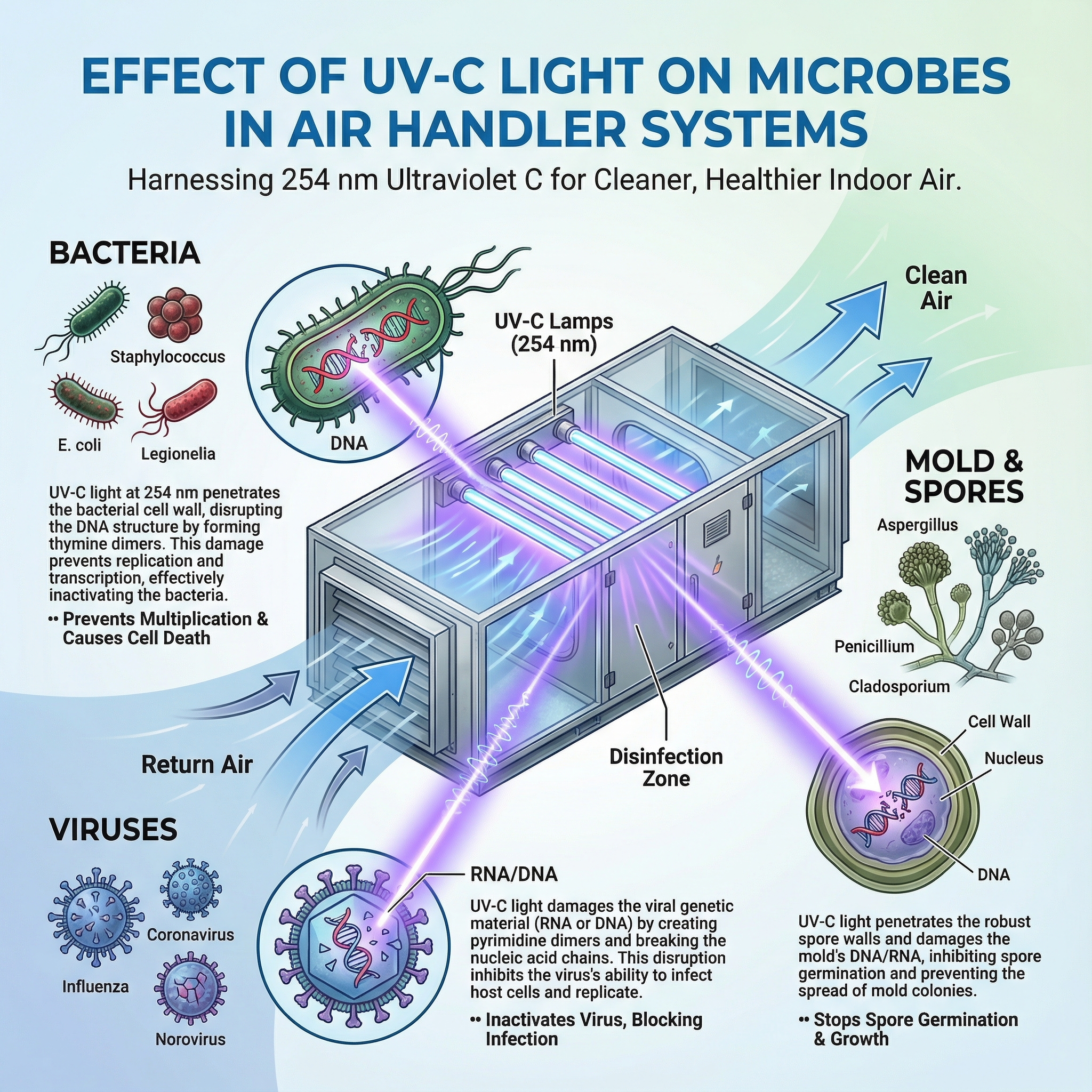
UV C in the 200-280 nm band inactivates microbes by damaging their DNA or RNA so they cannot reproduce. HVAC systems commonly use low-pressure lamps that emit near 254 nm, while UV-C LEDs operate around 265-280 nm.
Effectiveness comes down to delivered dose, intensity multiplied by exposure time. Think of dose like baking: oven temperature is intensity, bake time is exposure. Faster airflow shortens exposure, humidity, and organism type affect susceptibility, and line of sight is critical since shadows shield surfaces. Lamp placement and aging change intensity, so aim for direct coverage and verify output over time.
Types of HVAC UV Systems: Coil Lights, In Duct Units, and Where They're Used
Coil-sterilizing lamps sit above or beside the evaporator coil and the condensate pan. Their job is continuous surface hygiene, limiting slime, mold, and biofilm where moisture lingers. Placement matters: lamp length and location should provide a clear line of sight across the coil face to reduce shadowing.
In-duct air treatment lights mount in the return or supply plenum to expose moving air as it passes. These focus on the air stream, not just surfaces. Think of UV like sunlight, it works only where it can see.
Some installations use both, pairing a coil light for surface control with an in-duct unit for the air path. Selection comes down to what you want to address and where the lamp can maintain an unobstructed line of sight.
What the Research and Standards Say: ASHRAE, UL, EPA, and Test Methods
Think of the standards landscape as building codes for invisible light. In our field work, compliant UV installs hinge on a few pillars:
- ASHRAE 241 2023 recognizes UVGI as a way to deliver equivalent clean air for infectious aerosol control in healthcare and non-healthcare spaces.
- Performance verification relies on ASHRAE 185.1 for in-duct airstream UVGI and ASHRAE 185.2 for surface or coil treatment.
- EPA oversight under FIFRA applies when devices are marketed to control microorganisms. In California, CARB limits ozone emissions, so non-ozone UV solutions are preferred over ozone-generating 185 nm lamps.
- Photobiological safety follows IEC 62471, while HVAC integrations are evaluated within UL 60335 2 40 safety frameworks.
- Efficiency labels follow DOE's SEER to SEER2 procedures. UV add-ons have no SEER and must be installed so they do not raise static pressure or otherwise affect rated performance.
The practical path: choose UVGI systems that are tested to ASHRAE 185.x, meet IEC and UL safety, and align with EPA and CARB requirements without compromising SEER2-rated HVAC operation.
Installation, Safety and Costs: DIY vs Professional and What to Budget For
In our field installs, these systems work best when specified and installed by qualified HVAC professionals. Pros confirm correct sizing, lamp placement, shielding, wiring and interlocks, check compatibility with the air handler and duct, and ensure static pressure is not increased or equipment compliance compromised.
- Homeowner: keep panels closed, watch external status lights, maintain filters, and schedule service.
- Professional: all electrical work, lamp sizing and placement, ballast or driver service, lamp replacement, any work near refrigerant or combustion appliances.
Direct UV-C can harm eyes and skin, so lamps must be enclosed, access panels closed, interlocks used, and power off before service. If exposure cannot be avoided, use UV-blocking PPE and never bypass safety devices.
There are no universal cost ranges. Request an all-in price that includes equipment and labor, the replacement lamp cost, expected energy use, and discuss realistic outcomes.
Primary Benefits: Killing Germs, Reducing Mold, and Helping Your HVAC Run Better
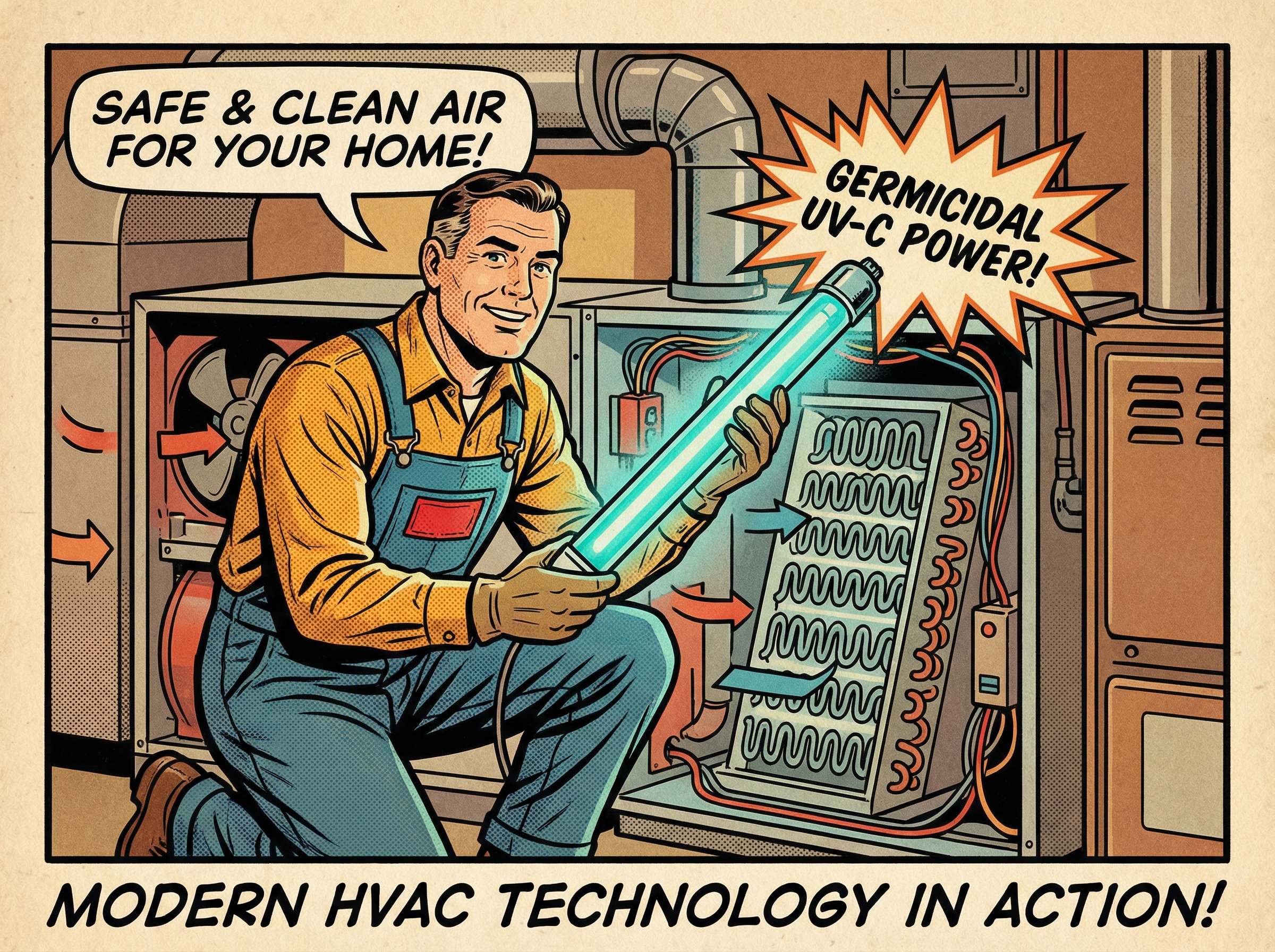
UV-C targets living growth on coils and in the airstream. With a proper dose, inactivation for many microbes can approach 99.9 percent. Breaking down biofilm on coils and drain pans cuts musty odors and IAQ complaints, especially with good filtration.
It does not replace filters. UV will not remove dust, pollen, pet dander, or smoke. Pair it with correctly sized, well-sealed filtration, plus ventilation and humidity control.
Cleaner coils preserve heat transfer and airflow. A fouled coil is like a coffee filter with residue; flow drops. Cleaner surfaces can trim runtime and reduce microbial service calls. At Budget Heating (BudgetHeating.com), this is where owners notice the payoff.
Signs Your HVAC Needs UV, And When UV Is Not the Right Fix
In our experience, UV fits when you see recurring coil mold or slime, musty odors, frequent condensate drain clogs or biofilm, coils that stay wet in humid homes, or when sensitive occupants, pets, or smokers make cleaner coils and airstreams more important.
Common misconceptions: not all UV is equal, wavelength, dose, and design matter. UV does not instantly sterilize every organism. Coil units and airstream units do different jobs, and misapplying types is a common mistake. Think of UV like sunlight, dose and contact time drive results.
UV is not the best primary fix for other issues. If dust, pollen, or smoke dominate, use HEPA filtration. For chemical or VOC odors, prioritize source control and increased ventilation. For persistent humidity, use dedicated dehumidification.
How to Choose the Right UV System: A Homeowner's Checklist for Sizing, Placement and Expectations
- Decide if you need it: frequent allergies, odors, or persistent coil slime, plus humid or damp climates, point to UV.
- Audit what you already have: filter quality, change frequency, and humidity control.
- Choose configuration: coil lamp, in duct, or both, based on goals and budget.
- Sizing and placement: ask for a wattage per coil area calculation. Rule of thumb, about 7.5 lamp watts per sq ft of coil. In our experience at Budget Heating (BudgetHeating.com), correct placement matters as much as watts.
- Insist on pro installation: proper shielding, wiring, and service access.
- Get an all-in price: equipment, installation, energy use, and lamp replacement costs.
- Plan maintenance: wipe viewport, confirm operation, replace lamps on schedule, typically yearly for standard bulbs.
- Winter tip: keep UV on in tight homes to limit off-season biofilm growth.
- Verify results: before and after coil photos, plus a labeled install.
- Ask contractors: exact sizing math, lamp wattage and count, placement, safety measures, maintenance interval, replacement lamp part numbers, and costs.
Maintenance: Bulb Lifespan, Cleaning, Replacement, and Record Keeping
In our field work, UV bulbs behave like a flashlight that slowly dims, so the delivered dose declines with hours of use. To keep performance steady, replace the lamp about every 12 to 24 months, per the unit label. Keep installation and replacement dates posted at the unit, add UV checks to seasonal HVAC service, and plan for professional lamp changes with coil inspections. Keep cleaning simple and by the book, only as specified for your device. Budget for periodic bulbs and modest around-the-clock electricity as part of normal HVAC upkeep.
Conclusion: Is HVAC UV-C Right for Your Building - Next Steps
HVAC UV-C is a targeted, chemical-free add-on that can reduce microbial growth on coils and in airstreams, curb odors, and help preserve performance over time. It works best as part of a layered IAQ plan with filtration, ventilation, humidity control, and routine maintenance. For safe outcomes, choose non-ozone units, use professional installation, and keep to replacement intervals.
If you are weighing UV-C for cleaner air or coil hygiene, we can size, spec, and integrate it properly. With 30+ years in HVAC and 200,000+ orders fulfilled, our team supports you before and after the sale.
- Get a Custom Quote for UV-C and IAQ packages
- Talk to Our Team, U.S.-based phone support available
- Shop UV-C Systems and Indoor Air Quality at BudgetHeating.com
- Ask about wholesale pricing, free shipping options, and Affirm financing
 Cooling
 Heating
 Money Saving Tips
 Product and Brands Insights
 Buying Guides
 State by State
 HVAC Systems