





 HVAC maintenance
How Often Do You Need to Change Your Central Air Conditioner Filter? A Quick Overview
Filter care matters because it is the simplest maintenance task with outsized impact. A clean filter lets the system move air freely, supports consistent comfort, can lower energy bills, improves indoor air quality, and helps extend equipment life. Think of it like a dryer's lint screen for your air handler, it catches debris before it can clog critical parts.
What a central AC filter does: it captures dust, fibers, pet dander, and other particles before they reach the evaporator coil and blower. By keeping that buildup out, the filter protects components, preserves airflow, and keeps temperatures even across rooms.
How often you should replace it is not one-size-fits-all. The right cadence depends on the filter type, how much the system runs, household conditions such as pets or allergies, and the local environment, for example high pollen or dust. Understanding these factors helps you set a practical, reliable replacement schedule.
Why Changing Your AC Filter Matters: Energy, Air Quality and System Longevity
In our field experience, timely filter changes pay off in three ways: cleaner air, steadier comfort, and lower strain on expensive components. Regular replacement keeps the media capturing dust, pet dander, pollen, mold spores, and smoke particles, which is especially important for allergy or asthma sufferers.
Airflow is the lifeblood of an AC. A clean filter lets air move freely across the evaporator coil and through the ducts, so rooms cool evenly and the thermostat is satisfied without long run times. When the filter is clogged, airflow drops like breathing through a scarf while jogging. The coil can run too cold and frost, the blower draws more amps, and some rooms develop hot spots.
That restriction forces the system to work harder, which raises energy use and monthly bills. Over time, the added load can stress the blower motor and compressor, accelerating wear and setting the stage for nuisance shutdowns or costly repairs.
Recommended Replacement Intervals: By Filter Type and Household Situation
Use this as a practical baseline: most central HVAC systems do best with a filter change every 30 to 90 days. Treat 90 days as a starting point, then adjust based on filter type and how your home is used.
- 1 inch disposable fiberglass: about every 30 days.
- Pleated filters (MERV ~8 to 12, 2 to 4 inches): roughly every 60 to 90 days. Many 4 inch pleated filters last 6 to 12 months in moderate use.
- Washable or reusable: clean every 1 to 3 months, following the manufacturer's guidance.
- High efficiency (MERV 13+): can load faster. Many manufacturers advise changes around every 60 days under normal use.
Adjust by household conditions:
- Standard occupied home with no pets: about every 90 days.
- One pet: about every 60 days.
- Multiple pets or allergy or asthma sufferers: about every 20 to 45 days.
- Vacation or rarely used homes: 9 to 12 months if system use is low and filters are inspected.
In our experience at Budget Heating (BudgetHeating.com), the posted up to lifespan assumes gentle use, while busy homes benefit from the shorter end of the ranges. Set a reminder, check the first few cycles, and fine tune your schedule from there.
How to Tell If Your AC Filter Needs Changing: Visual Checks & Performance Signs
Skip the calendar and look at the filter once a month. From years in the field, we have found a quick glance is often more reliable than a date stamp. Replace early if you see any of the following:
- The filter media looks gray or dark instead of off white.
- Dust is visibly caked across much of the surface.
- More than about 50% of the surface is covered with debris, like a dryer lint screen after a heavy load.
Performance can tip you off too: noticeably weaker airflow at vents, the system running much longer to hit the set temperature, or extra dust settling on furniture. Any of these point to a clogged filter or airflow restriction and warrant immediate replacement. After swapping the filter, monitor airflow and runtimes over the next day to confirm the issue is resolved.
When Filters Aren't Enough: Limitations, Myths and Regional Considerations
Quick myth check: changing a filter once a year is too infrequent, one fixed schedule does not fit every home, and waiting until a filter looks dirty means efficiency has dropped. Treat filter changes as both air quality and equipment care. In 30 plus years of HVAC work we have seen systems strain or short cycle because a filter was overdue.
Climate and region matter. Hot, humid areas and wildfire or heavy pollen seasons usually need more frequent changes. Higher MERV filters capture finer particles but fill up faster. With newer regional efficiency rules, keeping airflow unobstructed is critical for system performance. A filter is like a coffee filter: the finer it is, the slower things move, and the machine works harder.
Where filters alone fall short:
- Severe allergies or smoke exposure: add a true HEPA room purifier or whole home IAQ solution.
- High capture needs with limited airflow: select a balanced MERV rating that keeps pressure drop within spec, or have compatibility confirmed.
- Extremely dusty or smoky environments: pair more frequent changes with better sealing, source control, ventilation, or a dedicated filtration device.
Factors That Speed Up Filter Wear: Pets, Occupancy, Seasonality and Local Air
If your filter seems to clog sooner than expected, look at what the system is asked to catch. The more particles in the air or the longer the system runs, the faster a filter loads and the sooner it needs attention.
- Pets: Shedding breeds and multiple pets add hair and dander that collect quickly on the filter. Grooming indoors compounds the load.
- Occupancy and activity: More bodies mean more fibers, skin flakes, and stirred-up dust. Larger households, four or more people, typically need changes more frequently, often every 30 to 60 days.
- Season and run time: Long cooling cycles in hot weather or hot climates push more air through the filter, filling it faster. Inspect monthly during peak use and replace earlier if needed.
- Local air and indoor habits: Dusty or dry climates, nearby construction, wildfire smoke, and high pollen seasons raise particulate levels. Indoor smoking, frequent candles, or fireplace use add soot and fine particles.
If one or more of these apply, plan on shorter change intervals and more frequent inspections during those periods.
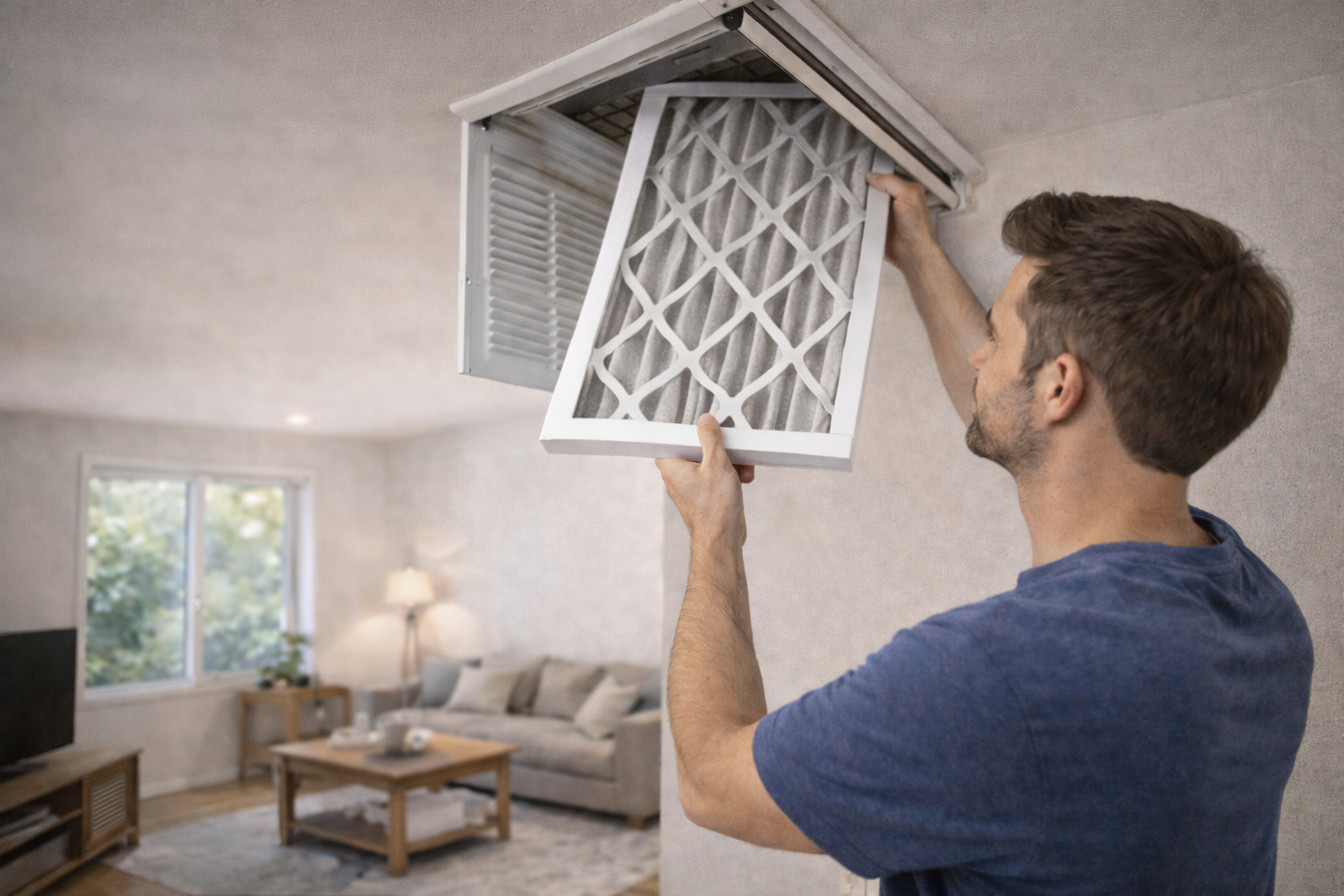
Step-by-Step: How to Replace (or Clean) Your Central AC Filter Safely
You can handle a filter swap in a few minutes with the right steps. Think of the filter like a book sliding into a shelf, it should fit snugly with no gaps.
- Set the thermostat to Off so the blower cannot start mid-task.
- Locate the filter at the return grille or at the air handler cabinet.
- Check the size on the old filter and keep a spare on hand for next time.
- Remove the old filter carefully. Note the airflow arrow.
- Install the new filter with the arrow pointing toward the blower. Confirm the filter is the correct size and fully seated to avoid bypass.
- Write the installation date on the filter frame. In our experience at Budget Heating (BudgetHeating.com), this prevents guesswork later.
- For washable filters, follow the manufacturer's cleaning steps, let it dry completely, then reinstall with the airflow arrow oriented correctly.
- Turn the thermostat back on and verify normal operation.
Reusable vs Disposable Filters: Cleaning, Lifespan and Cost Tradeoffs
Washable filters trade time for long-term savings: clean every 1 to 3 months per manufacturer instructions, and longevity depends on build quality and care. Disposables cost less up front and take zero cleaning time, but the ongoing spend is higher if you change them consistently. In our experience at Budget Heating (BudgetHeating.com), households that struggle to keep up with cleaning schedules usually save more with disposables, because consistency is what protects equipment. Swapping a dirty filter for a clean one can cut AC energy use by about 5% to 15%. Since filters are inexpensive compared with electricity and repair bills, the best choice is the one you will maintain on schedule, whether that means washing or replacing.
When to Replace the Filter Yourself, and When to Call an HVAC Pro
With decades in the field, we consider filter inspection and replacement a safe DIY job, similar to swapping a car's cabin filter. Stop there, and know when to bring in a licensed technician.
- Schedule annual preventive maintenance with a licensed technician.
- Poor cooling despite a clean filter, unexplained higher energy bills, or frequent short cycling.
- Icing on coils, water pooling at the air handler, abnormal noises or odors, or suspected refrigerant leaks.
- Leave any refrigerant handling and all electrical repairs to certified professionals.
- If ducts share air with combustion equipment, or you smell gas or exhaust, evacuate and contact a professional immediately.
These symptoms point to problems that require specialized tools, training, and licensing.
Simple Rules of Thumb and Next Steps for Your Central AC Filter Care
Here is a simple routine that works for most homes: inspect your central AC filter every month, then replace or clean based on its type and how you live. As a rule of thumb, 1 inch disposables run about every 1 to 3 months. Thicker pleated filters, 2 to 4 inch, typically go 3 to 12 months. Washable filters usually need a rinse every 1 to 3 months. Tighten those intervals if you have pets, smokers, allergies, extended run time, or dusty or smoky conditions.
Make it automatic. Write the install date on the filter frame, set a recurring calendar reminder, and keep at least one correct size spare on hand so you can swap it the moment an inspection says it is time. Stash the spare near the air handler so you do not forget, or align the check with an easy milestone like your utility bill.
Stick to this cadence and your system breathes easier, runs efficiently, and keeps comfort consistent. If you want the right filters on your doorstep on time, our team can help you choose and size them correctly.
- Get a Custom Quote for filter packs or a media cabinet upgrade.
- Talk to Our Team for U.S. based phone support from real HVAC techs.
- Shop Air Filters at wholesale pricing with fast shipping and optional Affirm financing.
 Cooling
 Heating
 Learning Center
 Money Saving Tips
 Product and Brands Insights
 Buying Guides
 State by State
 HVAC Systems