





 HVAC maintenance
Do Mini Splits Heat and Cool? The Quick Answer
Yes. Ductless mini-splits are heat pumps that both heat and cool by reversing refrigerant flow. In cooling mode they pull heat from indoors and release it outside. In heating mode they flip the process and bring heat in. Think of it like a two-way conveyor for heat, not a space heater making new heat.
That difference matters. Instead of burning fuel or glowing hot elements, mini-splits transfer existing heat. Moving heat generally takes less energy than generating it, which is the basic efficiency advantage. Because the indoor units modulate output and serve only the rooms you use, they can lower energy bills, keep temperatures steadier, and help indoor air quality.
In short, they are a single system for year-round comfort. In the sections that follow we will cover how they work in more detail, where they shine, and what to watch for when choosing and sizing. We will also outline practical pitfalls to avoid during setup and operation.
What Is a Mini Split (Ductless) System: Components and Benefits
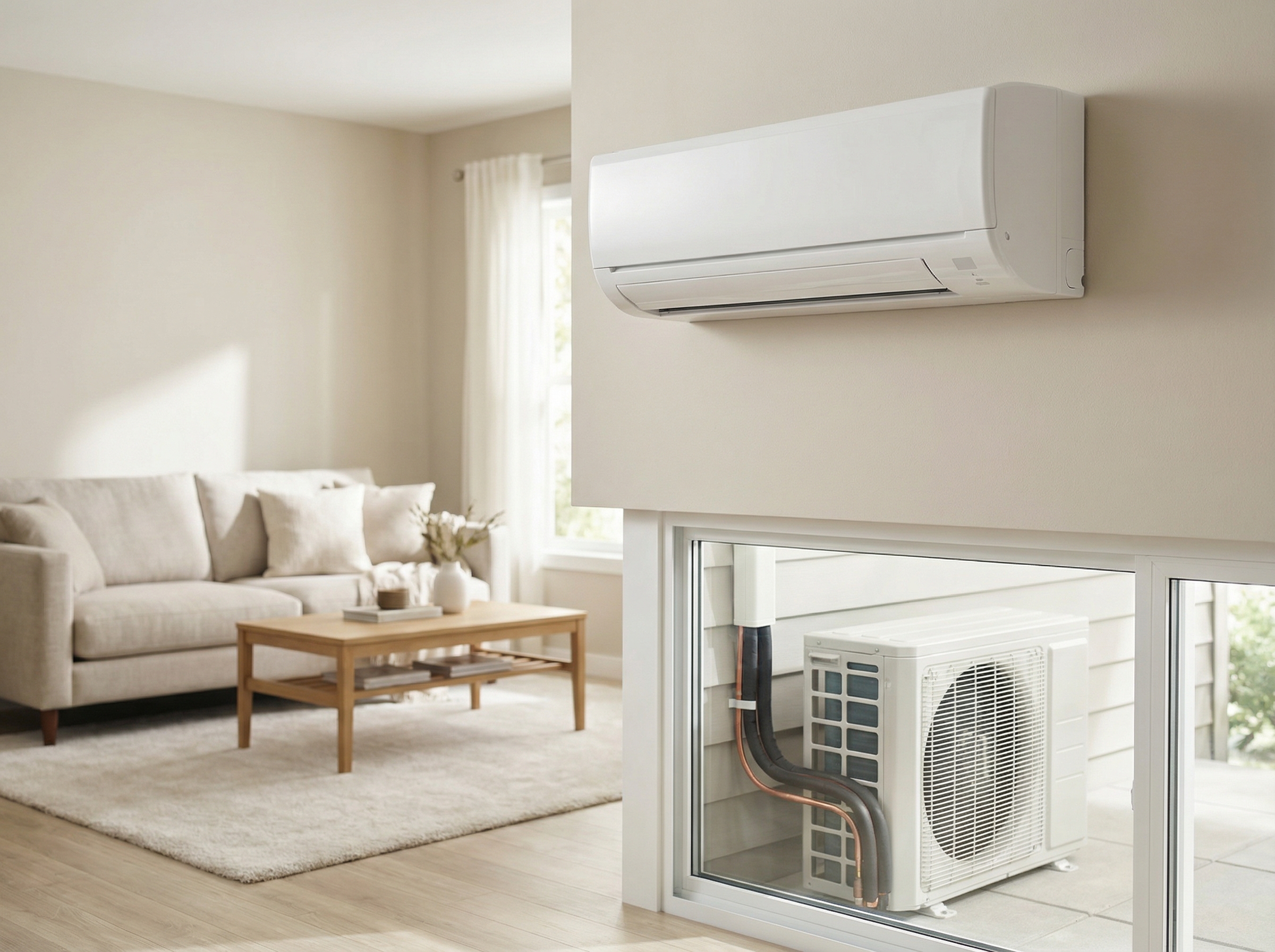
A mini split pairs an outdoor condenser with one or more indoor air handlers to deliver heating and cooling without ducts. Indoor units come as wall mounts, floor consoles, or low profile ceiling cassettes. Because there is no ductwork, they fit additions, basements, sunrooms, and older homes. One outdoor unit can serve multiple rooms year round. Indoor heads are quiet since the compressor sits outside and the fans are variable speed. Each head is its own zone with separate controls, so you condition only the spaces you use, smooth out hot and cold spots, and match different comfort preferences.
How Mini Splits Work: Heat Pump Basics and Key Components
At the core of a mini split is a closed refrigerant loop. The compressor raises refrigerant pressure and temperature, pushing hot vapor toward a coil. In cooling mode the outdoor coil acts as the condenser, where that heat is released to outdoor air. Refrigerant then passes through a metering device to drop in pressure, enters the indoor coil as a cold liquid vapor mix, and absorbs heat from indoor air. A small but critical part makes this cycle reversible: the reversing valve. It reroutes the hot discharge so the indoor and outdoor coils swap jobs. In heating mode the indoor coil becomes the condenser that delivers heat to the room, and the outdoor coil becomes the evaporator that pulls heat from outside air.
We pay close attention to the reversing valve because its position determines the direction of refrigerant flow and which coil is hot or cold. When it shifts, the compressor does the same work, but the pathway changes. Most modern mini splits pair this with inverter compressors and variable speed fans. Instead of simple on or off, the compressor ramps up or down to match the load, and the indoor and outdoor fans adjust airflow to keep the coils at the right temperature difference. Think of it like a dimmer switch rather than a light switch. In practice this steadier operation reduces temperature swings, trims wasted starts, and keeps capacity available as conditions shift.
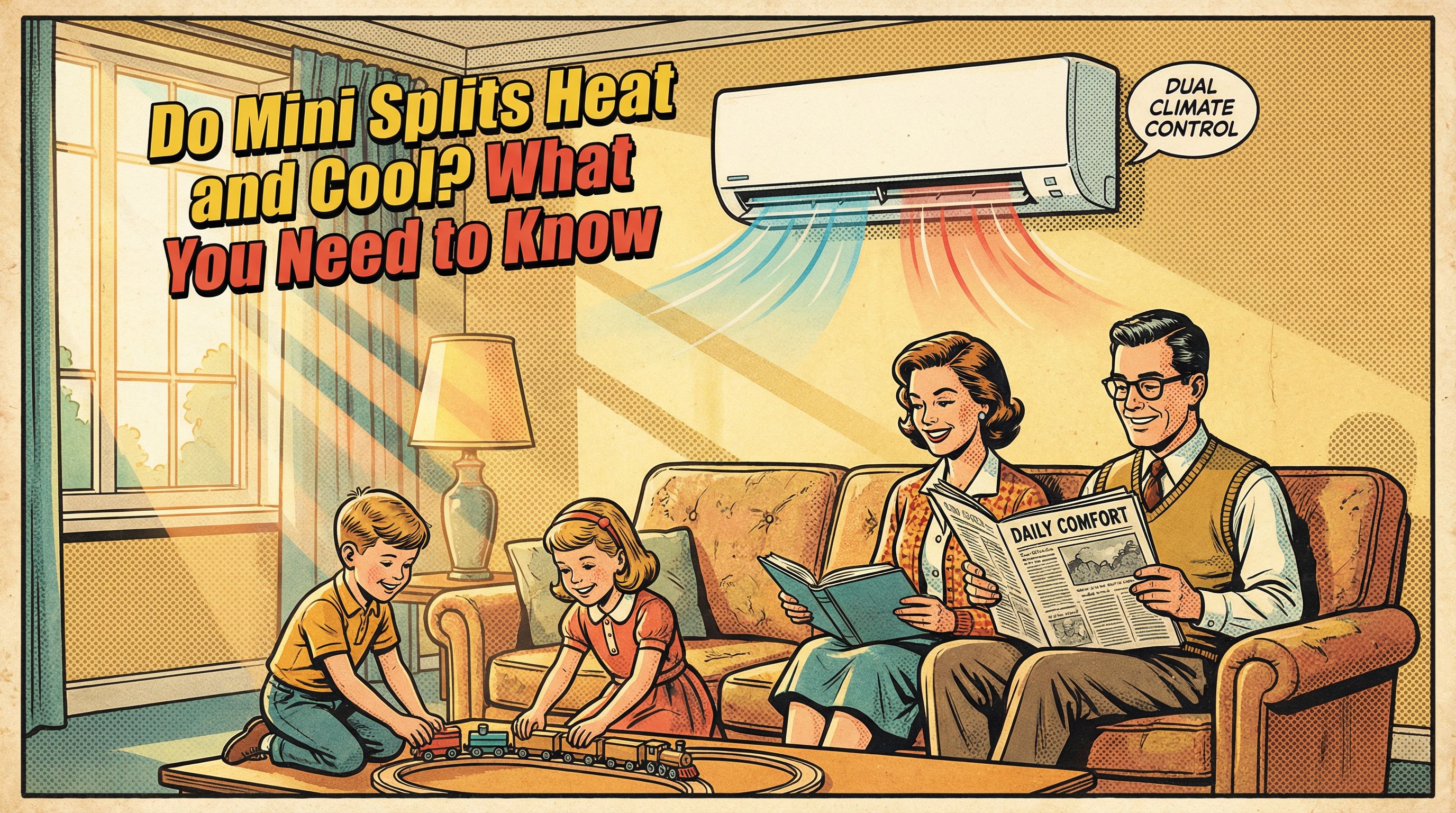
Do Mini Splits Provide Both Heating and Cooling? Features to Expect
Yes, most mini-splits are heat pumps that cool in summer and heat in winter. For true year-round comfort, choose a heat-pump model, not cooling-only. Verify SEER2 for cooling and HSPF2 or COP for heating, since higher ratings mean better efficiency. Day to day, you set a target temperature and the system modulates to hold it steadily and quietly.
Common modes include Cooling, Heating, Dry for dehumidification, Fan-only, Auto, and Sleep or Eco. You can run them from handheld remotes, wall controllers, or smartphone apps, and many add occupancy sensors that trim output when the room is empty and resume when you return. It feels like cruise control for your living room. In our experience at Budget Heating (BudgetHeating.com), customers love Auto changeover in shoulder seasons and using Dry to tame humidity without overcooling.
If winters are tough, look for cold-climate or hyper-heat models. They are engineered to deliver useful heat at low outdoor temperatures, with model-dependent low-temperature ratings. Check the published low-temp heating performance against your local winter conditions.
Sizing & Heat Rate Units: Choosing the Right Mini Split for Your Room
Start by listing the rooms you want conditioned, their square footage, and your goals: full replacement, supplementing, an addition, or fixing hot and cold spots. Area based BTU tables are only a starting point, then adjust for climate, sun exposure, insulation quality, and internal gains from people and appliances.
Focus on heat rate, shown as BTU per hour. Think of it like a faucet's flow, not the size of a bucket. The right BTU per hour keeps up with the room's load as conditions change.
Ask for a Manual J room by room load calculation rather than rules of thumb. In hot, humid climates plan roughly 10 to 20 percent more cooling capacity to handle latent moisture. For multi zone layouts, each indoor head must match its room's load, and the combined indoor capacities must be compatible with the outdoor unit to avoid oversizing.
For cold weather, require BTU per hour comparisons at multiple outdoor temperatures to confirm winter capacity. Place indoor units where airflow is clear, mount outdoor units on stands above snow drifts, and respect line set length and elevation limits. Confirm electrical details: dedicated circuit, correct breaker size, disconnect location, proper grounding, and any required permits.
When Mini Splits May Not Be the Best Choice (Tradeoffs to Consider)
We like mini-splits, but they are not perfect for every home. In the coldest climates, where heating demand is constant for long stretches, a high efficiency gas furnace or a hybrid setup often matches the load better. Standard mini splits also lose capacity as outdoor temperatures fall, so if you plan to heat through real winters, choose a cold climate or hyper heat model. Even then, during very extreme cold snaps some homes still need supplemental heat.
We also see performance fall short because of usage and design choices. Relying on Auto mode can cause temperature swings and wasted energy. Skipping filter cleaning reduces airflow and comfort. Accepting improper sizing or a weak layout locks in uneven rooms and higher bills.
Do not let myths drive the decision. Mini splits do more than cooling, they are highly efficient, quiet, and can serve more than a single room. The key is matching equipment to the climate and getting the design right.
Can You Run a Mini Split All Day? Pros, Cons and Best Practices
Yes, you can let a mini split run all day. That is normal when the weather calls for it. Like a refrigerator that stays on, steady operation avoids big temperature swings. The catch is upkeep: if filters clog, efficiency drops and the system works harder.
Plan simple care. Clean or replace filters every few weeks to monthly during heavy use, and schedule professional service yearly. If the unit runs heavily, book service twice a year.
Use the right mode for the season: Cool in summer, Heat in winter. Avoid overusing Auto mode, which can trigger unnecessary switching between heating and cooling.
In our experience at Budget Heating (BudgetHeating.com), many mini splits run year round with reliable comfort when owners follow those steps.
Energy Efficiency and Costs: SEER2, HSPF2 and What They Mean for Your Bills
SEER and HSPF described seasonal efficiency. As of 2023, equipment is rated under SEER2 and HSPF2, an updated DOE test that better mirrors real installations. We explain it like fuel economy for HVAC: SEER2 is the cooling miles per gallon across a season, HSPF2 is the heating equivalent for heat pumps.
To estimate savings when upgrading, a quick rule works well: percentage savings ≈ 1 − (SEER2_old ÷ SEER2_new). Examples we use in sizing discussions:
- Going from 13.4 to 16 SEER2 cuts cooling kWh about 16 percent.
- Going from 13.4 to 20 SEER2 cuts cooling kWh about 33 percent.
Since 2023, federal minimums are expressed in SEER2, EER2 and HSPF2. Many ductless systems start around SEER2 13.4, whole home heat pumps commonly start near SEER2 14.3 with HSPF2 around 7.5 (always verify by model and region). Higher HSPF2 ratings reduce winter operating cost for heat pump heating.
Upfront price typically rises with efficiency, but operating costs drop. Federal and state incentives, including Inflation Reduction Act linked programs, often require efficiency above the DOE minimums, so stepping up in SEER2 or HSPF2 can unlock rebates and improve payback.
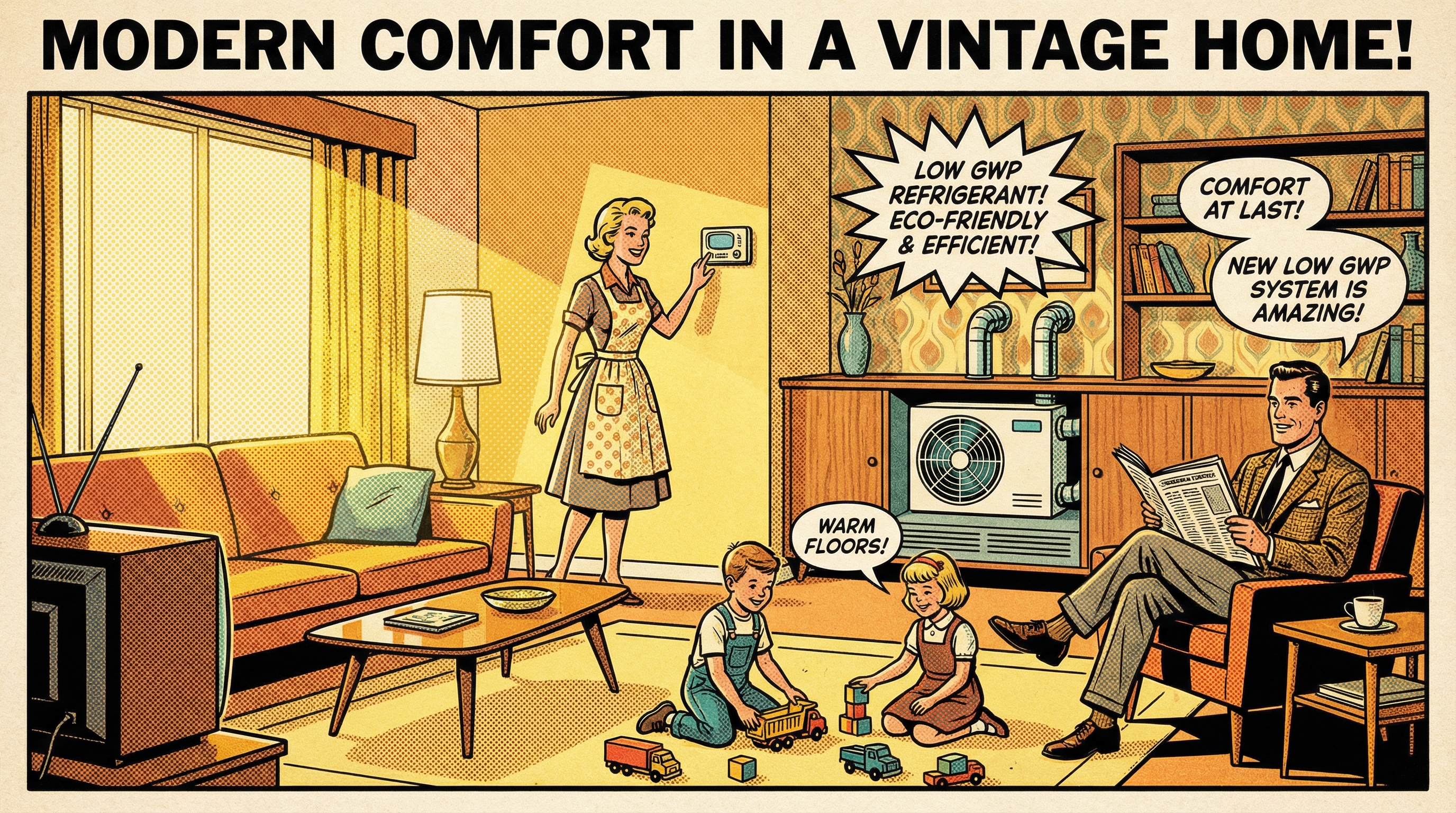
One more factor on the horizon: refrigerants are transitioning from R 410A to lower GWP A2L blends like R 32 and R 454B in the 2025 to 2026 window. That shift can influence installer practices and local code details, which may appear in project planning and costs.
Troubleshooting: My Mini Split Is Cooling but Not Cold: What to Do (and How to Cool Fast)
If air is cool but not cold, start with basics that restore airflow and reduce heat load. Cooling a sun-soaked room is like shading a greenhouse, cut the heat first, then the unit catches up faster.
- Set Cool mode and a comfortable setpoint, close blinds, doors, and reduce internal heat sources.
- Power off, then clean or replace indoor filters. Remove furniture or curtains blocking the head.
- Clear leaves and debris around the outdoor unit to improve breathing.
- Evaluate the room: insulation, large windows, west or south exposure, and high occupancy can limit results.
- If you notice water or sticky humidity, check the condensate drain line and any condensate pump for clogs or failures.
Safety first: do not open refrigerant circuits, avoid electrical work, and never chip ice off an outdoor unit. Let any ice melt naturally.
- Call a professional for electrical issues, persistent error codes, suspected refrigerant leaks, or significant water leakage.
- Professional service covers deep coil cleaning, leak detection, evacuation and correct charging, electrical inspections, and performance testing.
Are Mini Splits Right for You? Summary and Next Steps
Modern mini split heat pumps can be a great fit: one system for heating and cooling, high efficiency, easy zoning, and flexible retrofits. They deliver when sized correctly, installed properly, and matched to your climate. Upfront cost is often higher than basic equipment, but efficient models cut operating costs, and rebates or tax credits improve payback. If choosing heads, capacity, and placement feels daunting, start with a Manual J from a qualified installer, then talk with our team to turn it into the right package.
- Get a Custom Quote
- Talk to Our Team by phone for quick answers
- Shop Ductless Mini Split Systems
- Check rebates and tax credits in your area
 Cooling
 Heating
 Learning Center
 Money Saving Tips
 Product and Brands Insights
 Buying Guides
 State by State
 HVAC Systems