









List price:
$10,942.00Our price:
$8,660.00
List price:
$12,995.00Our price:
$8,930.00
List price:
$11,591.00Our price:
$9,140.00
List price:
$11,905.00Our price:
$9,595.00


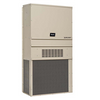
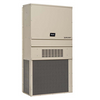
Bard Wall-Mount AC Package Units: The Complete Buying Guide
Everything you need to know about through-the-wall cooling with electric heat for commercial and specialty applications
Bard Manufacturing has been the industry leader in wall-mount HVAC equipment since 1914. Their through-the-wall package units are self-contained air conditioning systems that mount directly through an exterior wall, with the condenser section facing outside and the evaporator and blower facing inside. This design eliminates the need for rooftop equipment, exterior condenser pads, refrigerant line sets, and long duct runs. The result is a compact, efficient HVAC solution that cools and heats a space from a single wall-mounted unit.
What Is a "Straight Cool" Bard Wall-Mount Unit?
"Straight cool" means the unit uses a standard air conditioning cycle for cooling only. It does not include a reversing valve or heat pump function. All heating is provided by the built-in electric resistance heat strip (also called electric auxiliary heat). During summer, the compressor and condenser operate normally to cool the space. During winter, the electric heat strips activate to provide warmth. This is the simplest and most reliable Bard straight cool wall-mount configuration, with fewer mechanical components than heat pump models and lower upfront cost.
Straight cool with electric heat is the preferred configuration for warm and moderate climates where cooling is the primary need. In regions where heating demand is minimal (the Southeast, Southwest, Gulf Coast, and similar climates), the electric heat strip provides sufficient backup without the added complexity of a heat pump reversing valve. For cold-climate installations where heating is a primary concern, consider Bard's heat pump wall-mount units instead.
Single-Phase vs. Three-Phase: How to Choose
The difference between 1Ø (single-phase) and 3Ø (three-phase) Bard units comes down to your building's electrical service. Single-phase 208-230V power is the standard for most residential buildings, small commercial spaces, portable classrooms, churches, and modular structures. If you can plug in a clothes dryer, you have single-phase power. Three-phase 208-230V power is typically found in larger commercial and industrial buildings, where it delivers power more efficiently to heavy electrical loads. If your building has 3Ø service and you are running other 3Ø equipment (large compressors, motors, commercial kitchen equipment), the 3Ø Bard unit integrates cleanly with the existing electrical infrastructure.
| Feature | 1 Phase (1Ø) | 3 Phase (3Ø) |
|---|---|---|
| Power Supply | 208-230V / 1Ø / 60Hz | 208-230V / 3Ø / 60Hz |
| Capacity Range | 1 – 5 Tons | 2 – 5 Tons |
| Typical Applications | Classrooms, churches, offices, modular buildings, residential | Warehouses, industrial, large commercial, multi-unit |
| Availability | Standard in virtually all buildings | Commercial / industrial buildings only |
| Motor Efficiency | Standard | Higher efficiency at larger loads |
| Starting Current | Higher inrush on startup | Lower inrush, smoother startup |
| Relative Cost | Lower | Slightly higher |
| Refrigerant | R-410A | R-410A |
Common Applications for Bard Wall-Mount Units
Bard wall-mount AC package units are the standard HVAC solution for a wide range of commercial, institutional, and specialty applications. Portable and modular classrooms are the single largest application, where hundreds of thousands of Bard units are installed across school districts nationwide. The wall-mount design is ideal for buildings without attic space, mechanical closets, or roof access, and where a ground-level condenser pad is impractical or undesirable.
Other common installations include churches and houses of worship, small retail storefronts, modular office buildings, guard shacks and security booths, concession stands, telecommunications shelters, server rooms and IT closets, portable medical clinics, and residential additions or sunrooms where extending the existing duct system is not feasible. Any building where a traditional split system or rooftop unit cannot be installed is a candidate for a Bard wall-mount unit.
Installation: What Makes Bard Wall-Mount Units Different
Traditional split systems require an outdoor condenser on a pad, an indoor air handler, and refrigerant lines running between them. Rooftop units require crane access and roof curb preparation. Bard wall-mount units eliminate all of this by installing directly through the wall. A rectangular opening is cut in the exterior wall (Bard provides exact dimensions for each model), a wall sleeve is set in place, and the unit slides into the sleeve. The condenser section protrudes outside, and the evaporator and blower face the conditioned space.
The installation is straightforward for any licensed HVAC contractor familiar with through-the-wall equipment. Electrical connection (single circuit, hardwired), condensate drainage, and optional ductwork attachment are the primary hookup requirements. Bard provides sub-bases (wall sleeves) as separate accessories — make sure to order the correct Bard sub-base and accessories for your unit model and wall thickness when purchasing.
Electric Heat Strip Sizing
Each Bard wall-mount AC unit includes a factory-installed electric heat strip sized to the unit's capacity. Typical heat strip ratings are 3.4kW for 1-ton units, 6.8kW for 2-ton units, 10.2kW for 3-ton units, and 13.6kW for 4–5-ton units. Some models offer optional supplemental heat strip kits for cold-climate applications where additional heating capacity is needed. Electric heat strips operate at 100% efficiency (every watt converts to heat), but electricity costs more per BTU than gas in most markets, which reinforces that this configuration is best for cooling-dominant climates.
Recent posts
All Articles
Best Gas, Electric, and Hydronic Unit Heaters to Buy in 2026
The first hour in a cold garage or shop is always the same: frozen tools, stiff hands, and a space ...
AirQuest HVAC Review and Comparison, Value Buyer Guide
You're trying to pick an HVAC system, and the shopping experience is pure whiplash: one contractor ...
A Central Air Conditioner Buyer's Guide
Your house is hot, the clock is ticking, and the fastest way to waste money is buying the wrong cen ...
Wood Burning Stove Buying Guide 2026, Size, Tax Credit
Buying a wood stove in 2026 fails when you shop by "heats up to 2,500 sq ft" claims and ignore the ...
Sign up to receive exclusive deals, news, and more!
