




Why Is Air Conditioning So Expensive to Operate in Florida? Quick Summary
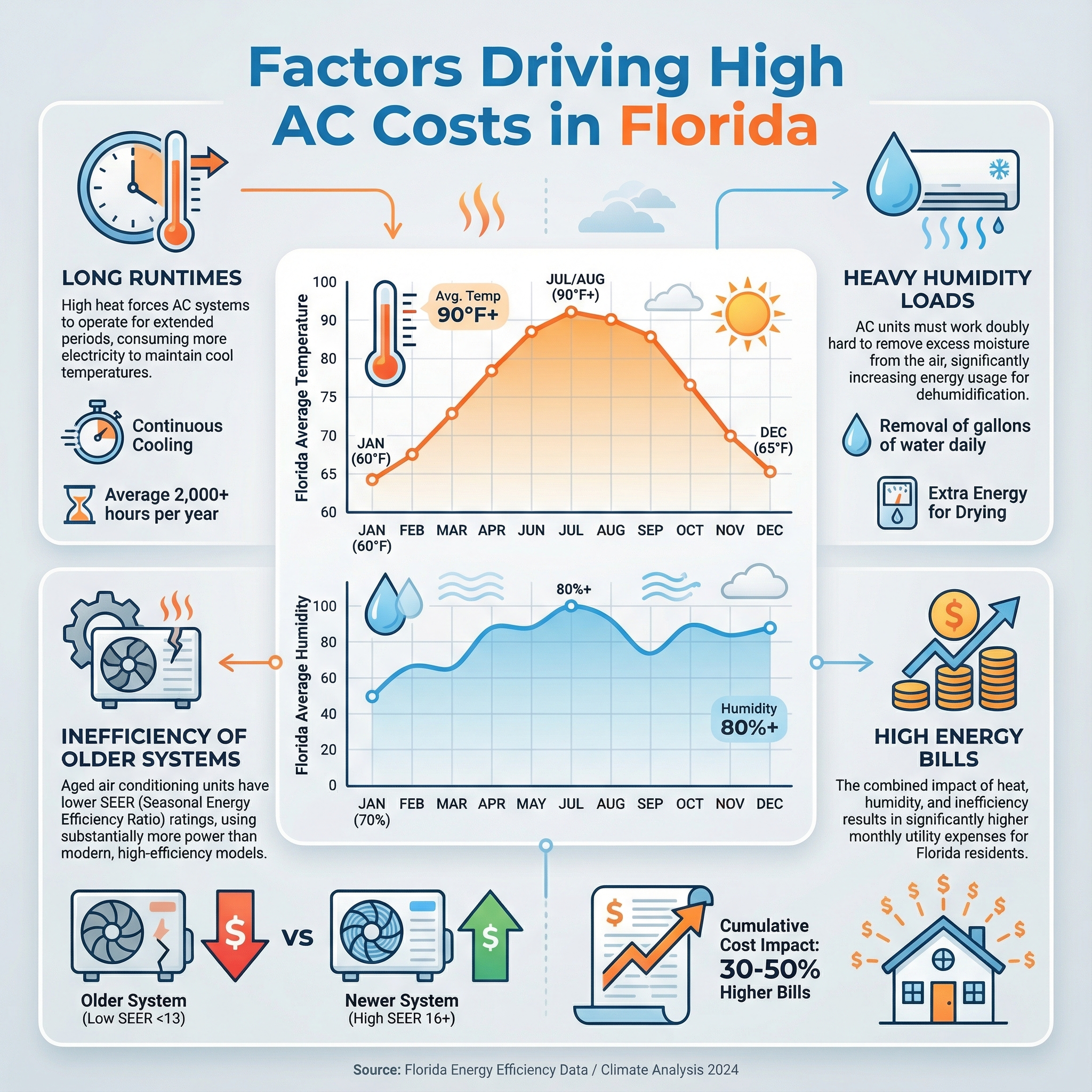
Air conditioning is unusually costly to run in Florida because a hot, humid climate and a long cooling season keep systems on for many hours a day. Homes must remove heat and a large amount of moisture at the same time, so equipment is handling both sensible and latent loads, which drives energy use up.
In our field work across Florida, the full picture comes from four pieces working together: climate, buildings, equipment, and utilities. Climate sets relentless heat and humidity. Building and duct details, like leaky supply runs, high solar gain, or uninsulated attics, add hidden load. Equipment choices, such as single-stage versus variable-speed and proper sizing, determine how efficiently the system handles moisture and common part-load conditions. Utility economics, including tiered rates and afternoon peaks, make long runtime hours more expensive.
This article will outline practical ways to trim bills by addressing each piece: tightening ducts and the envelope, dialing in airflow and refrigerant charge, matching capacity to the home, improving dehumidification, and using smarter controls and rate awareness. The aim is less runtime per degree of comfort, not just a lower thermostat setting.
Florida's Climate: Heat + Humidity = Much Bigger Cooling Loads
Florida sits in a hot-humid zone (IECC 1A/2A). High outdoor dew points and a nearly year-round cooling season mean cooling equipment must dump heat and also wring much more moisture than in drier climates. Sensible cooling is the temperature drop you feel. Latent cooling is moisture removal, like squeezing water from a sponge. In Florida the latent load is large, which pushes longer runtimes and more energy to stay comfortable. That reality shapes system design: equipment is sized and set up to control both temperature and humidity so rooms reach setpoint without overcooling.
High AC Run Time & Common Mistakes That Make Bills Worse
In Florida, AC often represents more than 40% of a home's energy use, so long runtimes turn small issues into big bills. We see that when systems run many extra hours, every loss stacks up: dirty coils, leaky ducts, low SEER choices, and poor airflow all amplify kWh use.
Thermostat sensitivity matters. For every degree you set below about 78 F, cooling costs can rise by up to roughly 8%. Many people overcool to mask humidity, but that extends runtime and raises costs without fixing the latent load discussed elsewhere in this article.
- Myths that inflate bills: High SEER alone guarantees low bills, short cycling saves energy, humidity barely costs, maintenance is optional.
- Common mistakes: skipping filter and coil cleaning, ignoring duct leaks, oversetting the thermostat, and neglecting airflow checks.
Electricity Rates, Timing and Why kWh Costs Add Up in Florida
At roughly 12¢ per kWh on average in Florida (EIA benchmark), the price looks modest. The issue is hours. A long cooling season and extended afternoon runtimes multiply that rate, so modest cents per kWh become a large monthly total. We regularly see that when systems run nearly nonstop during late-day heat, the meter adds kWh quickly even if the rate itself stays flat.
The most effective way to cut cost is to buy fewer kWh per hour or run fewer hours. Higher SEER equipment, sealed and balanced ducts, solid insulation, and thoughtful setpoints reduce draw or runtime. Given thermostat sensitivity, small setpoint changes can trim hours. In Florida, reducing runtime has an outsized financial impact because the savings apply across so many cooling hours.
When Upgrading Makes Sense: Payback Timeline and Honest Tradeoffs
We evaluate upgrades with simple payback: estimate annual cooling cost, apply the expected SEER improvement, then divide the added equipment cost by the yearly savings. In Florida, AC can be 40% or more of home energy and runtime is long, so high SEER and right sizing often recover cost quicker.
When replacement is not the best first step:
- Short ownership horizon or rentals where the premium will not be recouped.
- Major duct or airflow issues. Correct ducts, insulation, and commissioning first.
- Very low runtime homes where SEER gains pay back slowly.
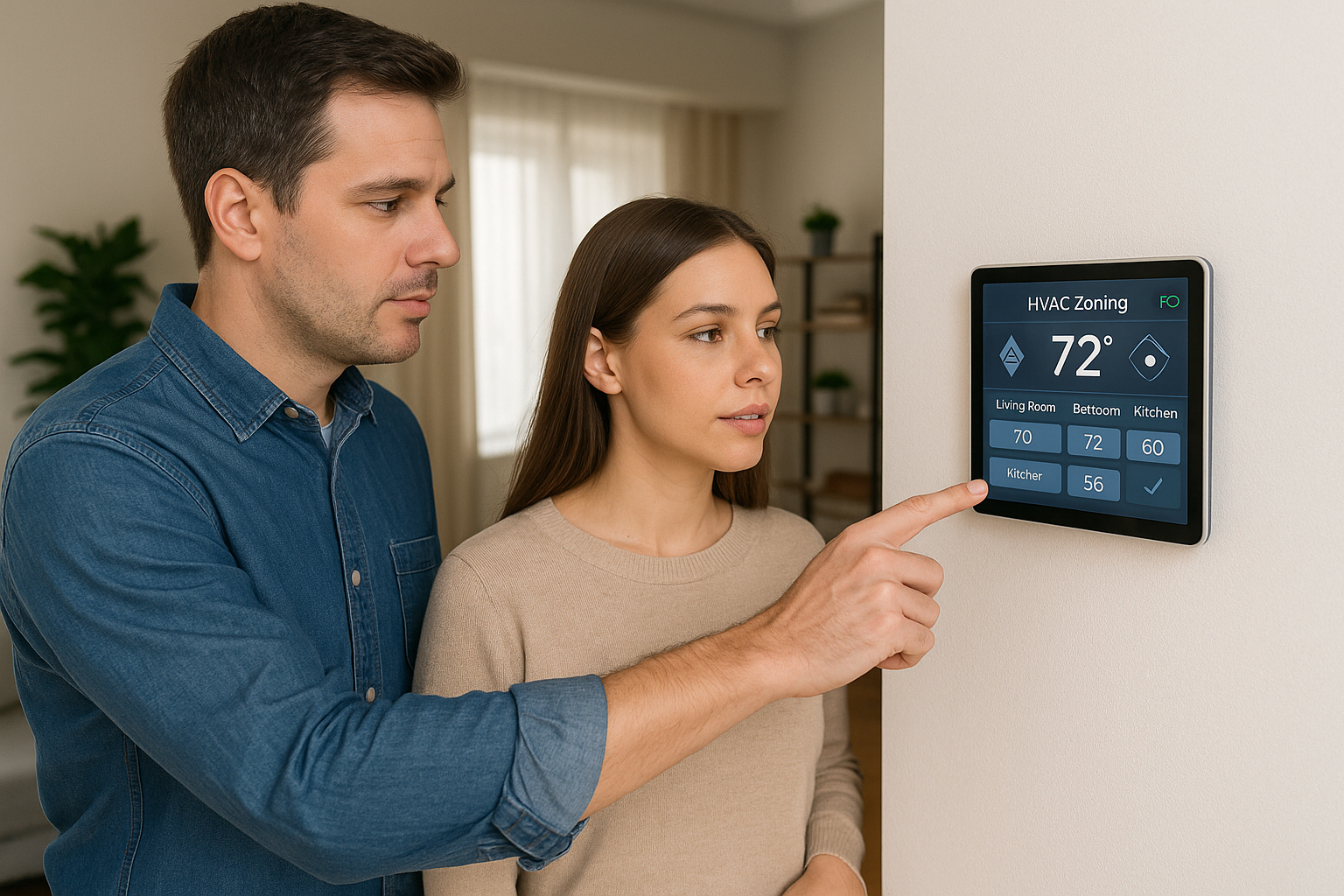
Better early moves: duct sealing and insulation, improved shading, airflow tuning and maintenance, whole-home dehumidifier or zoning.
System Efficiency Matters: SEER, SEER2 and Real World Performance
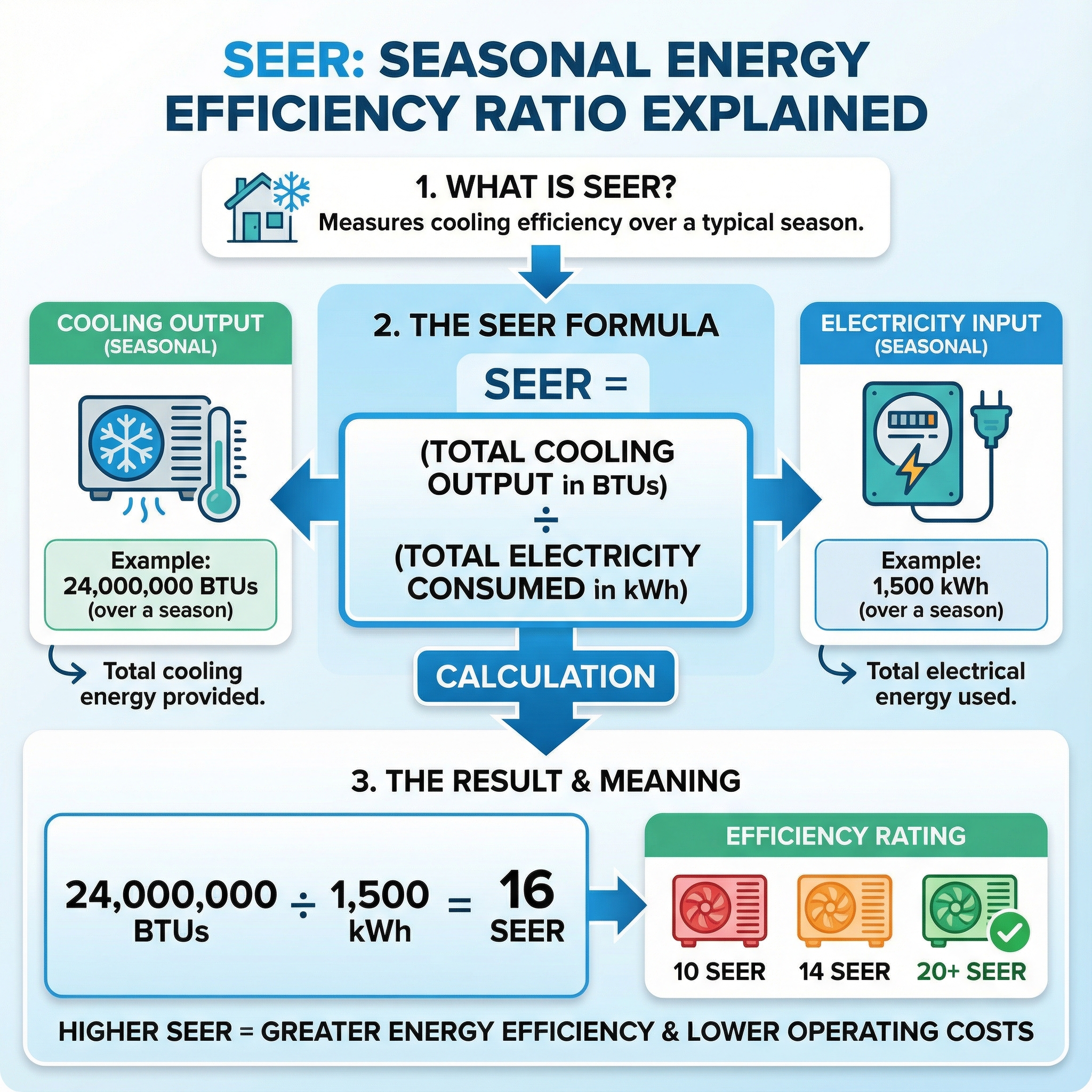
SEER is seasonal cooling output divided by watt hours. Higher SEER means more cooling per kWh. SEER2 is the 2023 test that better mirrors real static pressure, so ratings read slightly lower. Compare like with like, and note that 15.0 SEER is about 14.3 SEER2.
Real use: a 3 ton at 14 SEER draws about 2.57 kWh per hour, at 18 SEER about 2.00, roughly 22 percent less. Jumping from an old 10 SEER to 14 SEER often trims AC cost by more than 25 percent.
In Florida, AC runs for long seasons, so efficiency and humidity control matter. In our experience at Budget Heating (BudgetHeating.com), variable speed and two stage systems cut kWh while steadying humidity. Since Jan 1, 2023 the Southeast minimum is about 14.3 SEER2 for small splits, raising Florida's floor. Older low SEER units are costly here, so picking above the minimum usually pays back fastest.
Correct Sizing: How Many Tons Do You Really Need (and Why Oversizing Hurts)
Skip the ton-per-square-foot guess. Do a Manual J load, then Manual S to pick equipment that actually matches your home. In hot, humid Florida many oversize to be safe. That backfires: fast cooling, short cycling, and not enough runtime to remove moisture. Rooms feel cool but clammy, and you drop the thermostat, which bumps bills. From our field experience at Budget Heating (BudgetHeating.com), right-sized systems run steadily, dry the air, and feel better at a higher setpoint.
Demand these commissioning steps:
- Manual S confirmed and Manual D duct design verified.
- Measured airflow about 350 to 400+ CFM per ton.
- Total external static pressure test, recorded.
- Refrigerant charge set by superheat or subcooling, with documentation.
Duct Losses, Poor Insulation and Leaky Homes: Hidden Energy Drains
A high-SEER system cannot outrun leaky attic ducts. In Florida, supply leaks dump cooled air into 120 to 150 F attics, and return leaks pull hot, humid air into the system. The result is longer runtimes, uneven rooms, and higher bills. We often find losses at boots, panned returns, kinked flex, and poorly taped joints. Sealing with mastic, tightening connections, and insulating attic ducts can cut cooling costs roughly 20 to 30 percent.
The building envelope sets the load. Unshaded east and west windows and dark roofs add solar gain. Low attic insulation lets heat push into living spaces. Air leaks at recessed lights, pull-down stairs, and top plates let hot outside air bypass insulation. By adding shading, raising attic R-value, and air sealing, runtime drops, comfort improves, and the rated efficiency you paid for shows up indoors.
Maintenance, Refrigerant and Repair Costs: Practical Steps to Stop Waste
Florida humidity, salt air and long runtimes load systems with coil grime, algae in drains and extra electrical wear. In our field work, routine care often recovers 5 to 15% efficiency. Catching issues early is the cheapest repair, think a $150 tune up versus a $2,000 compressor.
- Replace filters every 30 to 90 days in cooling season.
- Clean indoor and outdoor coils to restore heat transfer.
- Clear and treat condensate drains and pans to stop algae.
- Verify refrigerant charge by superheat or subcooling, not by guesswork.
- Inspect capacitors, contactors and tighten connections, confirm blower airflow.
- Coast and storm: rinse outdoor coils, consider epoxy coated coils, anchor or elevate units and add surge protection.
Homeowner checklist to cut waste now and plan ahead:
- Keep the fan set to Auto to control humidity.
- Use bathroom and kitchen fans vented outdoors.
- Air seal and insulate the attic.
- Test and seal ducts.
- Consider a smart thermostat.
- For replacements, require Manual J, S and D, pick high latent capacity if humidity is a problem.
- Plan replacements around rebates and common 3 to 5 year payback in Florida.
Conclusion: Biggest Drivers of Cost and The Most Effective Fixes
In Florida, AC costs spike because a long hot, humid season, leaky ducts and envelopes, older or oversized equipment, and utility rates all stack up to create long runtimes. Cooling often takes more than 40% of a home's energy. The upside is that these same levers deliver the biggest savings: right sizing, sealing and insulating ducts, higher SEER2 systems with strong humidity control, Florida focused maintenance, smarter thermostat use, and where it fits, solar or time of use plans.
We know choosing the next step is a big decision when comfort and bills are both on the line. Our team has done this for decades in Florida homes, and we can map a clear, practical plan for yours.
- Get a Custom Quote: We run a Manual J, check rebates, size the right high efficiency system, and price it at wholesale with free shipping on most systems and Affirm financing options.
- Talk to Our Team: Call our U.S.-based support to review duct testing and sealing, thermostat strategy, and humidity control, no call center scripts.
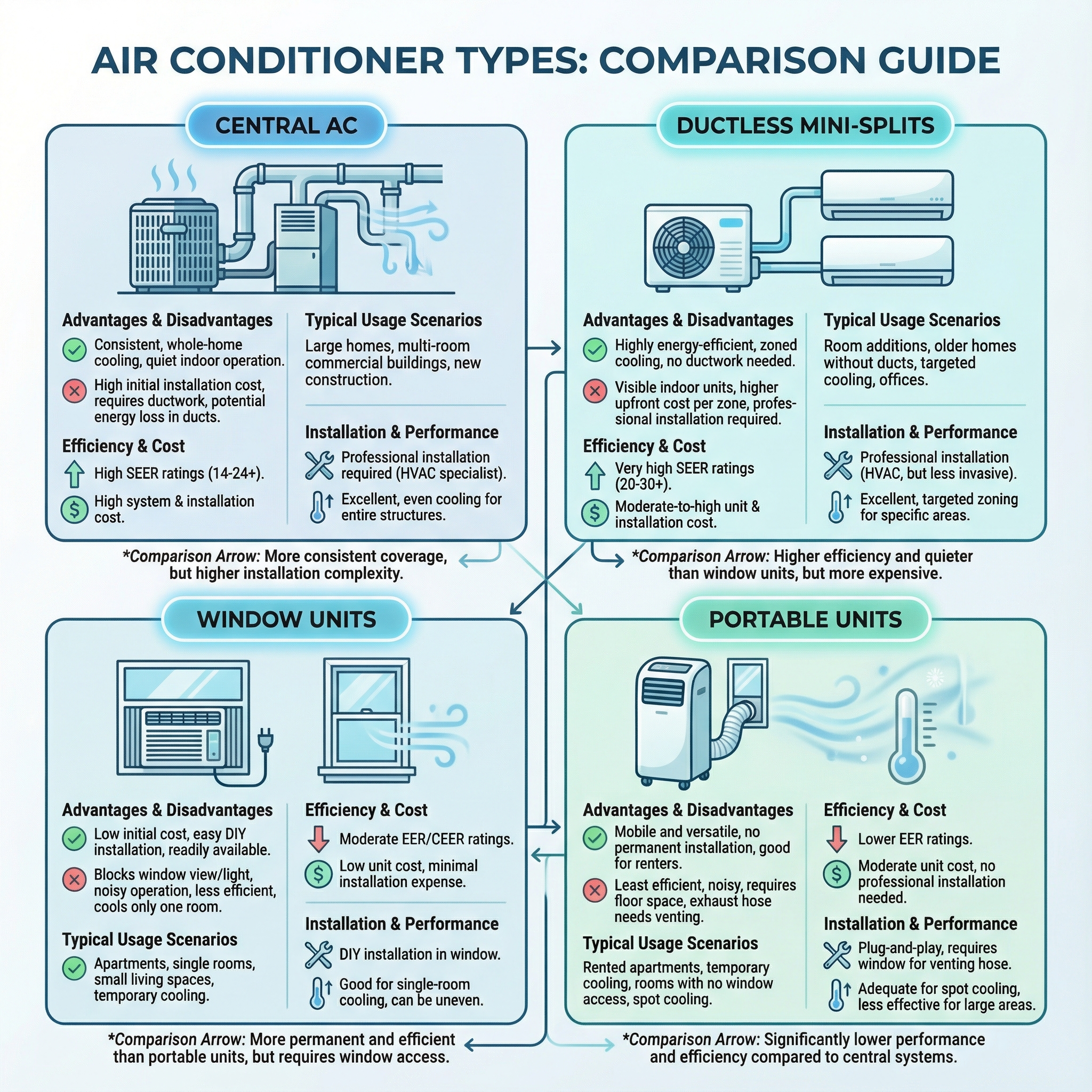
- Shop Heat Pumps and Central AC: Compare Goodman, Rheem, Bosch, and Gree systems that fit Florida conditions.