




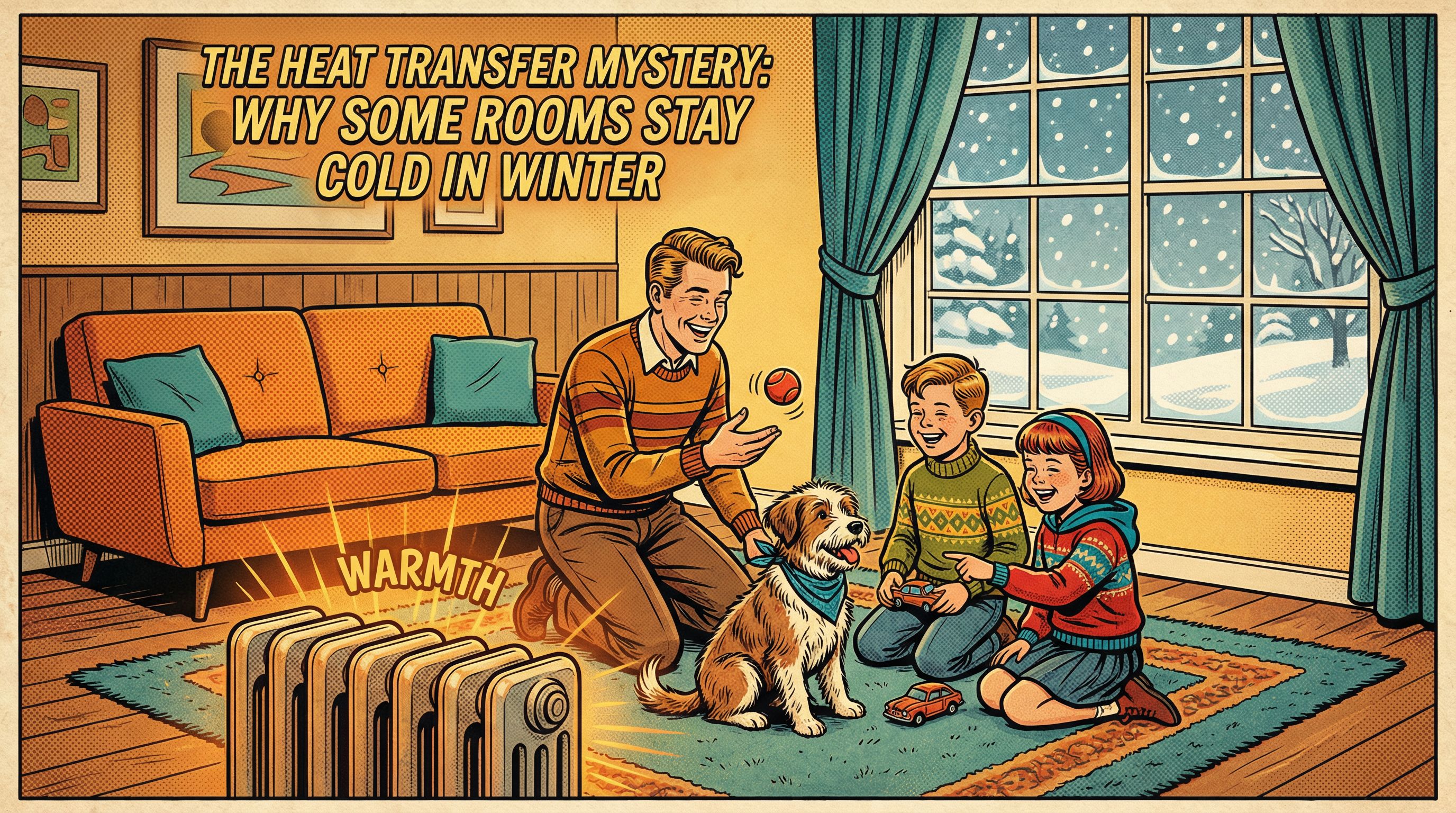
The Heat Transfer Mystery: Why Some Rooms Stay Cold in Winter
Keeping a steady, comfortable temperature through a house in winter can feel impossible when one bedroom or a corner office stays chilly. The culprit is usually uneven heat transfer and airflow, not a failing furnace. Warm air behaves like water in a shallow stream, it follows the easiest path, bypassing rooms with poor returns, leaky ducts, blocked registers, thin insulation, or long runs.
This guide takes a science-first, practical approach. We outline how to diagnose the basics you can see and measure, from supply temperature and airflow to heat loss at windows. Then we move into DIY fixes, register adjustments, sealing and simple balancing. Next, mid-level upgrades such as booster fans, added returns, zoning dampers, and smart controls. Finally, we explain the signs that indicate it is time to bring in a licensed professional, like persistent temperature deltas, noisy ductwork, or combustion safety concerns.
How Heat Transfer Explains Cold Rooms: Conduction, Convection and Radiation
Heat always moves from warm to cold. Think of it like water seeking the lowest level, it will find every path out of a room unless those paths are controlled. That movement happens through three modes, and each one can make a room feel cold for a different reason.
- Conduction: Heat slips through solid parts of the home, such as walls, windows and floors. If those surfaces are thin or poorly insulated, they give warmth a fast route out, so the room loses heat even while the system runs.
- Convection: Air carries heat between spaces. Gaps and pressure differences let cooler air enter and push warmer air out, creating drafts that drop the felt temperature below the thermostat setting.
- Radiation: Your body trades heat with nearby surfaces. Large cold surfaces lower the mean radiant temperature, so people feel chilly even when the air is nominally warm.
Understanding these three modes explains persistent cold spots. Cold surfaces pull heat by conduction and radiation, while drafts and unbalanced airflows move warmth elsewhere by convection. Misplaced heat sources can also bias where heat collects, leaving distant areas underheated. Identify the dominant path, then address the surface, the airflow or the radiant exposure.
Is 65 F Cold? Comfort for People (and Pets): What 'Comfortable' Really Means
Comfort is more than the thermostat number. Your body reads air temperature, the temperature of nearby surfaces, and airflow. At 65 F, a room with cold windows or a draft can feel chilly, while a tight, balanced room feels fine. Think of 65 F in the sun versus 65 F in the shade.
In our experience at Budget Heating (BudgetHeating.com), complaints about cold at 65 usually trace to air distribution or the building shell, not the furnace size.
- If some rooms are cold the furnace is undersized: more often it is duct design, dampers, or insulation.
- Systems self-balance after installation: they need balancing and sometimes adjustment.
- Turning up the thermostat fixes it: this overheats other rooms and wastes energy.
People and pets tolerate different temps. Set comfort by radiant conditions and local cold spots, not only the central thermostat.
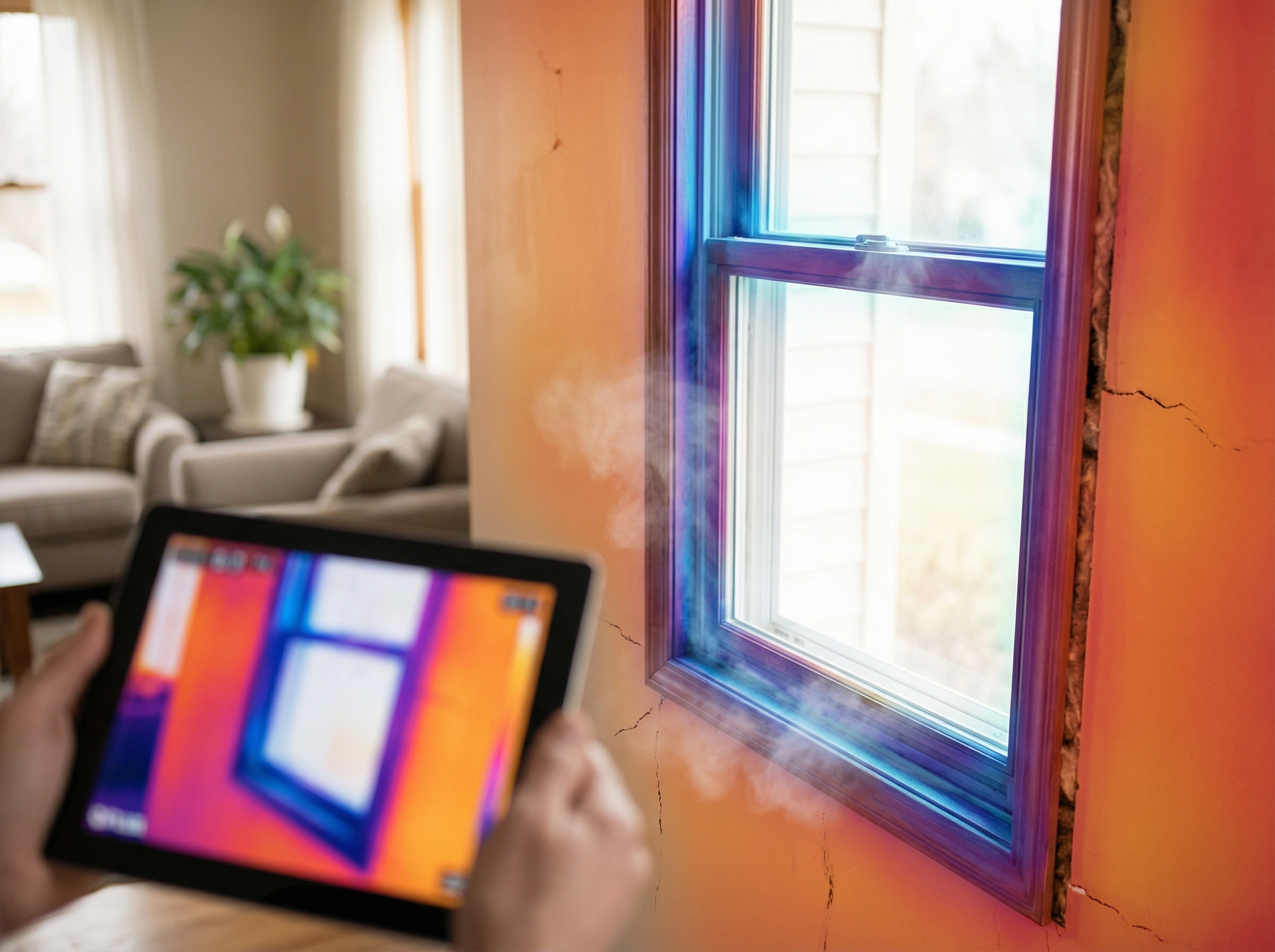
Insulation Problems and Thermal Bridging: Where Heat Escapes (and When Upgrades Help)
In more than 30 years working on homes, we see the same pattern: seal air leaks and add insulation in attics, exterior walls, and floor or ceiling assemblies first to slow conductive and convective losses. Thermal bridges, unbroken conductive pieces like studs, rim joists, or metal fasteners, let heat bypass insulation and create cold spots, like shortcuts through a fence.
Best targets: attics, rim joists, knee walls, and areas above unconditioned spaces such as garages and crawlspaces. These upgrades usually deliver the biggest impact, but specific costs and payback vary widely by house and region.
- If drafts dominate, prioritize air sealing at the top and bottom of the house before adding insulation.
- If thermal bridging is the main issue, continuous insulation over framing works better than packing more into cavities, and is best timed with exterior work.
- If access is limited, focus on accessible zones first and defer tight cavities to a future project.
Quick DIY Fixes to Warm Up a Cold Room: Sealing, Curtains, Rugs and Register Tweaks
Treat the room like a leaky bucket: measure first, fix the biggest drips, then recheck. Keep notes so you know what actually helped.
- Document room temperature at morning and evening for several days. Note outdoor weather and system run time if possible.
- Verify thermostat settings and schedules. If supported, try a remote room sensor.
- Open all supply and return vents. Clear furniture and drapes. Aim register fins toward the occupied area.
- Replace or clean HVAC filters.
- Inspect visible ducts for disconnections or gaps. Temporarily seal obvious gaps until a permanent repair.
- Keep interior doors open. If the door must stay shut, consider transfer grilles later.
- Air seal windows, doors, and attic hatches with caulk and weatherstripping.
- Check insulation in accessible attic or floor areas and add where safe. A rug on a cold floor can improve comfort.
- Account for room traits, like high ceilings or lots of glass, when choosing fixes.
- Use ceiling fans in winter mode to push warm air down and hang thermal curtains.
- For temporary heat, use safe, listed space heaters and follow CPSC guidelines.
- Re-measure at similar times and weather. Compare temperatures and note runtime changes to fine tune.
Before-and-after readings, taken under similar conditions, verify whether you improved heat delivery or reduced heat loss.
Common Causes of Cold Rooms: Where Heat Is Lost or Not Delivered
Rooms get cold when heat is lost faster than it is delivered. The dominant cause is uneven heat distribution. In our field work, these issues show up most often:
- Air infiltration and stack effect: leaks at doors, windows, attic hatches, and can lights pull in cold air while warm air rises out.
- Poor insulation and cold surfaces: thin or missing insulation in walls, ceilings, or floors, plus single pane windows and cold floors that create radiant discomfort.
- Thermal bridges: framing, steel, or slab edges that bypass insulation and bleed heat.
- Ductwork faults: imbalanced, leaky, or undersized ducts, and blocked or poorly placed vents that starve the room.
- Room location: north facing rooms or spaces over unheated garages or crawlspaces run cooler.
- Undersized or misplaced heat sources: small radiators or registers hidden behind furniture.
- Convective flows: warm air pooling at ceilings or drifting to adjacent zones.
HVAC Imbalance: Ducts, Radiators, Filters and Thermostat Placement
Cold rooms usually trace back to distribution, not the furnace. Airflow is like water: long or undersized runs, leaks and throttled paths starve distant rooms. Dirty filters, unsealed attic or crawlspace ducts, unbalanced dampers, missing returns and blocked registers are typical. A single thermostat and closed doors without transfer grilles make balance tougher. In our experience at Budget Heating (BudgetHeating.com), basics solve most complaints.
- Clear supplies and returns, move furniture, replace a dirty filter.
- Adjust vents or branch dampers to favor colder rooms, slightly reduce to warmer rooms, and avoid closing many vents.
Persistent problems call for duct design review, sealing with mastic or UL-181 tape, static pressure checks and professional balancing.
Room Layout, Windows and Solar Gain: Passive Factors That Make Rooms Colder
From our experience, room layout and orientation set the comfort baseline. North-facing rooms, large areas of glass, high ceilings, and rooms over unconditioned garages or basements lose heat faster, so they feel cooler than the thermostat suggests. Cold interior surfaces like single-pane glass or chilly floors pull warmth from your body through radiant exchange, which feels uncomfortable even with warm air. Simple tweaks can help without touching the HVAC system:
- Invite solar gain by opening shades on sunny exposures by day, then close them at dusk.
- Use insulating curtains and clear window film on large or older windows.
- Lay rugs on cold floors to cut radiant loss at the feet.
Mid-Level Solutions & When to Call a Pro: Duct Sealing, Re‑Insulation and Zoning
If cold rooms persist after DIY, it is time for a licensed pro: duct testing and sealing, airflow/static pressure checks, balancing, sealed system heat pump work, and combustion safety. Homeowners handle filters and basic caulk or light insulation. Pros handle refrigerant, major electrical, and full diagnostics. If you smell gas or a CO alarm sounds, evacuate and call.
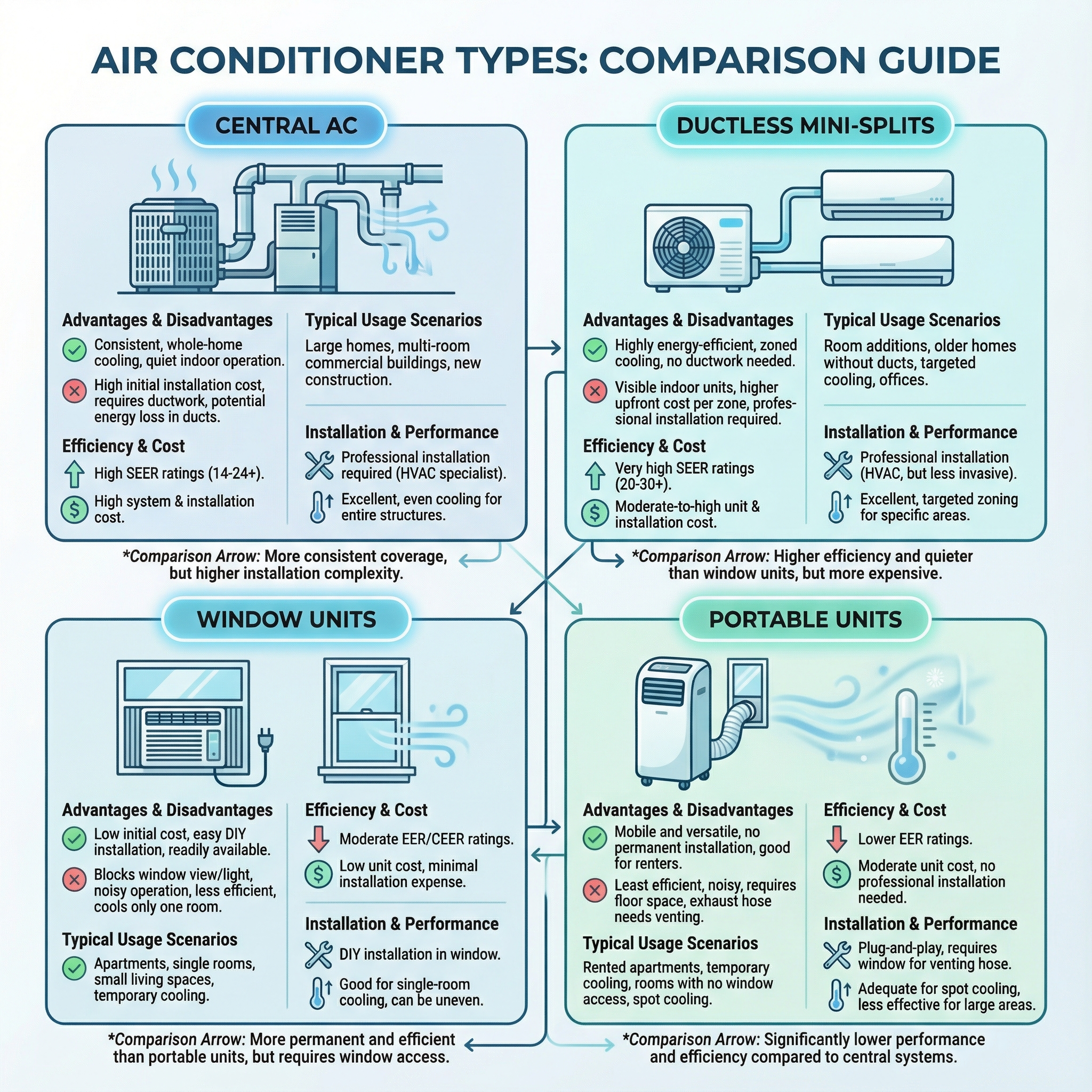
Mid-level fixes we specify: mastic-seal ducts, re-insulate attics and rim joists, add or resize returns and supplies, rebalance, zoning or smart thermostats with remote sensors, or a ductless mini split. Replacing equipment? Use SEER2 and HSPF2 and verify regional minimums. Costs vary; quotes follow an energy audit or HVAC assessment.
Diagnose, Seal, Balance: How to Fix a Cold Room and Improve Comfort for Good
Cold rooms rarely have a single culprit. They happen when heat escapes faster than it is delivered and airflow is not balanced. The fix is a sequence: measure, tighten the envelope, then balance supply and return air. Only after that consider duct changes or zoning. Follow this path for steadier room temperatures, lower energy use, and longer equipment life. It is the same approach our team uses every day, backed by 30+ years in HVAC and 200,000+ fulfilled orders.
We know you want that room comfortable without guesswork. We pair wholesale pricing with real technical guidance so you get results, not trial and error.
- Get a Custom Quote for a step by step plan and parts list
- Talk to Our Team, U.S.-based phone support available
- Shop Ducting & Registers for balancing and return upgrades
- Shop Ductless Mini Splits, financing with Affirm, fast shipping from PA and TX