




Quiet Air Conditioners for Bedrooms: Why Noise Matters for Sleep
A cool bedroom is not truly comfortable if the air conditioner keeps you awake. In a bedroom, noise is a primary comfort metric, right alongside temperature and humidity. This guide explains how sound ratings translate into real sleep comfort: how to interpret decibel specs in plain language, why inverter compressors sound smoother than single stage models, and how variable speed indoor fans can hold temperature quietly at night.
We also connect design to results you can feel. Thoughtful placement, solid vibration isolation, and proper installation reduce hums, rattles, and whoosh so you hear less while staying just as cool. Lower noise often brings side benefits too. Quieter systems avoid wasteful on and off cycling, which can trim energy use, keep filtration working steadily at low speed for better indoor air quality, and cut mechanical stress that may support longer service life. Whether you are choosing a new bedroom unit or trying to tame the one you have, you will learn which features to prioritize and practical steps to make your AC fade into the background so sleep comes easier.
Why You Should Treat Noise Level as a Top Selection Criterion
When the goal is real sleep, noise belongs on the same line as capacity and price. We have seen plenty of bedrooms with the right tonnage that still hum, rattle, or woosh. A quiet result comes from a design choice: verified sound data, the right technology, and smart installation all working together.
Start with a simple homeowner checklist:
- Set a noise goal for the room, then compare indoor sound ratings in dB(A) at Low and Sleep or Night modes.
- Prioritize the lowest verified levels over marketing labels.
- Check the outdoor unit's quiet or night mode rating and plan its placement relative to bedroom windows.
Treat noise like light in a dark room. A little is noticeable. Less is better.
Understanding AC Noise: What Decibels (dB[A]) Really Tell You
Decibel A-weighted, written dB(A), is not a simple linear ruler. It is logarithmic, which means each step represents a bigger change than the last. A 10 dB increase is perceived as roughly twice as loud, so a unit listed at 60 dB(A) can sound about twice as loud as one at 50. That is why a few points on a spec sheet matter, especially at night when the background is quiet. Think of it like a staircase where each step gets taller as you climb.
Manufacturers publish both indoor and outdoor sound levels in dB(A). We compare the two, because a quiet indoor unit does not guarantee a quiet outdoor unit, and vice versa. Also look closely at the measurement conditions shown on the sheet: how the sound was measured, the operating mode, and other test details. Without those, numbers across brands or models may not be apples to apples. Read dB(A) as a scale of perceived loudness, not raw energy, and small deltas take on real meaning.
Noise Thresholds for Sleep: What dB Levels Are Safe and Comfortable?
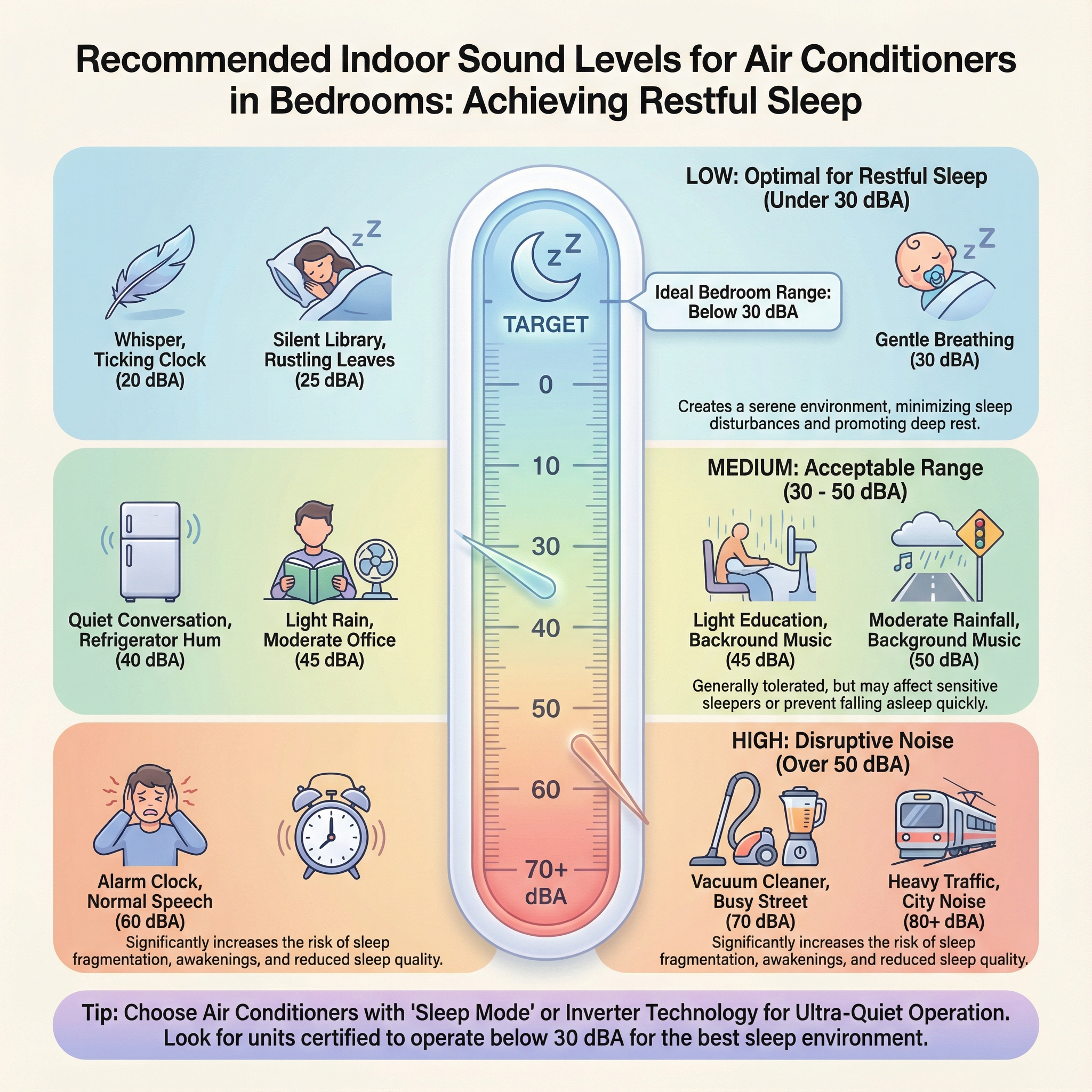
For bedrooms, aim for indoor sound in the high teens to upper 20s dB on a low fan setting. On medium, low 30s dB is usually acceptable. Avoid sustained mid 30s dB or higher in sleeping areas, since that level commonly disrupts light stages of sleep. In our field checks, most people sleep best when night readings sit near the lower end of these ranges.
Because a 10 dB increase is perceived as about twice as loud, a small bump on a spec sheet matters. A unit that measures 28 dB versus 35 dB will not sound slightly louder, it will feel significantly louder at the pillow. If nighttime levels drift into the mid 30s dB, many people find it harder to fall or stay asleep. Sensitive sleepers should target the bottom of the range.
Compare Types: Portable vs Window vs Mini Split vs Central: Typical Noise Profiles
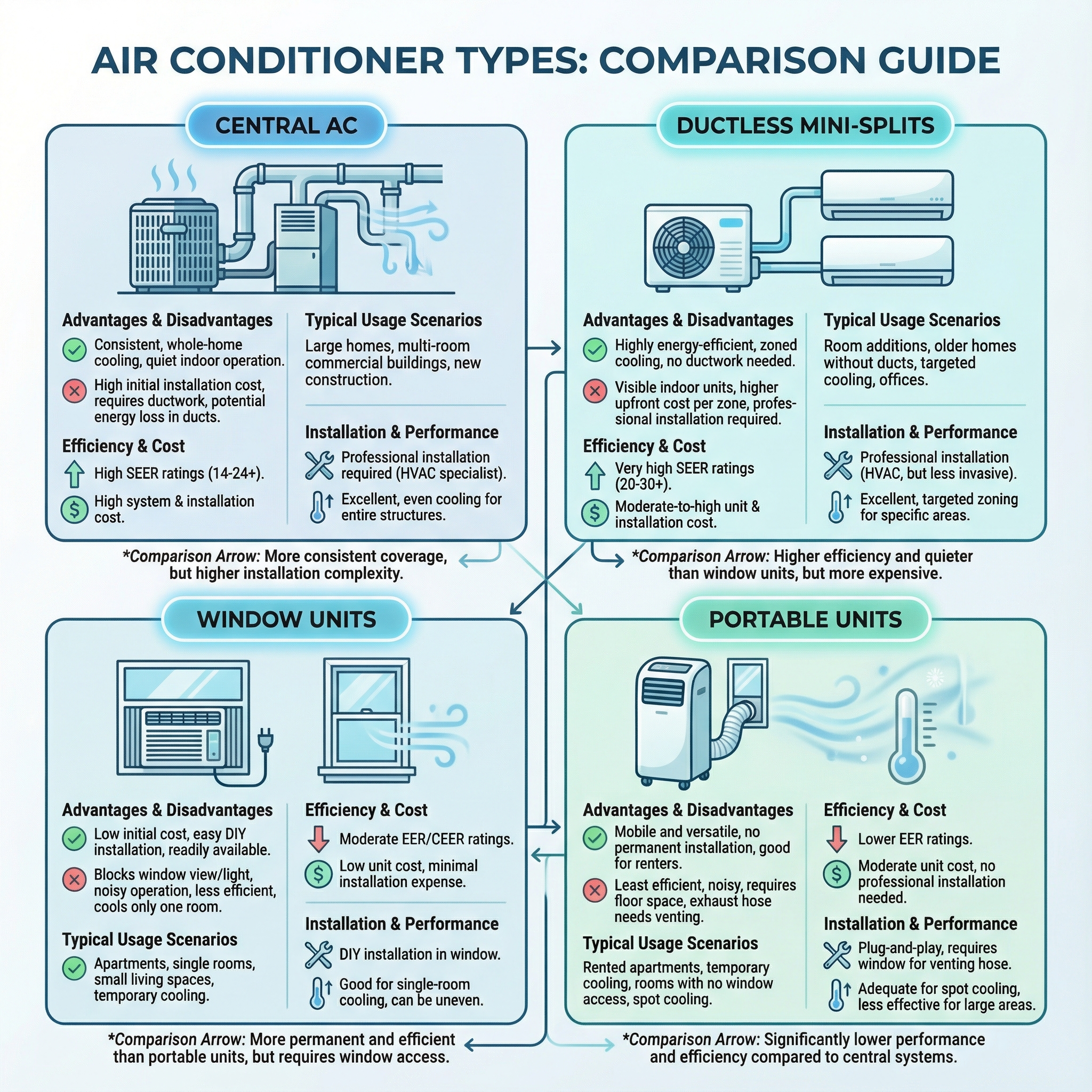
In our field experience, quiet performance comes down to where the compressor sits and how air moves. Here is how the common options compare.
- Portable AC: Compressor and indoor fan are in the room, so indoor noise is typically highest. Units vary, but on medium or high fan settings they tend to dominate conversation or TV.
- Window AC: Noise varies widely by model. Expect a noticeable jump on medium or high fan settings, since the whole assembly is in the opening.
- Ductless mini split: Quietest indoor experience in most cases. A dedicated wall or ceiling head and an outdoor inverter compressor keep indoor sound very low, and true sleep modes help at night.
- Central ducted: Can be very quiet if built right. A variable speed air handler, properly sized return paths, and attention to supply diffuser design reduce hiss and turbulence, especially in bedrooms.
Top Quiet Options by Type: Portable, Window, and Mini Split: Pros & Cons
For low noise, choose inverter and variable speed. Think of it like a dimmer switch rather than an on and off light: inverter compressors and ECM indoor fans modulate smoothly, cut cycling bursts, and avoid disruptive spikes at night.
- Ductless mini split: Quietest in real bedrooms. Pros: inverter is standard, long low RPM runs, true Sleep or Night modes, and Dry mode that dehumidifies quietly in humid regions. Cons: higher upfront, needs line set and a wall mount.
- Window AC: Better when you pick inverter models with Sleep mode. Pros: simple install. Cons: more vibration, one box in the window adds outdoor and structure noise.
- Portable AC: Usually the loudest. Pros: easy placement. Cons: single speed compressors and small blowers mean frequent cycling and fan hiss.
If you will stay ducted, specify an inverter condenser, a variable speed air handler, and properly sized return grilles for low noise. In our experience at Budget Heating (BudgetHeating.com), right sizing the returns and lowering static can quiet a system more than any fancy register.
When Quiet ACs Aren't the Best Choice: Tradeoffs, Limits & Alternatives
Quiet-first picks are not always the winning move. In humid regions, running at the lowest fan speed can leave rooms clammy. Favor units with a Dry or dehumidification mode that runs longer at lower RPM for discreet moisture control. In cold climates, a mini split that is not rated for low ambient heating can get louder and cycle hard during defrost, so verify low ambient and heating capability. In dense neighborhoods or HOAs, exterior sound limits may restrict outdoor placement, which can rule out some otherwise quiet systems unless equipment and siting meet the ordinance.
On cost, available sources do not provide dependable dollar ranges for quiet bedroom ACs. Efficiency helps on the power bill, and higher SEER or CEER trims kWh, but there are no clear price bands to compare.
- Judging by the lowest speed dB only
- Underestimating small dB differences
- Assuming low 30s dB suits sensitive sleepers
- Equating brand or efficiency with quiet
- Ignoring diffuser design, vibration, and placement
How to Read Manufacturer Noise Specs, Energy Ratings, and Independent Tests
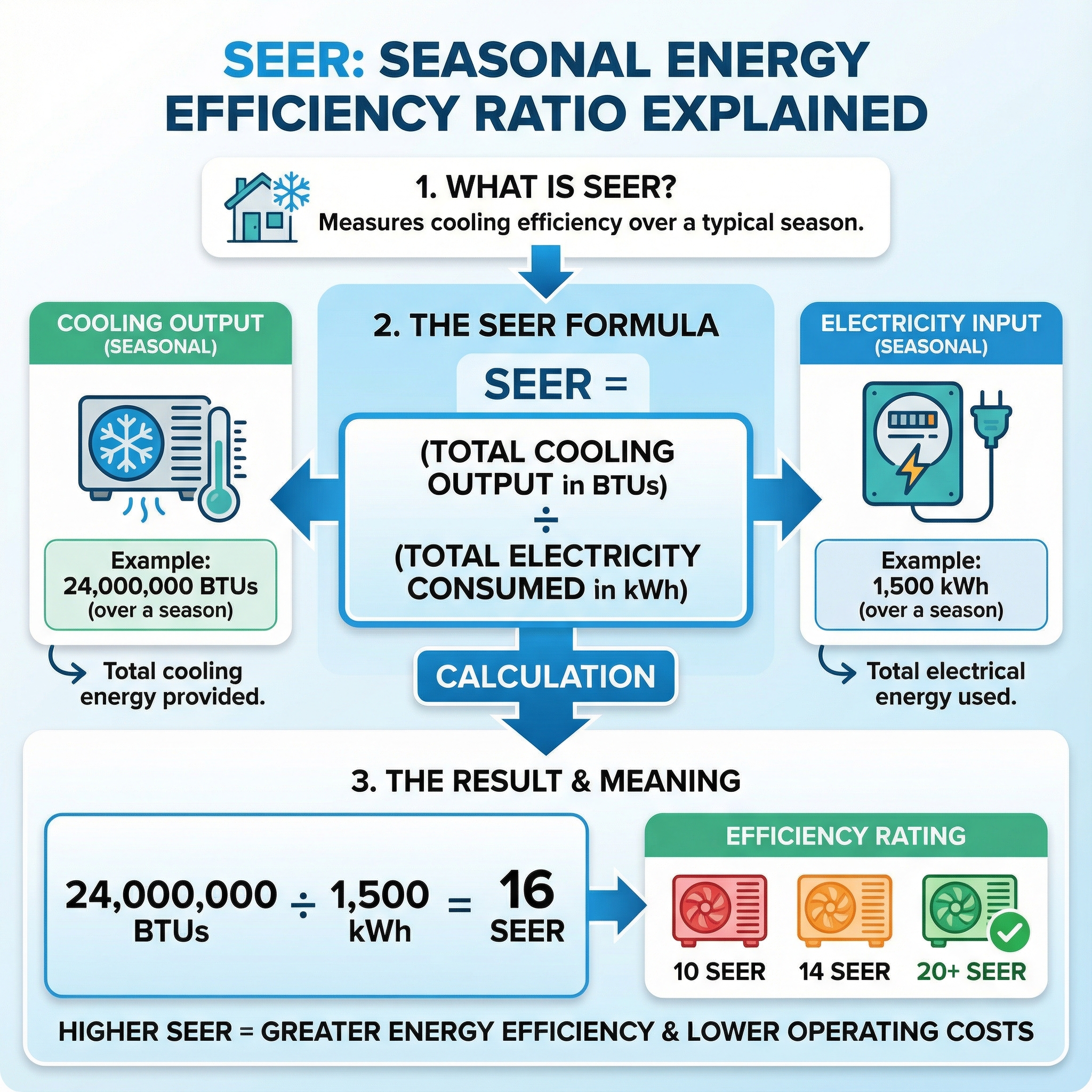
Start with the spec sheet: look at indoor and outdoor sound ratings at the speeds you will actually use, not just the lowest. Higher SEER or SEER2 variable-speed systems run longer at lower speed, so they are quieter and use less energy. In our experience at Budget Heating (BudgetHeating.com), start there. After DOE 2023 many central and ductless models list SEER2, with minimums about 14.3 South and 13.4 North. Room/window units are rated by EER or CEER, and higher CEER trims overnight power. ENERGY STAR Most Efficient 2024 flags units meeting ≤45 dB(A) at the lowest setting and stricter CEER. EU/UK Ecodesign A-G labels show indoor and outdoor sound power. Before install, ask for Manual J, indoor dB(A) at usable speeds, outdoor quiet mode ratings, return sizing, isolation hardware, smart placement, and setup of sleep and dehumidification modes.
Practical Tips to Reduce AC Noise in the Bedroom: Placement, Mounting, Ductwork & Maintenance
From our field work, the quietest bedrooms come from getting the install and setup right the first time. Use this checklist to cut noise you actually hear at the pillow.
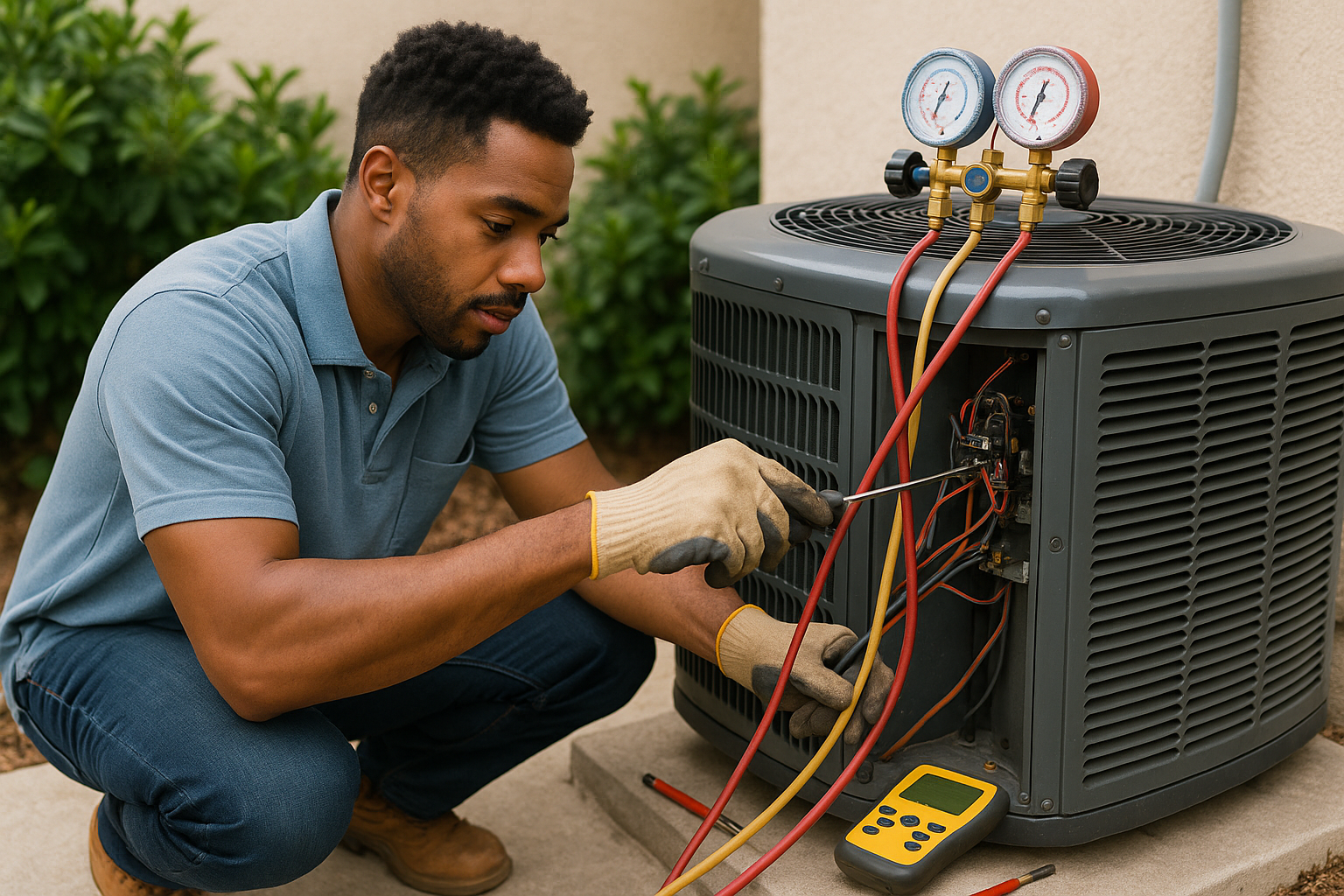
- Plan placement and vibration control: Keep outdoor units off bedroom walls and windows. Add rubber isolation pads, vibration isolating brackets, cushioned line set clamps, and flexible connectors so vibrations do not enter the structure.
- Design for quiet airflow: Plan the return air path early. Choose supply diffusers that spread air without jet noise, and size returns to keep velocity and static pressure low. Think wide river, not fire hose.
- Design quiet ductwork: Provide ample return grille area. Use lined duct or short flexible connectors where appropriate, and tune fan profiles for lower nighttime airflow.
- Manage humidity quietly: In humid climates, favor dehumidification modes that run longer at lower fan speed for moisture control without wind noise.
- Program nighttime operation: Pre cool in the evening to avoid loud pull downs. Enable Sleep or Night mode, allow a small setpoint drift, and prefer steady low RPM runs over frequent starts.
- Right size capacity: Have a Manual J load done for the bedroom or zone to avoid oversizing, which short cycles, and undersizing, which forces high fan speeds.
- Verify installation quality: Support and isolate refrigerant lines and drains. Mount indoor units with anti vibration measures, and ensure panels, grilles, and filters fit snugly to prevent rattles.
- Test, maintain, and adjust: Before final payment, listen at night in Sleep mode. Ask for fan profile or isolation tweaks if needed, keep filters clean, and revisit schedules each season.
Choose and Configure a Quiet Bedroom AC: Summary & Next Steps
Quiet sleep comes from pairing low dBA at the pillow, solid efficiency, and clean installation. Target under 30 dBA for ultra quiet, 30 to 40 for comfort, and know that above about 45 can intrude. The quietest setups use ductless mini splits with inverter compressors and variable indoor fans, right sized, with vibration isolation and smart outdoor placement. Verify dB ratings at low and medium fan, schedule gentle night modes, and keep filters and coils clean so the system runs steadily instead of cycling.
Whether you are buying new or quieting what you have, our team can map a plan that fits your room and budget. With 30+ years in HVAC and 200,000+ orders fulfilled, we make it straightforward.
- Get a Custom Quote
- Talk to Our Team by phone for U.S. based technical help
- Shop Ductless Mini Splits and Heat Pump Systems
- Fast shipping from PA and TX, financing with Affirm available