




Florida Air Conditioner Rebates and Federal Tax Credits: Maximize Your Savings
Cooling a Florida home can be one of your biggest monthly expenses. This guide shows how to cut upfront and lifetime costs by pairing Florida utility or state rebates with federal tax credits. We explain which systems and efficiency ratings qualify, how instant rebates differ from tax credits, how to stack programs, eligibility and timing, and the documentation you need. You will also see realistic savings scenarios and practical tips for choosing and maintaining high efficiency equipment, so you gain better comfort, cleaner indoor air, a longer system lifespan, and lower energy bills.
Quick overview: How Florida utility rebates and federal HVAC tax credits differ
Think of it as two waves of savings. Utility rebates in Florida usually show up first, either at the point of sale or shortly after installation, trimming the upfront price. Typical rebates for qualifying high efficiency AC systems are often from $100 to $200. Federal 25C tax credits arrive later, when you file your tax return, reducing your tax liability for that year.
We stack these whenever possible: the rebate lowers out of pocket costs today, the 25C credit delivers a second benefit at tax time. Same project, two timelines. Knowing the timing helps you plan cash flow and compare bids accurately.
Who qualifies for the federal HVAC tax credit (25C): caps, timeline and basics
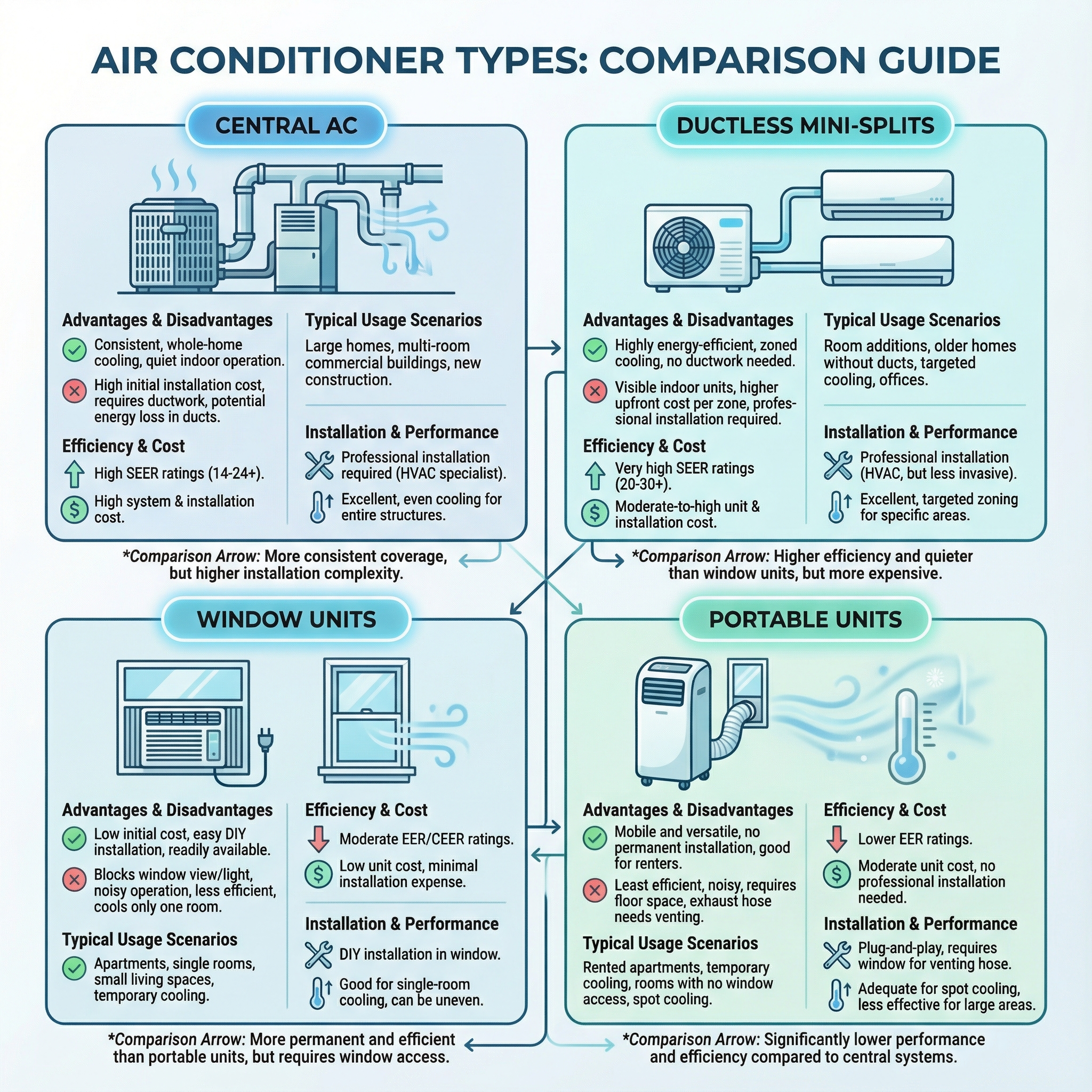
The Energy Efficient Home Improvement Credit, known as 25C, applies to existing homes and covers 30% of the installed cost for eligible HVAC placed in service from 2023 through 2032. Caps: up to $600 for qualifying central air conditioners and up to $2,000 for qualifying heat pumps or ductless mini-splits.
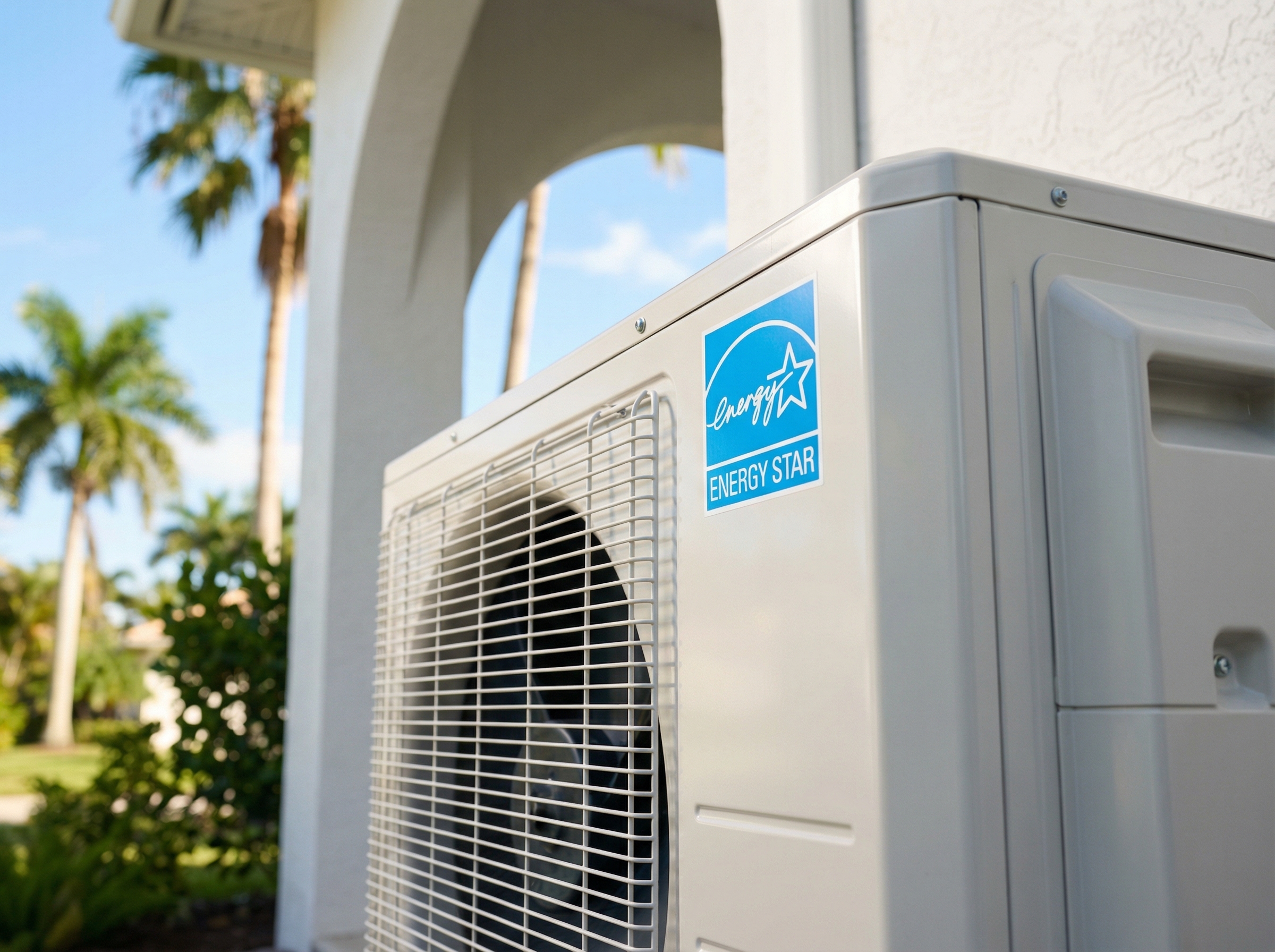
Eligibility basics: for 2026, many split central ACs must be ENERGY STAR and meet roughly 16 SEER2 and 12 EER2; packaged ACs can qualify if ENERGY STAR. Choosing a heat pump instead of a straight-cool AC lets you access the larger cap.
In our experience at Budget Heating (BudgetHeating.com), the smart first steps are to decide your path and budget, then confirm the specific model's federal tax-credit eligibility before you purchase.
Eligible equipment: SEER2, EER2, HSPF2 and ENERGY STAR requirements
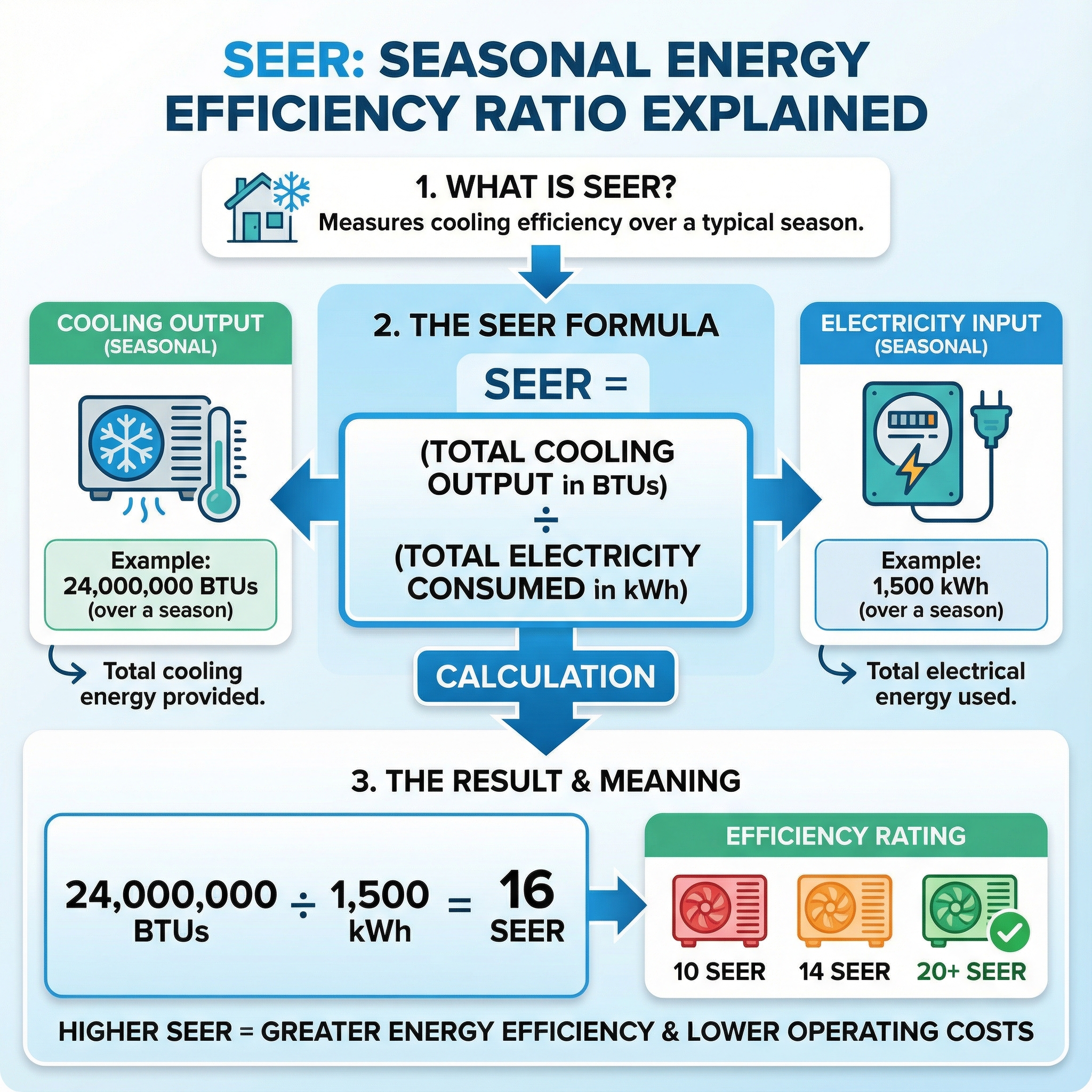
SEER2 is the newer, stricter DOE test introduced in 2023. For the same unit, SEER2 reads lower than legacy SEER because the test adds more real-world airflow resistance. It is like MPG measured on hilly roads instead of a flat track. In the South, current baselines are about 14.3 SEER2 for split ACs, and at least 14.3 SEER2 plus 7.5 HSPF2 for heat pumps.
Why it matters in Florida: cooling dominates your bill. Moving from roughly 14.3 SEER2 to 17 SEER2 can cut cooling electricity about 16%, and stepping to around 20 SEER2 can reduce it about 29%. Most new systems run from 14.3 SEER2 into the 20+ range, with premium inverter systems in the high teens to low 20s. In our experience at Budget Heating (BudgetHeating.com), utilities and the federal 25C credit look for equipment that meets specific SEER2, EER2, and HSPF2 thresholds, often with ENERGY STAR.
- Compare SEER2, EER2, and HSPF2 across models.
- Prioritize ENERGY STAR equipment that meets program criteria.
- Address filtration and indoor air quality when selecting the system.
Common mistakes and tradeoffs: when rebates or federal credits aren't the right answer
Incentives can be great, but they are not automatic and not always the best path. Here are frequent pitfalls we see, plus better options.
- Assuming any new AC qualifies. Most programs require specific SEER2, EER2, or HSPF2 levels or an ENERGY STAR listing. Do not rely on old SEER labels, SEER and SEER2 are not the same.
- Oversizing equipment. Bigger does not mean better. It often short cycles and misses humidity control. The fix is a Manual J load calculation, a room by room heat gain and loss study that considers insulation, windows, orientation, and climate. Oversizing is like wearing shoes two sizes too big, you move, but poorly.
- Skipping licensed installation and documentation. Many incentives require a licensed contractor and a manufacturer certification statement. Keep invoices and model numbers together.
- Thinking rebates and credits cannot be stacked. They often can, but a rebate usually lowers the out of pocket basis used for the federal credit. Keep careful records.
- Extreme cold climates. All electric heat pumps can struggle at very low temperatures, a gas furnace or dual fuel setup can be a better fit.
- Nonqualifying projects. New construction, some rentals, or rule mismatches may not qualify for 25C. Consider utility only rebates or phasing measures across tax years.
- Buying before preapproval. Many programs require participating contractors or preapproval. Confirm requirements before you purchase.
How Florida rebate programs work: the state, utilities and what to check first
In our experience across Florida, incentives are mostly utility run. The state did not opt into the IRA Home Energy Rebates, so there is no state administered HOMES or HEAR rebate. Because the climate is hot and humid, programs concentrate on high efficiency central air conditioners and heat pumps. Utilities set their own rules, and amounts and paperwork vary by program year. Typical values range from about $100 to $1,500.
Examples: Florida Power & Light generally requires a qualifying system around 15.2 SEER2 installed by an FPL approved contractor, and has offered roughly $150 instant rebates for about 16 SEER systems. Florida Public Utilities Company has offered about $100 for roughly 15 SEER equipment.
- Verify your utility's current rebate rules before you buy: eligibility, minimum SEER2, EER2, HSPF2.
- Check if approved contractors are required and whether pre approval is needed.
- Confirm documentation, forms, and submission deadlines.
Step-by-step: How to claim federal tax credits and local rebates
- Before you order: confirm your utility or state program's eligibility rules, including required contractors, any pre-approval, and paperwork.
- Get multiple written quotes that list exact indoor and outdoor model numbers, matching coil, AHRI reference number, SEER2/EER2/HSPF2, scope of duct and electrical work, permits, and commissioning steps.
- During installation: use a licensed Florida HVAC contractor, make sure permits are pulled and inspections scheduled, and photograph model and serial labels.
- After installation: collect the final invoice, AHRI certificate, permit documents, and inspection approvals. Submit utility rebate applications promptly.
- Tax filing: track invoices, AHRI matches, and manufacturer certification statements. Claim the 25C Energy Efficient Home Improvement Credit on IRS Form 5695 when you file.
- Recordkeeping: keep digital copies of everything for program verification or audits.
Documentation checklist: what to keep (invoices, AHRI, manufacturer letters, permits)
For rebates and the federal credit, reviewers look for proof of the exact equipment installed, its efficiency, and proper installation. In our experience, keeping the items below avoids delays.
- Itemized invoice: equipment cost, installation labor, model numbers, and installation date.
- AHRI certificate or listing for the matched indoor and outdoor system, used to verify SEER2, EER2, and HSPF2 values.
- Manufacturer's certification statement confirming the equipment meets the rebate or tax credit efficiency criteria.
- Permit documents: proof of closed permit or inspection, plus photos of the unit data plates showing model and serial numbers if requested.
- Warranty and commissioning packet: proof of warranty registration and startup records, including airflow, refrigerant charge, and thermostat setup.
AHRI documentation and the manufacturer letter validate efficiency claims, while the invoice, permits, photos, and commissioning records prove the job was installed correctly and on the stated date.
How rebates and tax credits stack: real savings examples and net-cost math
Here is how stacking works in practice: take the installed price, subtract any instant utility rebate to get your adjusted upfront cost, then estimate the federal credit on the remaining eligible amount when you file taxes. Utility rebates can be treated as purchase price adjustments for federal tax purposes, which means they may reduce the cost basis used to calculate the 25C credit. Confirm treatment with a tax professional.
Example: a central AC replacement priced at $4,500 that meets the required ratings might receive a $200 instant FPL rebate plus a $600 federal 25C credit. Net cost is about $3,700, roughly $800 total savings. If the rebate reduces the tax basis, the credit is still often capped at $600 for AC, but basis matters when you are not at a cap.
- Typical central AC stacking: about $700-750 combined.
- Typical heat pump stacking: roughly $2,100 or more combined, before any long term bill savings.
Next steps: Get a rebate check and a tax-credit estimate for your Florida AC upgrade
Combine Florida utility or local rebates, manufacturer incentives, and the federal 25C credit to lower your net cost. Expect hundreds off for a central AC and thousands for a high efficiency heat pump. Bottom line: stacking cuts upfront cost, speeds payback, and lowers bills. To maximize savings, meet Southeast SEER2, EER2, HSPF2 thresholds, get itemized quotes with AHRI certs, verify rules, and keep documentation. If the rules feel complex, our team will estimate your totals.
- Get a Custom Quote: itemized pricing, AHRI cert, estimated rebates and 25C
- Talk to Our Team: U.S. based phone support from HVAC pros
- Shop High Efficiency AC and Heat Pumps: wholesale pricing, Affirm financing