




Quick answer: Is the AC making your vents stink, or is something else to blame?
Vent odors are common, and they do not always mean the air conditioner is broken. In our 30 plus years working on HVAC systems, we treat vent smells as indoor air quality warnings. The first step is to identify the smell and its pattern before deciding on a simple fix or an emergency. Ask what it smells like, then note when it happens: only when cooling starts, all the time, only in certain rooms, after rain, or after long cycles. That pattern is a roadmap, like a dashboard light that tells you which system to check. Safety first: strong burning, rotten egg, or sharp chemical odors call for cutting power and leaving the area. Musty or damp notes often point to drainage or microbial growth, which may allow basic DIY checks like filter changes and drain inspection.
Common vent smells and what each odor usually points to
With 30+ years working on residential and light commercial systems, we see the same odor patterns repeat. Use this quick map to narrow the source.
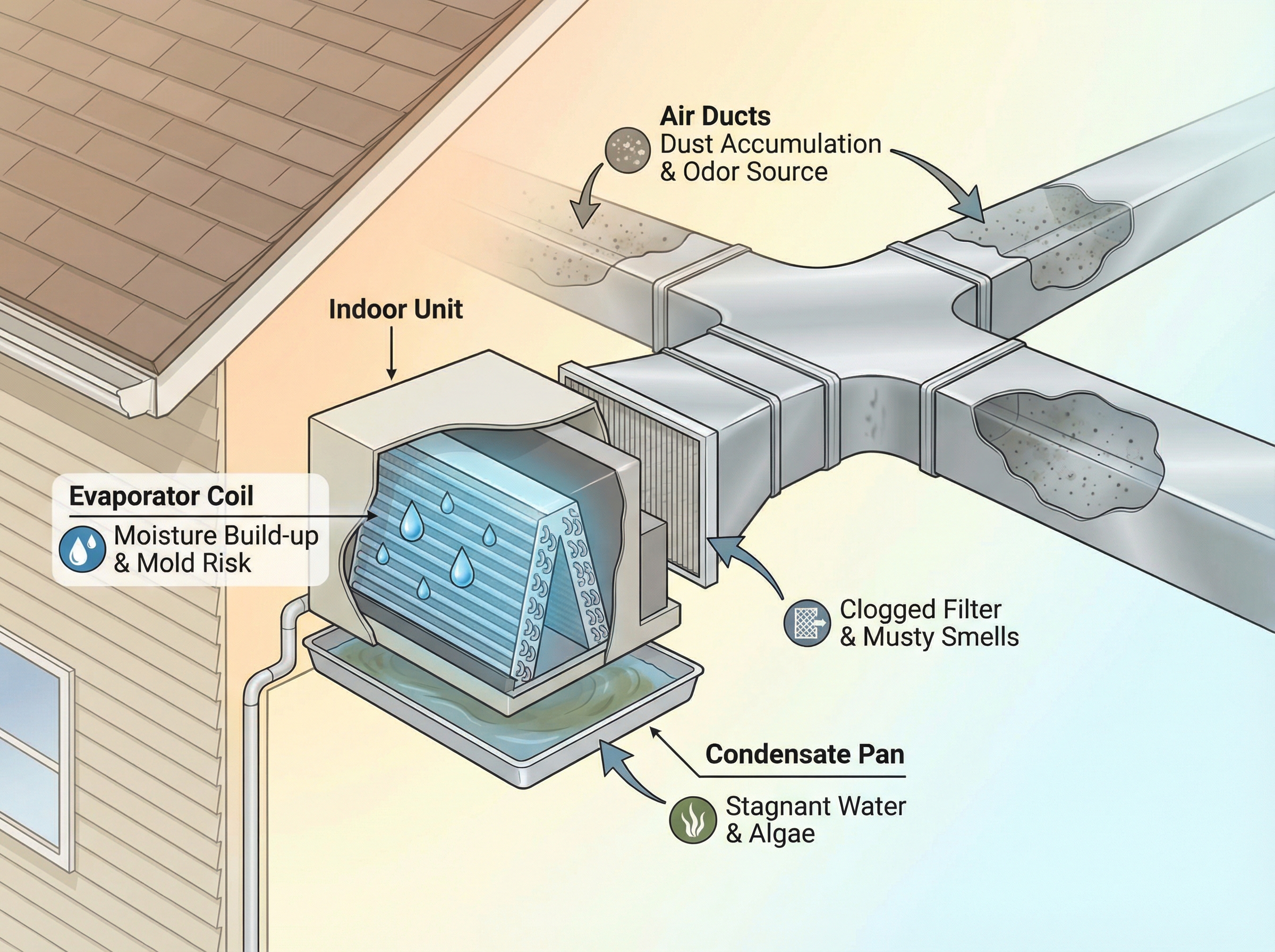
- Musty or dirty-sock odor: This almost always traces to microbial growth in a damp spot the system touches, typically the evaporator coil, drain pan, nearby duct liner, or a wet air filter. It often grows stronger when cooling runs, after rainy weather, or when a condensate line is partially clogged. If the smell is strongest at supply registers right as the system starts, focus on the indoor coil area and drainage.
- Chemical, solvent, or sharp sweet smell: These point to VOCs from new paints, flooring, furniture, adhesives, or household cleaners that the ventilation system is picking up and redistributing. Odor spikes often follow cleaning, renovations, or delivery of new goods, then taper as materials off-gas. Closing interior doors can help you locate the room of origin, and a fresh carbon filter can reduce recirculation while the source dissipates.

How to safely diagnose where the smell is coming from (step-by-step)
Treat this like a slow, careful walkthrough, not a teardown. Keep panels closed and avoid electrical or gas parts. Use your senses and the system's modes to narrow the source.
- Note pattern and timing: does the odor show only at startup, after long runtimes, only in certain rooms, or all the time? Try cooling, heating, and fan-only. If fan-only smells, the issue is likely in the air path, not the refrigerant cycle.
- Walk the house while the system runs. Compare supply grilles to return grilles. Stronger odor at supplies points to the equipment or ductwork, stronger at returns points to something in the home being pulled in.
- Check humidity clues: window condensation, sweating ducts, musty closets, or visible mold suggest moisture-driven causes that need drying or drainage correction.
- Look around the air handler for safe visual cues: standing water, wet insulation, rust streaks, debris on or near the filter area.
In our experience at Budget Heating (BudgetHeating.com), documenting these patterns quickly isolates the source and prevents unnecessary part swapping.

Other common sources: sewer gas, dead pests, stored items and building plumbing
Not every bad smell starts in the AC. In many homes we inspect, the ventilation simply spreads odors that originate elsewhere. Think of the air handler as a circulator that can turn a small smell into a house-wide one.
- Sewer gas: A persistent sewage smell usually points to a plumbing issue. Dry or blocked P-traps and damaged vent stacks allow backdrafts that the return can pull in and distribute through the supply vents.
- Dead pests and decay: Dead rodents or organic debris inside duct runs or return cavities create strong decay or garbage-like odors whenever the blower runs.
- Stored items and household sources: Paints, solvents, pesticides, fertilizers, litter boxes, and laundry chemicals near returns or in mechanical rooms off-gas, get entrained, and circulate to occupied spaces.
When to call an HVAC pro, and honest limits of DIY fixes
Call a pro for rotten-egg gas smells, sharp chemical or refrigerant odors, persistent burning or electrical smells, visible leaks, recurring water around the air handler, ice on lines, or repeated short cycling with poor humidity control. Evidence of duct contamination, dead pests in ductwork, or structural moisture problems also requires professional inspection and remediation.
- DIY limits: refrigerant handling, electrical repairs, gas burner or venting work, deep coil cleaning, duct sealing or major duct repair, and complex diagnostics. Opening sealed cabinets or working near live wiring can void warranties and create safety risks.
- Common misconceptions: closing vents saves energy, the highest MERV filter is always best, duct cleaning always fixes odors, masking sprays are harmless, smelly vents mean the AC is at fault, bigger systems solve odor and comfort issues. In reality, restrictive filters and closed vents raise static pressure, duct cleaning helps only when contamination exists, sprays add VOCs, many smells come from plumbing or pests, and oversized units short cycle and remove less humidity.
- Better fits in some cases: fix moisture sources and leaks, remove pests and repair ducts, right-size equipment, add ventilation, use a dedicated dehumidifier, or correct plumbing traps when odors trace to drains.
AC-specific causes: coils, condensate pans, filters and ducts
The evaporator coil is cold and wet whenever the AC runs. Dust, kitchen aerosols and pollen stick to that surface, then moisture turns the mix into a biofilm where mold and mildew take hold. That growth releases musty or sour compounds into the airstream. The condensate pan sits directly beneath, and if the drain is partially clogged or the unit is out of level, water lingers. Standing water becomes a breeding spot for bacteria and mold, so the blower pulls those odors through the supply.
Dirty filters make it worse. A clogged filter traps dust, pet dander and organic matter that can harbor microbes, and when it gets damp it starts to smell. Inside the ducts, lined sections that get wet from leaks or sweating can support growth that carries a stale, earthy odor. In our experience at Budget Heating (BudgetHeating.com), the fix is to remove the moisture path: clear and flush the drain, clean and sanitize the coil and pan, install a fresh properly rated filter, and dry or repair affected ductwork. Think of a coil and pan like a damp sponge left in a sink, it quickly goes sour.
Immediate DIY fixes you can try (safe, step-by-step)
We suggest starting with these simple, homeowner-safe checks. They often clear minor odors and airflow issues without tools.
- Replace the air filter: Pull the existing filter, note the size and airflow arrow, and install a fresh one. Plan on every 1 to 3 months. A clean filter is like a coffee filter, it catches debris before it goes where it should not.
- Clean supply and return grilles: Vacuum and wipe the grilles to remove dust and hair that can trap odors and cut airflow.
- Refill plumbing traps: Run water into rarely used sinks, tubs, and floor drains to refill P-traps. This blocks sewer gas from entering the home.
- Check the condensate drain and pan: If you can access it easily, clear minor slime or debris and flush the drain with a mild vinegar solution. Confirm the pan is draining after a cooling cycle.
- Control indoor humidity: Aim for 30 to 50 percent relative humidity. Use bathroom and kitchen exhaust fans during and after use, and consider a dehumidifier in humid climates.
- Outdoor unit housekeeping: Remove leaves and vegetation around the condenser and keep at least 18 to 24 inches of clearance. Gently rinse fins with a garden hose (no pressure washer).
- Thermostat and runtime: Avoid wide temperature setbacks that cause short cycling. Steadier setpoints and longer runtimes improve dehumidification and can reduce musty smells.
These quick steps tidy the air path from return to supply so the system can do its job cleanly and quietly.
When the smell indicates danger: gas, refrigerant, electrical or carbon monoxide risks
Some odors mean stop now. Rotten egg or sulfur indicates a gas leak, evacuate and call the gas utility or 911. Sweet or solvent-like suggests refrigerant or combustion fumes, turn the system off and call a licensed HVAC tech. Hot, burning, or electrical smells beyond a brief dusty startup signal overheating and fire risk, shut it down. Keep carbon monoxide detectors near fuel appliances. Do not open cabinets, touch wiring, or handle refrigerant, which requires certification.
Prevention & maintenance checklist to stop smells from returning
Odors rarely start overnight. They build when moisture, dust and airflow issues stack up. We use this simple checklist to keep systems fresh and to stop smells from coming back.
- Fix moisture first: musty odors combined with condensation or visible mold signal poor ventilation and high indoor humidity. Address the moisture source before anything else.
- Stay on a routine: regular professional maintenance keeps coils, blowers, condensate systems and safety controls clean, which removes the conditions odors thrive in.
- Use the right filter strategy: choose filters that balance MERV with your system's airflow capability, and change them on schedule to avoid trapped moisture and microbial growth.
- Size and design correctly: ask for a Manual J load calculation and a discussion of latent vs sensible capacity, pressurization and duct airflow. Correct sizing improves drying and reduces odor risk.
- Select equipment with dehumidification in mind: regional SEER2 minima and design choices affect latent performance. In many homes, the best smelling system is the one that manages humidity well.
- Add targeted enhancements when needed: UV‑C coil lights, whole‑house dehumidifiers and balanced ventilation with an ERV or HRV cut down on microbial growth and stale air.
- Match strategy to climate: hot humid regions see more condensate and microbial risk, while arid or cooler regions tend to have dust and stale air as the main drivers. Choose controls accordingly.
- When odors persist: targeted upgrades like dehumidification or improved ventilation usually outperform repeated duct cleaning.
Think of humidity control like wringing out a damp towel. The drier the system stays, the less there is for odors to feed on.
Summary & quick troubleshooting checklist: what to do now
Vent odors are early warnings, the HVAC air path is often involved, but the AC is not always the culprit. Start by identifying the smell and source, then work these quick checks.
- Pinpoint the odor type and where it is strongest.
- For sulfur or gas, chemical or refrigerant, or persistent burning, shut off, evacuate, and call a pro.
- Replace or wash the air filter.
- Clear the condensate drain, clean the pan, and check for standing water.
- Inspect coils for buildup, schedule a cleaning if needed.
- Check registers and ducts for debris or pests, vacuum grilles, keep RH below about 50 percent.
Most smells resolve with a systematic approach, but if they persist 24 to 48 hours or you see leaks, icing, or short cycling, call a technician. When you need parts or replacements, our 30+ years, stocked warehouses, wholesale pricing, U.S. phone support, and Affirm financing help you act quickly.
- Get a Custom Quote.
- Talk to Our Team.
- Shop Air Filters, Dehumidifiers, IAQ, many ship free.