




What Is a Mini Split: The Ductless Heat Pump That Heats and Cools Rooms
Mini splits are ductless heat pump systems that heat and cool specific rooms or zones rather than conditioning an entire home through ducts. Think of them like a dimmer switch for comfort, letting you set the exact feel in the areas you use most without wasting energy elsewhere. In our experience, that room-by-room control is what makes them immediately noticeable in daily living.
Beyond precise temperature control, the benefits stack up. Mini splits can significantly improve everyday comfort, reduce energy waste and monthly utility bills, and dehumidify and filter air where needed. With basic upkeep, they provide reliable performance for 15 years or more. We find that consistent, light maintenance is what keeps them running smoothly over the long haul. If you have a space that is consistently too warm or too cool, a mini split targets the problem directly, delivering the right amount of heating or cooling where you need it and avoiding the inefficiency of conditioning the whole home through ducts.
What Is a Mini Split? A Quick, Practical Definition
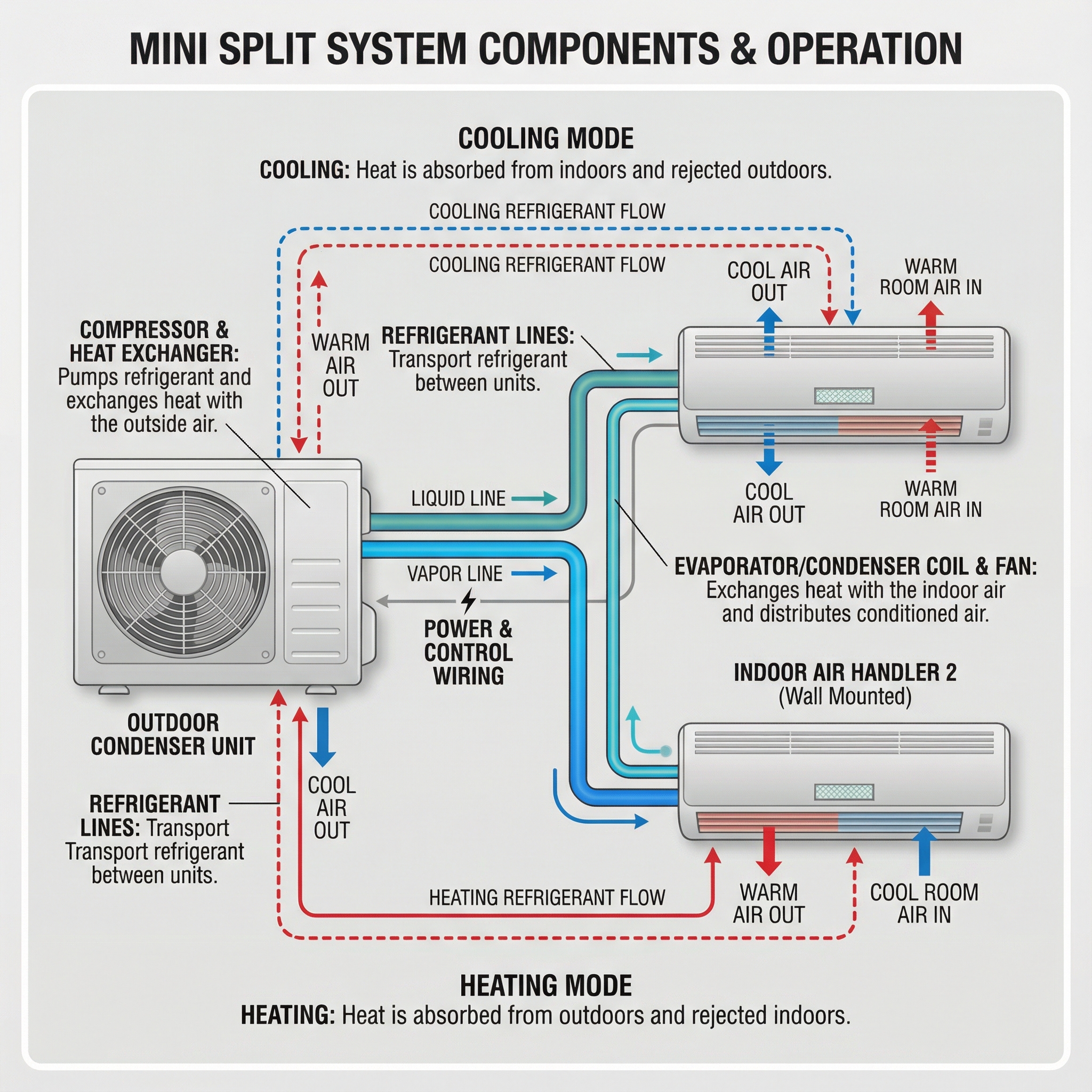
We describe a mini split as a two-part heat pump HVAC system: an outdoor compressor/condenser linked to one or more indoor air handlers by a small conduit that carries refrigerant, power and communication wiring, and a condensate drain.
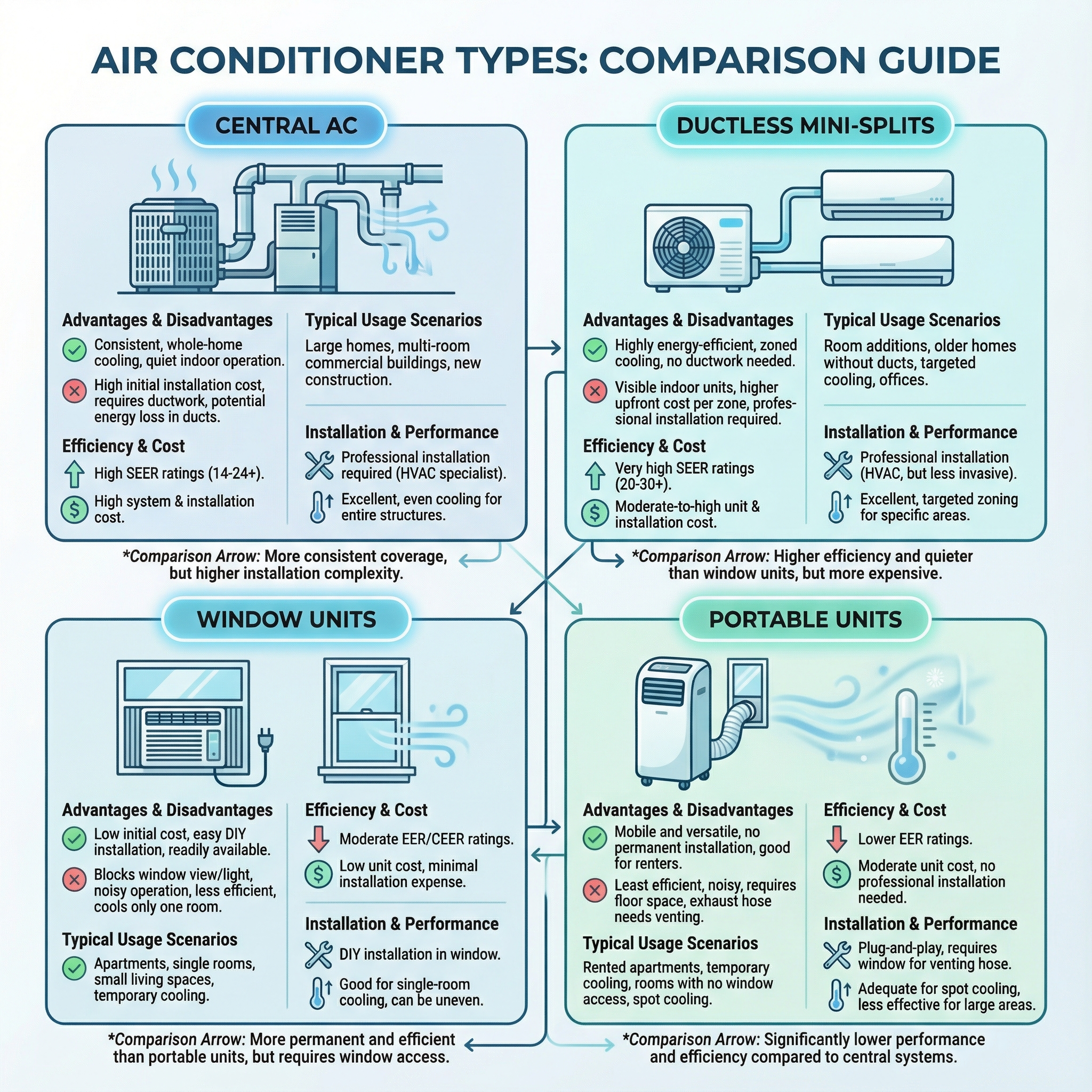
Configurations are simple: single-zone pairs one indoor unit with one outdoor unit, while multi-zone connects several indoor units to one outdoor unit to serve different rooms. Indoor heads come in four common form factors: wall-mounted, ceiling cassette, floor console, and slim-ducted, allowing the equipment to match the space and the look you want.
How a Mini Split Works: The Refrigeration Cycle and Reversing Valve
At its core, the system moves heat from one place to another instead of making new heat. The refrigerant is the messenger that carries energy between indoors and outdoors as it circulates. In our field experience, the quickest way to visualize it is a conveyor belt that can run forward or reverse: the belt is the refrigerant loop, and the packages are units of heat being picked up and dropped off.
In cooling mode, the indoor coil acts as the evaporator, where refrigerant absorbs heat from the room air. The compressor then drives the refrigerant to a higher pressure and temperature, pushing that captured heat to the outdoor coil. Outside, the condenser releases the heat to the ambient air. The loop repeats continuously, so the space gets cooler as indoor heat is moved outdoors.
The reversing valve is the traffic director. When it shifts position, it swaps the roles of the coils. In heating mode, the outdoor coil becomes the evaporator and pulls heat from the outside air, and the indoor coil becomes the condenser that delivers that heat into the living space. Because mini splits are heat pumps, the same refrigeration circuit provides both cooling and heating year round, simply by changing flow direction and coil function through the reversing valve.
Indoor Units: Types, Air Distribution and Indoor Air Quality
Indoor heads come in four common styles: wall mounted, ceiling cassette, floor console, and slim ducted. Choose based on room layout, furniture placement, and aesthetic preferences. Because mini splits deliver conditioned air directly to the room, not through dusty, leaky ducts, and include filtration in the indoor head, they can improve indoor air quality. Indoor heads are also engineered for low sound levels suited to bedrooms and offices.
- Wall mounted: High on a wall, throws air across the room for broad coverage.
- Ceiling cassette: In the ceiling, sends air in multiple directions for even comfort.
- Floor console: Low placement delivers air at occupant level, good where wall space is tight.
- Slim ducted: Concealed unit feeds small grilles for a clean look and uniform spread.
Single Zone vs Multi Zone (and VRF/VRV): Choosing the Right Configuration
Single zone mini splits pair one indoor head with one outdoor unit, ideal when you are conditioning one space. Multi zone setups connect several indoor units to a single outdoor compressor, serving multiple rooms from one outdoor footprint. Zoning is the payoff, like giving each room its own light switch: each indoor unit has its own thermostat and independent control, so you set room by room temperatures, eliminate hot and cold spots, and avoid conditioning empty spaces. From what we see in the field, single zone fits studios, additions, or a large open area, while multi zone suits homes with several distinct rooms.
For larger residential or light commercial projects, VRF or VRV extends the multi zone concept with advanced capacity control and layout flexibility.
Energy Efficiency, SEER2/HSPF2 and New Regulatory Changes
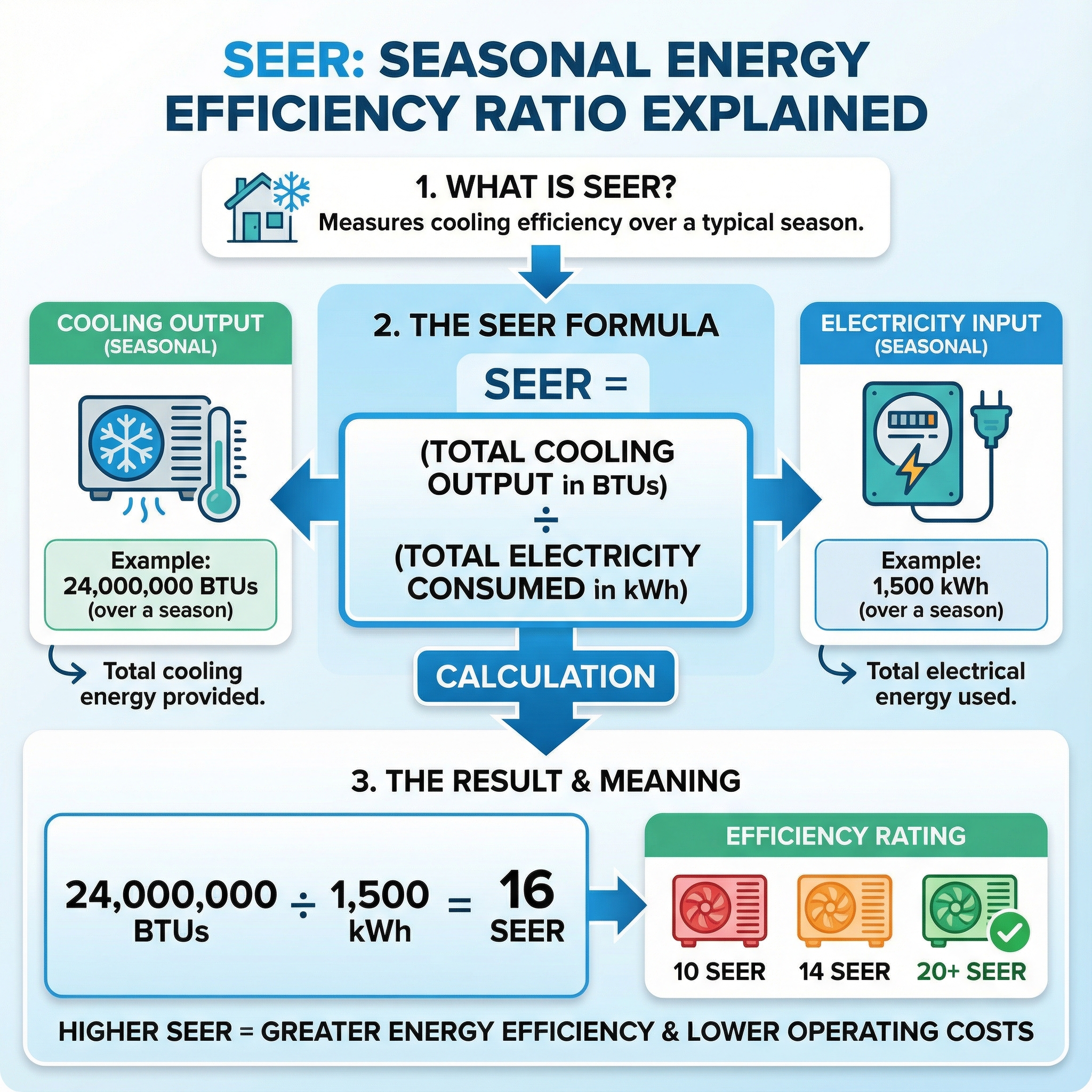
SEER and SEER2 measure seasonal cooling efficiency, essentially how much cooling you get per kilowatt hour. Higher SEER2 lowers bills: going from SEER 14 to 20 can cut cooling energy 30 percent, and SEER 10 to 18 can trim bills 50 percent. For most homes, SEER 16 to 21 is a practical sweet spot. Modern ductless mini splits often range SEER 16 to the mid 30s.
HSPF2 is the heating side for heat pumps, higher is better across the season. In 2023 the industry moved to SEER2 and HSPF2 test procedures with updated regional minimums, so compare like for like. The AIM Act is phasing down higher GWP refrigerants such as R-410A in favor of lower GWP options like R-32 and R-454B A2L beginning around 2026. Local code adoption and rebates vary, so confirm regional rules before you buy. In our experience at Budget Heating (BudgetHeating.com), planning for the new refrigerants helps avoid permitting and supply hiccups.
Outdoor Unit & Inverter Compressor: Why Variable Speed Matters
The outdoor unit houses the compressor, the heart that drives refrigerant through the system. Fixed-speed models are either on or off, which causes short cycling, temperature swings, and higher noise. Inverter-driven compressors act like a dimmer switch: they ramp up to hit your setpoint quickly, then modulate to match real-time demand. That variable speed means higher seasonal efficiency, quieter operation, and steadier room temperatures. Many mini splits use this approach to fine tune capacity, so the unit sips power instead of gulping it.
In our experience at Budget Heating (BudgetHeating.com), homes feel more even and dehumidification improves because longer, lower-speed runs wring moisture without overcooling. The compressor also avoids hard starts, which can extend service life and reduce wear compared with traditional on or off systems.
Refrigerant Lines, Installation Basics and Safe Maintenance Tasks
Between the indoor air handler and the outdoor unit runs a refrigerant line set, two copper tubes that move heat like supply and return lanes on a highway. The larger insulated tube is the suction line, the smaller is the liquid line. These pass through a small wall penetration, often inside a protective conduit that commonly also carries power or communication wiring and, in many layouts, the condensate drain.
Homeowners can safely:
- Clean or wash reusable indoor filters monthly.
- Keep the outdoor condenser clear of leaves, snow and vegetation.
- Gently rinse the outdoor coil with a hose, never a pressure washer.
- Periodically check condensate drains for clogs or algae.
- Turn power off before any cleaning or inspection.
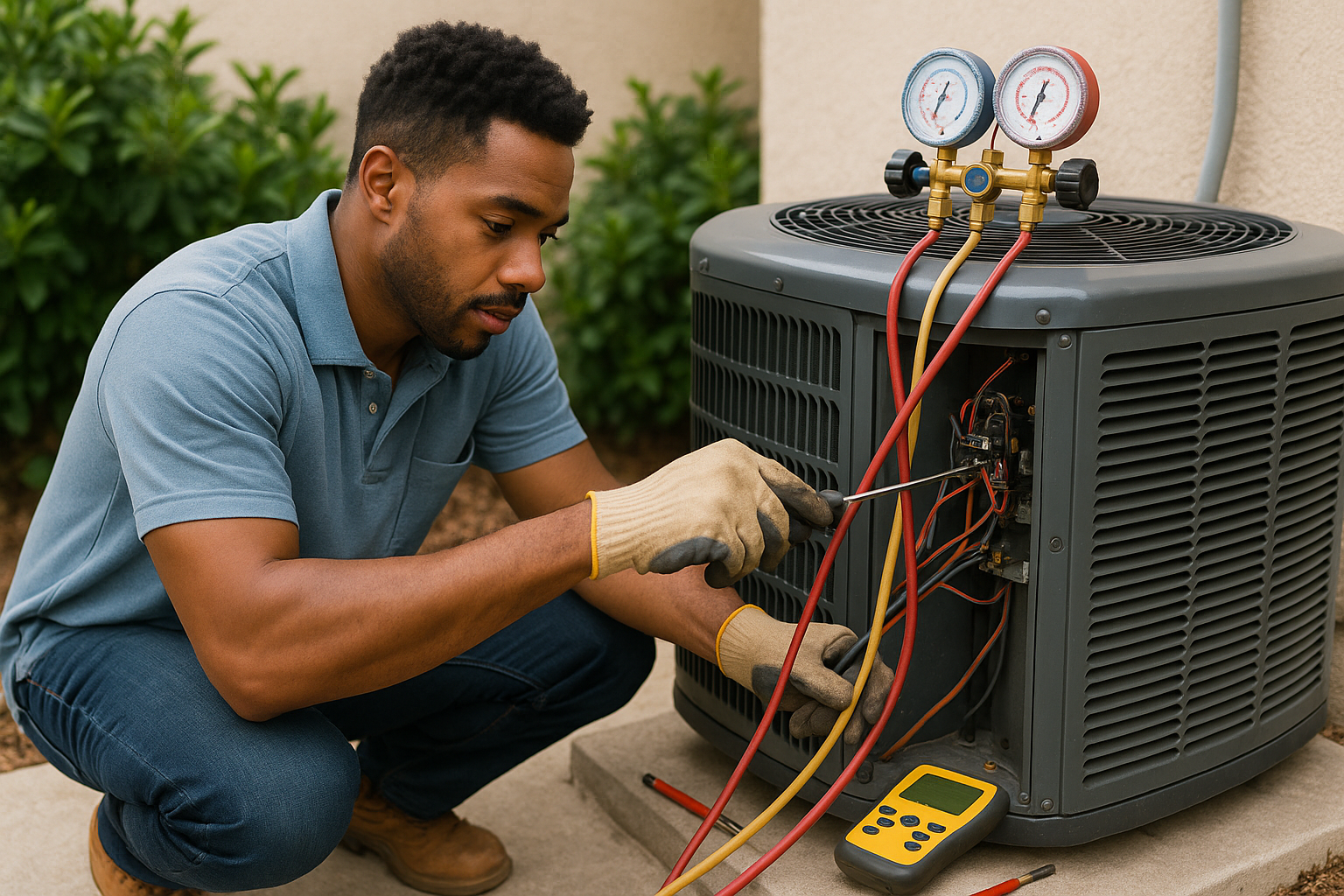
Licensed professionals must handle line set routing and length, evacuation, charging and leak repair, as well as dedicated circuit and breaker sizing, control wiring, secure condensate drainage, and required clearances. Improper work can cause poor performance, higher energy use and shorter equipment life.
Benefits, Drawbacks and When a Mini Split Isn’t the Best Choice
Mini splits deliver high efficiency, precise zoning and flexible, low impact installation. In our experience they shine in problem rooms, additions, garages and ductless homes, giving room by room comfort without major construction. Think of them like task lighting, great where you need precision, not always the best single fixture for the whole house.
There are tradeoffs. Upfront cost can be higher than some options. In very cold climates, heating output drops unless you choose a cold climate model or keep backup heat. Whole home projects may need multiple indoor heads, which adds cost and can challenge aesthetics.
When a mini split is not the best fit: If you already have good ducts and want one centrally located system, a central ducted system is simpler. In subfreezing regions that see long cold snaps, a gas furnace or a dual fuel setup is often better. If zoning is unimportant and you prefer one thermostat, a high efficiency central heat pump can be the sweet spot.
- They are not cooling only, many models heat well in cold weather.
- Ductless means small wall penetrations, not large duct runs.
- Proper sizing matters, oversizing causes short cycling and discomfort.
- Maintenance is required: clean filters monthly, check coils and drains yearly.
Is a Mini Split Right for You? Decision Checklist and Next Steps
Mini splits are an efficient, flexible alternative to ducted HVAC, and when matched to your home and climate they can reduce energy use and improve comfort. Typical cooling savings versus an old SEER10 system: SEER14 about $450 per year, SEER18 about $750 per year, SEER22+ about $975 per year on a $1,500 baseline, often outweighing the upfront difference. Success comes from correct sizing with a Manual J, climate-appropriate equipment, and quality installation with routine maintenance.
- Define the zones you want to condition.
- Gather room dimensions and construction details for a Manual J load calculation.
- Check local rebates and refrigerant or permitting requirements.
- Request written proposals from qualified installers.
- Plan annual professional maintenance after install.
Bottom line: if targeted comfort and lower bills are the goal, a mini split is often a smart fit. Choosing models and sizing can feel complex, and that is normal. Our team brings 30+ years of HVAC know-how with U.S.-based phone support to guide you.
- Get a Custom Quote sized to your rooms and climate.
- Talk to Our Team by phone for fast, expert answers.
- Shop Mini Splits at wholesale pricing, ask about free shipping and Affirm financing.