




Ventilation Solutions for Homes Without Ductwork: What this guide covers
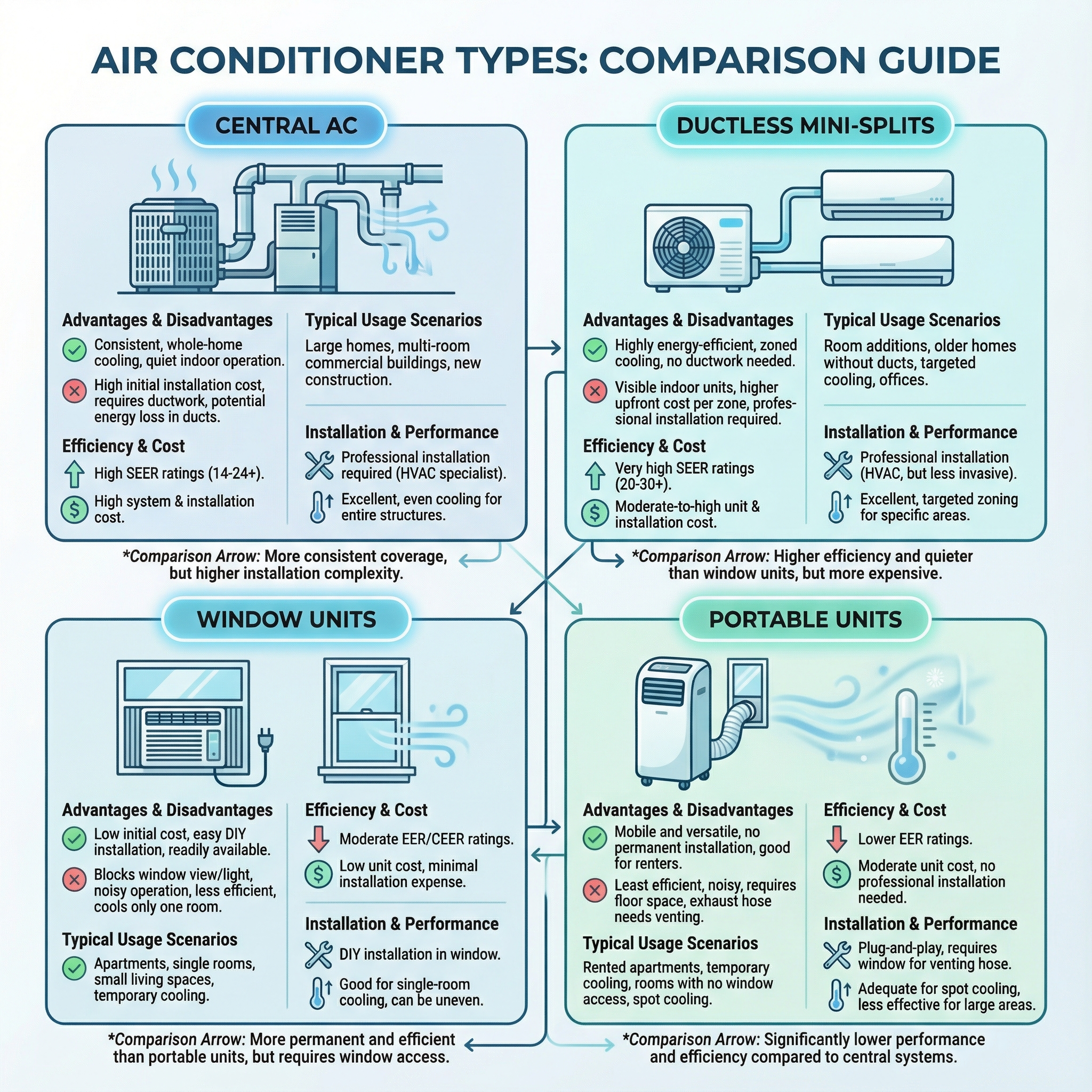
Living in a home without ductwork does not mean sacrificing comfort or indoor air quality. With targeted ventilation and ductless comfort systems, you can keep air fresh and temperatures steady. This guide outlines practical options that work without a central duct system: through wall or single room ERV and HRV units to exchange stale and fresh air, spot exhaust for kitchens and baths to remove moisture and pollutants at the source, and ductless mini splits to handle heating and cooling while ventilation manages fresh air.
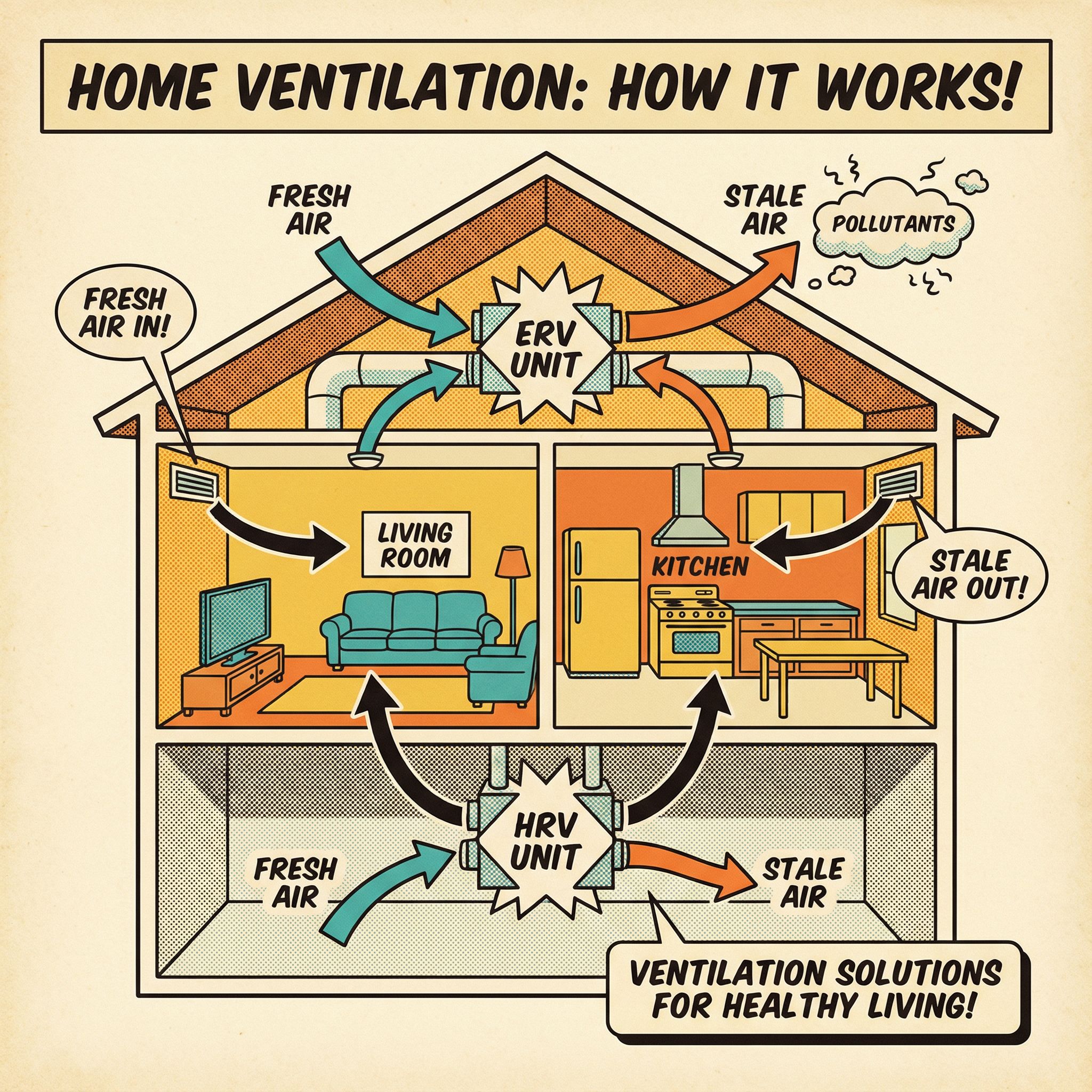
Non-ducted ventilation simply means moving air in and out of the home without relying on a network of supply and return ducts. Instead, it uses room-based devices, such as a through wall ERV or HRV that transfers heat or energy between incoming and outgoing air, and targeted exhaust fans that pull contaminants directly outdoors.
Why ventilation matters is straightforward: fresh air dilutes indoor pollutants, manages humidity that can lead to condensation and odors, and helps maintain consistent comfort across seasons. Paired with ductless mini splits, these solutions create a balanced approach where clean air and temperature control work together in rooms where you need them most.
Why ventilation matters in ductless homes: benefits you gain
In ductless homes, ventilation and comfort choices deliver clear benefits. The biggest win is avoiding duct losses. In our field work, we often see 20 to 30 percent of output disappear in duct runs before it reaches rooms. Think of a garden hose with pinholes, flow is there but much is wasted. With ductless, there are no long runs to leak, so more of what you pay for reaches the space. The other major gain is zoning. Each room follows its own setpoint, so lived-in areas stay dialed in while spare rooms can be set back, which trims run time and smooths out hot and cold spots.
- Lower operating costs: fewer losses plus zoning reduce energy use and monthly bills.
- Retrofit friendly: small line sets and compact heads limit disruption in finished spaces.
- High efficiency: many mini splits carry high headline ratings for strong comfort per watt.
- Flexible aesthetics: choose placements that fit decor and sightlines.
- IAQ support: built-in filtration helps with particles. For balanced fresh air, add an ERV or HRV to exchange stale air while moderating heat and moisture.
Does your home need mechanical ventilation? A homeowner checklist
A tight home is like a thermos, great at holding comfort and also indoor pollutants. Use this checklist to diagnose needs and set goals before choosing equipment.
- Find trouble spots: check kitchen, bathrooms, laundry, and bedrooms for steam, lingering odors, moisture on windows, or morning stuffiness.
- Evaluate building tightness and need: newer or recently air sealed homes are usually tighter. If the home feels stuffy with windows closed, or humidity spikes during normal use, mechanical ventilation is likely warranted.
- Factor climate: in humid regions, prioritize moisture control. In cold or dry climates, protect against overdrying while bringing in fresh air.
- Decide spot vs whole home: use spot ventilation for obvious sources (range hood, bath fans). Choose whole home when freshness is a house wide goal or rooms stay stuffy overnight.
- Size it right: ask for ASHRAE 62.2 guidance for airflow targets.
- Prefer balanced systems when possible for consistent fresh air without pressurizing or depressurizing the home.
- Choose HVI listed fans to ensure tested airflow and sound levels.
- Add smart controls: humidity or VOC sensing, boost timers, and runtime tracking.
- Plan easy maintenance: accessible filters and smooth duct runs. After install, verify performance by measuring airflow and confirming quiet operation and effective capture at sources.
How ventilation differs from air conditioning, and why both matter in ductless homes
Ventilation brings outdoor air in and exhausts indoor contaminants, managing moisture and pollutants. Air conditioning and heat pumps control temperature and also dehumidify. In our experience, ductless homes work best when a mini split handles comfort and a dedicated ERV or HRV manages fresh air.
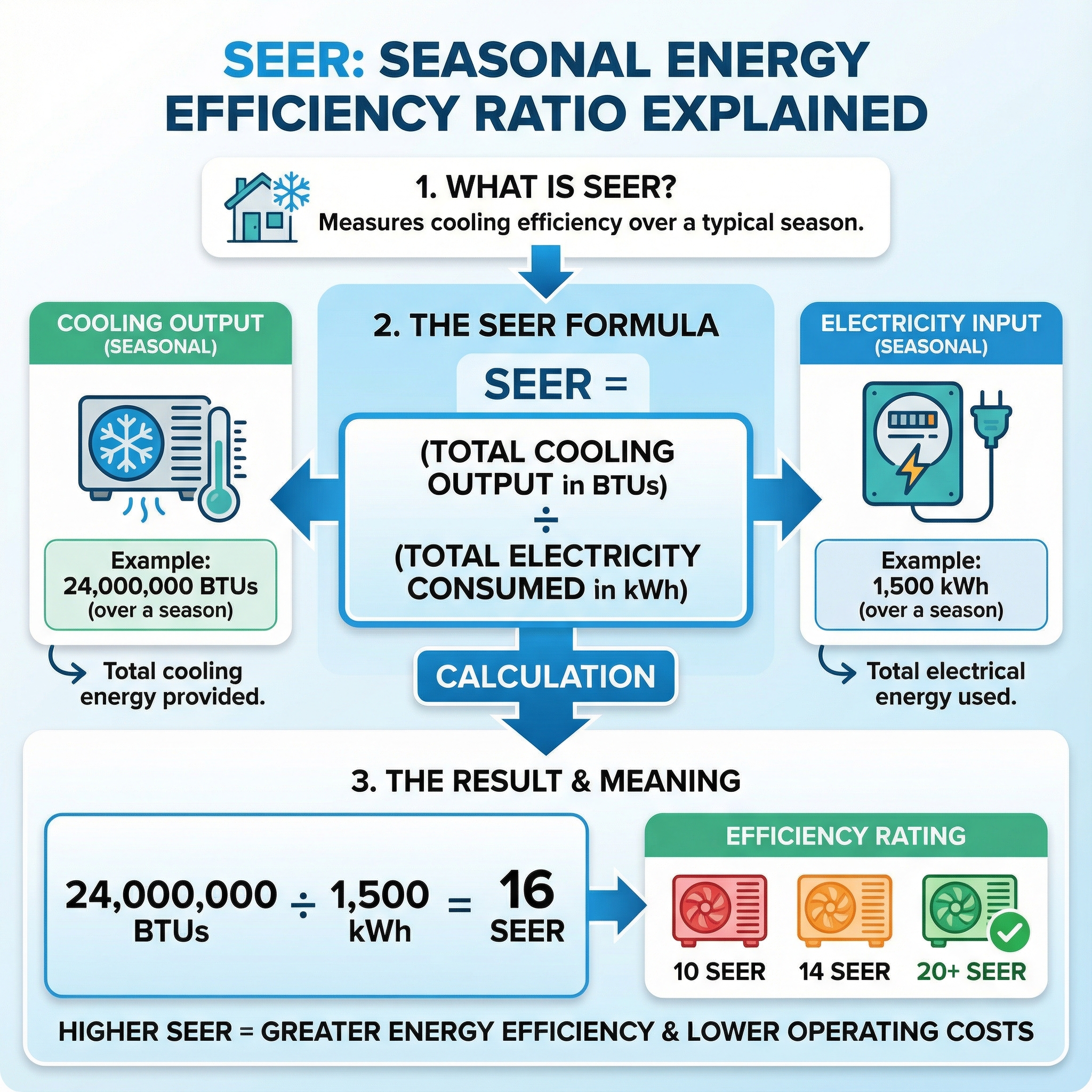
For cooling efficiency, look at SEER and the newer SEER2. SEER is the seasonal ratio of cooling output to electric input. The DOE updated the test to SEER2 using higher static pressure to better mimic real installations, so SEER2 numbers read lower for the same unit. Quality ductless systems commonly rate about 16 to 30 plus. U.S. rules now set minimum SEER2 levels, and the thresholds vary by region.
Energy impact is straightforward. Moving from roughly 14 SEER to 20 SEER can trim cooling electricity around 25 to 35 percent, all else equal. Ventilation devices such as ERVs or HRVs use different metrics like airflow and recovery efficiency.

Common mistakes and tradeoffs: when ductless ventilation isn't the best fit
Ductless systems are flexible, but they are not a universal answer. For larger homes with many rooms, outfitting each space with individual heads can be pricier than a single central system. Multi zone setups work well only with careful design, including correct head sizing and placement. Oversized heads short cycle, like wearing shoes two sizes too big, which leads to uneven temperatures and poor humidity control.
- Whole home coverage on a tight budget: a ducted central system often delivers lower cost per room and a cleaner look.
- Homes with good existing ductwork: replacing the air handler and condenser can be simpler than mounting multiple indoor units.
- Minimal profile aesthetics: if you want fewer visible components on walls, a central or concealed solution may be a better fit.
Common pitfalls include assuming ductless makes air dirtier. Modern units typically improve filtration. DIY installation risks are real, including refrigerant handling, electrical, and condensate routing, and can void warranties. Retrofits often avoid invasive ductwork, but the lineset, power, and drainage still need proper planning.
Quick options for homes without ducts: pros, cons and typical costs
For ductless homes, think in tiers: basic ventilation, balanced ventilation with heat exchange, and full heating plus cooling. Cost versus ROI comes down to upfront spend, operating cost savings, and indoor air quality gains. Swapping an older ducted setup for efficient ductless can trim annual bills by $1,000 to $2,000, and moving to higher SEER mini splits often brings double digit percent reductions. In our experience at Budget Heating (BudgetHeating.com), homeowners see the best value when they pair the right ventilation approach with the right-sized comfort system.
- Exhaust-only fans: lowest upfront and simple moisture control. Cons, no heat recovery and limited savings. Best as an IAQ fix.
- Supply fans: brings in filtered air and can slightly pressurize. Cons, adds heating or cooling load. Upfront is modest to moderate.
- Through-wall ERV/HRV: balances in and out while exchanging heat, like trading stale air for fresh without losing most of the warmth. Higher upfront, pays back through reduced run time and healthier air.
- Mini splits: biggest comfort upgrade and energy cuts. Upgrading to higher SEER can reduce cooling costs roughly 15 to 30 percent, with total savings approaching $1,000 to $2,000 per year versus older ducted gear.
- Portable exchangers: plug-in room solutions. Lowest commitment, limited capacity, savings are comfort and IAQ driven.
Ductless ERV/HRV, through the wall units and code: choosing by climate and standards
ERV and HRV units both recover heat. The difference: ERVs also move moisture across the core, HRVs move only heat. In hot humid and mixed climates, an ERV tamps down incoming moisture so your space feels drier. In cold dry climates, an HRV is preferred to bring in fresh air while keeping humidity in check. Ductless, through-the-wall single-room models are ideal for retrofits or targeted rooms. In our experience at Budget Heating (BudgetHeating.com), single-room ERVs are often the cleanest fix where ducts are impractical. Size to ASHRAE 62.2 as a baseline: Qfan equals 0.03 times floor area plus 7.5 times bedrooms plus one, in cfm. Verify local adoption, then match equipment performance and noise to the calculated rate. Also confirm any paired room cooling or heat pump meets your region's SEER2 or EER2 minimums, and watch for DOE updates that affect room devices.
Installation, safety and seasonal maintenance for ductless ventilation and mini splits
Think of upkeep as a shared job. Homeowners handle light care, licensed professionals handle design, installation and anything involving power or refrigerant.
- Clean or replace indoor filters monthly to quarterly, more often with pets or dust.
- Open windows occasionally to flush stale air on mild days.
- Clear outside vents and verify exterior vent flaps move freely.
- Check the condensate drain for steady flow or a dry pan.
- Use ladders cautiously and avoid removing equipment covers.
- Test carbon monoxide detectors monthly and keep fresh batteries.
- Pros should perform sizing and placement, electrical connections, refrigerant recovery and charging, evacuation and commissioning.
- They also handle code compliance, permits and combustion or backdraft testing when ventilation is added.
DIY work on wiring or refrigerant can create safety hazards, fail inspections and void warranties. When in doubt, leave it to a licensed contractor.
Portable exchangers, window/through wall ventilators and spot solutions
For renters or short term fixes, portable and non ducted options can help. Window fans and portable air exchangers add quick air changes without cutting ducts. Through the wall ventilators need a sleeve, an exterior hood, and good sealing, yet run steady and discreet. Upgrading bathroom and kitchen exhaust often delivers the most moisture and odor control per dollar. We use these when budgets are lean, single rooms need relief, or seasonal use fits. For whole home balance, a permanent system is better.
Choosing the right ventilation approach for a ductless home - quick next steps
The long game is clear: pair balanced ventilation with conditioning. Use an ERV or HRV for fresh air and a ductless mini split for heating and cooling. In hot humid or mixed climates, lean ERV. In cold dry climates, lean HRV. Next steps are straightforward: check your home's tightness and key pollutant sources, size airflow with ASHRAE 62.2, choose ERV or HRV by climate, select mini splits that meet current SEER2 and EER2 minimums, then have a pro design and commission the system. Upfront cost ranges from modest to higher, but long term energy savings and cleaner indoor air usually justify the investment.
If you remember one thing, make it this: balanced fresh air plus right sized ductless equals comfort, efficiency, and healthy air. Choosing equipment can feel like a lot, and that is normal. Our team has 30+ years of hands-on HVAC experience, US-based phone support, and has fulfilled over 200,000 orders, so we can make this simple.
- Get a Custom Quote
- Talk to Our Team by phone for fast, U.S.-based technical guidance
- Shop ERVs and HRVs
- Shop Ductless Mini Splits