




Top 10 Air Conditioning Issues You Should Know About: Why it Matters
Heat waves expose weak points in an AC. When outdoor temps soar, the system runs longer cycles, so small problems like dirty filters, blocked ducts, low refrigerant, clogged drains, and dirty coils quickly snowball into comfort loss, higher bills, and faster wear. In our decades of field experience, faults surface at the worst time because the system has no recovery window between cycles.
How issues manifest is usually obvious if you know what to look for: reduced or uneven cooling, sticky rooms from humidity, musty or burning odors, rattles or hissing, short or frequent cycling, water around the air handler, ice on the refrigerant lines or coil, and energy use creeping up. Think of the AC as a heat conveyor belt: if any part is restricted, the whole line slows and strains.
This guide outlines the ten most common problems, what the symptoms mean, and which fixes are safe DIY versus when to call a licensed pro, so you can restore performance quickly and avoid preventable breakdowns.
How to Identify Your Type of Air Conditioning System: Quick, Safe Checks You Can Do
Start with safety and the thermostat, the traffic cop for your AC: set to Cool, setpoint below room temp, fresh batteries, no schedule hold, sensor not in sun or near a supply vent.
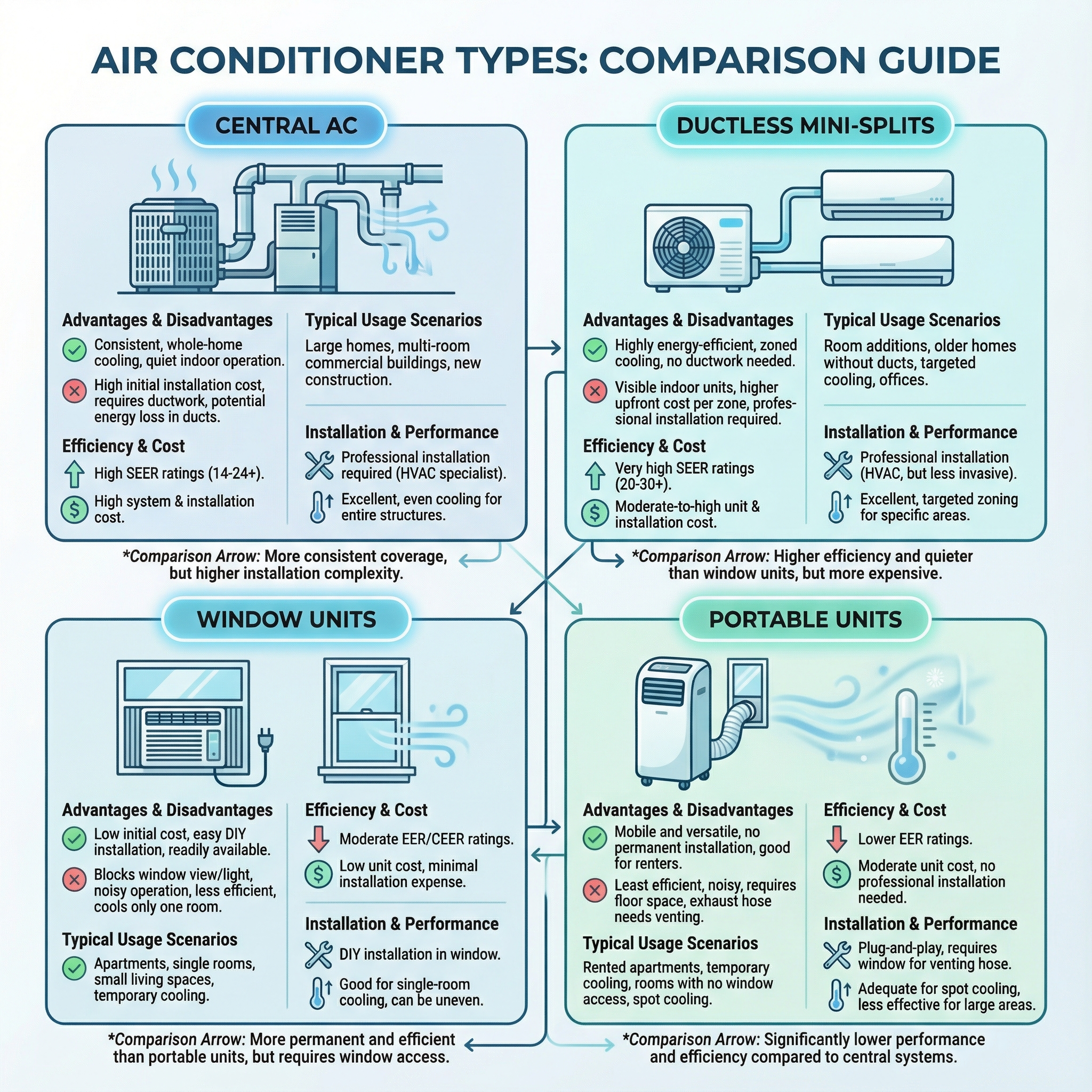
- Type cues: Split system, outdoor unit plus indoor furnace or air handler. Packaged unit, one cabinet outdoors on a pad or roof with short ducts. Ductless mini split, small outdoor unit and indoor wall or ceiling cassette, no ducts. Heat pump clues, Heat Pump label, visible reversing valve tubing, or the outdoor unit running in mild weather.
- Quick triage: replace or clean the filter, feel airflow at registers, listen for new noises, and look for water at the indoor unit.
- Homeowner-safe care: change filters every 1-3 months, keep registers clear, clear debris around the outdoor condenser, power off before gently rinsing coils, and log symptoms with times.
Reduced Airflow & Frozen Coils: Why Dirty Filters and Blocked Vents Hurt Performance
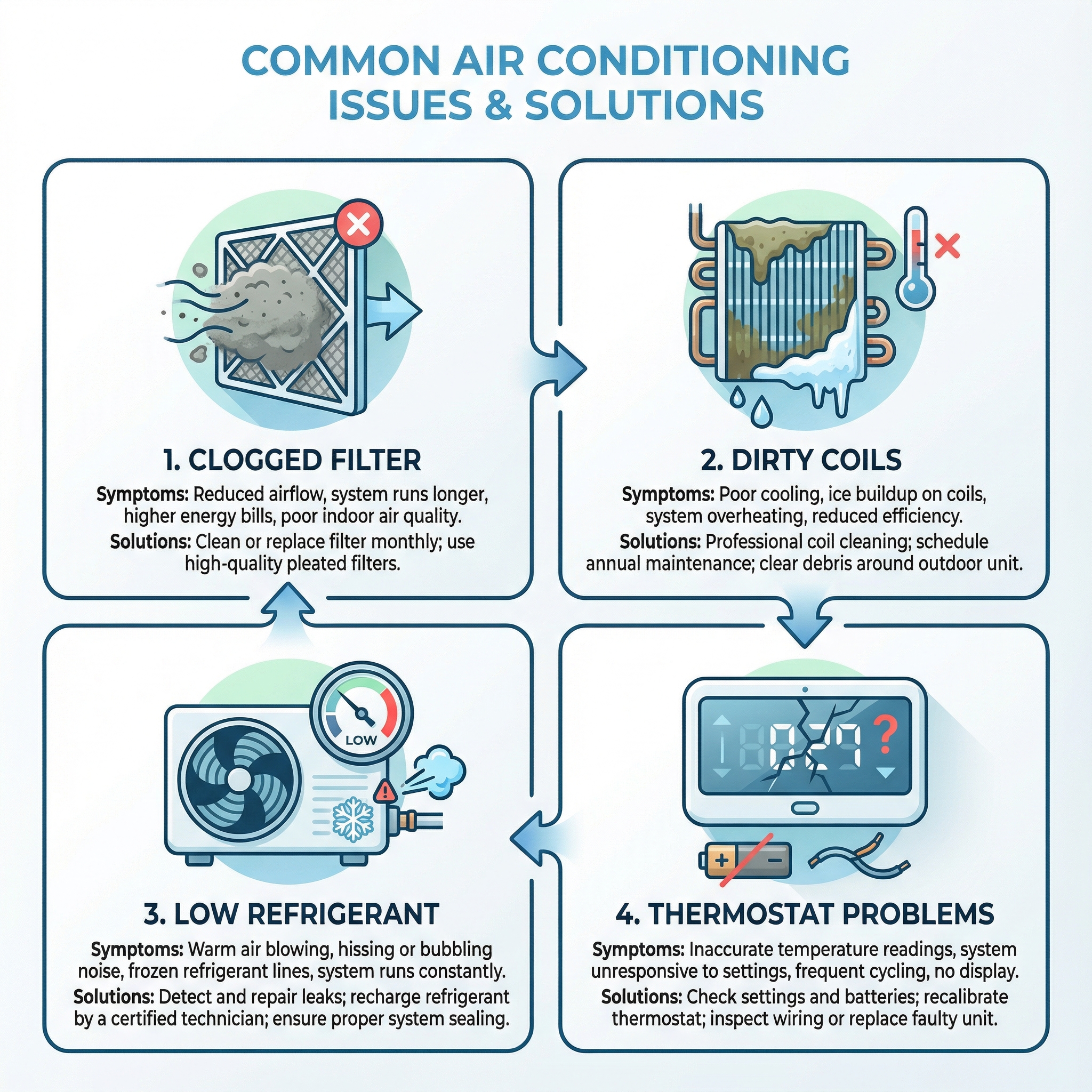
Airflow is the lifeblood of any AC. When the filter clogs, usually in 1 to 3 months, the system starts to suffocate, like breathing through a clogged mask. You will feel weak airflow at the registers, rooms go out of balance, and the blower works harder just to keep up. Starved airflow lets the evaporator coil run too cold. If it drops below freezing, frost builds into ice. Common signs are visible ice on the indoor coil or lines, little or no airflow, and a puddle when the ice thaws. Low refrigerant can also cause freezing, but restricted airflow is the usual culprit. In our experience at Budget Heating (BudgetHeating.com), letting a coil stay frozen risks water leaks and even compressor damage.
- Turn the system off and let the ice melt completely.
- Replace or clean the air filter.
- Make sure all return grilles and supply vents are open.
- If freezing returns, schedule a professional inspection.
Refrigerant Leaks and Compressor Failures: Causes, Dangers, and Why These Need a Pro
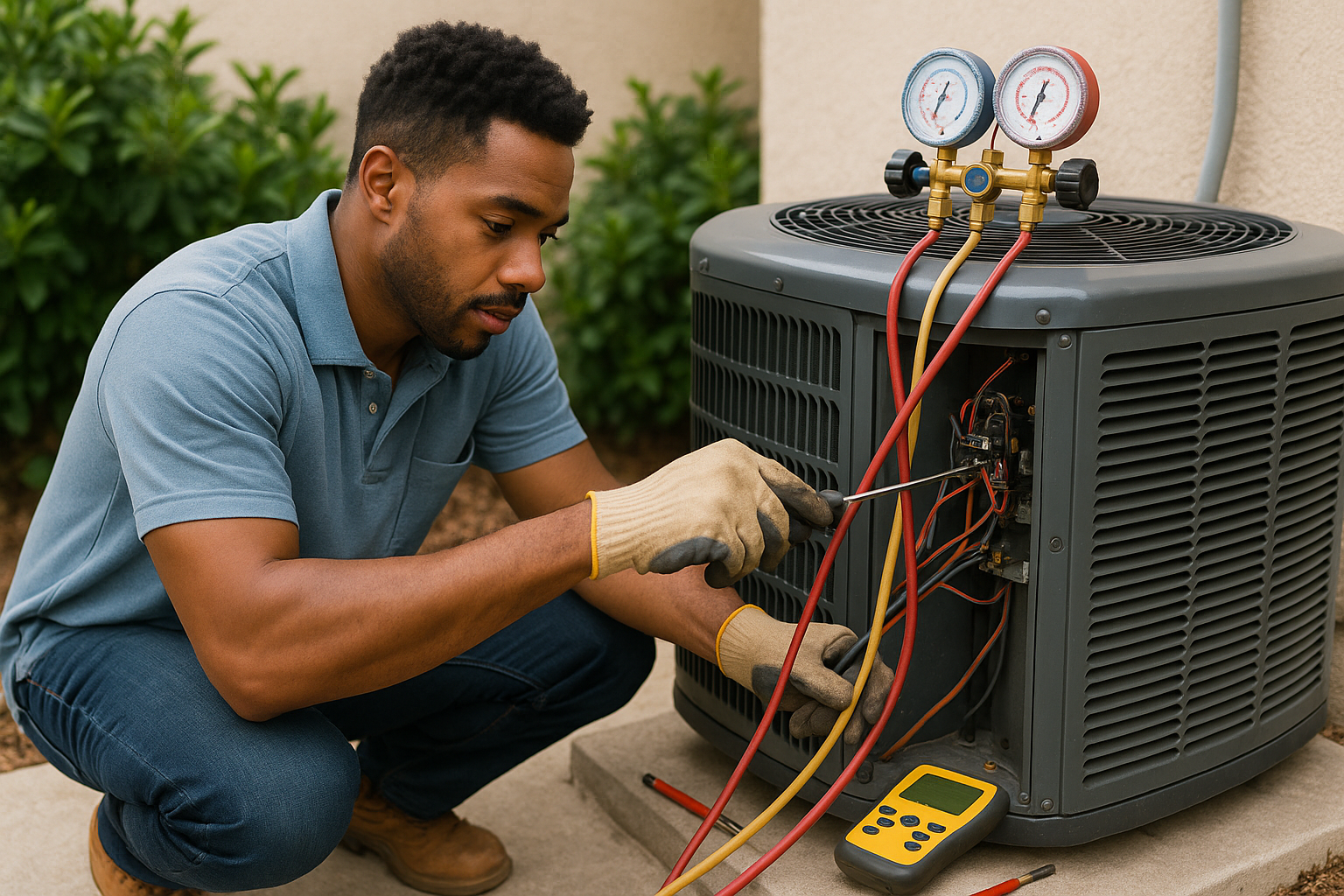
Your AC's refrigerant circuit is a sealed loop, the same fluid cycling continuously. The compressor is the heart of that loop, creating the pressure difference that pushes refrigerant through the coils to absorb and release heat. If the system is low on refrigerant, there is almost always a leak. Common signs include weak or no cooling, hissing, oily stains on copper lines, and sometimes ice forming on the indoor coil.
Running with a low charge deprives the compressor of cooling and lubrication, which overheats it and can cause irreparable damage. In our experience at Budget Heating (BudgetHeating.com), typical failure clues are an indoor blower that runs while the air stays warm, plus knocking or grinding from the outdoor unit.
If you see icing, switch the system off to let it thaw. Leak detection, repair, evacuation, and recharging require a licensed HVAC technician. Compressor testing and replacement are professional tasks as well, and catching the issue early often prevents a full failure.
Insufficient Cooling & the Homeowner's Checklist: Steps to Diagnose and Prevent Problems
Not cooling well is a symptom with many possible causes. Use a diagnostic sequence: check controls and airflow first, then consider mechanical issues and system sizing.
- Thermostat: set to Cool, setpoint below room temperature, correct schedule, fresh batteries. Reduce rapid cycling by adjusting cycle rate or temperature differential.
- Airflow: replace or clean filters, open all supplies and returns, confirm strong blower flow. Keep 2 feet of clearance around the outdoor unit and gently rinse a dirty condenser coil.
- Basics: verify breakers are on, condensate float switch is not tripped, and both indoor and outdoor fans run. Aim for indoor humidity of 30 to 60 percent.
- If performance remains poor, likely causes include low refrigerant, dirty coils, airflow restrictions, or failing fan motors.
- For replacements: identify your climate zone and insist on a Manual J load calculation, measured airflow commissioning, and right-sized capacity. Avoid rules of thumb, prefer variable-speed or ECM blowers, configure controls to prevent short cycling, then reassess comfort after installation.

Dirty Evaporator or Condenser Coils and Condensate Drain Problems: Hidden Efficiency Killers
Both coils do the heavy lifting of heat transfer: the indoor evaporator absorbs heat and the outdoor condenser releases it. When dust, grease, or yard debris coat these coils, that grime acts like a blanket over a radiator, insulating the metal, cutting capacity, stretching run times, and even letting the evaporator frost over.
Moisture is part of normal operation at the evaporator. That condensate should flow through a drain line. If algae or sludge builds up, or if a frozen coil thaws all at once, the line can clog and you get water pooling around the air handler, musty odors, and a real risk of water damage and mold.
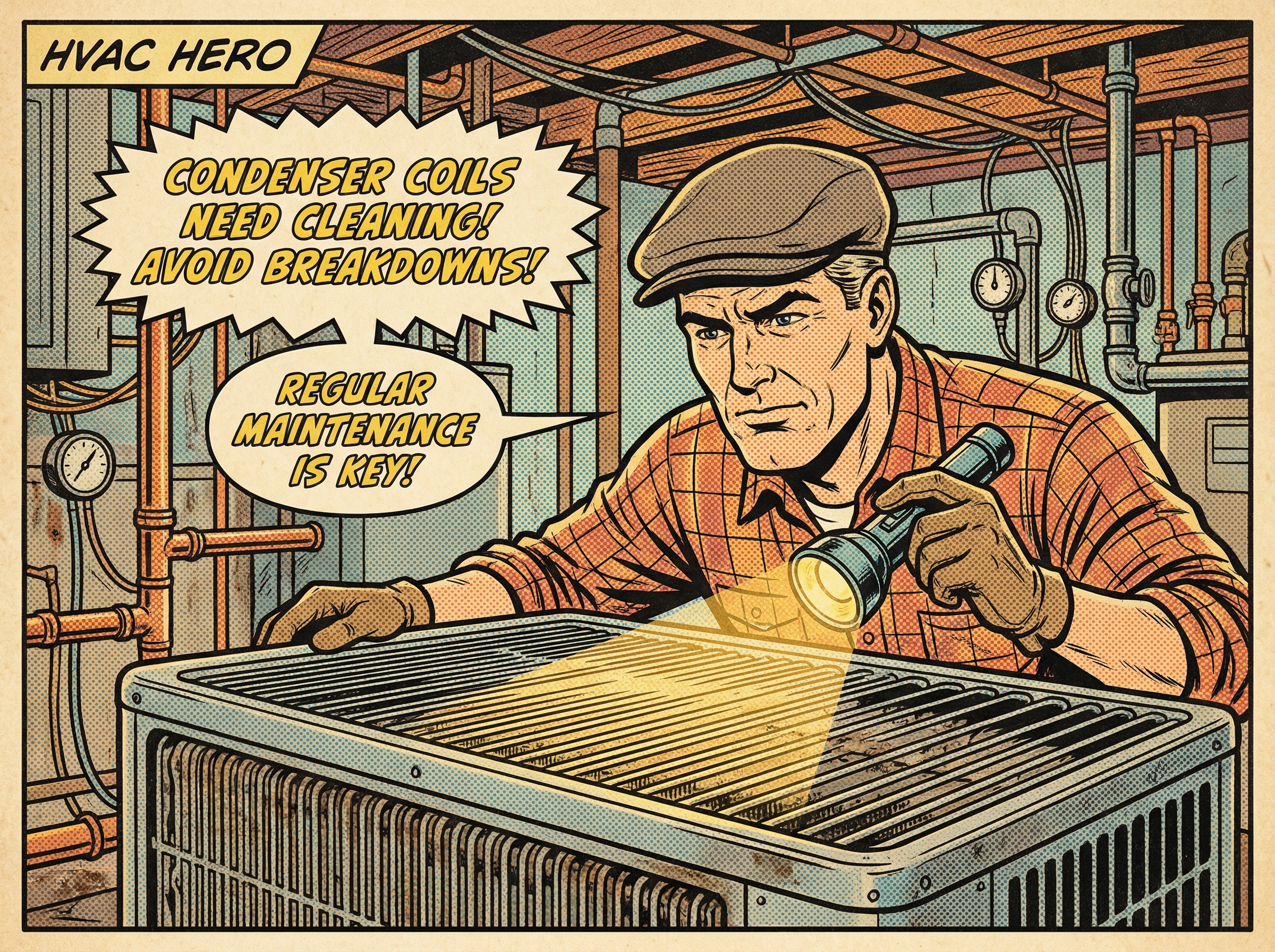
What you can do safely: keep the outdoor unit clear of leaves and mulch, and with power off, gently rinse the condenser coil from the top down. What to leave to a pro: cleaning the internal evaporator coil, checking for icing causes, and flushing the condensate drain. In our experience at Budget Heating (BudgetHeating.com), catching these issues during routine service prevents bigger repairs and keeps comfort steady.
Unusual Noises, Electrical Failures and Safety: Don't Ignore the Sounds
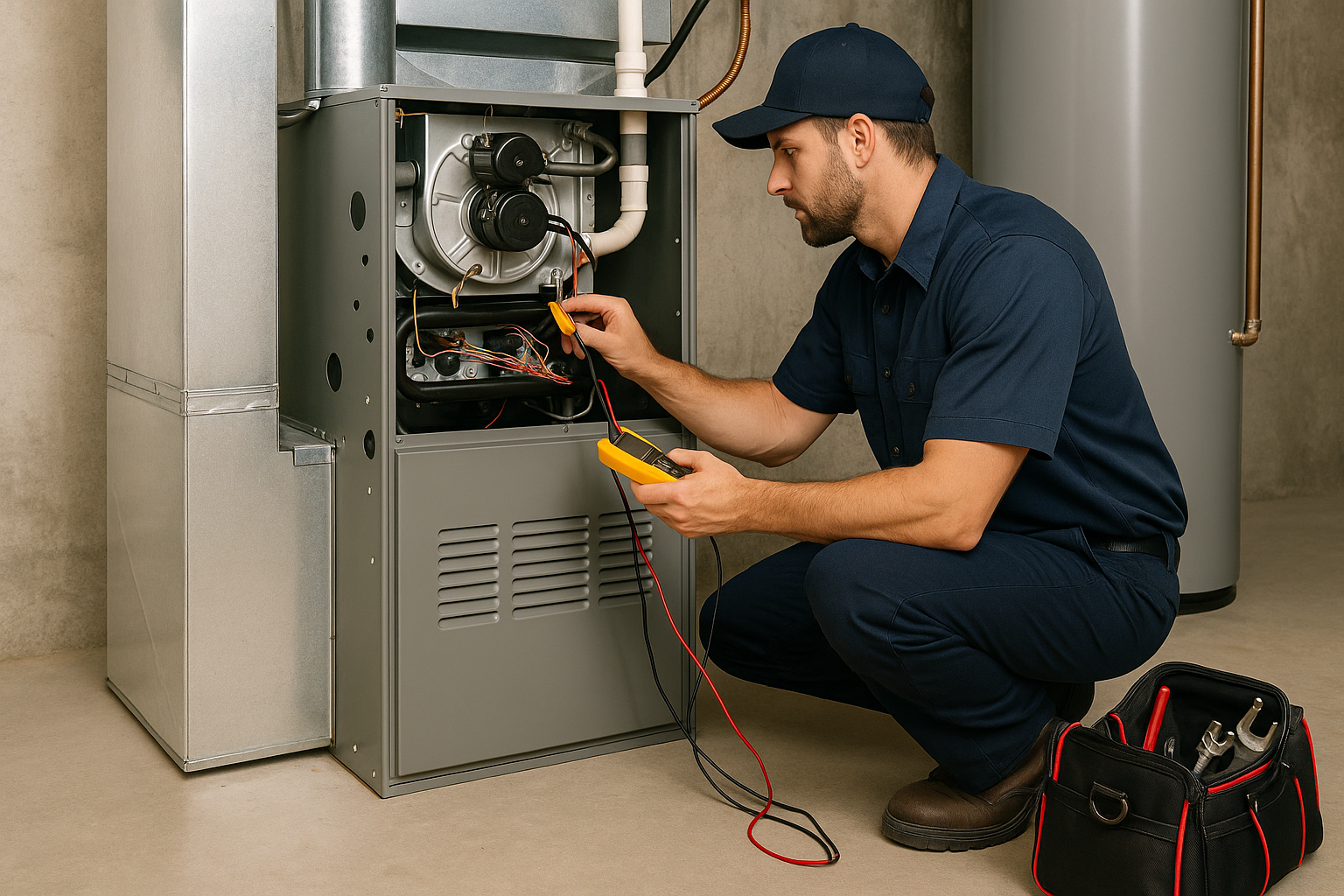
New or worsening sounds are early warnings. From decades in the field, we see consistent patterns: buzzing points to contactor or capacitor trouble; grinding or screeching signals failing bearings or a seizing motor; rattling means loose panels or debris; steady hissing can mean a refrigerant leak. Any loud, metallic clank warrants a stop, then inspection, before minor wear turns into broken shafts or cracked housings.
- Disconnect power before cleaning or reaching in.
- Never recover or add refrigerant.
- Do not keep resetting a tripped breaker.
- Treat any gas or combustion odor as an emergency.
- Call a licensed pro if you suspect a refrigerant leak.
- Breakers trip repeatedly.
- You see scorched wiring or smell burnt electronics.
- A motor is seized.
- Contactors or capacitors fail repeatedly.
High Energy Bills and SEER: How Efficiency, Maintenance and Upgrades Affect Costs
If cooling bills are climbing and comfort is slipping, efficiency has likely dropped. In our decades of field work, the usual culprits are simple but costly: the system runs longer to do the same job, rooms feel uneven, and humidity creeps up. Common faults include:
- Dirty or clogged air filters
- Coils coated with dust or biofilm
- Low refrigerant charge or small leaks
- Failing blower or condenser fan motors
- Thermostat missettings that cause short cycling
- Duct leakage that spills conditioned air into attics or crawlspaces
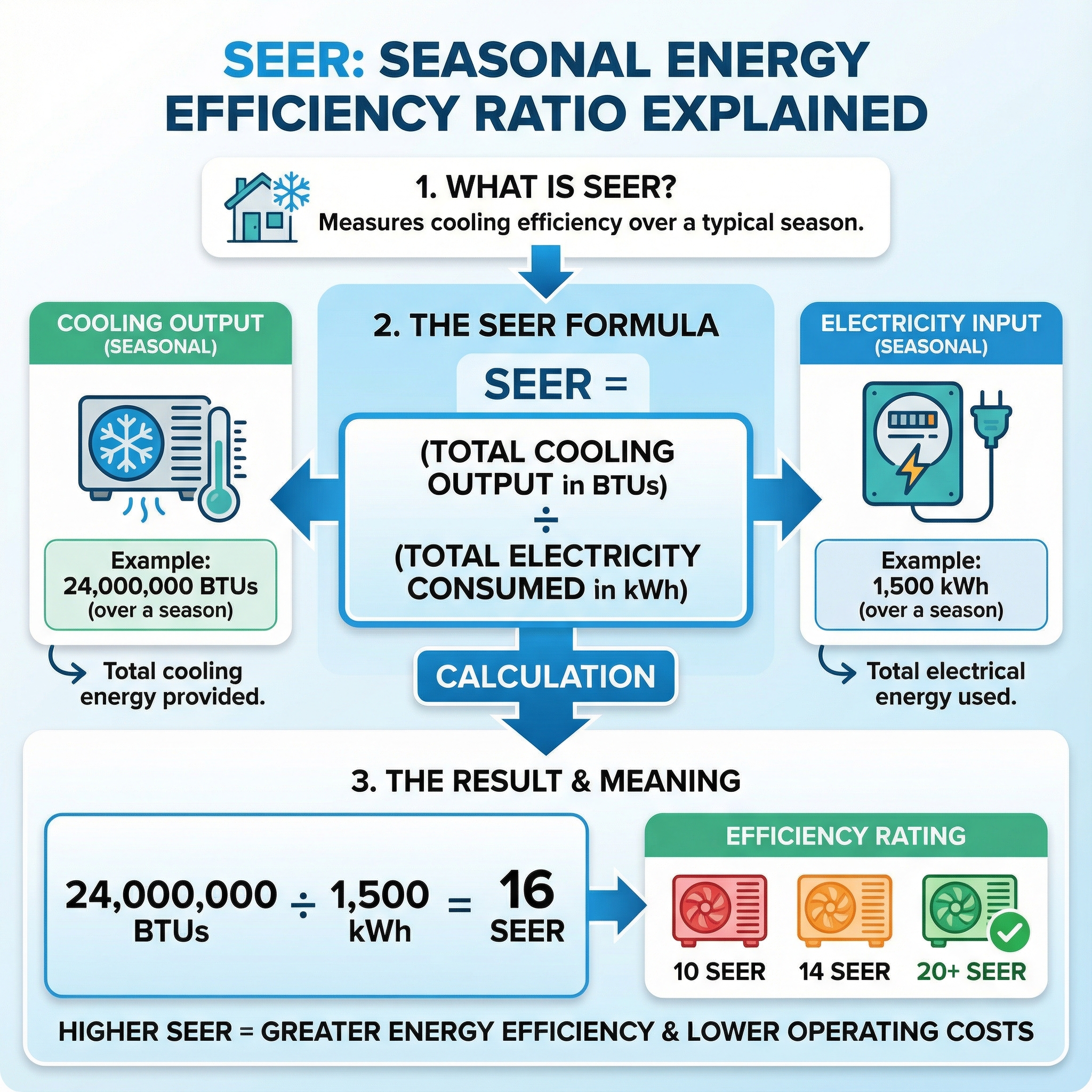
SEER is the seasonal efficiency rating for cooling, higher is better. SEER2 is a newer Department of Energy test that uses more realistic conditions, so its numbers are a better proxy for real homes. Upgrading can cut seasonal energy use significantly: about 23 percent from SEER 10 to 13, roughly 38 percent from 10 to 16, and up to about 50 percent as you approach SEER 20. Actual savings depend on climate and hours of use. To realize them, correct sizing, matched indoor and outdoor components, sealed ducts, proper charge and routine maintenance are essential. If efficiency loss persists after service, or an older low-SEER unit runs many hours, replacement often makes financial sense.
Regional, Regulatory and Tradeoff Considerations: When Repair Isn't the Best Option
Not every fix is wise. From years in the field, we know climate and codes shape the math. In hot dry regions, peak EER and performance at high temperature matter more than a seasonal rating. In hot humid zones, steady run time and dehumidification beat short bursts. Mixed climates complicate heat pump sizing. The DOE SEER2 test and region specific minimums can make like for like repairs on very old units impractical. The AIM Act HFC phase down is pushing many models to A2L refrigerants, and code rules vary.
Myths to skip: refrigerant does not naturally run low, a leak is likely, topping off without fixing it is a band aid. A spinning blower is not proof of cooling. Dirty filters and odd noises are early damage signals.
- Very old or chronically inefficient systems: replacement with higher SEER2, plus duct improvements, wins on cost.
- Repeated failures, compressor or electronics: a new system can cost less than serial repairs.
- Mismatched or poor sizing: zoning or a heat pump beats part swapping.
Summary: Next Steps to Fix, Maintain or Upgrade Your AC
Most AC troubles trace back to repeat offenders: clogged filters and airflow restrictions, dirty or frozen coils, refrigerant issues, thermostat or control errors, condensate clogs, electrical faults, compressor or fan problems, duct leaks, and simple age. The good news, many are preventable with routine maintenance and prompt repairs.
If you are weighing repair versus replacement, you are not alone. We help homeowners make the call daily with clear diagnostics and real numbers.
Start with quick checks: install a fresh filter, clear debris around the outdoor unit, document noises, error codes and temperatures, then schedule professional service for coil, charge and controls. If inefficiency or major failures persist, consider a properly sized, higher SEER upgrade. Refrigerant, electrical and compressor work should be handled by a licensed tech.
- Get a Custom Quote: right-size options, wholesale pricing, free shipping on most systems, financing with Affirm.
- Talk to Our Team: U.S. based phone support from seasoned HVAC pros, 30+ years in the industry.
- Shop Air Conditioners and Heat Pumps: Goodman, Rheem, Bosch and Gree in stock.