




Why comparing split (mini split) and central AC costs matters
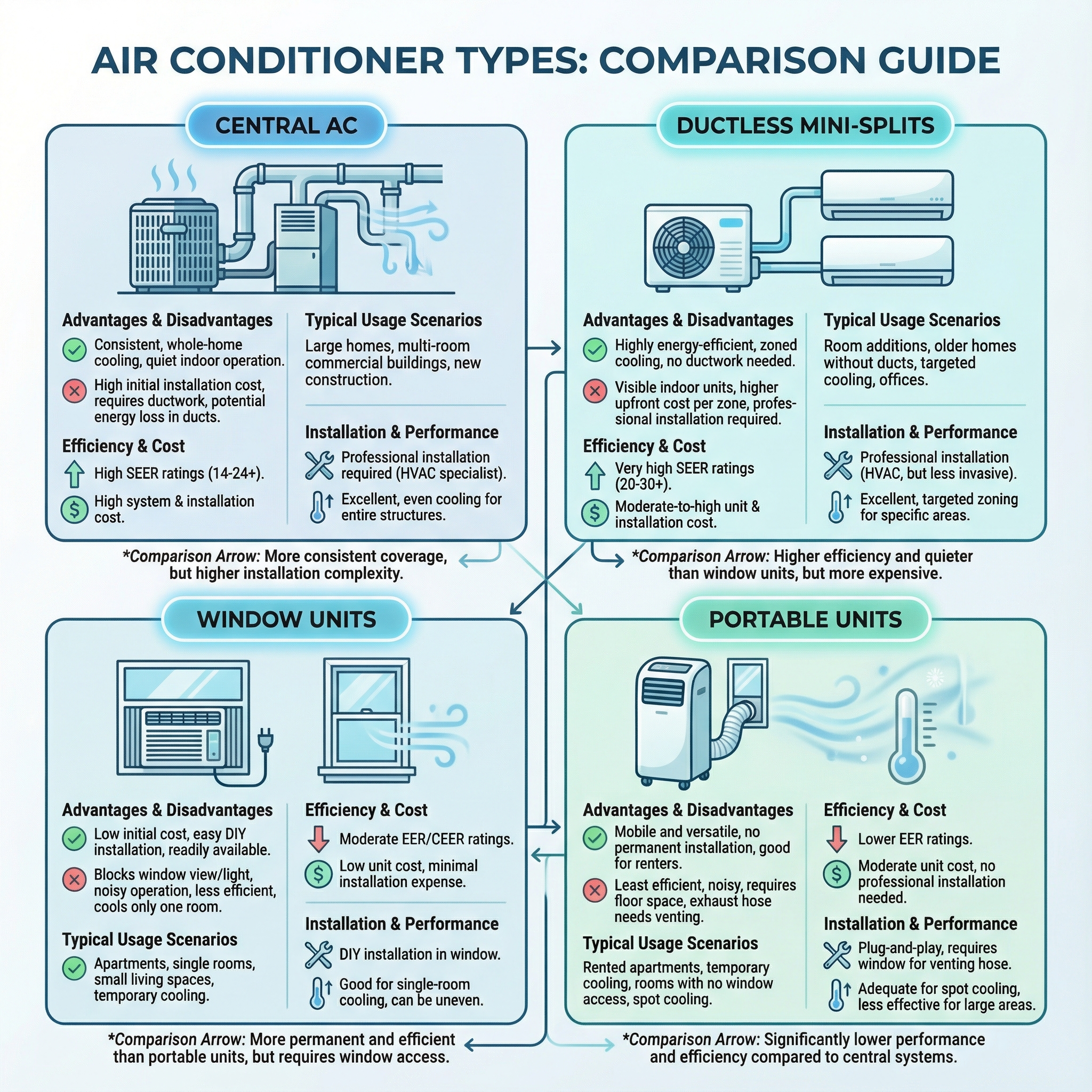
A ductless mini split uses an outdoor condenser and one or more compact indoor air handlers connected by refrigerant lines, no ductwork required. Central air uses a single outdoor unit and an indoor coil or air handler to push conditioned air through ducts to every room. Both can cool well, but they are built for different homes and priorities.
Choosing between them is not only about the lowest install bid. The more affordable option depends on two buckets: upfront and operating costs. Upfront includes the system, labor, and whether ducts already exist or need repair. If ducts are absent or leaky, the added work can outweigh a lower equipment price, making a mini split attractive. Operating costs hinge on monthly energy use, maintenance, and comfort goals. Mini splits allow room by room cooling, which can cut runtime if you rarely use the whole house. Central air cools the entire ducted area, which suits consistent, whole home use. Think of it like choosing between a lower sticker price and better fuel economy: the winner depends on your home's ducts, how you use the space, and the comfort you expect.
Quick answer: Which is more affordable, mini split or central AC?
There is no universal winner. In our experience, cost comes down to per-zone versus whole-home economics. Mini splits are priced per zone, often about $4,000 to $8,000 each. Central AC commonly runs around $6,000 to $12,000 for whole-house cooling when ducts are in good shape. Where good ducts already exist and you want the entire home cooled, central usually wins on upfront cost per square foot. If you lack ducts or need targeted room control in a few spaces, mini splits can cost less for those areas and reduce conditioning of unused rooms. Actual totals hinge on home size, zones, climate, and usage.
Upfront equipment cost: Mini split price ranges vs central AC units
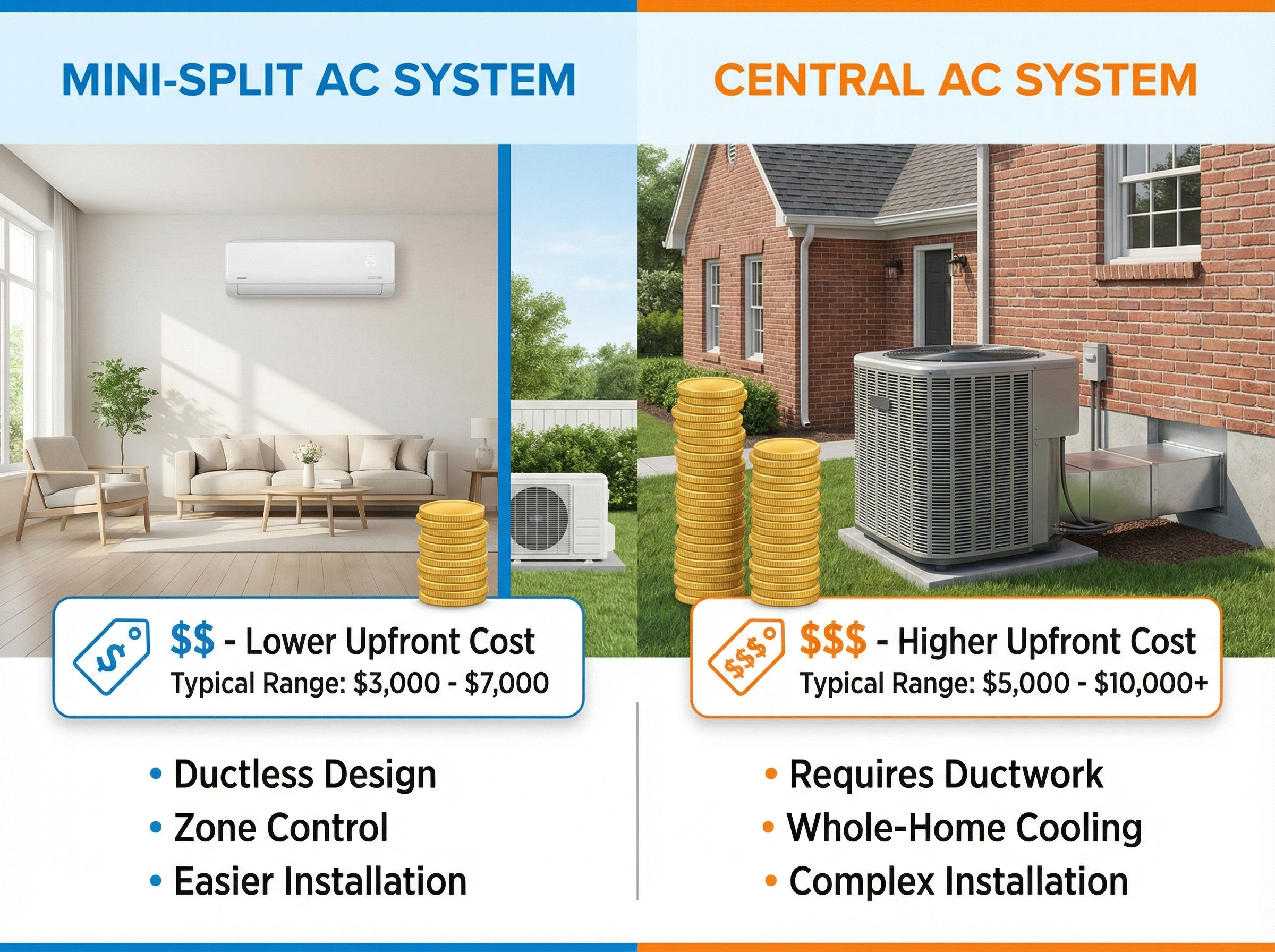
Here is what we see on real installs: single or small multi zone mini splits typically run about $3,000 to $7,000 installed. Larger multi zone projects often average roughly $4,000 to $8,000 per zone. A 3 zone kit can be $3,500 to $6,500 before labor. Central AC often lands around $5,000 to $10,000 when new or modified ductwork is needed, and about $6,000 to $12,000 for whole home systems when ducts are in good shape. In our experience at Budget Heating (BudgetHeating.com), many central packages start near $8,000 and climb with duct scope.
- Number of zones and indoor unit types: each head adds equipment and labor.
- Model choice and capacity: higher efficiency or larger sizes cost more.
- Site factors: line set length, electrical, condensate handling, controls, permits.
To compare bids, ask for itemized quotes listing equipment models, number and type of indoor units, line set lengths, electrical work, permits, condensate handling, and controls.
Operating costs: SEER/SEER2 ratings, duct losses, and typical monthly bills
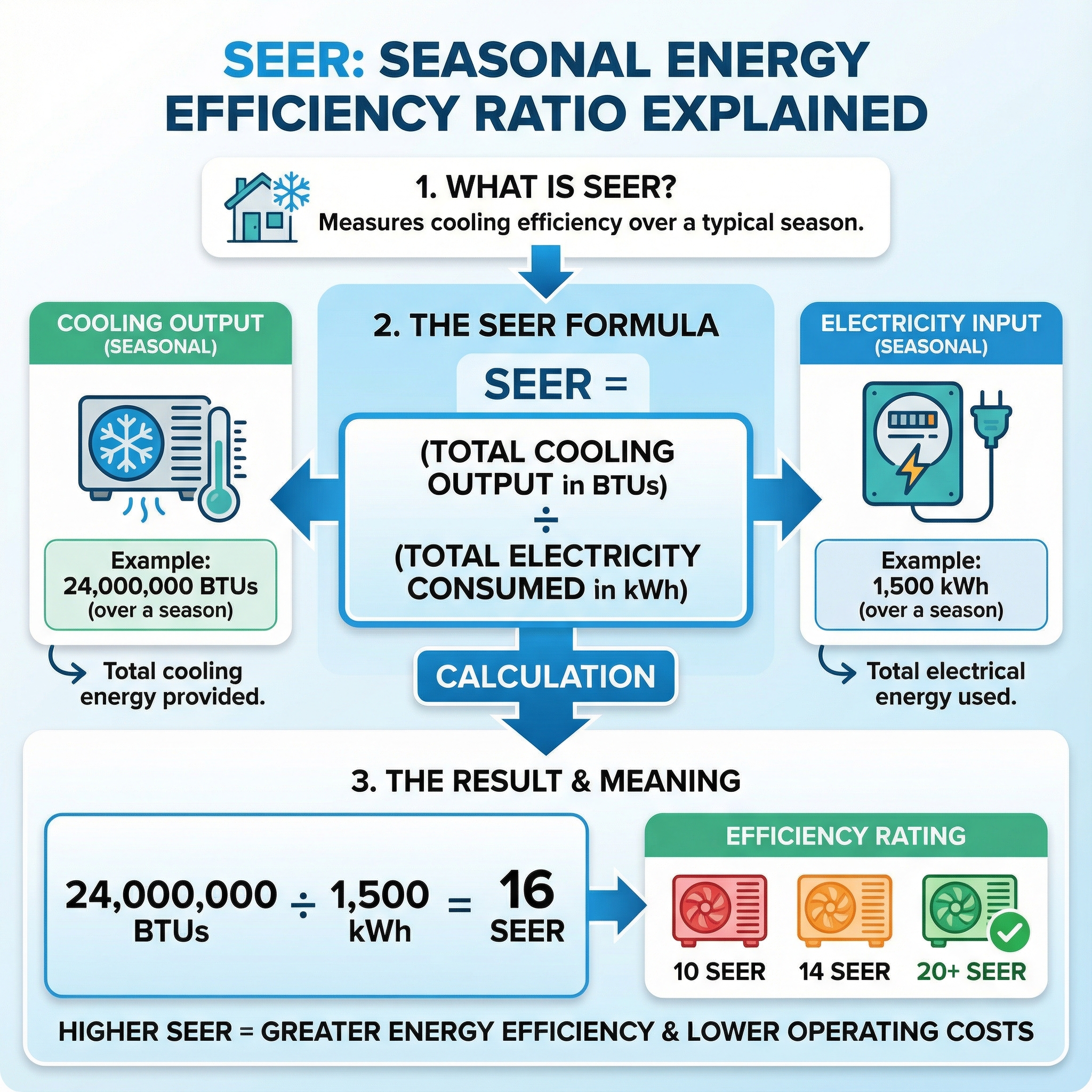
SEER is the seasonal miles-per-gallon of cooling. Higher numbers mean fewer kWh. SEER2 is a newer, stricter test that typically scores the same unit lower than legacy SEER, but it better reflects real static pressure. Since 2023, higher minimums have moved many products into the mid-teens SEER2.
Delivered efficiency is what reaches the rooms. Central ducts in attics or crawlspaces often leak 20 to 30% of cooled air, so a mid-teens SEER2 central can deliver much less. Ductless mini-splits avoid those losses and many rate SEER 20+ (high-teens SEER2).
On bills, the gap is clear: a 12k to 18k BTU central AC may draw about 3,000 to 3,500 W, while a comparable mini-split often pulls 800 to 2,000 W. In practice, mini-splits commonly save about 30 to 40% on cooling energy versus standard central, and the best cases approach 65%. For local cost estimates, request annual kWh with your utility rate and include duct-loss and zoning assumptions. These differences shape monthly bills, which make up much of lifetime cost.
How home size, climate, and zoning affect affordability
Local climate drives costs. Hot humid zones with long cooling seasons often favor inverter ductless mini-splits, due to part-load efficiency and no duct losses. Cooler or mixed regions can favor central AC if ducts exist, but added ductwork usually tips retrofits to ductless. Verify capacity at extremes and pick zoning that matches real use and home size. Since 2023 ratings use SEER2/EER2 with regional minimums: North ~SEER2 13.4, Southeast/Southwest stricter, under 45,000 Btu/h often SEER 15, about SEER2 14.3, and the Southwest adds EER2 limits. In many Northern states, fewer cooling hours plus the 25C credit and utility rebates can favor high-efficiency heat pumps and mini-splits.
Installation cost breakdown: labor, ductwork, and complexity
The biggest swing factor is ductwork. It is the highway your air travels, and rebuilding a highway costs far more than mounting ductless heads. If ducts are missing or leaky, new runs, plenums, registers, and patching add material and hours. Electrical is next: panel capacity, dedicated circuits, outdoor disconnects, and wiring often show up as add-ons. Labor follows access and disruption. Attic or crawlspace work, drywall repair, and permits extend timelines. Mini-splits often wrap in one to two days, central systems with new ducts can take several. In our experience at Budget Heating (BudgetHeating.com), bids should include Manual J, Manual S, and Manual D so you avoid mis-sizing that raises upfront and monthly costs.
- Duct status: replace, seal, or reuse
- Electrical upgrades: panel, breakers, disconnects
- Access and repairs: attics, crawlspaces, drywall
- Design: documented load calc and duct layout
Maintenance, repair costs, and expected lifespan (what affects long term value)
Maintenance sets lifespan and cost. In our experience, dirty filters and skipped service can cut efficiency by 10%+, which shows up as higher bills and more wear.
- Mini splits: clean head filters monthly in heavy use, keep coils and drains clear, and budget for annual professional service.
- Central systems: replace filters on schedule, clean coils, inspect ducts, and include a yearly tune up.
Central systems support higher MERV whole home filters and add ons like media filters, UV, or ERVs. Mini splits use smaller filters, so frequent cleaning or supplemental IAQ solutions matter.
Many ductless mini splits are heat pumps that cool and heat, adding year round value. They can replace or supplement fossil fuel heat, shifting lifecycle costs and aiding decarbonization goals.
Also compare sound ratings, mounting and vibration control, and confirm parts and labor warranties and installer credentials.
Hidden costs, tradeoffs, and when each option is NOT the best choice
No single system fits every home. In our experience, honest planning avoids buyer's remorse and surprise operating costs. Here are situations where an alternative often works better.
- Aesthetics or limited space: If wall heads would be an eyesore or outdoor clearance is tight, consider ducted mini split air handlers or a central AC when good ducts already exist.
- Very cold climates: Standard mini splits can lose capacity near 25°F. Cold climate heat pumps or a high efficiency gas furnace handle deep cold more reliably.
- Whole home, many zones: Per room mini splits can add up. For continuous whole house cooling, a single central unit with tight ducts can be more cost effective.
- Duct losses are real: Attic or crawlspace ducts often leak 20 to 30 percent. If ducts are leaky, ductless shines. If ducts are tight and insulated, central can pencil out.
- DIY pitfalls: Permits, local codes, and improper charging can reduce performance and void warranties.
Before committing, review indoor head locations, line set routes, outdoor unit clearances, and any interior changes. And remember, many mini splits are heat pumps that provide efficient heating too.
Payback, rebates, financing and practical tips to lower costs
To model payback, ask for itemized bids with AHRI matched models, Manual J, S and D, projected annual energy use, and permit and electrical line items. Subtract tax credits and state or utility rebates, which favor high efficiency heat pumps and ductless, verify local eligibility and performance thresholds, then divide the efficiency premium by annual bill savings to find years to pay back. High SEER mini splits repay in 3 to 5 years, faster in hot climates or where electricity rates are high; if financing, compare savings to the payment.
Lower costs: right size, phase zones, seal and insulate ducts, seasonal maintenance, and smart thermostats or zoning.
Decision checklist: Which system is right for your home and budget
No one system fits every home. With good ducts and whole-house needs, central AC is often the lower upfront cost. Where ducts are absent, zoning matters, or efficiency is the priority, ductless heat pump mini splits often win on lifecycle cost. Get multiple detailed quotes with itemized install totals and estimated annual energy use.
Quick checklist: inspect ducts, list rooms to condition, require Manual J/S/D and AHRI matched quotes, request annual energy estimates, check incentives and warranties, verify panel, clearances, and maintenance plan.
We know this is a big decision. With 30+ years in HVAC and U.S.-based phone support, our team will map the right system to your home and budget.
- Get a Custom Quote
- Talk to Our Team by phone
- Shop Ductless Mini Splits
- Shop Central AC Systems