




Why Your Floor Plan Changes HVAC Performance, Comfort and Cost
Your layout acts like the course of a river, it dictates how air moves, where heat collects, and how hard equipment must work. In our field work, open plans feel airy and mix air naturally, yet they are tougher to keep uniformly comfortable and often use more energy, raising bills. Closed plans can target rooms precisely and save when doors and controls are used wisely, but they need proper return paths and duct design or comfort suffers. Here we map the pros, cons, and the design, control, and retrofit choices that make either layout perform well.

How Open Floor Plans Change Airflow, Loads and Comfort
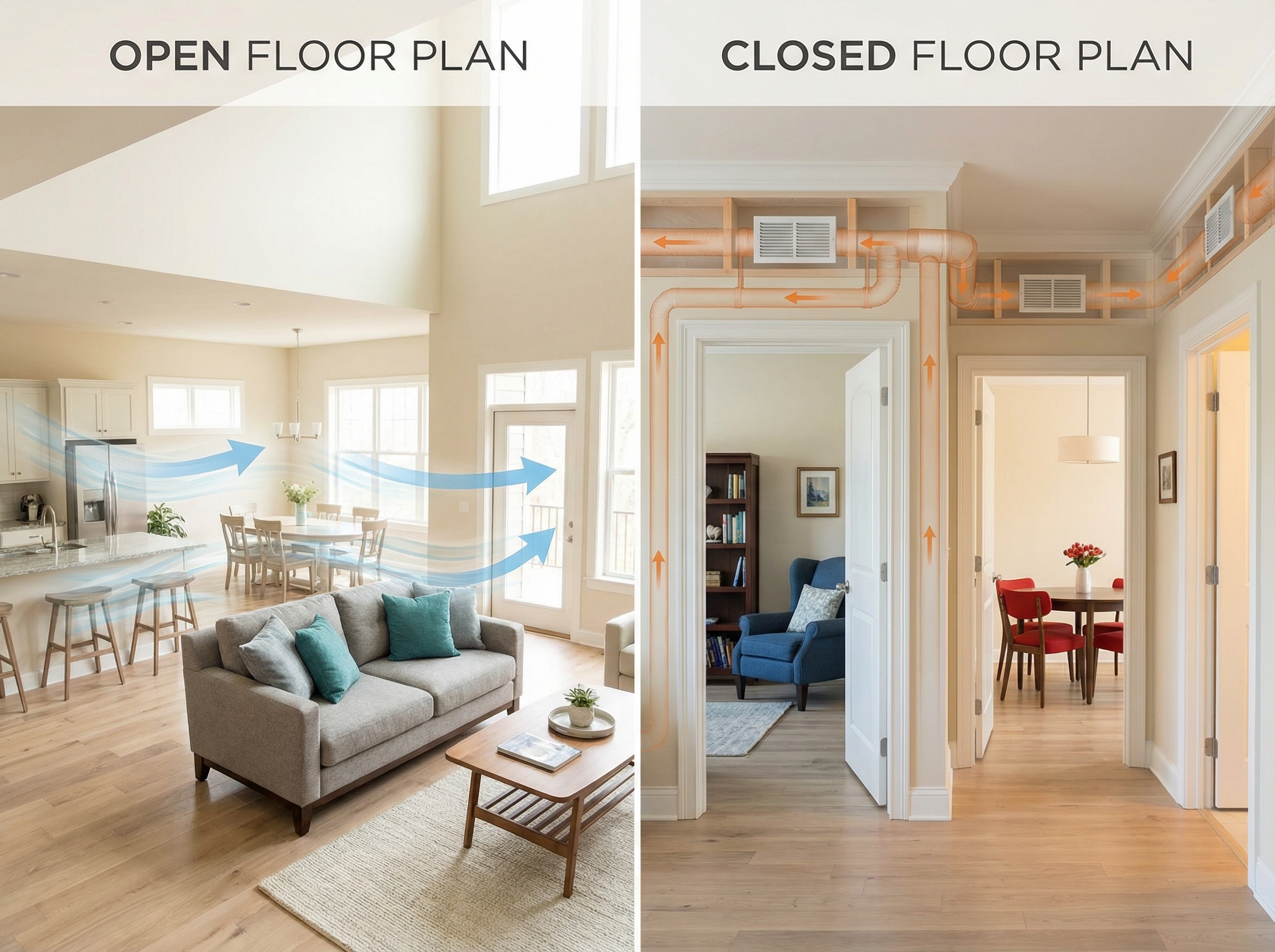
In open plans, air, humidity and sound travel easily, so cooking smells, moisture and equipment noise are more noticeable. In mild weather, freer airflow can feel comfortable with less forced air. The trade-off is control: one system conditions a large shared volume, so you cannot shut off unused pockets and heating and cooling loads per area rise. We often see tall rooms stratify, with warm air up high and cooler air low, which feels like hot head and cold feet.
- Use ceiling or destratification fans to mix temperatures vertically.
- Place window shading to reduce solar gains.
- Duct routing and thermostat placement can be simpler, but fine room control is reduced.
HVAC Advantages and Challenges of Closed (Compartmentalized) Floor Plans
Closed layouts keep conditioned air contained. In 30+ years of installs and support, we see walls and doors boost privacy, cut noise and odors, and make true room-by-room control practical. You can condition only occupied rooms, trimming runtime and energy use.
The tradeoff is airflow. With doors shut and no return paths, rooms go positive, adjacent areas go negative, and comfort swings. It is like breathing through a pinched straw: airflow falls and the system works harder. These homes usually need more branches, more returns, and careful balancing, which raises install complexity and cost versus open plans. Short, localized cycles also change how much value you get from very high SEER ratings.
Quick check: if closing doors hurts comfort, add dedicated returns or transfer paths or grilles to relieve pressure and restore even temperatures.
Load Calculations and Right Sizing: The Must-Do Steps Before Buying Equipment
Right sizing starts with a room by room Manual J load calculation. Inputs must include room square footage, ceiling heights, number of stories, insulation, air tightness, window size and orientation, local climate, and internal gains. Avoid rules of thumb like tons per square foot. They ignore these factors and often oversize or undersize the system.
Use Manual S to select equipment that matches the calculated sensible and latent loads, then Manual D to design ducts so capacity, airflow, and distribution meet those loads. Oversizing will not fix comfort. It usually causes short cycling, poor humidity control, temperature swings, and added wear. It is like wearing shoes a size too big, you stumble instead of walking better. In our experience at Budget Heating (BudgetHeating.com), right sized systems run steadier and feel better.
At startup, verify commissioning essentials:
- External static pressure
- Total airflow in cfm per ton and room by room CFM vs design
- Refrigerant charge
- Temperature split across coils
When Each Plan Is a Poor Fit: Common Mistakes, Myths and Better Alternatives
We see every week that layout drives load, airflow and where sensors should live. Common myths to skip: the floor plan does not matter, open plans are easier, closed plans are automatically cheaper, and discomfort in an open area means just size up. Oversizing often worsens humidity and temperature stability. Closed plans only perform well when return paths and duct balancing are addressed.
- Mistake: using identical supply and return strategies for both layouts, which creates stratification in open volumes and pressure problems in closed rooms.
- Open plan poor fit: hot humid climates without variable speed equipment, robust dehumidification and solid distribution. Consider a hybrid layout, zoning, or a dedicated ductless unit for a large great room.
- Closed plan poor fit: when proper return paths and balancing will not be provided. Keep some areas open or add targeted supplemental conditioning.
- Better alternatives: zoning, ductless additions, and selectively insulating or compartmentalizing during remodels. Do not oversize the central unit.
Zoning, Dampers and Smart Thermostats: How to Get Room-by-Room Control
Zoning is like putting light switches on each area instead of one switch for the whole house. Use motorized duct dampers and a zone panel, or a multi compressor or multi zone system, to send conditioning only where it is needed. This tunes comfort to real usage, for example a great room versus bedroom wings. In our experience at Budget Heating (BudgetHeating.com), the best results come when zoning is planned alongside the duct layout and controls.
- Compartmentalized homes: group rooms into logical zones, day versus night or by floor, so you can set back unoccupied areas without affecting occupied spaces.
- Open plans: keep the main living area as one zone and add secondary zones for bedrooms or offices. Use multiple sensors or averaged temperature inputs so one thermostat location does not misread the entire space.
- Smart controls: choose thermostats with remote sensors and occupancy schedules. They enable aggressive setbacks in closed plans and smarter staging in open plans.
- Ducting essentials: pair zoning with proper duct design and adequate return paths. Closing dampers or activating zones without this can create harmful pressure imbalances.
- Hardware checklist: zone control panel, reliable motorized dampers, and verified airflow and static pressure for each zone.
Equipment, SEER2 and Efficiency: Choosing the Right System for Your Layout and Climate
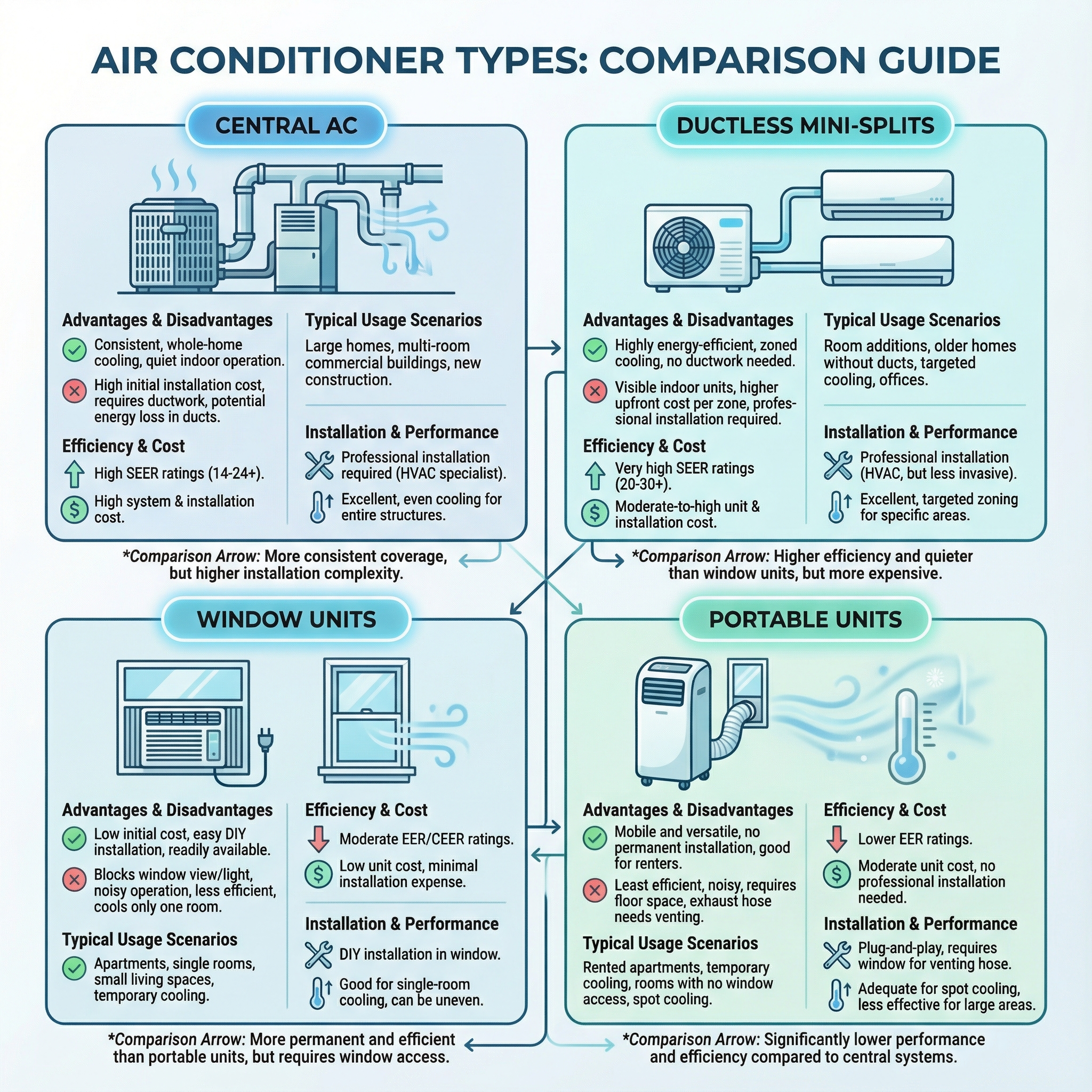
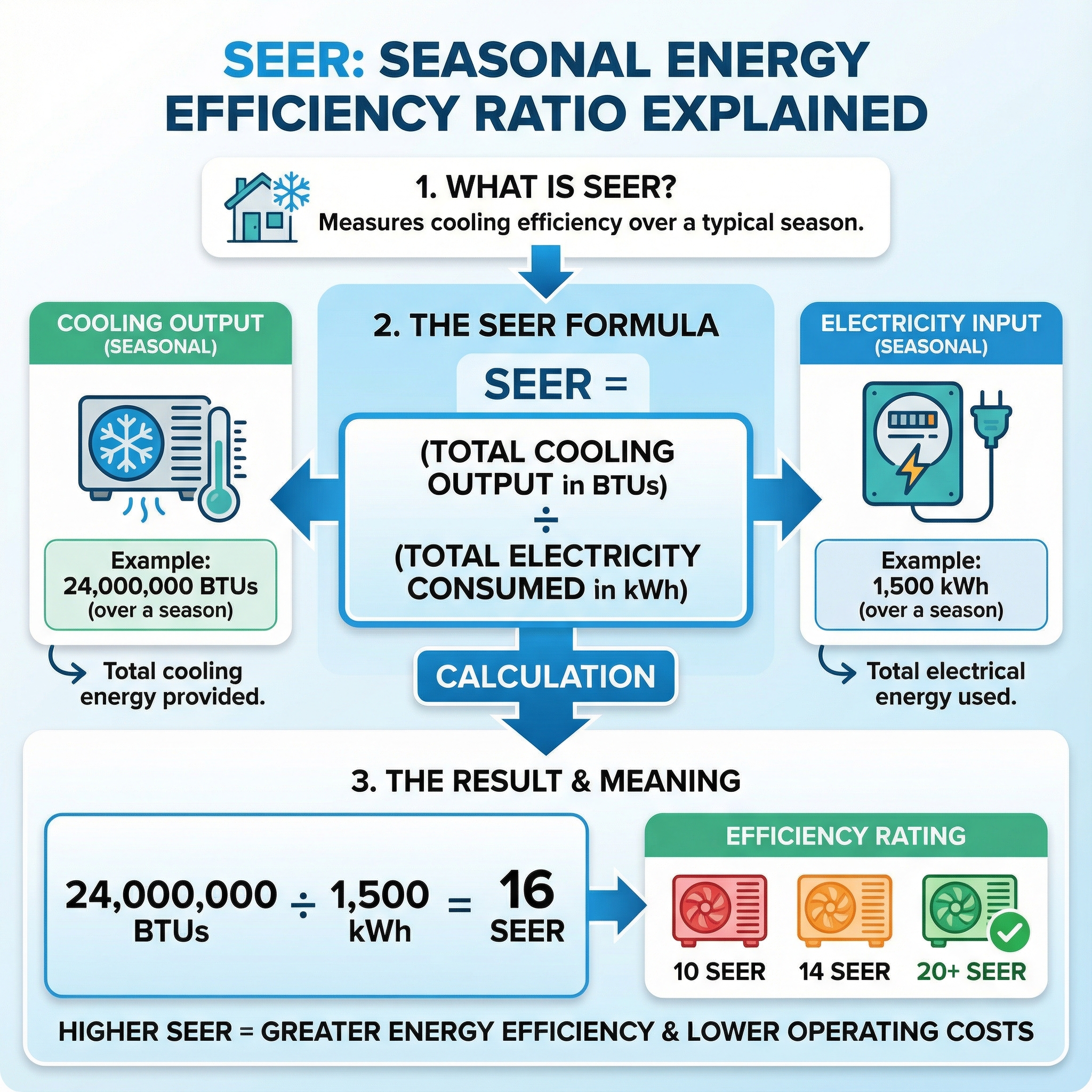
SEER and SEER2 describe seasonal cooling efficiency. Higher numbers mean fewer kWh for the same comfort. With the 2023 test change, equipment is rated at 0.5 inch external static pressure, so a SEER2 label often reads lower than the old SEER for the same hardware. In the field we consistently see that upgrading from older low SEER to mid teens trims cooling energy about 20 percent, and moving from roughly 14 to about 20 SEER can cut kWh around 30 percent, assuming proper sizing.
Layout matters. From our installations, open plans benefit from variable speed or inverter equipment, which runs longer at lower output, smooths temperature, and improves dehumidification. Closed-off rooms may balance better with staging or existing zoning.
- Hot humid: prioritize dehumidification and variable speed.
- Hot dry: high SEER can be sufficient.
- Cold: consider cold-climate heat pumps or hybrid heat.
Know the floor: 2023 DOE minimums vary. Northern states are about 14 SEER, roughly 13.4 SEER2. Southern minimums are higher, capacity dependent, and include EER2 requirements.
Ductwork, Vent Placement and Return Air: Getting Distribution Right
In 30+ years of HVAC field work, we see distribution succeed when supply and return work as a loop. Do not close off many supply registers to force airflow elsewhere. It raises static pressure, reduces total airflow, increases noise, and can damage equipment.
For closed rooms, design return air and transfer paths. Provide a dedicated return or an engineered path using return grilles, transfer grilles, jump ducts, or a properly sized door undercut so the room stays near neutral pressure. Avoid short supply to return paths that bypass occupants and create drafts.
Compartmentalized homes need more duct branches and returns. Include balancing dampers, seal the runs, and document branch sizes and external static pressure targets so the system can be commissioned and adjusted. In large open areas, add sufficient supply registers and strategically placed returns, often multiple, to sustain circulation and limit stratification.
Insulation, Ventilation, IAQ and Maintenance: Envelope and Safety Considerations
Seal leaks and upgrade insulation before sizing, then rerun Manual J. Humidity and ventilation matter: humid climates need latent removal or a whole-home dehumidifier, dry climates favor ventilation with HRV or ERV. Use a filter cabinet for MERV 11 to 13 without high drop. Closed doors that block returns can cause imbalances and backdrafting, have a pro evaluate. At commissioning check static pressure, airflow and refrigerant charge. Replace filters every 1 to 3 months, keep grilles and the outdoor unit clear. Leave electrical, refrigerant and combustion work to licensed pros.
Practical Recommendations: Matching Floor Plan, HVAC Design and Controls
Open and closed floor plans impose different HVAC demands, so choose layout and HVAC strategy together so equipment, distribution and controls align with how spaces are used. Open plans favor variable speed or multi stage equipment, robust supply and return coverage, zoning of great rooms, destratification fans and explicit dehumidification. Closed plans benefit from room level control with zoning, proper returns or transfer paths in every closed room, plus well balanced, well sealed ducts.
Coordinating this can feel like a lot, whether you are building, remodeling, or fixing hot and cold spots.
We translate it into a layout aware design and stand behind it with commissioning support.
- Next steps: get a room by room Manual J, require Manual S and Manual D, demand commissioning numbers (airflow, static pressure, refrigerant), fix envelope before upsizing.
Ask contractors: room by room Manual J, how Manual S tradeoffs fit your climate and layout, zoning and thermostat or sensor strategy, Manual D with room CFM targets, how humidity and ventilation are handled, and which commissioning measurements you will receive.
- Get a Custom Quote, sized and specified to your floor plan.
- Talk to Our Team at 813-885-7999 for U.S. based phone support from seasoned HVAC pros.
- Shop Heat Pumps, ACs and Controls at wholesale pricing, with free shipping options and Affirm financing.