




How Often Should You Change Your HVAC Air Filter? A Practical Overview
How often should you change your HVAC air filter? There is no single calendar date that fits every system. This overview explains why there is no universal interval and how to build a schedule you can adjust over time.
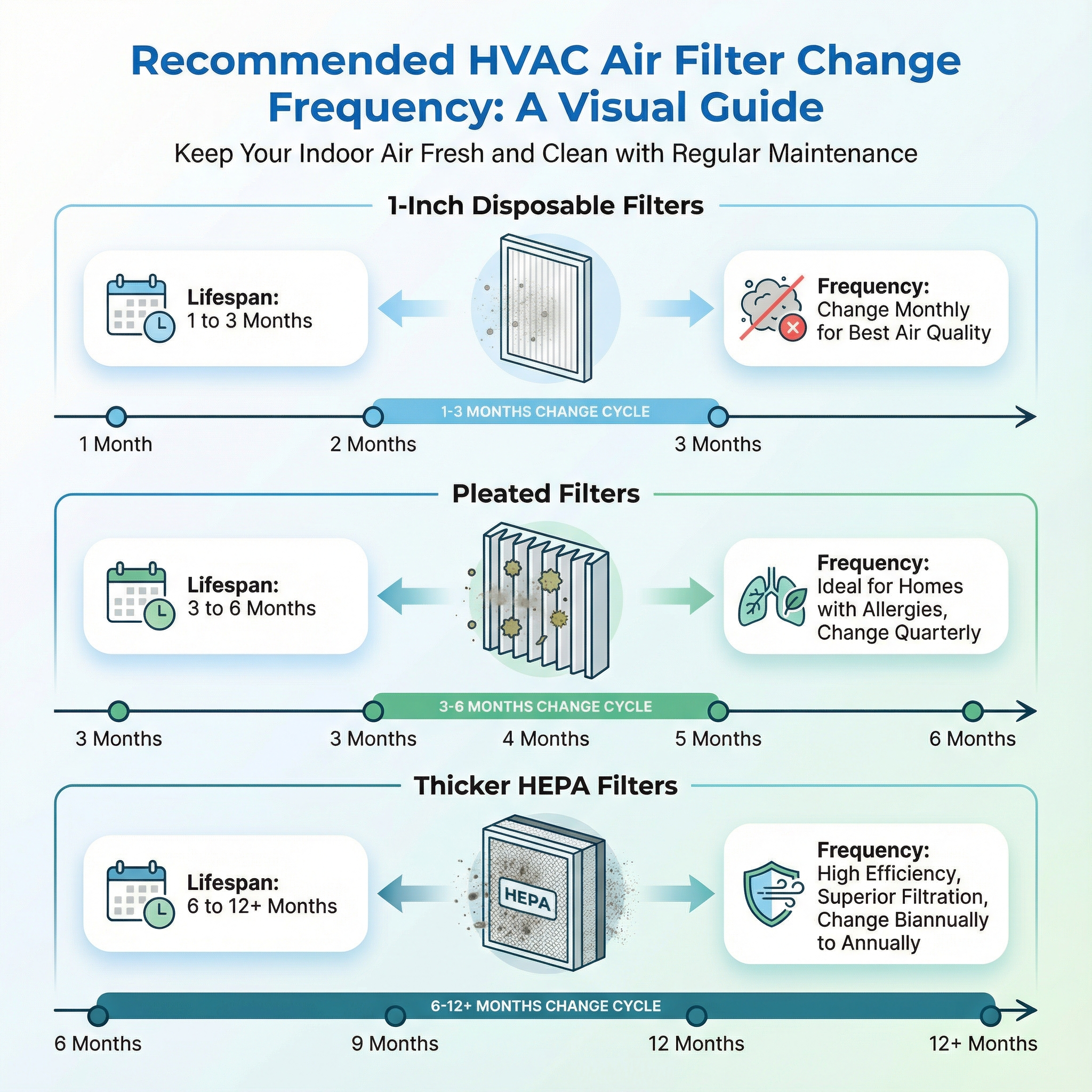
Start with monthly checks. For common 1 inch filters, a typical replacement window is roughly every 1 to 3 months. Thicker media or HEPA filters often run longer, about 6 to 12 months. Treat these as baselines you refine, not strict rules. That approach helps you avoid replacing too early or running too long between changes.
The right interval depends on three things: your system, your filter, and conditions in the home. Think of it like a calendar reminder you tune to your household. If a monthly look shows the filter still clean, keep it in. If it looks dirty sooner than expected, shorten the interval. By checking monthly and adjusting within the ranges above, you end up with a practical plan that matches your equipment and living space.
Why Replacing Your HVAC Filter on the Right Schedule Matters for Comfort, Air Quality and Equipment Life
Think of the filter as the system's lungs: when it is clean, air moves freely, temperatures stay even, and the equipment does not have to work as hard. Consistent filter changes keep airflow where it should be, which protects efficiency and the comfort you feel in every room. A clean filter also helps keep dust off coils and other components, so those parts stay cleaner and perform as designed.
When a filter is left in place until it clogs, airflow is choked. The result is higher energy use and added wear on blowers and compressors. Debris that packs into a neglected filter can coat coils and internal surfaces, which drags down performance and makes the system labor to do the same job. That extra strain shows up as uneven temperatures, diminished indoor air quality, and a shorter equipment life.
The right schedule depends on the filter type. Pleated filters typically hold more than basic fiberglass, so under average conditions they last longer between changes while still protecting airflow and indoor air quality. Whatever you choose, replacing on time preserves efficiency and keeps the system operating smoothly, instead of fighting a preventable restriction.
Where to Start: Identify Your Filters, Set a Baseline Schedule and Inspect Monthly
Use this quick checklist to lock in a reliable filter routine.
- Find filters at return grilles, the furnace or air handler cabinet, and any ceiling returns. Count how many you have.
- Confirm size and MERV on the filter frame, or measure the slot. Take a photo and save it.
- Set a baseline schedule: standard 90 days; one pet or dusty area 60 days; multiple pets or allergies 20 to 45 days; vacation homes 9 to 12 months. Shorten for thicker media, higher MERV, or heavy use.
- Inspect monthly: look for gray matting, pleats filled, or debris. Clues include longer cycles, weak airflow, extra dust, or a whistle at the return. In our experience at Budget Heating (BudgetHeating.com), monthly checks catch issues before comfort drops.
- Replace correctly: turn the system off, align the airflow arrow toward the blower, insert fully, and write the install date. Keep two spares per size, label each return with its size, and set phone reminders.
Safe DIY Filter Care and When to Call a Pro
Most homeowners can safely handle routine filter care. In our experience at Budget Heating (BudgetHeating.com), replacing the filter and lightly cleaning supply and return vents are simple, effective tasks. Always switch the system off before opening the cabinet, follow the airflow arrow on the filter, and dispose of the old one properly, ideally sealed in a bag to keep dust contained.
- DIY tasks: replace filters on schedule, vacuum or wipe vents and grilles, confirm the filter sits snug and flat.
- Call a licensed HVAC technician for any refrigerant work, electrical compartment issues, breaker trips, burning smells, short cycling, or a blower that will not start.
- Also call a pro for duct balancing or persistent comfort or performance problems, like uneven rooms or weak airflow that does not improve with a clean filter.
Filter Types, MERV Ratings and Tradeoffs: When a Higher Efficiency Filter Isn't the Right Choice
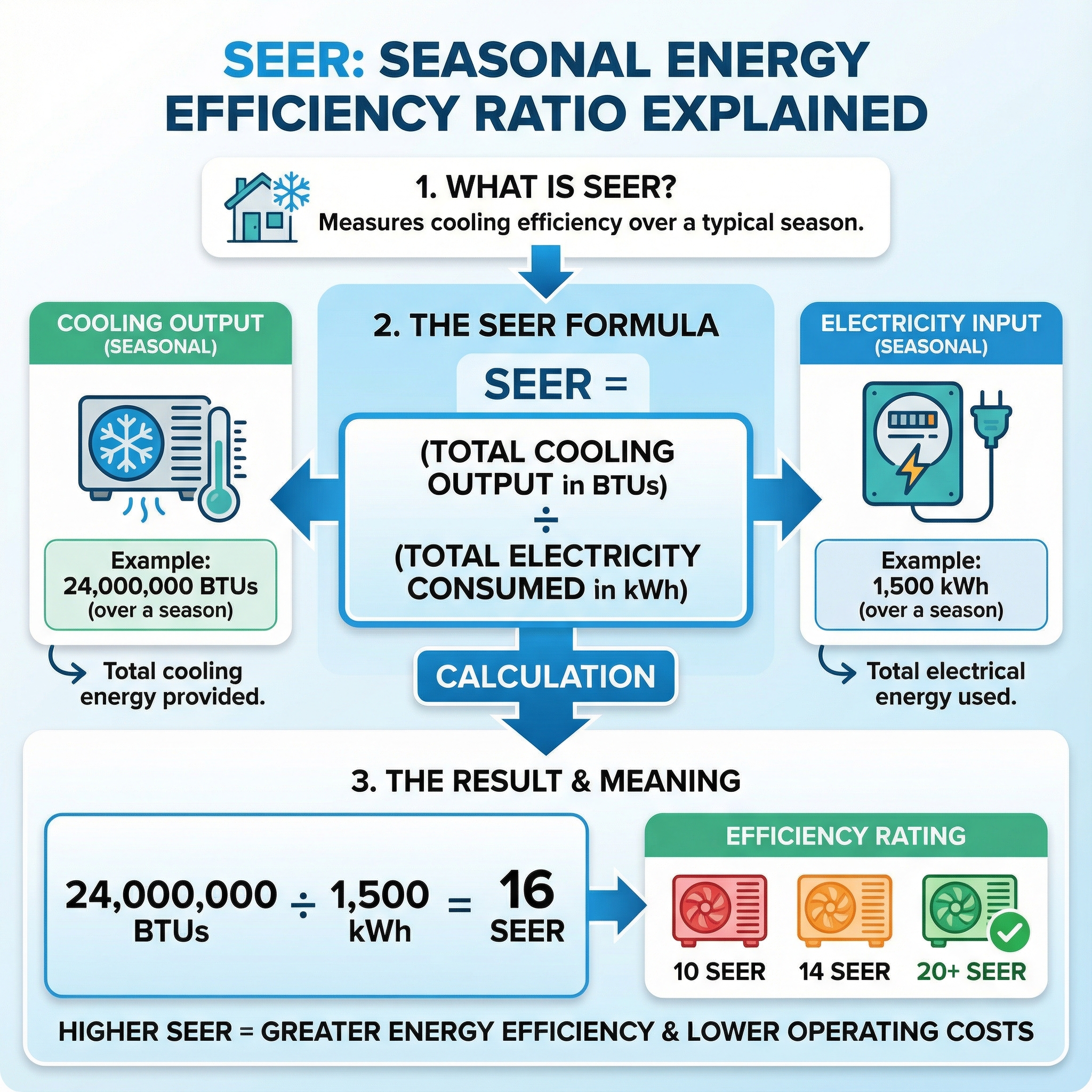
MERV describes how well a filter captures particles, roughly from 1 to 16. Higher MERV catches finer dust and smoke, but usually raises pressure drop, which can reduce airflow if the system cannot handle it. ASHRAE favors higher efficiency, often MERV 13 or above, when the equipment and ductwork support it. Pleated filters (MERV 8 to 13) strike a balance, while fiberglass panels (MERV 2 to 4) offer low resistance with limited capture. Washable filters are typically low MERV and performance swings with cleaning. Higher MERV loads faster, so monitor more closely. Under SEER2 test conditions, keeping external static pressure reasonable is critical, since an overly restrictive filter can cut capacity and increase energy use.
- Older PSC blowers or undersized returns: favor MERV 8 to 11 pleated, or increase filter area with a 2 to 4 inch media cabinet.
- Allergy or smoke concerns but ductwork cannot handle added static: add room HEPA purifiers instead of pushing to MERV 13.
- Intermittent-use homes or inconsistent maintenance: skip washable filters, use quality disposable pleated on a defined schedule.
Common Myths and Mistakes About HVAC Filters (And What Really Works)
The most common myth is that a single filter can run for a year. In practice, most systems need replacement every 1 to 3 months. The bigger mistake is treating filters as set and forget. Wait too long and airflow drops, the blower works harder, utility bills rise, and key parts can be damaged. It is like trying to jog with a scarf over your mouth, the system strains to breathe and performance falls off.
- Myth: Annual changes are fine. Reality: plan on 1 to 3 months for most systems.
- Mistake: Ignoring filters until comfort problems show up.
- What works: Check monthly, then set the change interval to your conditions.

Cost and Energy Benefits of Timely Filter Changes: What You Can Save
Timely filter changes do more than protect air quality, they lower operating costs. We routinely see 5 to 15 percent lower A/C energy use after a clogged filter is replaced, because the system breathes easier, static pressure drops, and cycles shorten. If your cooling bill is $120 in a hot month, that is about $6 to $18 saved, month after month. A clean filter is like swapping a clogged dust mask for a fresh one, the effort drops instantly. Over the long term, regular maintenance that includes on-schedule filter changes is linked to systems lasting roughly 5 to 7 years longer on average. You also see fewer nuisance service calls and less wear on motors and compressors, which helps preserve efficiency all season.
Quick Reference: 1 Month • 3 Month • 6-12 Month Filter Replacement Guide
Use this quick chart as a starting answer to How Often Should You Change Your HVAC Air Filter? Pick the interval that best matches your filter type and home use.
- 1 Month: 1 inch fiberglass in any home. 1 inch pleated MERV 11-13 with heavy use, multiple pets, smoking, allergies, or nearby construction. Apartments with high dust loads or continuous fan operation.
- 3 Month: 1 inch pleated MERV 8-11 in average homes with 0-1 pets, no smoking, moderate runtime. Townhomes or small households without special air quality concerns.
- 6-12 Month: 4-5 inch media cartridges MERV 11-13 in clean homes, larger return area, or variable speed systems. Low occupancy, vacation homes, or mild climates lean toward 9-12 months.
Shorten intervals after renovation, peak pollen, wildfire smoke, or if airflow drops or rooms feel uneven.
How to Check Your HVAC Filter and Change It Step by Step
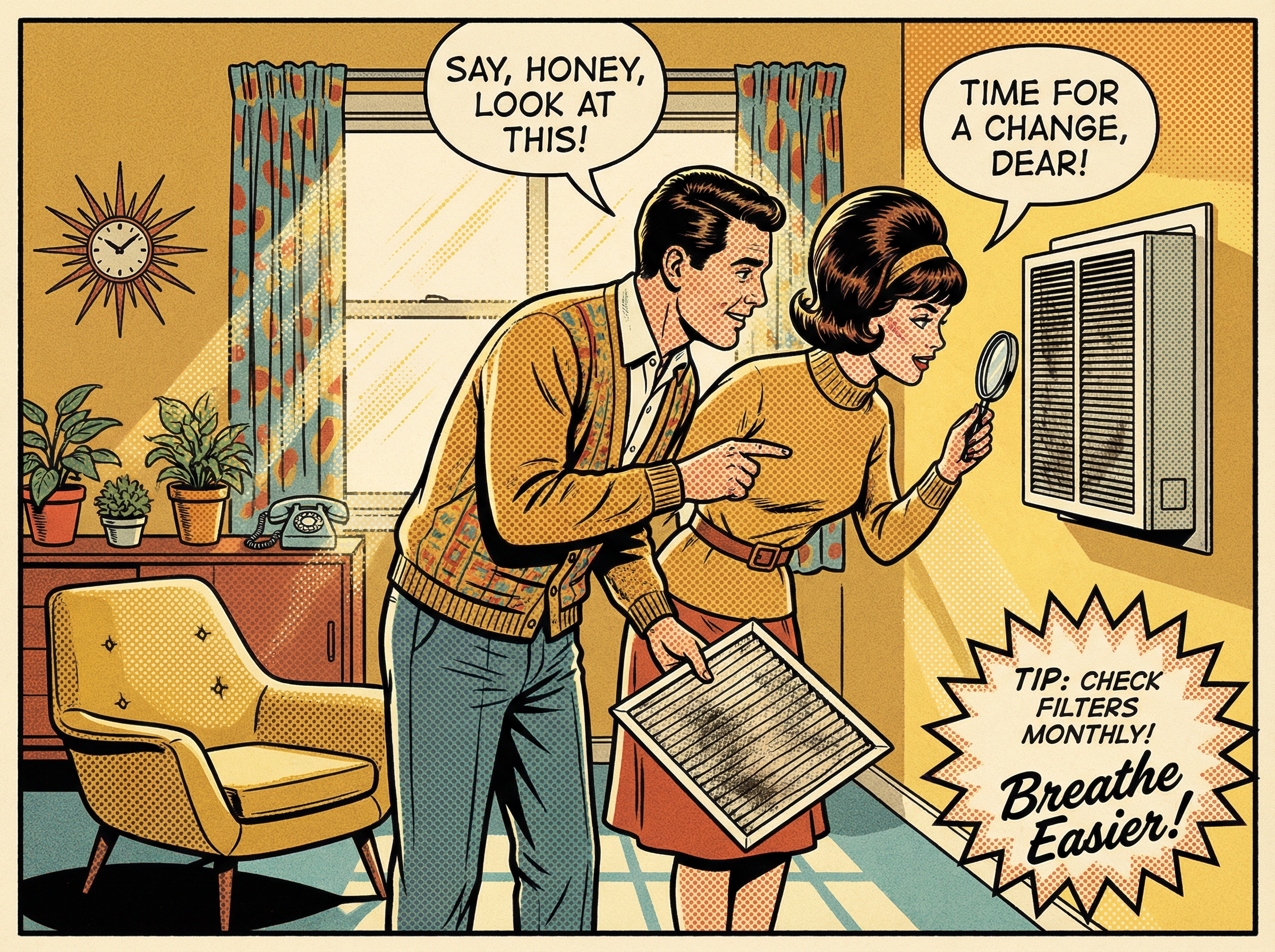
In our field experience, the light test is reliable: pull the filter, hold it up to a light. If light barely passes through, or the media looks gray and matted, replace it. Performance clues also tell the story: rooms feel stuffy, airflow at vents is weak, the system runs longer than usual, or utility bills creep up.
Step by step change:
- Turn off the HVAC at the thermostat or the disconnect.
- Open the return grille or furnace slot, then slide the filter out.
- Find the airflow arrow on the frame. Install the new filter with the arrow pointing toward the blower.
- Seat it square and snug. Gaps let dust bypass.
- Write today's date on the frame for easy tracking.
- Restore power and check airflow at a nearby vent.
Washable or reusable filters: follow the manufacturer's cleaning schedule. Rinse gently, let them dry fully, then reinstall with the arrow aligned. For disposable filters, bag the old one to keep dust contained and dispose per local rules.
There is no federal replacement mandate. Follow the manufacturer's guidance and your home's conditions, like pets, renovations, or regional dust.
Summary: Monthly Checks, Replace When Dirty, and Make It Routine
Make filter care simple: inspect monthly, replace or clean when dirty, and stay within the product and equipment recommendations. As a rule of thumb, 1 inch disposable or standard pleated filters run 1 to 3 months, thicker or HEPA styles can go 6 to 12 months, and homes with pets, allergies, smokers, or high runtime should expect shorter intervals. Change sooner if the media looks loaded, airflow drops, runtimes stretch, or bills rise. Set a monthly reminder, keep a couple spares on the shelf, and follow the maker's directions for washable filters. This hybrid approach keeps comfort steady and helps your system breathe.
If you are unsure what your system needs, that is normal. Our team can help you pick the right filter and schedule, then deliver fast at straightforward wholesale pricing.
- Get a Custom Quote
- Talk to Our Team by phone
- Shop Air Filters