




HEPA vs MERV Filters: What's the Difference and Why It Matters for Your HVAC
HEPA and MERV describe two different ways of measuring filtration. MERV is a 1 to 16 scale used for HVAC filters in ducts and air handlers. The higher the MERV, the better the filter is at catching smaller particles. HEPA is a separate standard that exceeds MERV 16 performance, designed for extremely high single pass efficiency often seen in cleanrooms and hospital settings.
Here is the tradeoff: HEPA delivers top tier capture, but it usually adds significant resistance to airflow. Most central HVAC systems are not built to push through that added resistance, which can cut comfort, raise energy use, and stress equipment. MERV rated filters are the everyday language of central HVAC, offering a range of air quality gains while staying inside typical blower and duct limits. Think of filters like kitchen strainers, finer mesh catches more but slows the flow.
Choosing correctly affects indoor air quality, comfort, utility bills, and system life. With 30 plus years in HVAC, we'll frame the decision by balancing air quality needs with system compatibility and operating cost.
How HEPA Filters Work: Efficiency, Particle Sizes, and Practical Limits
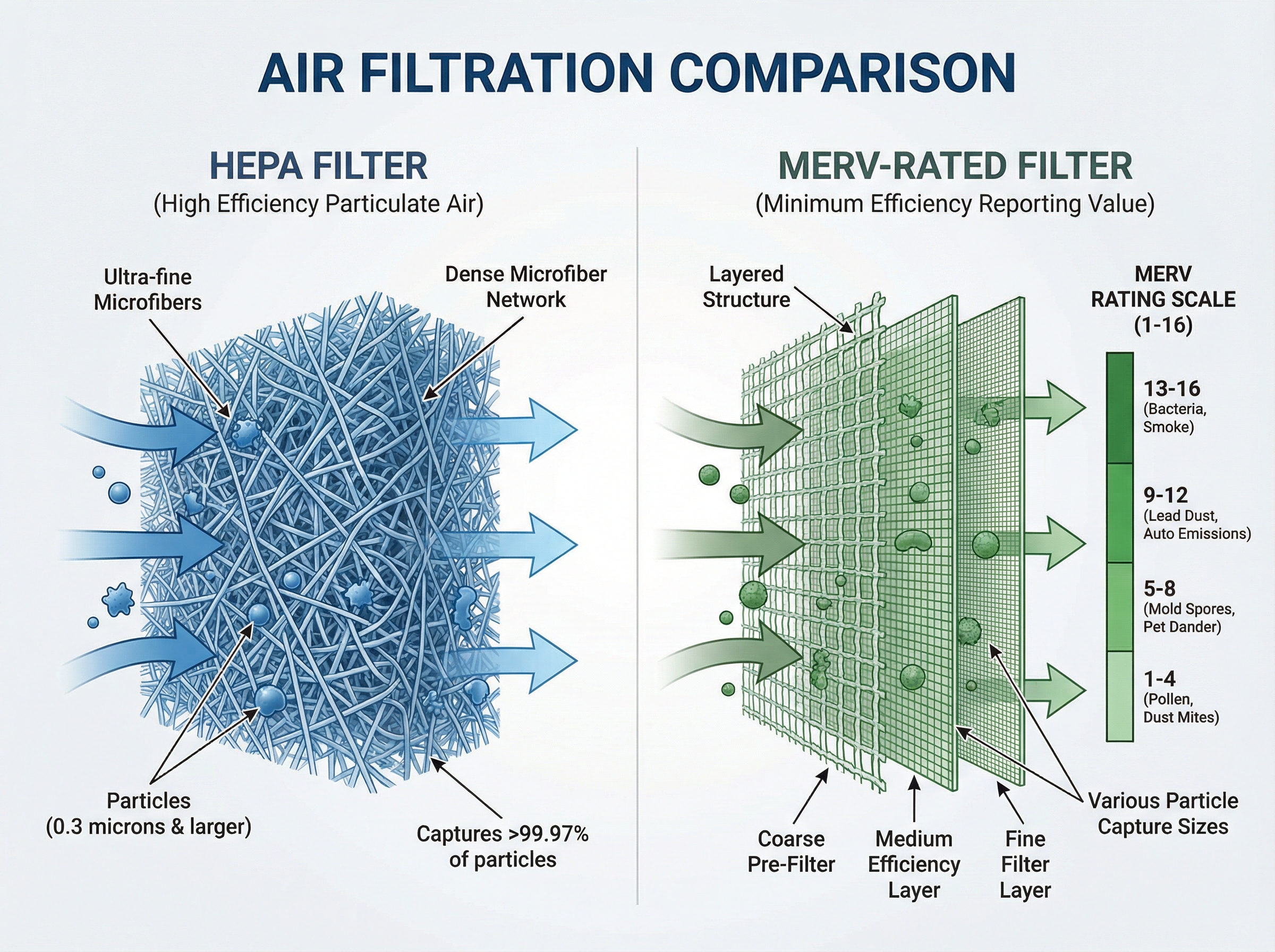
HEPA works by forcing air through a dense mat of microfibers, a fiber forest that grabs particles three ways: larger ones collide and stick (impaction), midsize brush along fibers and are snagged (interception), and ultrafine particles zigzag from Brownian motion and settle into the fibers (diffusion). The hardest size to catch is about 0.3 microns, and true HEPA removes roughly 99.97% of these in one pass. That makes HEPA the highest single-pass option for fine particulates, smoke, and many microorganisms.
In the field we see the biggest gains when HEPA is applied correctly. The media needs airtight seals, otherwise air bypasses the filter, and its resistance can overwhelm typical furnace slots. When maximum removal is critical, such as immunocompromised occupants, severe asthma or allergy, or medical areas, use portable HEPA purifiers or professionally designed add-on housings with prefilters and verified static pressure.
What MERV Ratings Mean: From MERV 1 to MERV 16 (and Where Homes Usually Live)
MERV is ASHRAE's standard rating, 1 to 16, that shows how well a filter captures particles across defined size ranges. Higher numbers mean a tighter mesh, like moving from a fishing net to a fine sieve, so more fine particles are caught, and the filter adds more resistance to airflow. For most U.S. homes, we find the feasible and effective choices are MERV 5 to 13. Homes prioritizing relief from allergies or wildfire smoke often step up to MERV 12 or 13, but only when the blower and ductwork can tolerate the added resistance. Many residences settle in the mid range to balance cleaner air, airflow, and energy use. The right pick pairs the target air quality with what the system can comfortably move.
Comparing Filtration Performance: HEPA vs High MERV Media
Think of filters as sieves with finer mesh capturing smaller particles. If your goal is absolute particle removal, HEPA leads. It excels at ultrafine and clinical-level control, appropriate for medical needs or immunocompromised occupants. For most households, a mid to high MERV filter, often MERV 8-13 within system limits, knocks down dust, pollen, many allergens, smoke fractions, and many respiratory particles.
Practical limits matter. HEPA's dense media can severely restrict airflow in typical residential systems, raising static pressure and potentially overworking blowers. Very high end MERV, roughly 13-16, also adds resistance, usually to a lesser degree. That tradeoff tracks the MERV spectrum: as ratings rise, capture improves while airflow resistance increases.
Cost and upkeep differ too. HEPA setups usually cost more up front, may require professional installation, and often use pricier or more frequent media. MERV filters are widely available across budgets and are commonly replaced every 1-3 months. In our experience at Budget Heating (BudgetHeating.com), homeowners get the best balance by choosing the highest MERV their equipment is rated to handle and maintaining it on schedule.
MERV Selection Guide: Which MERV Should I Get for My Home?
Start by clarifying goals. Are you tackling everyday dust, helping with allergies or asthma, addressing wildfire smoke and fine particles, or protecting someone who is immunocompromised? Your goal points you to how aggressive your filtration should be.
In our field experience, most homes are well served by MERV 8 to 11. Where allergies, smoke, or health sensitivities matter, consider MERV 12 to 13 only if the equipment can tolerate the added resistance. Select the highest MERV your equipment manufacturer endorses and that a qualified contractor confirms your blower and ducts can handle.
Ask your contractor:
- What is the equipment's maximum recommended MERV?
- Will you measure external static pressure before and after?
- Would a deeper media cabinet be advisable?
- Can blower speeds be adjusted if needed?
- Are ducts tight, the coil clean, and the filter rack properly sealed?
Factor in local conditions. Dusty or arid climates, wildfire season, pets, or nearby construction may justify a higher MERV and more frequent changes.
Ensure proper size and fit. Use the exact filter dimensions, maintain gaskets or seals, and close any gaps. A loose filter is like a gate left ajar, air simply slips around it.
After an upgrade, check comfort and airflow at registers, room temperatures, and listen for unusual blower noises. If performance worsens, revert or call a pro.
Remember, filtration happens only while the fan runs. During high pollution periods, consider more low speed circulation to boost cleaning while balancing energy use.
Inspect monthly and replace on schedule. Estimate annual costs by unit price times change frequency, and weigh any energy impacts against the indoor air quality benefits.
Common Myths and Honest Limitations: When High Efficiency Filters Aren't the Best Choice
We often see great intentions collide with real system limits. High efficiency filters can be like breathing through a thicker mask: cleaner air, but harder airflow. Here are frequent misconceptions and what actually happens in typical homes:
- Myth: Any HVAC system can use a HEPA filter without changes. Reality: Most residential blowers are not built for HEPA pressure drop and need special housings or upgrades.
- Myth: HEPA is always the best choice. Reality: In standard ducted systems it often restricts airflow excessively.
- Myth: HEPA is simply a higher MERV rating. Reality: They are different standards, HEPA is generally beyond MERV 16 and much denser.
- Myth: Higher MERV is always better. Reality: Efficiency rises, but so does resistance, match to blower and duct capacity.
- Myth: Maintenance stays the same. Reality: High efficiency media loads faster and needs more frequent changes.
- Myth: Upgrading filtration has no energy impact. Reality: Added resistance can increase fan energy and wear.
When is high MERV or HEPA not ideal: older furnaces or undersized returns, long duct runs, or variable speed systems tuned for low static. Better options include MERV 8 to 11 pleats, deep 4 to 5 inch MERV 11 to 13 low pressure drop media, dedicated bypass HEPA with its own fan, or room HEPA units for targeted spaces.
Airflow, Pressure Drop, and HVAC Compatibility: What Your System Can and Cannot Handle
Every filter adds resistance, known as pressure drop. Your blower is designed to move a set amount of air within a maximum external static pressure. If the filter is too restrictive, airflow falls, comfort drops, and equipment runs harder. It is like trying to breathe through a thick scarf, you get less air with more effort.
Match the filter to the system. Check your furnace or air handler documentation for the maximum recommended MERV rating and allowable external static pressure. Choose a MERV within that range. Install the filter with the airflow arrow in the correct direction and make sure the rack seals tightly so air does not bypass the media. If you are unsure, have a licensed HVAC contractor measure static pressure and confirm delivered airflow.
HEPA media have much higher pressure drop than standard residential systems are built for. Retrofitting HEPA into a standard filter slot without system changes can restrict airflow, raise energy use, reduce comfort, and damage equipment. Do not do this unless the system is verified and modified as needed.
- Watch for rising energy bills, reduced airflow at registers, longer run times, or new hot or cold spots.
- Safety red flags include coil icing, overheated blower motors, or tripped safety limits. If these appear, seek professional evaluation.
Can You Install HEPA in a Standard Home HVAC System? (Short Answer and Safe Paths)
Short answer: usually no. Do not slide HEPA media into a standard filter slot unless the system was designed or modified for it. Most residential furnaces and air handlers are built around MERV-rated filters. Standard filter rails are not built for the gaskets HEPA requires. True HEPA is more restrictive and belongs in dedicated units with their own fans or in engineered, sealed housings.
Safe paths:
- Whole-home: a professionally installed sealed HEPA housing with a prefilter and airtight connections. Some use auxiliary fans.
- Rooms: portable HEPA purifiers sized to the space.
- High MERV: have a licensed HVAC professional measure external static pressure and adjust blower, cabinet, or ducts if needed.
That preserves filtration gains without starving airflow or stressing equipment.
Alternatives and Upgrades: Portable HEPA, Whole House Add Ons, and Electronic Filters
When a central HEPA retrofit is not feasible, layer solutions: use a high MERV filter at the air handler, add portable HEPA in rooms, or an add-on cabinet built for pressure. HEPA kits cost more up front and need professional installation, and if integrated wrong they can increase energy use. Electronic filters are options too. In our experience at Budget Heating (BudgetHeating.com), MERV 11 to 13 plus one or two portables covers most needs. 2024 DOE portable cleaner standards and 2023 SEER2 tests changed ratings and blower designs, compare specs. Dusty areas need higher MERV and more changes, humid areas need moisture tolerant media, wildfire zones benefit from portable HEPA. Inspect central filters monthly, never run without a filter or block returns. Payback varies, so total annual filters, energy, and installer fees, including portable filter changes.
Conclusion: The Practical Choice: Match MERV to Your System and Use HEPA Where It's Designed For
For most homes, the practical path is clear: use the highest MERV your HVAC can safely handle, keep filters on schedule, and add HEPA via portable units or professionally designed housings only when needed. A dirty filter can add more pressure drop than a clean higher MERV pleat, so maintenance is as important as the rating.
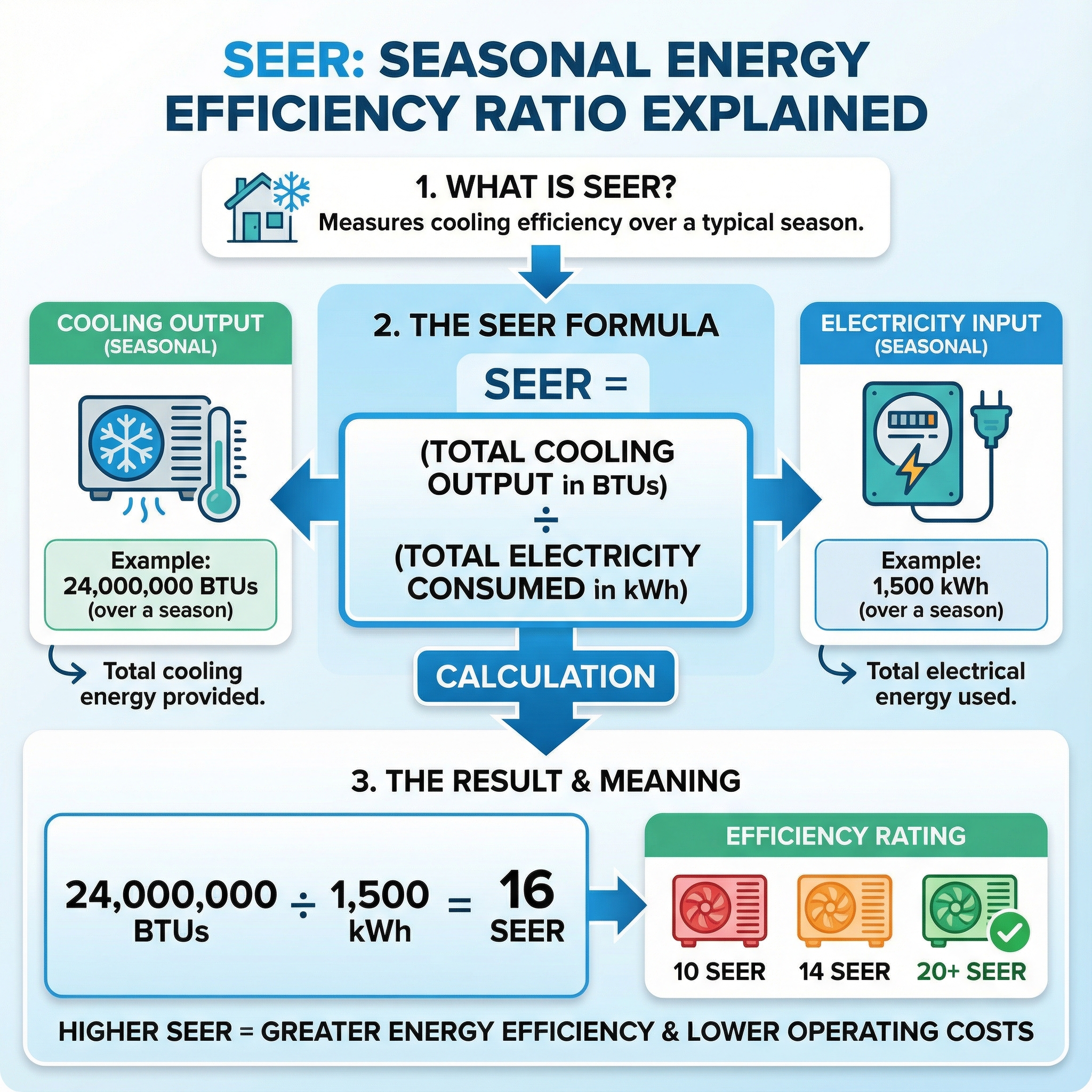
SEER and SEER2 define cooling efficiency, with SEER2 now the standard. Modern systems typically run mid teens to low 20s, and upgrading can deliver meaningful energy savings over time. Filters do not change nameplate SEER2, but resistance affects real-world efficiency: up to about MERV 13 is usually negligible on energy, while very tight media can add more than 5%. Pair a higher SEER2 system with a deep-pleat, low pressure drop MERV 13 where feasible, and use dedicated HEPA for HEPA-level needs.
If you are balancing allergies, wildfire smoke, and static pressure limits, our team can help you optimize IAQ, airflow, energy use, and equipment life.
- Get a Custom Quote
- Talk to Our Team for U.S.-based phone support, sizing, and recommendations
- Shop Filters & IAQ or Shop High-SEER2 Heat Pumps & ACs (financing with Affirm, free shipping on most orders)