




Exploring the Versatility of Daikin Multi Zone Mini Splits
Homeowners and builders are looking for comfort that fits the way spaces actually get used, not a one-size-fits-all thermostat. That is why multi-zone systems are getting attention. They let you dial in temperatures by area, morning to night, season to season, without reshaping the whole house.
Daikin stands out for high-quality, high-performance multi-zone mini-splits that deliver flexible whole-home comfort and zoning. In practice, that means consistent, quiet conditioning tailored to different rooms, from busy living areas to lightly used spaces, while keeping control simple.
At the core is a heat pump. Instead of creating heat, it moves it. Think of it like a conveyor belt for warmth, carrying heat from outside to inside in winter, then reversing in summer to move indoor heat out. Moving heat uses less energy than generating it with electric resistance or burning fuel, which is why this approach is efficient, steady, and well suited to modern zoning.
What Is a Daikin Multi Zone Mini Split? A Clear, Practical Definition
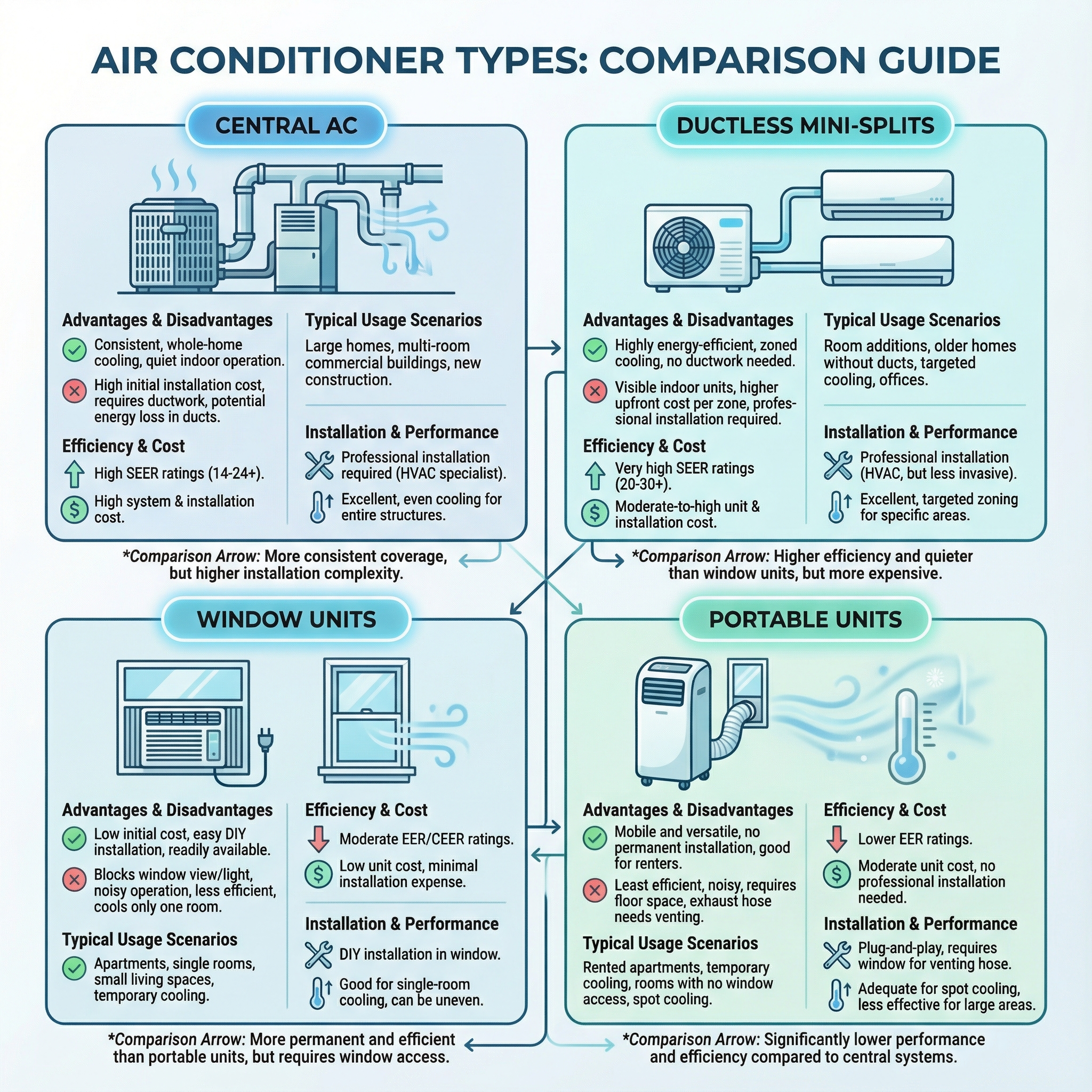
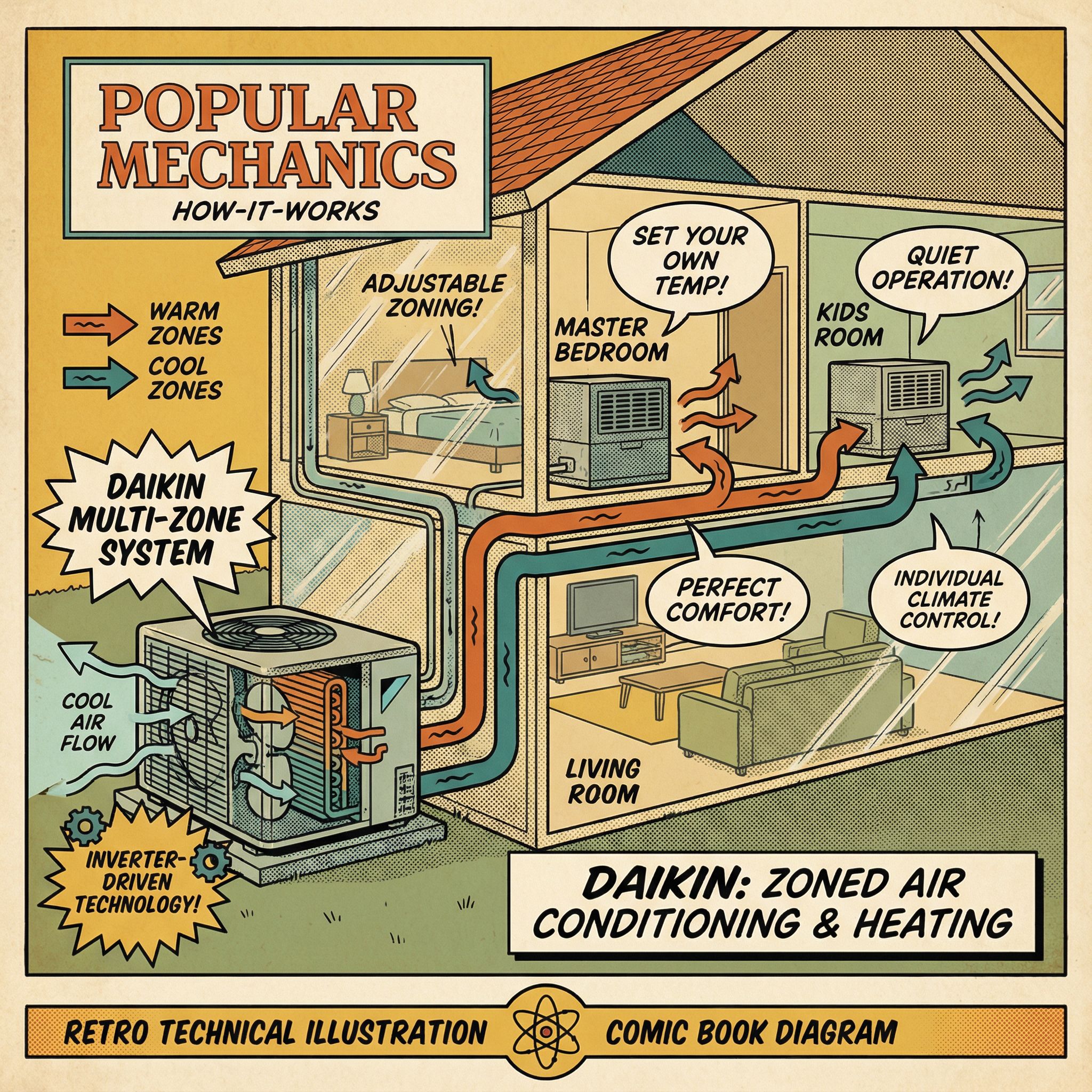
A Daikin multi-zone mini-split is an inverter-driven heat pump that pairs one outdoor condenser with multiple indoor units to create independent temperature zones. Think of the outdoor unit as a comfort power strip, feeding refrigerant to wall-mounted, ceiling cassette, floor-mounted, or slim-ducted units, each with its own control. Unlike a single-zone mini-split that serves one room, a multi-zone shares capacity across several spaces. Unlike central HVAC, it avoids long duct runs and conditions only the rooms in use. System design is limited by the condenser's available ports and the total connected capacity, so the number and mix of indoor units must stay within those limits.
Daikin Efficiency & Technology: SEER, HSPF and Inverter Advantages
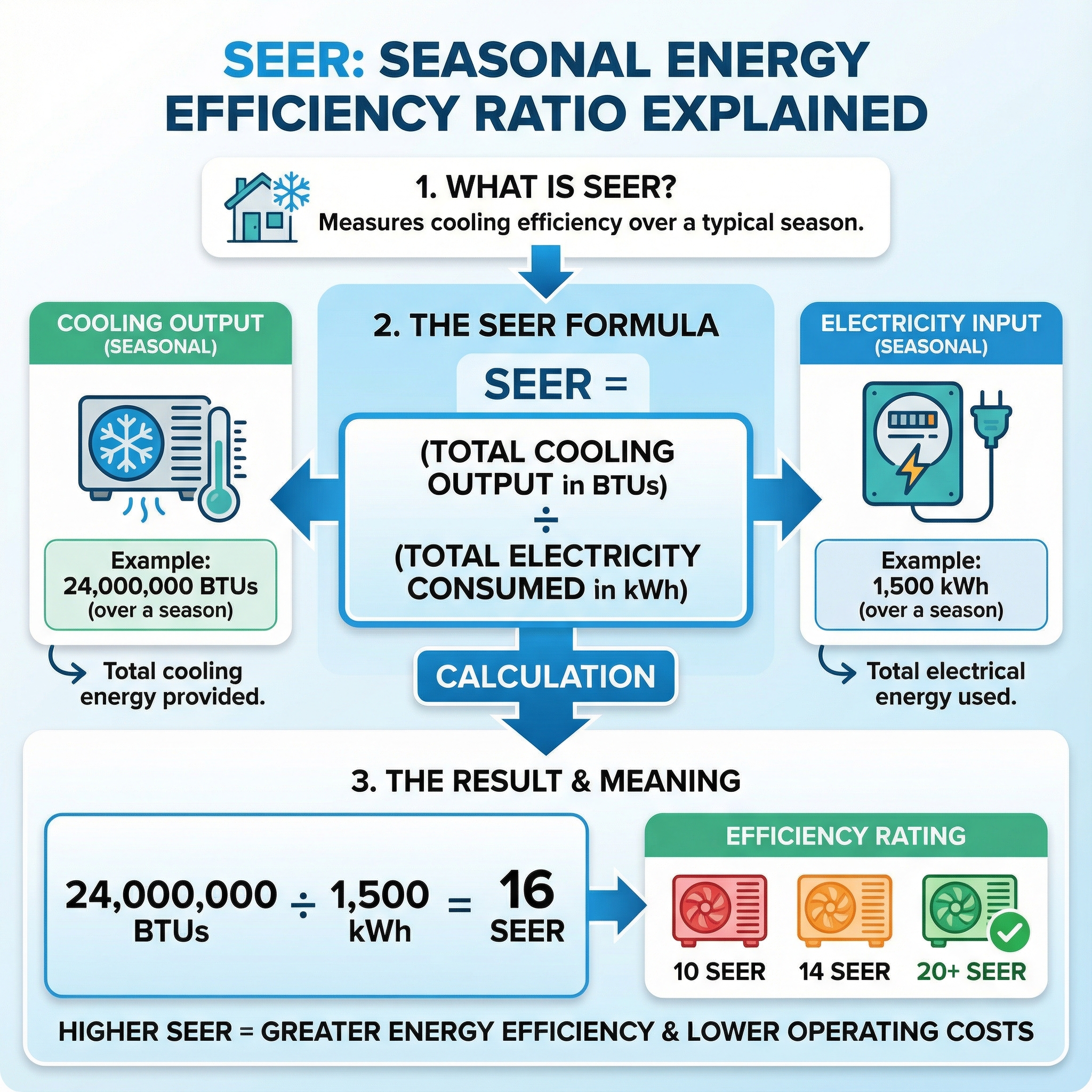
In cooling, SEER expresses seasonal efficiency under lab conditions. SEER2 is the updated test that uses more realistic external static pressure and fan power, so ratings shift downward slightly, but better reflect field performance. When comparing current Daikin equipment, prioritize SEER2 for a truer picture and use SEER only when older literature is your only reference. For heat pump heating, HSPF and the newer HSPF2 follow the same idea.
Across common configurations, Daikin multi-zone combinations typically land in the mid to upper teens on SEER, with certain pairings near 18 to 19. In current specifications you will see SEER2 and HSPF2 published, and some ductless lines reach roughly 20 SEER2. Expect the exact rating to vary by the indoor unit mix and capacity chosen.
Inverter-driven compressors are the efficiency engine. Instead of switching fully on and off, the compressor ramps up or down to match the load, like a dimmer switch on a light. Running steadily at lower speeds improves part-load efficiency and reduces cycling, the stop-start behavior that wastes energy. This approach is the reason these systems deliver strong seasonal performance, especially when most hours are below peak demand.
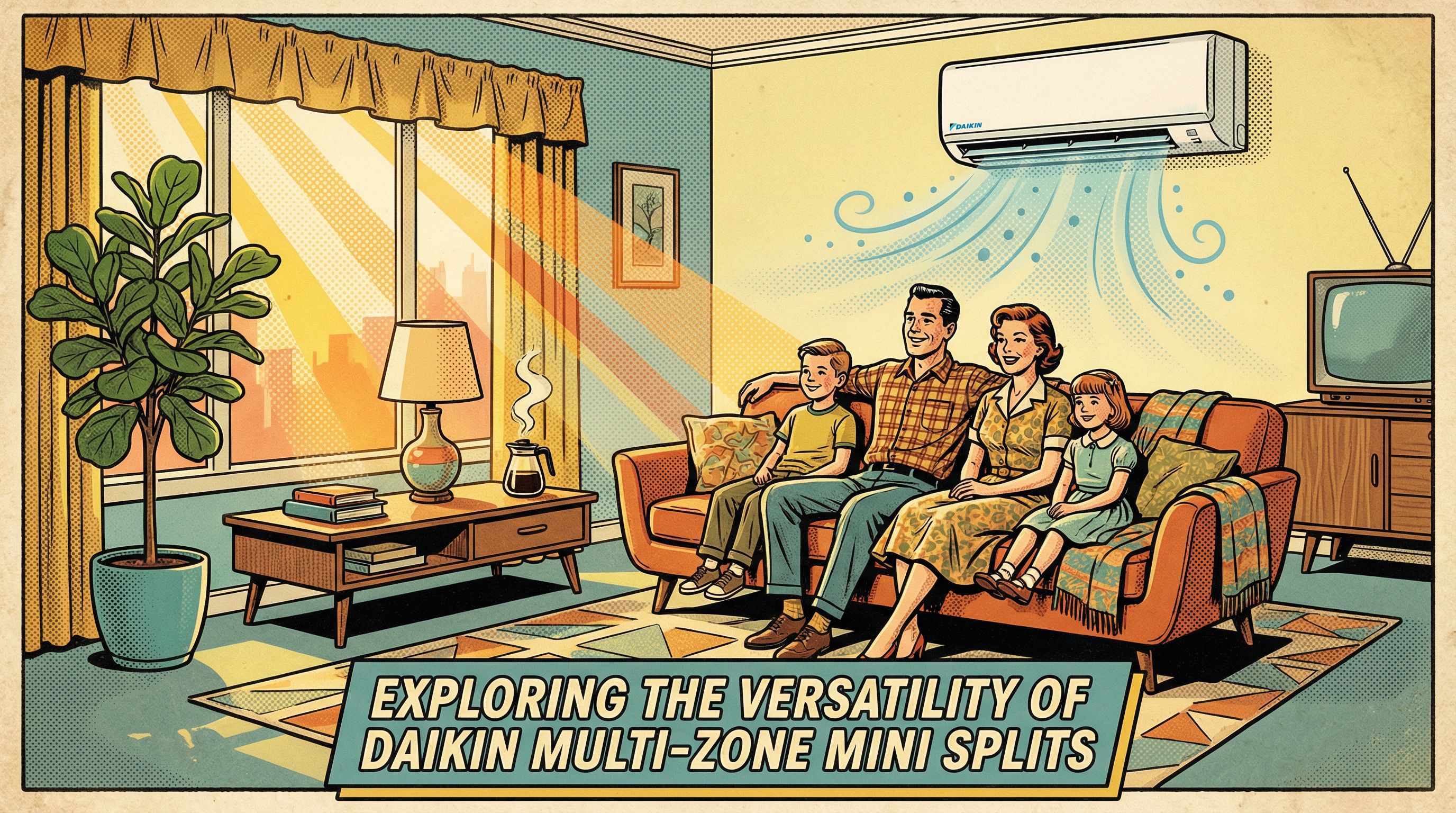
Key Benefits of Daikin Multi Zone Mini Splits: Zoning, Quiet Operation and Retrofit Flexibility
Daikin multi zone systems deliver true zoning, so each room gets its own set point and schedule. That means real comfort for the home office, nursery, or bonus room, and fewer arguments over one central thermostat. Because you only condition the spaces you are using, and the system modulates at part load, homeowners commonly see lower utility bills without sacrificing comfort. Tradeoffs are manageable: more remotes or wall controls to set, and a little planning so rooms that act as one zone share similar settings.
- Wall mounted: the go to choice for most rooms, fast to install and easy to service.
- Ceiling cassette: ideal when you want air spread evenly in larger or open areas with ceiling access.
- Floor console: great under windows or in knee wall spaces where high wall mounting is not practical.
- Slim ducted: hides in a soffit or closet to feed short duct runs for a clean, built in look.
Retrofits are friendly: small line set penetrations and minimal disruption to finishes. Operation is whisper quiet indoors and outdoors, and heat pump technology provides both heating and cooling year round. In our experience at Budget Heating (BudgetHeating.com), Daikin's controls and reliability make day to day use simple, with routine maintenance limited to filter cleaning and occasional coil care.

When Daikin Multi Zone Mini Splits May Not Be the Best Choice (Tradeoffs & Alternatives)
We have seen multi zone mini splits disappoint in a few cases: 1) Homes with many small, closed rooms, where air cannot move between spaces. A ducted central heat pump, a small duct high velocity system, or a concealed ducted mini split air handler often gives better room to room balance. 2) Projects trying to hang too many heads on one outdoor. Capacity is not unlimited, port and line length limits apply; splitting into two systems or using a ducted air handler is cleaner. 3) Oversized equipment in humid regions, which short cycles like tapping the gas then the brakes, leaving rooms cool but clammy with poor dehumidification. Avoid common mistakes that sink performance: DIY refrigerant work, which is unsafe and voids warranties, skipped filter and coil cleaning, and ignoring required clearances or line length rules.
Costs, Savings and Regulatory Context: What to Expect Financially and Legally
Upfront costs are higher than a basic central system or single-zone unit. Pricing scales with the number of zones, the line set lengths, electrical upgrades, and finish work. Installation time and access drive labor.
Operating costs drop with efficiency. Moving from about 14 SEER to about 18 SEER can cut cooling energy roughly 22%. Zoning trims waste by conditioning only the areas you need, which lowers run time and evens comfort. Payback is faster in long cooling seasons and homes with higher runtime.
Regulatory landscape: In 2023 the DOE shifted testing to SEER2, EER2, and HSPF2. Regional minimums apply to air conditioners, heat pump minimums are national. Many utilities and tax programs require an AHRI matched-pair certificate for the exact outdoor and indoor combination, so keep that document for rebate submission and inspections. In some hot regions there are additional EER2 thresholds for qualifying equipment.
Permitting and refrigerant rules: jurisdictions are phasing in A2L refrigerant requirements. That can influence model eligibility and installation details, so verify local code before purchase. In our experience at Budget Heating (BudgetHeating.com), confirming code, rebates, and AHRI matches upfront avoids change orders and protects your incentives.
Homeowner Checklist & Planning Guide: Sizing, Placement and Controls
- Define zones and daily schedules. Note rooms that need independent temperature control.
- Confirm climate fit. For cold regions, pick low ambient heating models with published capacity at your design temperature.
- Obtain a room by room Manual J. Think of it as the tape measure before ordering cabinets, it sets the load per space.
- Select indoor unit type per room: wall mount, cassette, or ducted, sized to the Manual J load and layout.
- Match the outdoor unit: total capacity, number of ports, and turndown so minimum and maximum loads are covered.
- Plan clearances for airflow and service: indoor and outdoor, including setbacks and snow line.
- Verify electrical readiness: dedicated circuits, breaker size, wire gauge, disconnects. Plan condensate drains or pumps.
- Route line sets correctly: lengths, elevation changes, insulation thickness, UV protection, gentle bends, sealed penetrations.
- Choose controls: native remotes or thermostats, Wi Fi app, staging, lockouts, and setpoint limits.
- Target efficiency for rebates and secure the AHRI matched system certificate.
- Installation quality checks: nitrogen pressure test, deep evacuation to 500 microns with decay test, charge by weight or verified superheat or subcooling.
- Commissioning checklist: airflow and dip switch settings, drain test, supply and return temps, register balancing, documentation for future service.
- Maintenance plan: clean filters, clear drains, wash coils, and an annual performance check.
Maintenance, Safety and Troubleshooting: Keep Your System Efficient and Safe
Simple, regular care keeps efficiency high, indoor air clean, and warranties intact. Before any cleaning, power the system off at the disconnect or breaker. Check filters monthly and replace or wash as needed. Outside, keep the coil and surrounding area clear so air can move freely.
- Homeowner tasks: Power down before cleaning, handle filter maintenance, and remove debris around the outdoor unit while maintaining required clearances.
- Pro-only tasks: All refrigerant and electrical work, annual tuneups, and any leak diagnosis or repair. This preserves performance and protects warranties.
- Safety essentials: Use a dedicated, properly grounded circuit, maintain clearances, and ventilate the space if a refrigerant leak is suspected.
Cadence: check filters monthly, perform a quick visual inspection each season, and schedule professional service annually or every 1 to 2 years. If you suspect a refrigerant leak, power the unit off, ventilate, and contact a licensed professional.
Comparing Daikin Models and Alternatives: Picking the Right System for Your Home
We start with the manufacturer package: submittals, engineering data, performance maps, and installation manuals. Confirm an AHRI-listed matched combination for the outdoor unit and indoor coil or air handler to lock in published ratings and rebate eligibility. Then check the install details: line-set limits, branch requirements for multi-zone, electrical and static pressure. Compare rivals on capacity at your design temperature, turndown range, sound, controls, and warranty. Finally, have an installer validate sizing with a load calculation and duct conditions.
Is a Daikin Multi Zone Mini Split Right for You? Next Steps and Final Checklist
A Daikin multi zone fits best when you need room by room control across several spaces without adding ducts. If that sounds like your project, the final step is getting the match and commissioning right. We get that you want it done once and done right.
- Verify each zone and outdoor unit form a listed AHRI combination, save the AHRI certificate.
- Hire a licensed contractor, pull permits, and confirm a commissioning plan with leak test, evacuation, and documented startup readings.
- Finalize indoor unit styles, line routes, electrical, pad, and condensate plan, then register warranties.
For supporting sources and deeper reading, see the footnotes.
Our team has 30+ years in HVAC and we are a factory authorized dealer, ready to help you dial this in.
- Get a Custom Quote
- Talk to Our Team, U.S. based phone support available
- Shop Daikin Multi Zone Mini Splits at wholesale pricing