




Turn Your Sunroom into a True Four Season Space with a Ductless Mini Split
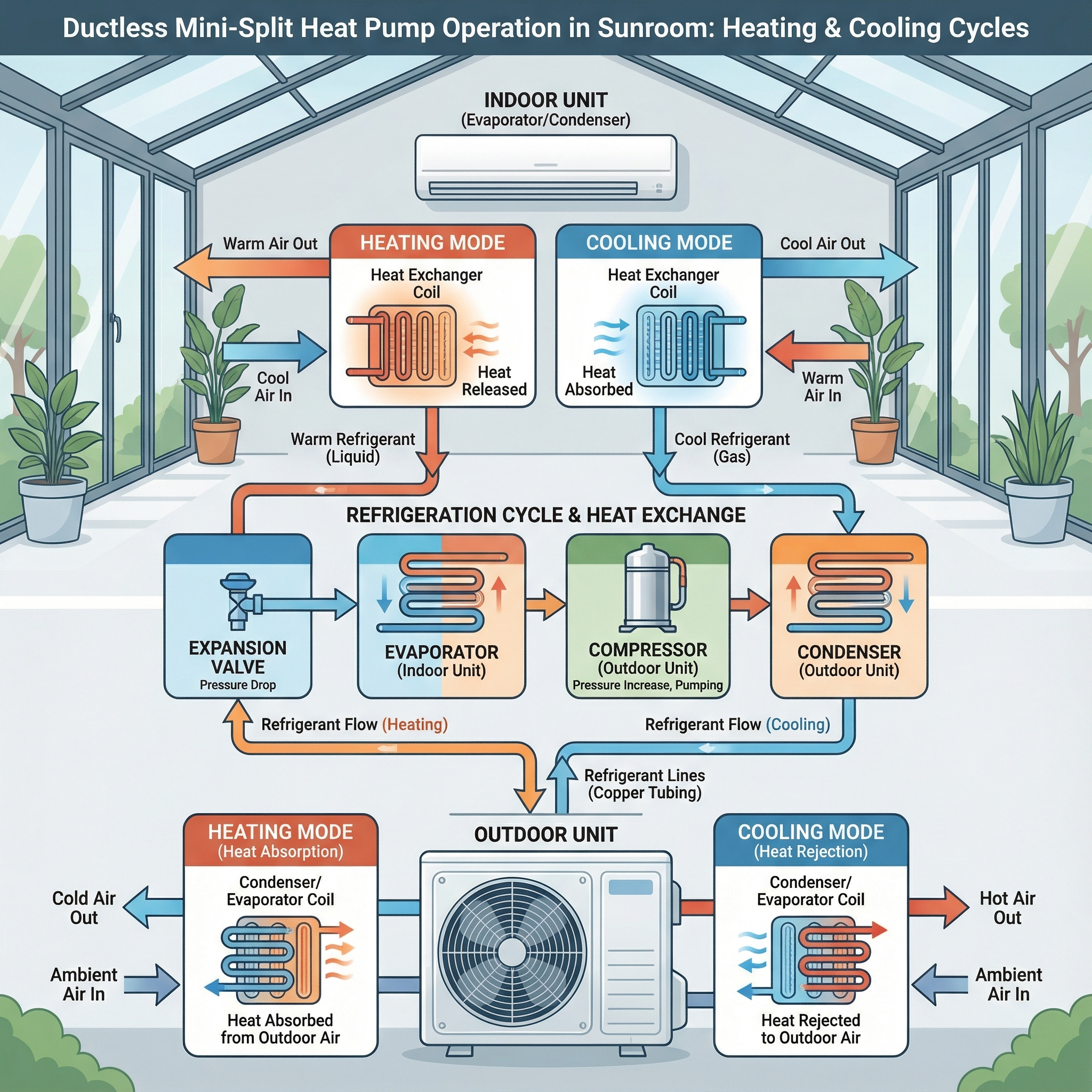
Sunrooms soak up light but often swelter in summer and feel chilly in winter. A ductless mini split heat pump fixes that with precise, zone specific heating and cooling, no duct losses, and minimal disruption. The indoor head and compact outdoor unit vary output like a dimmer, keeping comfort steadier and quieter than window ACs, space heaters, or baseboards while cutting energy use. Built in filtration and humidity control aid air quality, and with routine filter cleaning plus an annual professional service, a properly selected system can run reliably beyond a decade.
Why Sunrooms Need Dedicated Heating & Cooling: The Mini Split Advantage
From years of field work, we see glass-heavy sunrooms act like a greenhouse, hot at noon and chilly after sunset. A ductless mini split handles that swing with year-round heating and cooling, inverter control, and no duct losses.
- Zoned comfort: Tune the sunroom independent of the house, ease central HVAC workload, and run it only when occupied.
- No-duct installation: A small wall penetration carries lines, power, and condensate, so retrofits stay fast and low impact.
- Indoor unit options: Wall mounts, floor consoles, or ceiling cassettes provide quiet, directional airflow to tame solar gain and humidity without blocking views or blasting seating.

SEER2, Inverter Tech, and Why Efficiency Matters in a Sunroom
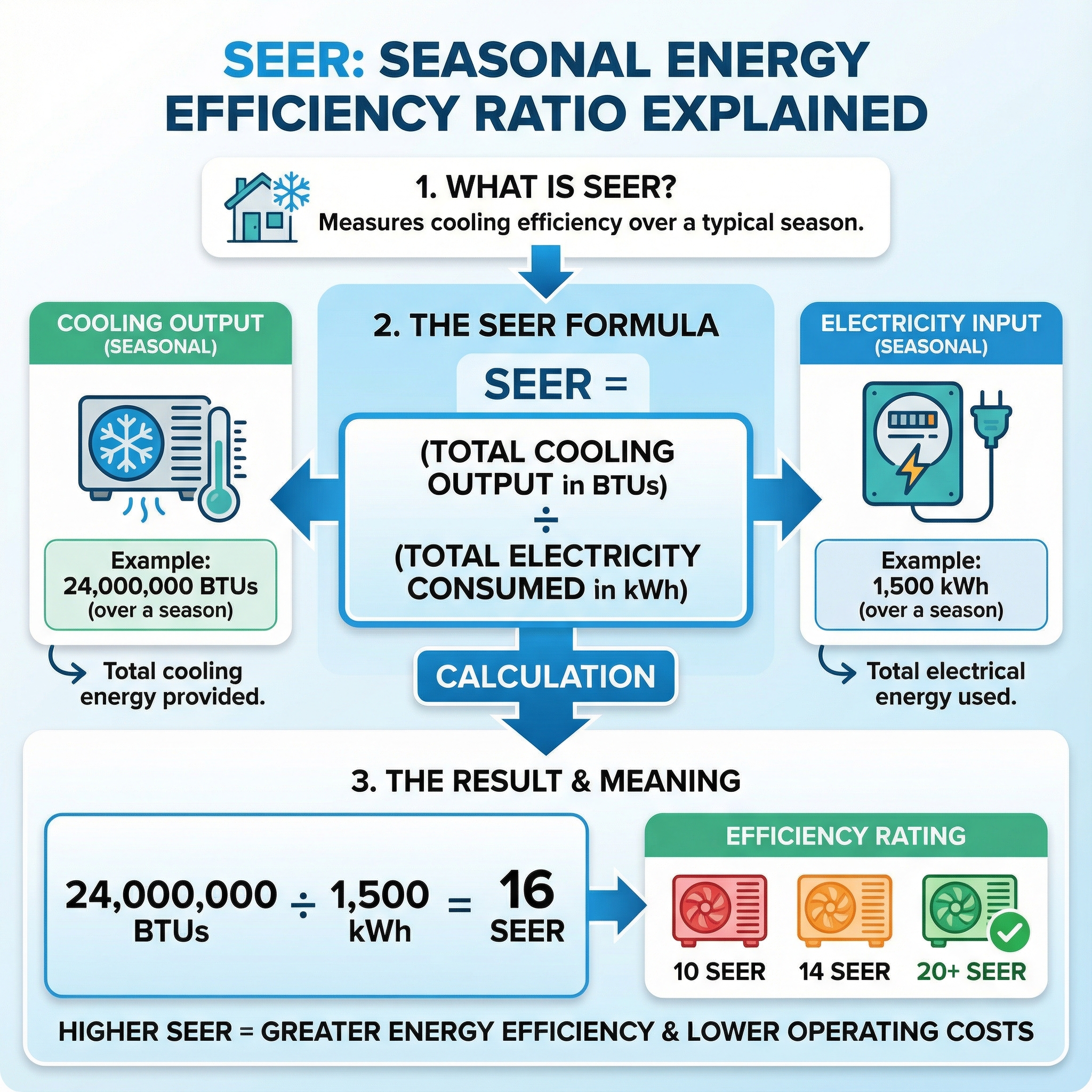
SEER and the newer SEER2 rate seasonal cooling efficiency, like miles per gallon for AC. SEER2 values run a bit lower than legacy SEER because the test is tougher, but higher numbers still mean fewer kWh. Post 2023 minimums sit roughly at 13.4 to 14.3 SEER2, which passes code, not necessarily your utility bill.
Modern mini splits span about 15 to 19 SEER2 in the mainstream, with high efficiency models around 20 to 23+. Moving from 14 SEER2 to 17 can trim about 18 percent of cooling use, 20 saves about 30 percent, 21 about 33 percent.
In our field experience, sunrooms run long hours thanks to glass and late day solar gain. Inverter driven compressors modulate output instead of hard on or off cycling, so they hold steadier temperatures and excel at part load. That smooth operation, especially at 20+ SEER2, can blunt afternoon spikes and materially cut costs in south or west facing rooms.

When a Ductless Mini Split May Not Be the Best Choice (Honest Tradeoffs)
Mini splits are often misunderstood. They heat and cool, often rival central-system efficiency, install with a small wall penetration, and many work in extreme weather when properly selected. Upfront cost is higher than a window unit, but incentives and lower energy use can improve lifetime value.
- If the sunroom is a leaky glass box with little insulation or shading, prioritize envelope upgrades. For occasional use, a simple electric baseboard or hydronic radiator can be more practical.
- If there is no acceptable place for the outdoor unit, or HOA rules limit appearance or noise, consider a through-the-wall heat pump, PTAC, or electric radiant floor.
- In very cold regions where design temperatures dip beyond low ambient capacity and you do not want backup heat, a sealed combustion gas wall heater or extending existing ducts may fit better.
Avoid two common pitfalls: sizing only by square footage, especially with heavy glazing and solar gain, and neglecting filter cleaning and annual service, which can trim efficiency by about 10 percent.
Sizing, Installation Planning, and the Homeowner Checklist for Sunrooms
- Loads: year-round or seasonal, occupancy, orientation, ceiling height, plants or gear.
- Size: measure area. ~12k BTU for 250-350, ~18k for 450-550. Add 10-20% for climate, step up for south or west glass. At Budget Heating we often size 24k vs 18k in sunrooms.
- Heat and humidity: choose a single-zone cold-climate model, verify heat at winter design temp per capacity tables, add dehumidification if SHR is high.
- Install: clear airflow, short line set, proper drain or pump, dedicated circuit and disconnect.
- Verify: ask about solar gain, heat at design temp, dehumid plan. Afterward confirm vacuum, leak test, charge, drain, test heat and cool. Maintain filters, keep outdoor unit clear, annual service, check permits and incentives.
Climate, Codes, and Refrigerants: Regional Rules That Affect Your Sunroom System
In the U.S., mini splits are labeled with SEER2 and HSPF2. Minimums: most ductless heat pumps about 14.3 SEER2 and 7.5 HSPF2. AC-only splits need roughly 13.4 SEER2 in the North and 14.3 in the Southeast and Southwest. We see many 2026 models at 15 to 19 SEER2. SEER2 reads lower than old SEER. Northeast incentives often favor NEEP-listed cold-climate units.
Refrigerants are moving to low GWP options like R 454B, while R 410A and R 32 remain common during the transition.
- Hot and humid: prioritize higher SEER2 and strong moisture control. If SHR is high, plan supplemental dehumidification.
- Cold climates, IECC 4 or higher: size for heating load, pick cold-climate or hyper-heat models, and verify low-temp capacity in manufacturer tables or NEEP data.
Costs, Energy Savings, and Incentives: What to Expect Financially
In sunrooms that run long hours, efficiency pays. From a SEER 10 baseline and a $1,500 annual cooling bill, SEER 14 saves about 30% or $450, SEER 18 about 50% or $750, and SEER 22+ roughly 65% or $975.
The higher SEER premium typically pays back in 3 to 5 years, then keeps saving through a 15 to 20 year lifespan with proper care. Annual maintenance is $150 to $250, and a dirty filter can waste 10% or more. At Budget Heating (BudgetHeating.com) we see simple filter swaps preserve those gains. Although ductless costs more than a window unit, zoning the sunroom and avoiding ductwork improve lifetime economics, and utility rebates or tax credits for high efficiency or cold climate models can shorten payback.
Maintenance & Safety: Easy Homeowner Tasks and When to Call a Pro
- Shut power off at the indoor unit and the outdoor disconnect before cleaning.
- Clean or replace filters monthly, more often in pollen or heavy use. Wash reusable filters with mild soap and water, dry fully. Lightly dust the cabinet and louvers, do not spray into the unit.
- Keep 2 to 3 feet clear around the outdoor unit. Remove debris and gently rinse the coil with low pressure water, never a pressure washer.
- Check the condensate drain for slow flow. If accessible, flush with water or diluted vinegar. Persistent backups or pump issues need service.
- Verify modes, temperatures, and schedules. Replace remote batteries. Call for service at any error code, icing, unusual noise, or oil stains at line connections.
- Seasonal prep: use shades to cut solar gain, keep doors closed, and confirm wall penetrations are sealed.
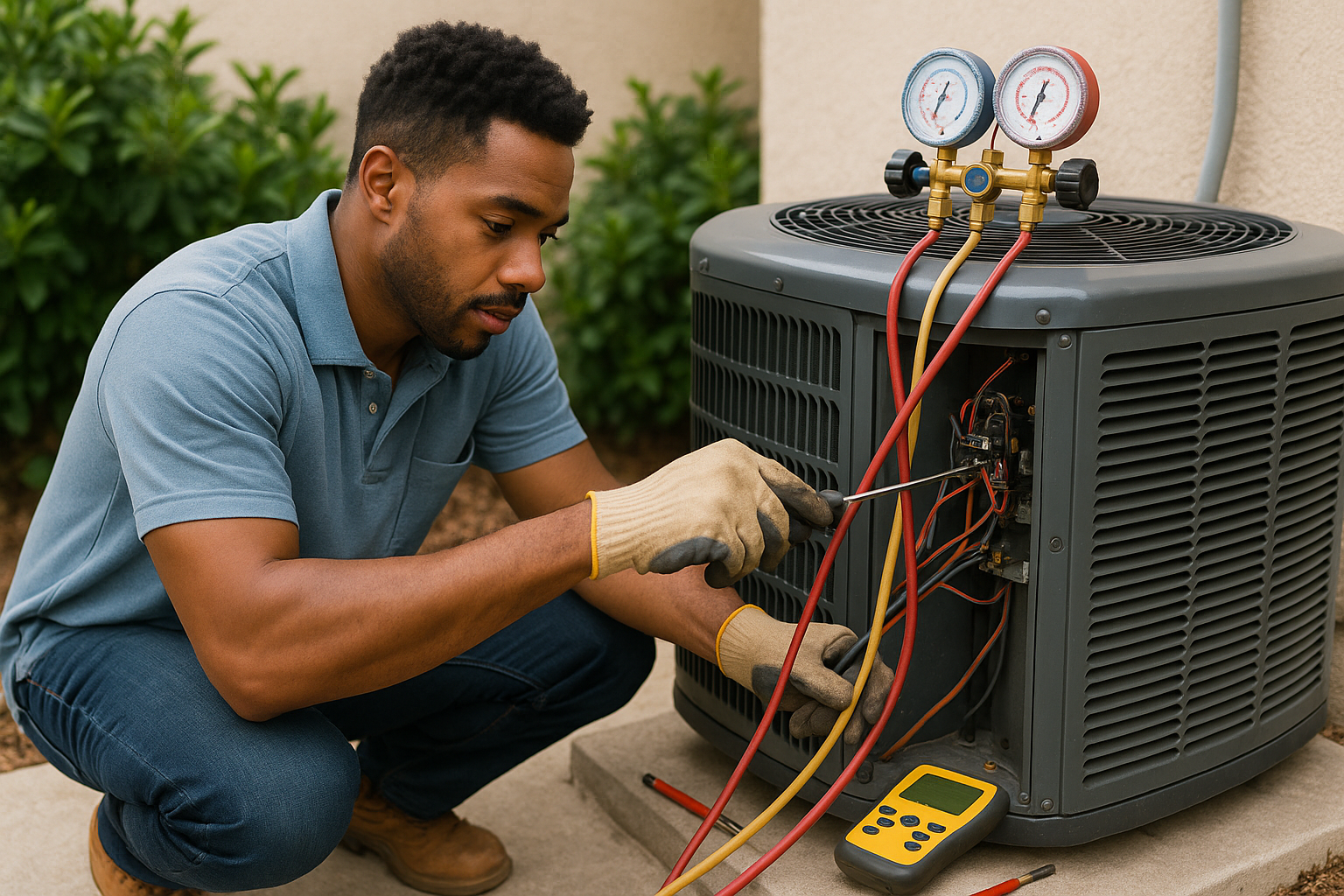
- Call a licensed HVAC professional for installation or relocation, any electrical work, all refrigerant tasks, deep cleanings that require disassembly, part replacements, or recurring problems like short cycling, poor cold weather heating, repeated icing, or water leaks.
- Schedule professional maintenance at least annually, or before both heating and cooling seasons in heavy use. This typically includes electrical checks, safety controls, refrigerant tests, coil cleaning, airflow and condensate verification, and documentation for warranty support.
- Safety cautions: high voltage and charged capacitors can cause severe shock, do not open panels or modify wiring. Never cut line sets. Refrigerant can cause frostbite and asphyxiation, and venting is illegal. Avoid unvented fuel heaters, or use only with ventilation and CO detection, and keep combustion sources away from the outdoor air intake.
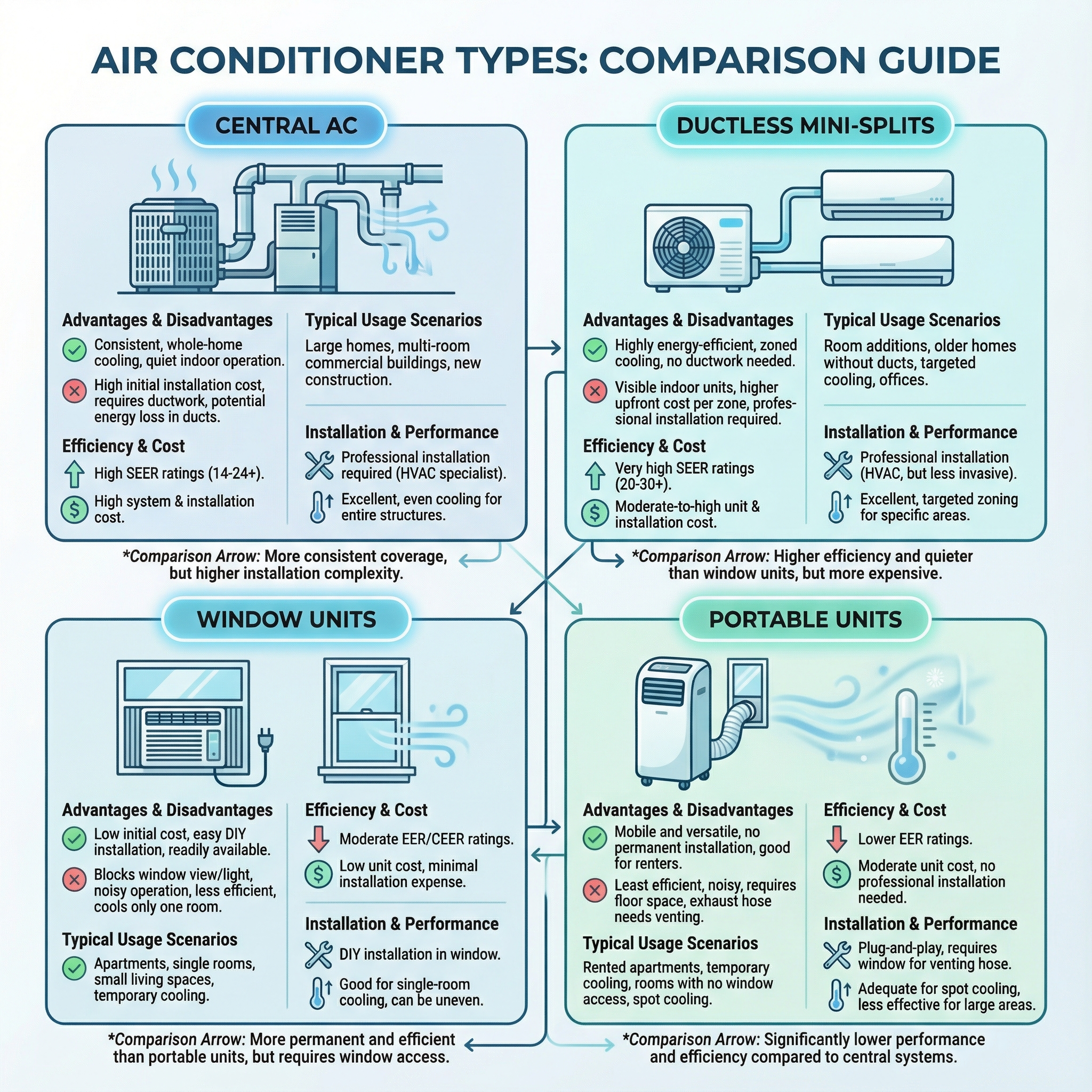
Comparing Options: Mini Splits vs Window Units, Portable ACs, and Space Heaters
Choose a mini split when you care about long term comfort and the efficiency priorities covered above, especially if you plan to stay put or want year round control. In our experience at Budget Heating (BudgetHeating.com), the happiest owners are targeting whole space or multi room comfort. Window and portable units fit renters or short term, single room needs at the lowest upfront cost. Space heaters are fine for brief spot heat in small areas, not whole home duty.
Make Your Sunroom Usable All Year: Next Steps and How to Get a Quote
Ductless mini split heat pumps are a practical, efficient way to make a sunroom truly four season, delivering quiet, zoned comfort without adding ducts. Success comes from correct sizing, verified low ambient heating capability, and smart placement, drainage, and power planning. If you are weighing options, a quick sizing review removes the guesswork. Our team matches SEER2 and HSPF2 to your room and climate so you get even comfort and strong lifetime value.
- Get a Custom Quote
- Talk to Our Team, phone support available
- Shop Ductless Mini Splits