




Why Comfort Should Drive Your Duct vs. Ductless Decision
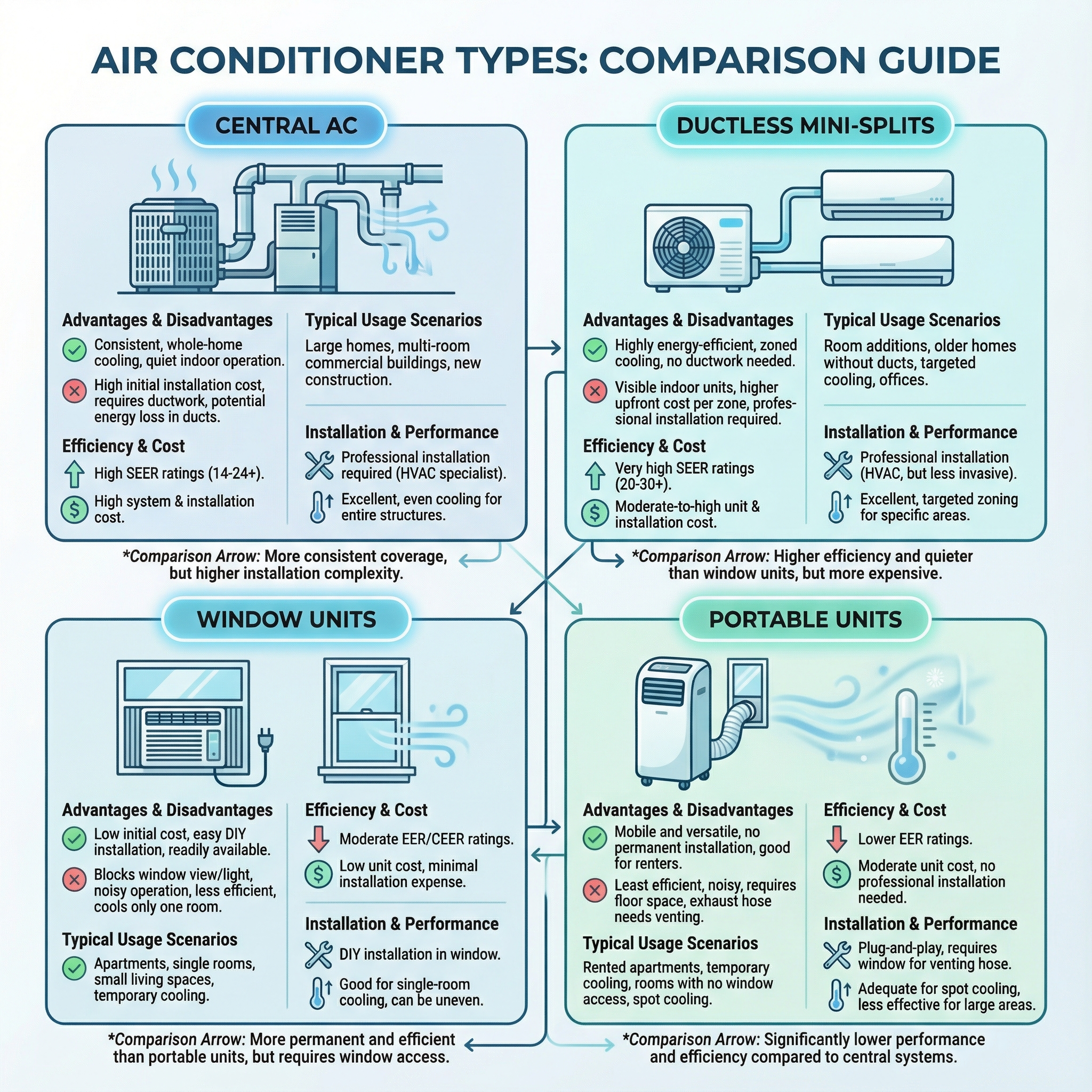
Choosing between ducted central HVAC and ductless mini split systems is ultimately about how your home feels every day. A ducted system uses a single air handler and a network of ducts to deliver heating and cooling to every room, usually under one thermostat. A ductless mini split connects an outdoor unit to one or more compact indoor air handlers, no ducts, with room by room control. From decades of field work we have seen that the right fit hinges on comfort fundamentals: steady temperatures, quiet operation, fewer drafts, and good humidity control, plus what it costs to run and how practical a retrofit will be.
In the sections that follow, we will compare:
- Comfort and zoning control
- Energy use and operating cost
- Installation time and retrofit impact on finished spaces
- Indoor air quality and humidity management
- Maintenance needs and reliability
- Real world scenarios by home type and climate
- A practical checklist to guide your decision
How Ducted (Central) Systems Work: Basics and Benefits
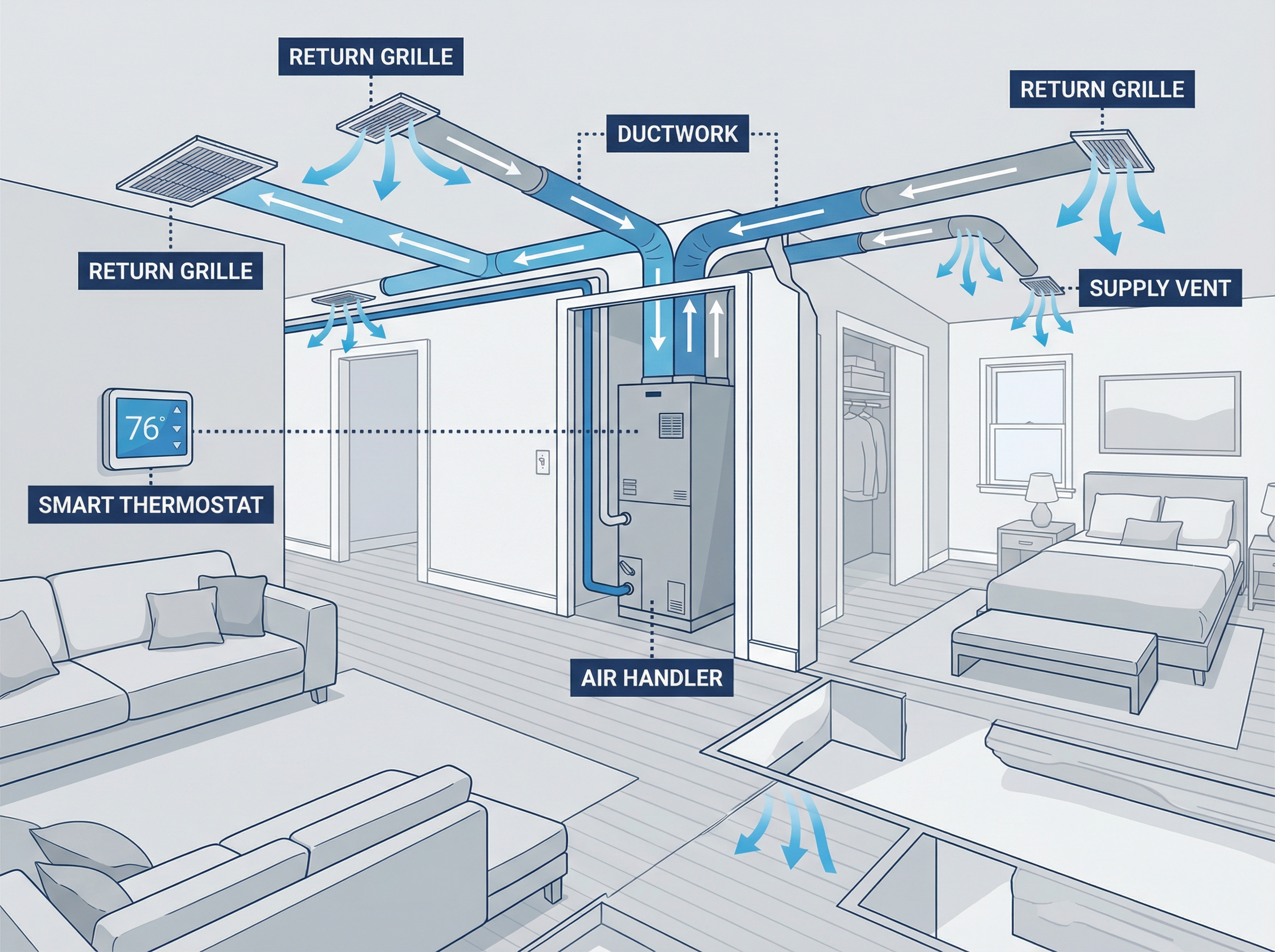
Central HVAC uses one thermostat to tell a single air handler when to heat or cool. The blower pulls air from return grilles, conditions it, then pushes it through supply ducts to rooms, where only grilles and registers are visible. Most components sit in attics, walls, or a mechanical room, so the look stays clean.
When quality ductwork already exists, a ducted replacement is often the most straightforward and cost-effective choice. In the field we see comfort issues from duct systems that are oversized, leaky, or poorly laid out. Bigger ducts are not automatically better, tight and properly sized usually wins. Many older systems are single-stage and create noticeable temperature swings. Upgrading to variable-speed or multi-stage equipment, paired with a variable-speed blower and well-designed, well-sealed ducts, delivers steadier, whole-home uniformity from a simple, single thermostat setpoint that many homeowners prefer.
How Ductless (Mini Split) Systems Work: Basics, Tech and Benefits
Ductless mini-splits pair an outdoor heat pump with indoor heads. Each head is its own zone, so bedrooms, offices, and sunrooms can run different set points independently. Inverter-driven compressors and variable-speed fans modulate output like a dimmer, not a switch. Result: less cycling, steadier temperature, and quieter operation. For appearance, heads mount on walls or ceilings, and newer slim wall units, ceiling cassettes, or short-ducted heads reduce visual impact while keeping zoning. In our experience at Budget Heating (BudgetHeating.com), that even comfort is what people notice first. Controls include remotes, wall controllers, and smartphone apps. With multi-head systems, verify integration with a central controller or smart home platform if you want unified control. Ductless shines in retrofits, older homes without ducts, additions, and trouble rooms, since installs are typically quicker and less disruptive, though per-zone costs can be higher.
Air Distribution, Drafts and Noise: Comfort Tradeoffs to Expect
Comfort hinges on how air is delivered and how loud the system is. We see drafts and hot or cold corners when supply and return locations, grille sizing, and airflow balance are off. High fan speed can feel like a box fan, while larger registers at lower velocity mix air quietly. With ductless, place heads to sweep the room, not blast beds or seating. Check dB ratings for indoor and outdoor units, and place equipment to shield bedrooms and living areas.
Measure and specify:
- Room cfm and number of supplies
- A return path for each closed-door room
- Register sizes to keep face velocity low
- Variable-speed capability and indoor/outdoor dB targets
Indoor Air Quality & Humidity Control: How Each System Impacts Comfort
IAQ basics: clean air needs filtration, clean distribution paths, and planned ventilation. In ducted systems, air quality rises or falls with filter quality and duct cleanliness; neglected ducts can recirculate dust, allergens, and mold. Ductless systems avoid duct-borne issues and use localized washable filters in each head, but those inserts still need routine cleaning to keep performance steady.
Comfort in hot, humid regions hinges on moisture removal, not just temperature. We prioritize latent load control: right-sized coils, proper airflow, and variable-speed operation that extends contact time at the coil. When indoor humidity lingers, add dedicated dehumidification or adjust controls to favor slower, longer runtimes. In tight homes, pair either system with mechanical ventilation, typically an HRV or ERV, to maintain fresh air and manage CO2 and moisture.
Temperature Consistency & Zoning: Which System Gives Better Control?
From our field experience, start by clarifying comfort goals up front: one uniform setpoint for the whole house, or room-by-room control.
A well designed ducted system, with balanced supplies and returns, excels at whole-home uniformity from a single thermostat. Add damper-based zones to segment floors or wings, but expect more controls and tuning.
Ductless delivers precision where you live: each head maintains its room tightly if the zoning layout matches room loads. Size every indoor unit to the actual room load, rather than assuming one oversized head can serve multiple rooms. It will not push air reliably around corners or through closed doors.
For everyday comfort, choose ducted when consistent temperatures everywhere matter most. Choose ductless when eliminating hot or cold rooms and individualized schedules are the priority.
Energy Use & Operating Costs: Efficiency Comparisons (SEER, SEER2 and Real Bills)
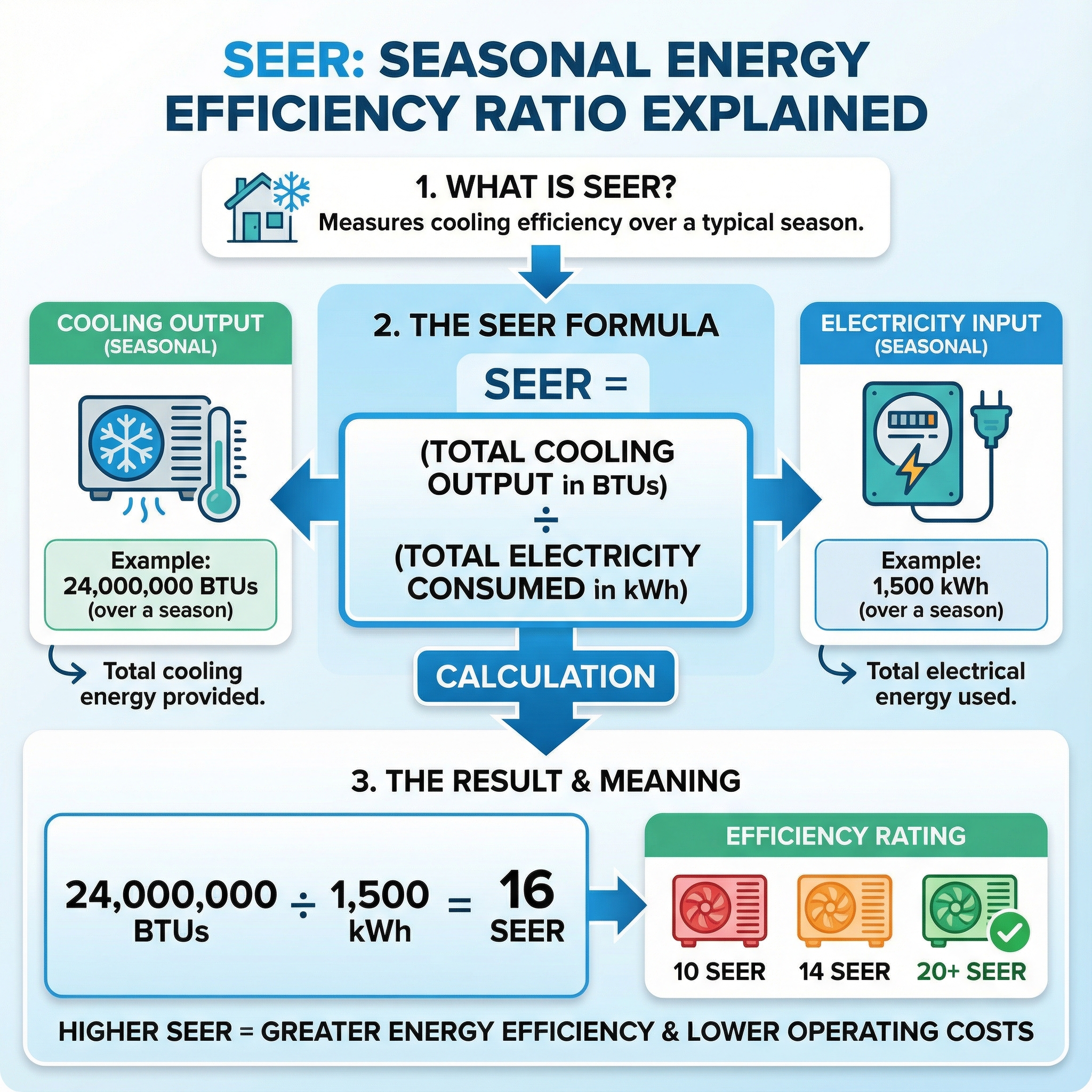
SEER and SEER2 measure how much cooling you get per unit of electricity over a season. Think of them like miles per gallon for AC. SEER2 uses the newer DOE 2023 M1 test that better reflects real external static pressure, so the same unit will show a SEER2 number that is typically 4 to 5 percent lower than its legacy SEER even though the physical efficiency is unchanged. Modern ducted split systems commonly land around 14 to 20 SEER, while many ductless mini splits start near 20 SEER and top models can exceed 30 SEER.
Regulatory context matters for both compliance and expectations. The 2023 rules introduced SEER2, EER2, and HSPF2 and raised minimums. Split heat pumps now require roughly 14.3 SEER2 and 7.5 HSPF2 nationwide, and air conditioner minimums vary by region.
Here is how that shows up on real bills. Using a $1,500 annual cooling bill at 10 SEER as a baseline, upgrading to 14 SEER can save about $450 per year, 18 SEER about $750, and 22 SEER about $975. In our experience at Budget Heating (BudgetHeating.com), the biggest swings come when you also tackle distribution losses and zoning.
Duct losses are a hidden efficiency penalty. Leaky or attic located ductwork often wastes 25 to 30 percent of delivered cooling. Ductless systems avoid those losses by delivering air directly to the room, use high SEER inverter compressors, and let you cool only the spaces you occupy. In practice, that zoning typically trims another 20 to 40 percent compared with a typical central system.
Installation & Retrofit Considerations: Time, Cost and Disruption
A smooth install starts with a clear plan. Before choosing equipment, verify the site so you know the true scope, timeline and potential tradeoffs.
- Design and sizing: require Manual J room by room load calculations, Manual S equipment selection and Manual D when ducts are involved to prevent oversizing and short cycling.
- Ducts: assess condition, accessibility and leakage. Note any sealing, replacement or balance work that could add time and cost.
- Electrical: confirm panel capacity and required dedicated circuits for the outdoor unit, and identify any subpanel or wiring upgrades.
- Routing and finishes: plan line set and condensate paths, wall or roof penetrations and surface repair or paint touch ups.
Typical timelines: ductless installs are often done in about one day for straightforward layouts. Central systems commonly take 2 to 5 days due to duct work and more on site labor.
Installed costs: ductless mini split systems commonly run about $3,000 to $8,000+, central split systems roughly $3,500 to $7,000. Compare full installed costs including electrical work, duct repairs and finishes, and ask about rebates, tax credits and regional incentives. In our experience at Budget Heating (BudgetHeating.com), panel upgrades and hidden duct leakage are the most frequent drivers of extra time and cost.
Maintenance, Reliability and Tradeoffs: When One Option Isn’t the Best
In our experience, no single system is universally better. Proper design and sizing drive results. Modern multi zone mini splits can serve entire homes, not just one room, and many indoor units are slim or cassette style, so they are not automatically an eyesore.
Owner tasks, safe to handle:
- Clean or replace accessible filters regularly, whether at each ductless head or a central return.
- Keep outdoor units clear of debris.
- Watch for odd noises, odors, or weak airflow.
Pro-only work: annual tune-ups, refrigerant diagnostics or charging, electrical repairs, duct sealing and airflow balancing, plus combustion safety checks. Refrigerant and high voltage are hazardous, and furnaces carry carbon monoxide risk. Use CO detectors and call pros for suspect conditions.
Tradeoffs to consider: Ducted systems add duct cleaning, sealing, and balancing, which increases maintenance complexity and cost. Ductless systems require filter cleaning at every head and an annual professional check, which can be tedious in homes with many rooms. If you want one central filter and minimal visible indoor equipment, a well designed ducted setup fits better. If avoiding duct upkeep is the priority, ductless is often the cleaner path.
Decision Checklist & Summary: Which System Boosts Comfort More?
There is no universal winner. Ductless mini splits usually deliver superior room by room comfort, precise modulation, and energy savings when ducts are poor or rooms are problematic. High quality ducted systems excel at seamless, whole home uniformity when good ducts already exist.
- Choose ducted if you want a single, hidden system and you already have good ducts.
- Choose ductless for additions, older homes without ducts, problem rooms, or when individualized control and operating savings matter most.
Top questions for your installer:
- Will you perform Manual J room by room load calculations?
- How will you handle Manual S equipment selection and, for ducted jobs, Manual D?
- Will you test duct leakage and balance airflow?
- What is the heat pump low ambient performance?
- What are the warranty, parts, and service terms, and the full installed cost breakdown including electrical and any duct remediation?
Every home is different, and the right choice comes from good sizing and planning. If you want a straight answer and a right sized solution, our team will help you compare options and pricing clearly.
- Get a Custom Quote
- Talk to Our Team by phone
- Shop Ductless Mini Splits
- Shop Central Ducted Systems