




Why High Rise Apartments Need Tailored HVAC Design
High rise apartments are not just taller versions of low buildings. In tall towers we routinely see air behave like it does in a chimney, rising through shafts and creating stack effect that pushes and pulls between floors. Solar exposure varies by facade, shared walls and ceilings transfer heat, occupancies are dense and stacked, and mechanical space and access are limited. One size fits all systems rarely handle these competing forces efficiently.
Custom HVAC for high rises means we engineer around the building's real loads, orientation, and use patterns. That can include right sized central plants or distributed heat pumps, zoning by exposure and floor, pressure control at doors and vertical shafts, dedicated outdoor air systems for precise ventilation, and controls that stabilize temperatures from floor to floor. The payoff is less energy waste, steadier room conditions, better ventilation control, and lower operating costs.
When thoughtful design is paired with proactive commissioning and routine maintenance, systems run closer to design efficiency, equipment life is extended, emergency repairs are reduced, and occupant comfort stays consistent over the long term. From the sunny corner on the 20th floor to a shaded interior on the 5th, a tailored approach keeps conditions predictable and comfortable.
Key Challenges in High Rise HVAC: Stack Effect, Vertical Distribution & Access
High-rise HVAC is not a scaled-up low-rise system. Stack effect, like a chimney, drives pressure imbalances that move air between floors, so risers need tight control and pressure zoning. Loads vary by exposure, with top floors overheating while perimeter zones run cold. Mechanical space is tight, shafts compete with elevators, and roof or terrace access sets equipment size and service paths. Acoustics and vibration control are critical in stacked occupancies to prevent noise complaints. Built-for-high-rise means planning vertical distribution, access, and pressure from day one.
Best System Types for High Rise Apartments: VRF, DOAS, Rooftop & Ductless Options
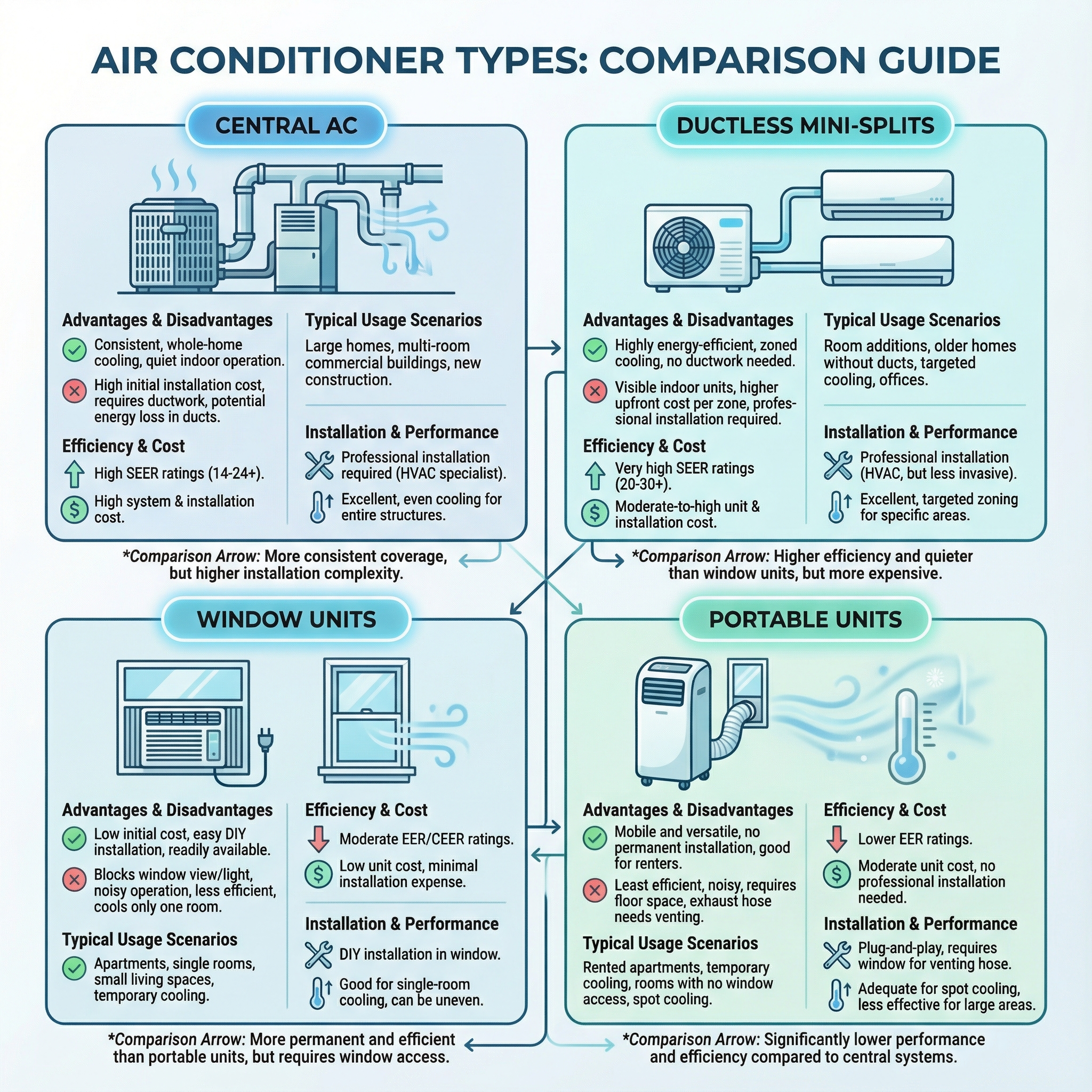
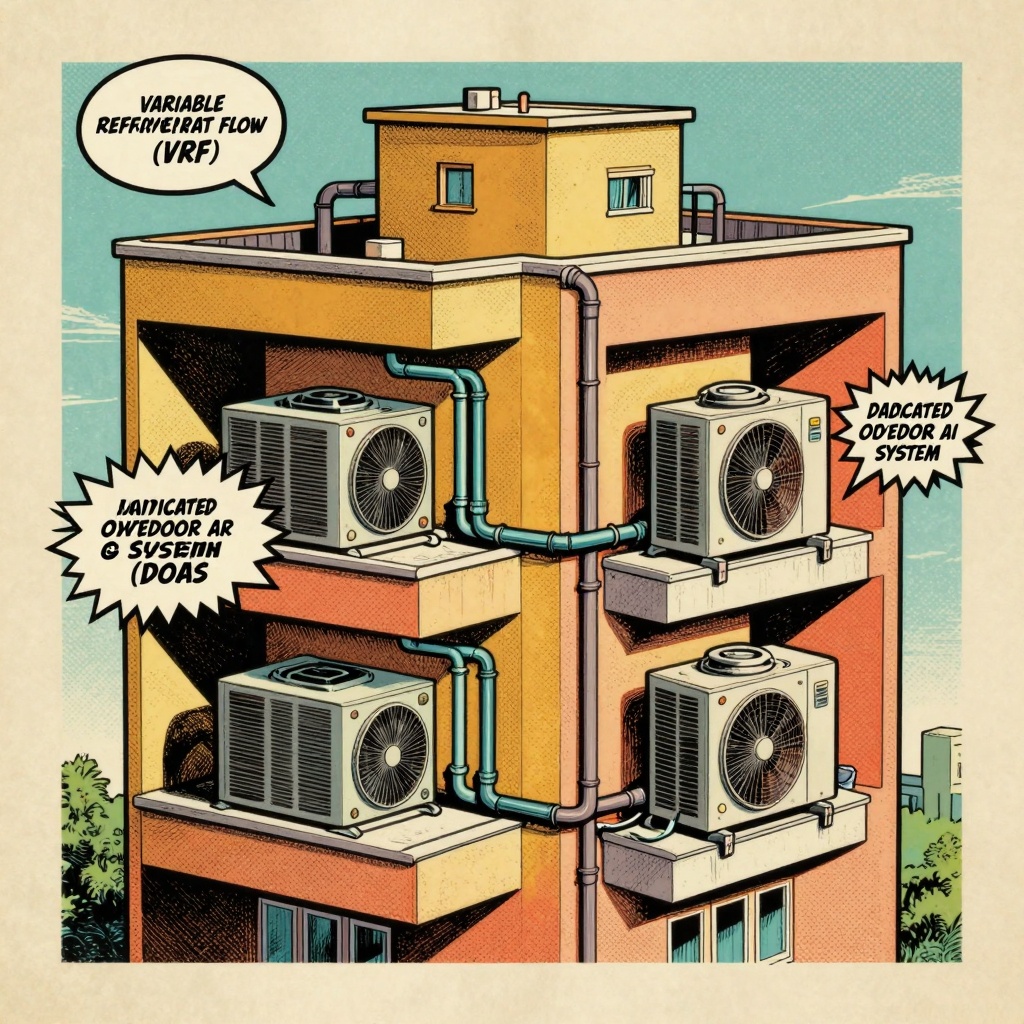
VRF/VRV is a multi split heat pump that modulates refrigerant to many indoor units, great when shafts are tight and electric decarbonization is a goal. DOAS is a dedicated outdoor air system that delivers filtered, dehumidified ventilation so terminal units handle mostly sensible loads and pressurization, helpful with stack effect. Pairing VRF with DOAS suits tall towers with limited mechanical space and a premium on zoning and part load efficiency.
Other fits: in unit ductless mini splits for lower first cost and simple installs, fan coils with a central plant for large buildings, water source heat pumps for flexible zoning on shared loops, and packaged rooftop units for mid rise roofs with ample area. Heat recovery can be added through enthalpy wheels or plate exchangers on DOAS, and through heat recovery chillers or heat pump based recovery at the plant level to cut energy. In our experience at Budget Heating (BudgetHeating.com), final selection balances height, mechanical space, lifecycle cost, and decarbonization goals.
When Custom High Rise HVAC Is Not the Right Fit (Tradeoffs & Alternatives)
Custom central plants can be excellent, but they are not always the smart choice. The tradeoffs we see most often: higher upfront cost, longer timelines, and potential structural work that historic or tight mechanical spaces simply cannot absorb. Think of it like a tailored suit, great when you can commit to fittings, but not ideal for every wardrobe.
- Very cold climates: Heat pump output drops significantly below about 25 F. Hybrid systems with gas backup or full gas furnaces are often more reliable and economical in those conditions.
- Space or historic constraints: Full central upgrades may be too disruptive. VRF or mini split systems, or fan coil units paired with DOAS, deliver strong gains with far less structural impact.
- Limited capital: Custom designs carry higher upfront costs. Simpler packaged systems or a phased retrofit can be more feasible.
Avoid misconceptions that hurt outcomes: shared ventilation alone is not enough for IAQ, humidity control matters, bigger equipment is not better, and add on IAQ tools are not optional without an assessment.
Retrofit vs New Construction: Planning, Coordination & System Selection
We start with ASHRAE based load calculations, a lifecycle cost review and a refrigerant impact check, then align early with architectural, structural, fire protection and elevator teams. That coordination keeps shafts and ceiling space clear and avoids redesigns.
For new towers, an integrated central plant with DOAS, or floor by floor plant with heat recovery, usually offers the best mix of efficiency and maintainability. In retrofits, VRF or mini splits, or keeping fan coils while adding a DOAS, deliver major gains with minimal structural change.
- Confirm permits, building rules, installer access and required clearances.
- Fix outdoor and shared component locations for code compliance and serviceability.
- Use pilot floors, phased work or targeted upgrades to validate results and control capital.

Design Considerations: Zoning, Pressure Control & Vertical Distribution
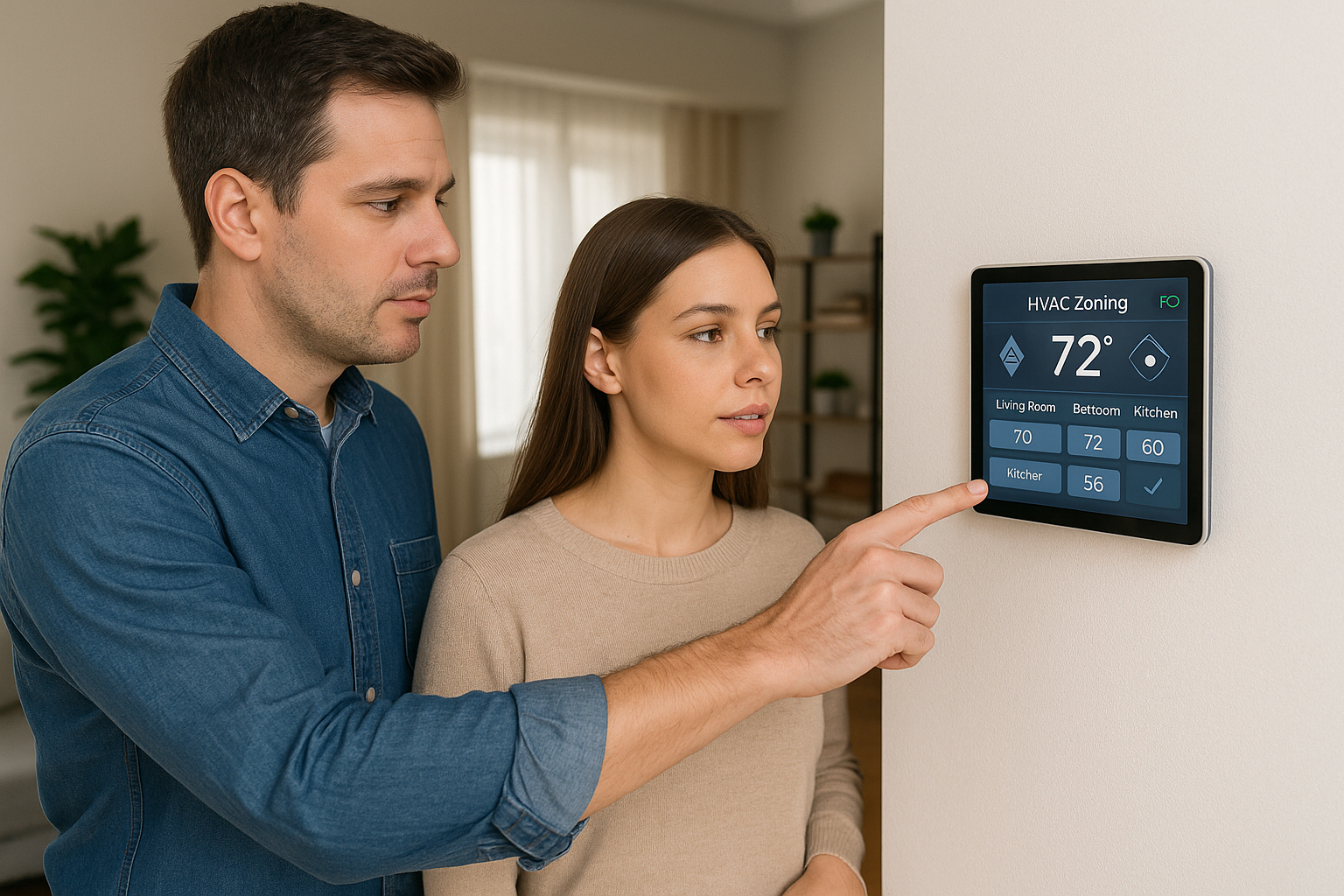
In tall, stacked buildings, zoning is the first lever for comfort and efficiency. Break spaces by unit, exposure, and use type, then give each zone local control. Specify advanced strategies at design, scheduling, setbacks, demand response, and sensible overrides, so operators condition only what is occupied. Stack effect pushes warm air up and pulls cold air down, like a chimney, so plan relief and transfer paths, stage ventilation, and use pressure control to keep doors easy to open and corridors neutral. Efficient, code-compliant riser and shaft layouts simplify refrigerant and piping runs and keep maintenance safe. Call out silencers, flexible connections, and vibration isolation early to prevent noise complaints. In our experience at Budget Heating (BudgetHeating.com), these choices avoid energy waste and preserve tenant comfort from lobby to penthouse.
Energy Efficiency, SEER2 Rules & Lifecycle Cost Considerations
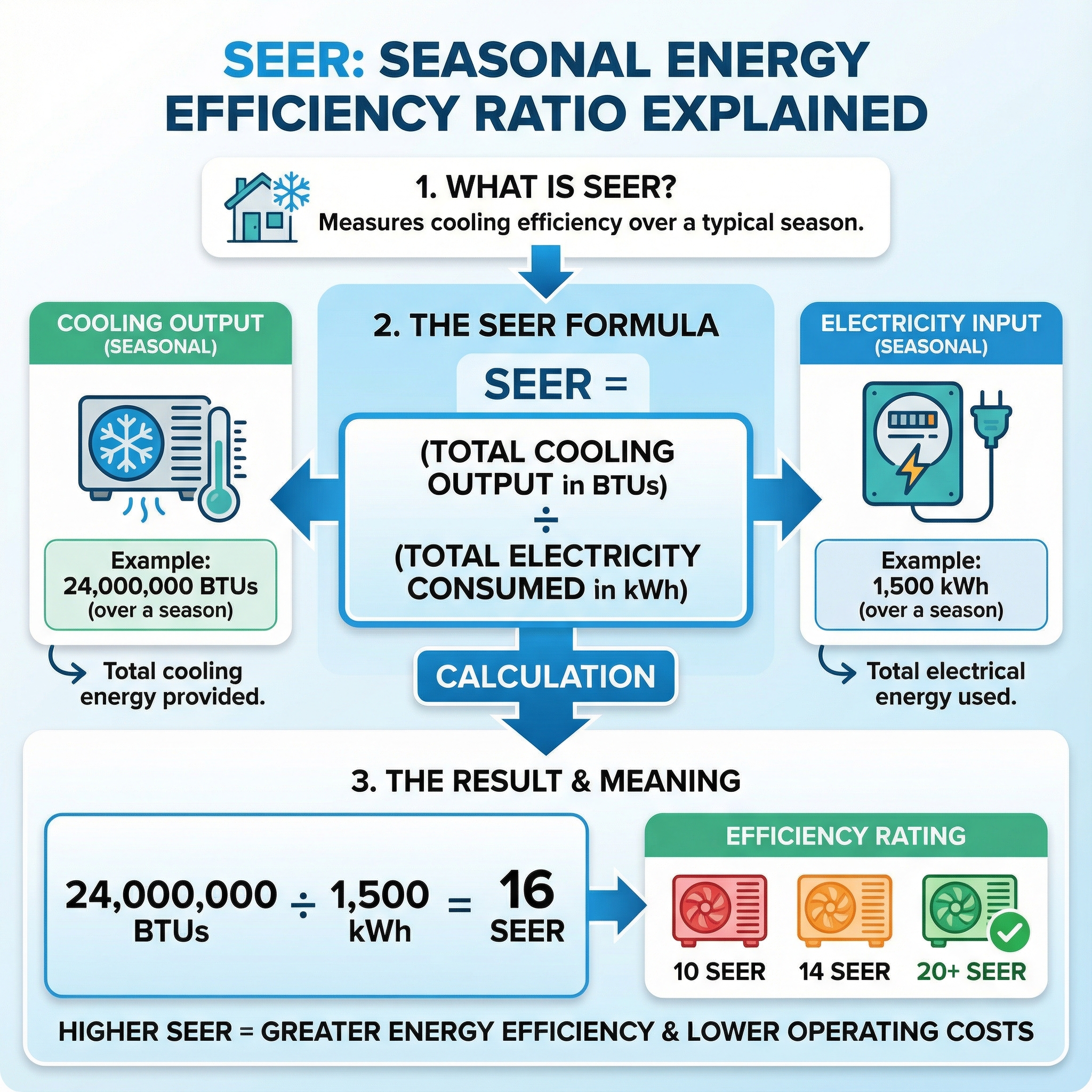
SEER2 and HSPF2 replaced legacy metrics in 2023. SEER2 yields more realistic field values, and new regional minimums now apply. Match the DOE region and capacity tier, North, Southeast, or Southwest. In some regions EER2 also targets high temperature performance. Variable-speed compressors and fans excel at part load, common in apartments, reducing kWh, peak demand, and humidity. Climate drives design: humid and mixed-humid need active dehumidification, hot-dry prioritizes sensible cooling, cold climates favor variable-speed with precise terminals. Upgrading beyond code minimum can trim cooling electricity 20 to 40 percent, depending on climate and runtime. Life-cycle cost is the yardstick for justifying higher first cost in high-rise duty cycles.
Improving Indoor Air Quality and Ventilation in Multi Family Towers
In tall buildings with limited window use, clean air comes from integrating four pieces: right sized ventilation, high efficiency filtration, humidity control, and UV coil sanitation. In our field work, high rises perform best when outdoor air delivery, often via a DOAS, dilutes pollutants and manages pressure between spaces. MERV appropriate filters capture fine particles from dust, smoke, and allergens. Dehumidification holds indoor relative humidity near 40 to 60 percent to discourage mold. UV at the coils curbs biofilm so heat exchange stays efficient. Together these steps reduce allergens, dust, smoke, and microbial growth, improving health and lowering complaint and turnover risk for owners.
- Install MERV appropriate filters with easy access for routine replacement.
- Commission ventilation and balance airflows across floors and stacks.
- Use dehumidification controls to maintain 40 to 60 percent RH.
- Consider UV lights for coil sanitation where moisture is persistent.
- Residents should maintain in unit filters, run portable purifiers or dehumidifiers as needed, and report IAQ issues promptly. Building level IAQ needs professional design and commissioning.
Maintenance, Service Access and Life Safety for High Rise HVAC
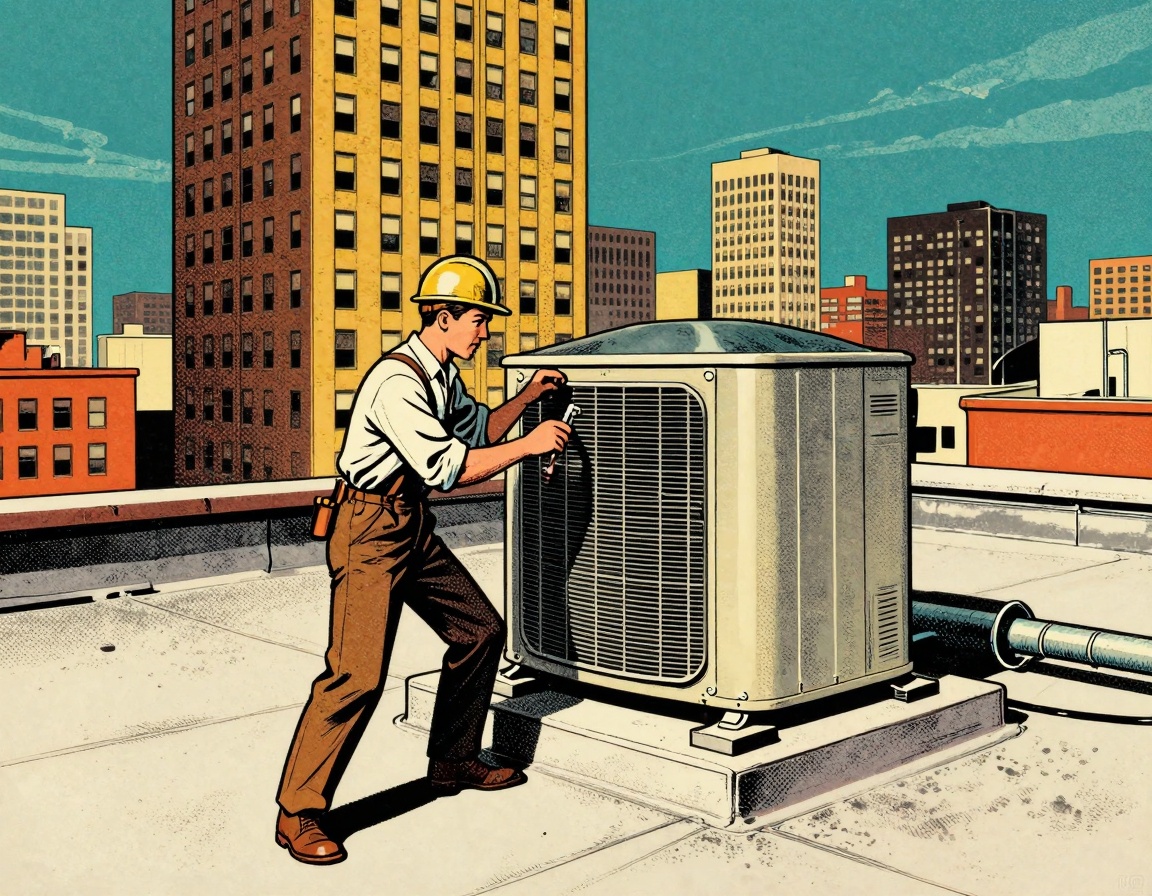
We recommend pro service twice per year (pre cooling and pre heating), filters every 30-90 days, condensate cleaning every 3-6 months, and IAQ accessories annually. Residents should only replace or clean filters, vacuum grilles, keep clearances, and test smoke/CO detectors monthly. Do not open cabinets, touch refrigerant lines or electrical panels, or block pressurization or fire dampers. Treat gas, CO, refrigerant, or water events as emergencies. For refrigerant, electrical, combustion, controls, or restricted areas, notify building management and call a licensed pro. Obtain written approval and coordinate with HOA/building management before equipment changes.
Bringing It Together: Commissioning, Redundancy & Choosing the Right Partner
High rise HVAC is orchestration of comfort, IAQ, energy, serviceability, space, and life safety. Commissioning, ongoing performance monitoring, and preventive maintenance preserve efficiency and occupant satisfaction. Use lower GWP refrigerants when practical, add leak mitigation, and design redundancy for pumps, central plants, and critical ventilation with backup power. Integrate controls with fire and smoke strategies, meet NFPA and local codes, and verify jurisdictions early. Costs and payback vary by project, so a custom lifecycle model is essential. With 30+ years in HVAC, our team will map a code ready, reliable path and support you.
- Get a Custom Quote, wholesale pricing made accessible
- Talk to Our Team, U.S.-based phone support
- Request a custom HVAC assessment, site specific loads, refrigerant impact, lifecycle model
- Shop Commercial Equipment