




Black Friday & Cyber Monday HVAC Deals: Can Holiday Sales Actually Save You Money?
Holiday HVAC sales can deliver real savings, but they are not automatically the right move for every home. In our experience, Black Friday and Cyber Monday bring some of the lowest prices of the year on systems and services, driven by manufacturer promotions, contractor sales targets, and slower shoulder season workloads. Reputable contractors often bundle extras like maintenance or air purification. Still, look beyond the sticker price: weigh installation scope, warranty coverage, included service, and expected energy use to understand total cost of ownership.

Are Holiday HVAC Sales Real? What to Expect from Black Friday and Cyber Monday
Holiday HVAC sales are real, but the value rides on the bundle. We often see discounts that include equipment, installation, maintenance, financing, and extras. Like a prix fixe menu, the package matters more than the sticker price.
- Promotion types: percent off systems, Buy 1 Get 1 Free maintenance that locks in two years at about half cost, extended warranties, smart thermostats, and air purification add-ons.
- Bundle value: service and warranty perks can trim lifetime costs more than a small price cut.
- Watchouts: advertisements vary in transparency. Low upfront prices can hide inferior models, limited warranties, or shortcuts in design and installation. Verify brand reputation, efficiency ratings, scope of work, and every inclusion in writing.

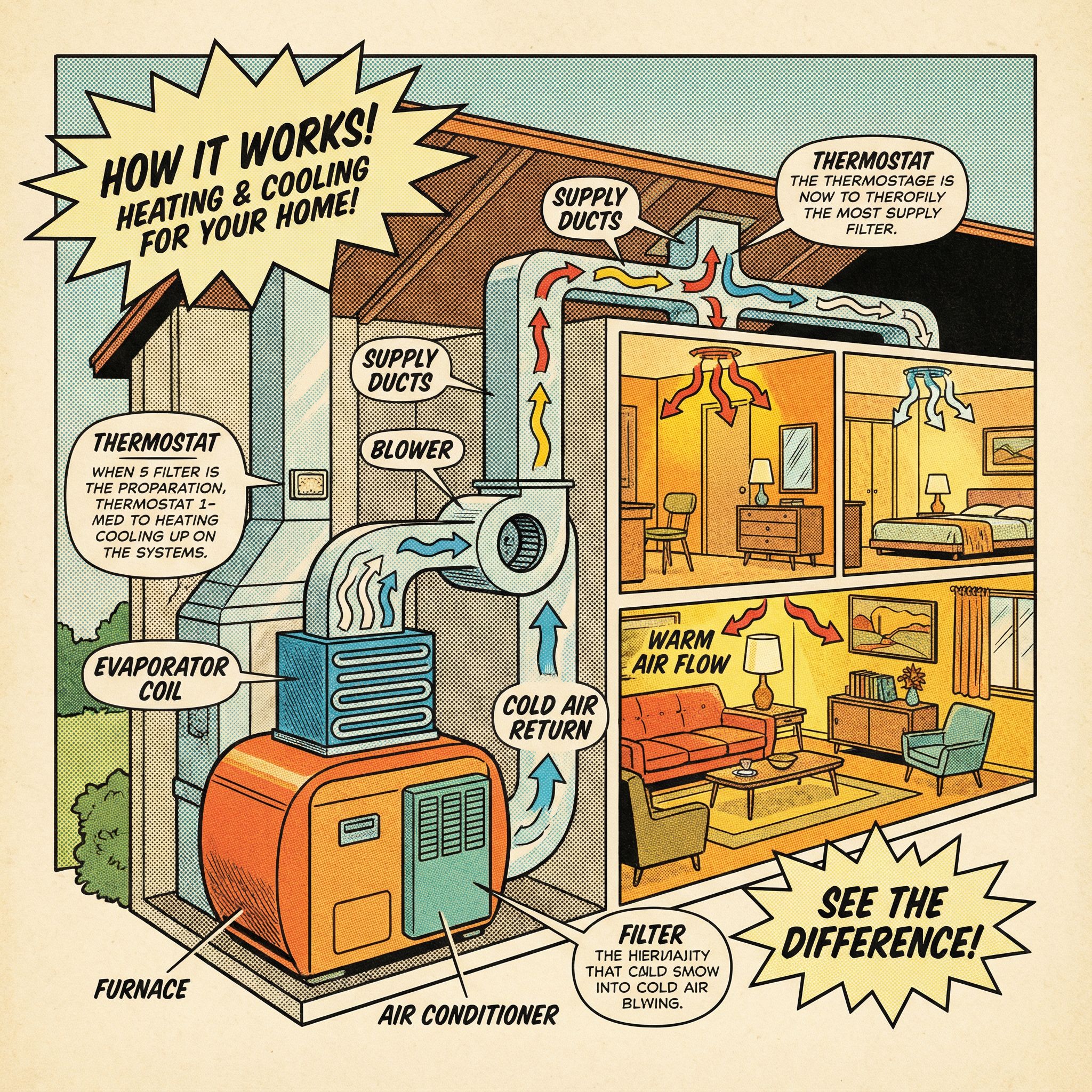
Typical Discounts: How Much Can You Actually Save on a New HVAC System?
Do not judge by sticker price. Real value comes from total cost of ownership: equipment plus installation, included accessories, warranty terms, energy use, and likely maintenance over 15 to 20 years.
- Instant equipment promos: commonly 5 to 15 percent off, higher on closeouts.
- Bundled extras: thermostat, pad, line set, surge protection, or extended warranty, often a $200 to $800 swing.
- Efficiency savings: moving from 14.3 to 16 to 18 SEER2 can cut bills 10 to 25 percent, roughly $150 to $600 per year in high usage homes.
Compare apples to apples, same SEER2 or HSPF2, accessories, and installation scope. In our experience at Budget Heating (BudgetHeating.com), stacking holiday promos with rebates or tax credits can outperform waiting, provided you will stay long enough to recover the upgrade. A $1,000 higher efficiency option that saves $250 per year pays back in about four years.
Key Factors to Check Before Buying on a Holiday Sale (Quotes, Sizing, Ducts, Warranties)
Use this checklist before you sign during a holiday sale. It keeps the focus on total value, not just the headline discount.
- Quotes and pricing: Get 2 to 3 written quotes with exact model numbers, AHRI matched pair numbers, equipment tonnage, and a clear scope (duct repairs, line set, pad, electrical, condensate, permits). Demand an out the door price with taxes, fees, and adders, plus promo dates, in stock status, rain check policy, and any restocking or cancellation fees. In our experience at Budget Heating (BudgetHeating.com), apples to apples quotes prevent bait and switch.
- Sizing and design: Require Manual J load calculation, Manual S equipment selection, and Manual D when ducts are added or modified. Align to climate needs, cold climate heat pump, dual fuel, or high EER2 for extreme heat.
- Ductwork: Inspect leakage, sizing, insulation, and static pressure. Plan sealing, resizing, or added returns.
- Electrical and gas: Confirm panel capacity, breaker sizes, dedicated circuits, heat strip sizing, and surge protection. For gas, check line sizing, venting type and condition, combustion air, and CO detectors.
- Placement: Verify indoor clearances, outdoor pad and drainage, HOA limits, and potential noise impact.
- Efficiency and comfort: Compare SEER2, EER2, HSPF2, AFUE, and ENERGY STAR tiers. Consider variable or two stage, dehumidification, sound levels, MERV 11 to 13, UV or ERV or HRV, and smart thermostat fit.
- Installer, warranties, and maintenance: Use licensed, insured, preferably NATE certified pros. Confirm commissioning, registration windows, parts and labor coverage, and transferability. Plan routine maintenance to keep coverage valid.
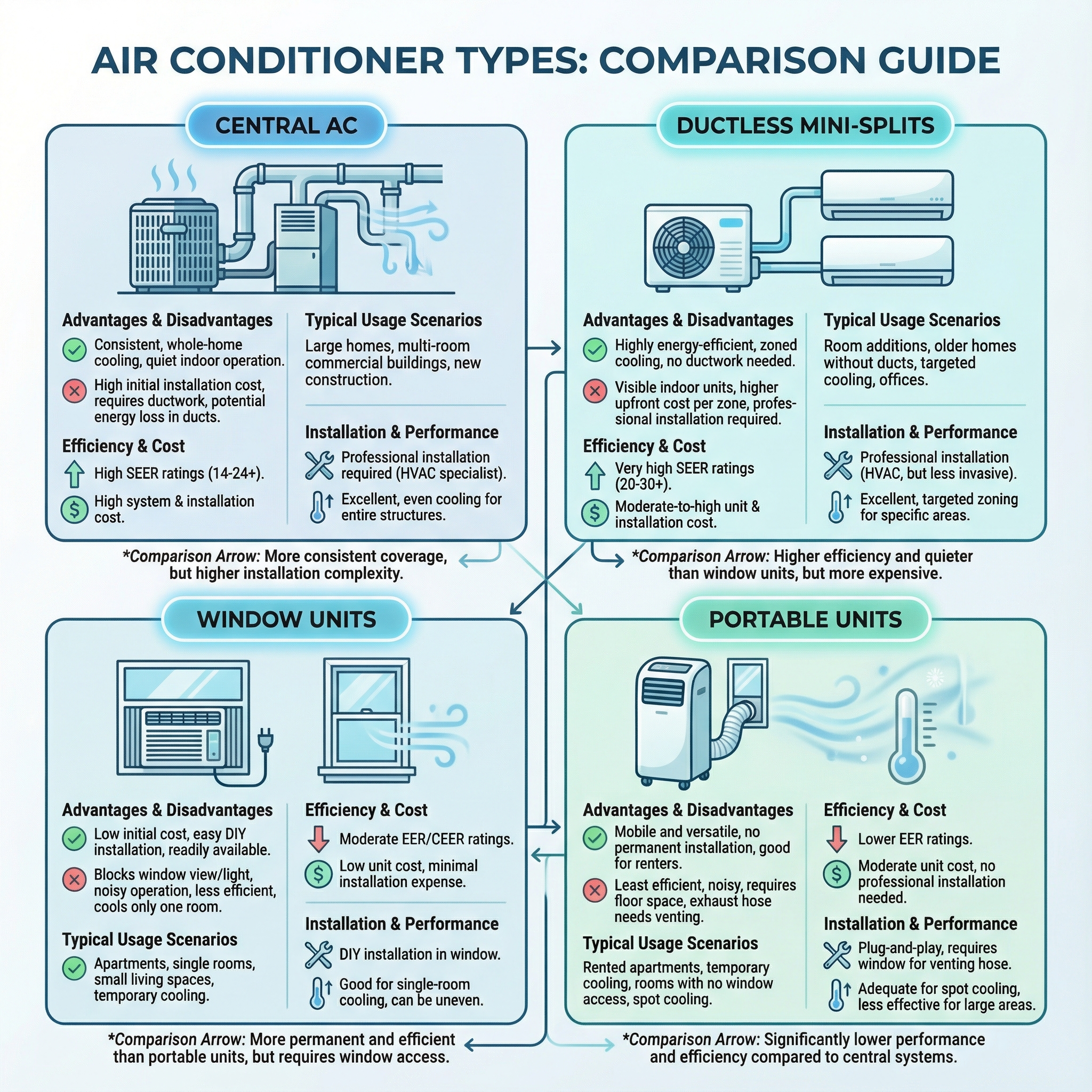
- Ductless and incentives: For mini splits, match heads to room loads, plan line set routing, and condensate. Verify and stack rebates and tax credits.
- Avoid pitfalls: Do not chase the lowest price or flashy freebies, do not ignore ducts, and do not buy equipment online then hire the cheapest labor. Verify minimum regional ratings and the installer’s permitting.
Financing Options During Black Friday: Deferred Interest, Low APRs and What to Watch For
Holiday deals often advertise 0% or low APR, but the fine print decides the real cost. Review the APR after the promo, term length, any deferred-interest clause, fees (origination or promo), and prepayment penalties. With deferred interest, missing payoff by the promo end can trigger retroactive interest on the original balance, and minimum payments rarely retire the balance in time.
Many contractors run special financing during holiday sales. Confirm whether it stacks with instant promotions, manufacturer or utility rebates, and federal tax credits. Post-purchase rebates and tax credits usually stack, while instant discounts are sometimes either-or. Over 30 years, we have seen well-structured stacks cut the effective net cost meaningfully.
New System vs Repair: Financial and Comfort Considerations to Help Decide
From field experience, replacement makes sense when your system is roughly 10 to 15 years old, uses obsolete refrigerant like R 22, breaks down often, struggles with comfort, or needs a major repair that costs 30 to 50 percent of a full replacement. That is the core cost versus repair rule of thumb. If the unit is younger and a needed fix is small, repair usually wins.
- Watch for signals: rising energy bills, rooms that are too hot or cold, excessive noise, and poor humidity control. These point to underperforming equipment or ducts.
- Estimate energy savings: compare a new system’s projected annual use to your current unit using your actual run hours and local utility rates.
- Run payback math: for base efficiency versus higher efficiency, divide the price difference, including typical Black Friday pricing, by the annual savings to get simple payback or ROI.
- Include ongoing costs: filters, routine maintenance, optional extended labor coverage, and any duct sealing or balancing needed.
Replacement thresholds are financial and comfort based, not just age. Think of it like a car, you compare fuel use and upkeep, not just sticker price. Scenarios where replacement is not the best choice: the system is under about 8 to 10 years and the repair is minor, you plan to move within a year or two, or the real problem is duct leakage or airflow. Alternatives that fit better then are targeted repairs, duct sealing and balancing, or controls upgrades.
Installation Costs, Timeline and Why Proper Installation Matters for Holiday Purchases
- Logistics and design: clear access, secure pets, parking, floor protection; confirm thermostat compatibility and Wi Fi setup, line set routing and wall penetrations, condensate drain path, outdoor placement. Verify who pulls permits and schedules inspections. Use licensed, insured contractors who follow local codes; avoid offers that skip permits, duct or electrical upgrades, or condensate safety.
- Commissioning with the installer present: verify charge by superheat or subcool, airflow CFM per ton, static pressure, temp split; test all modes; confirm safety devices.
- Paperwork to keep: AHRI certificate, Manual J/S/D, commissioning data, warranty registration, permit or inspection results, and model and serials.
- Maintenance: set filter reminders and the first maintenance visit; plans twice yearly for heat pumps and once for cooling only preserve efficiency and document care. Many warranties require proof; schedule promo follow ups in years 1 to 2 to catch early issues.
Rebates, Tax Credits and Utility Incentives: Stackable Savings to Check Before You Buy
Holiday promos can stack with federal, state, utility and manufacturer incentives, but only if the equipment meets rules. Since 2023, eligibility is tied to SEER2, EER2 and HSPF2 ratings under the DOE M1 test. Split central AC must meet regional minimums, roughly 13.4 SEER2 in the North and higher thresholds in the Southeast and Southwest. Heat pumps saw a nationwide efficiency bump in 2023. Rebates often require ENERGY STAR tiers. Climate matters, Southwest programs value EER2, the Southeast may favor humidity control specs, and northern markets require cold-climate heat pumps. Watch caps, forms and deadlines. Clearance models must meet local minimums to be installed. Align Black Friday or Cyber Monday buys with current and upcoming standards, and confirm stacking rules.
Energy Efficiency (SEER2/HSPF2/EER2) and Long Term Operating Savings
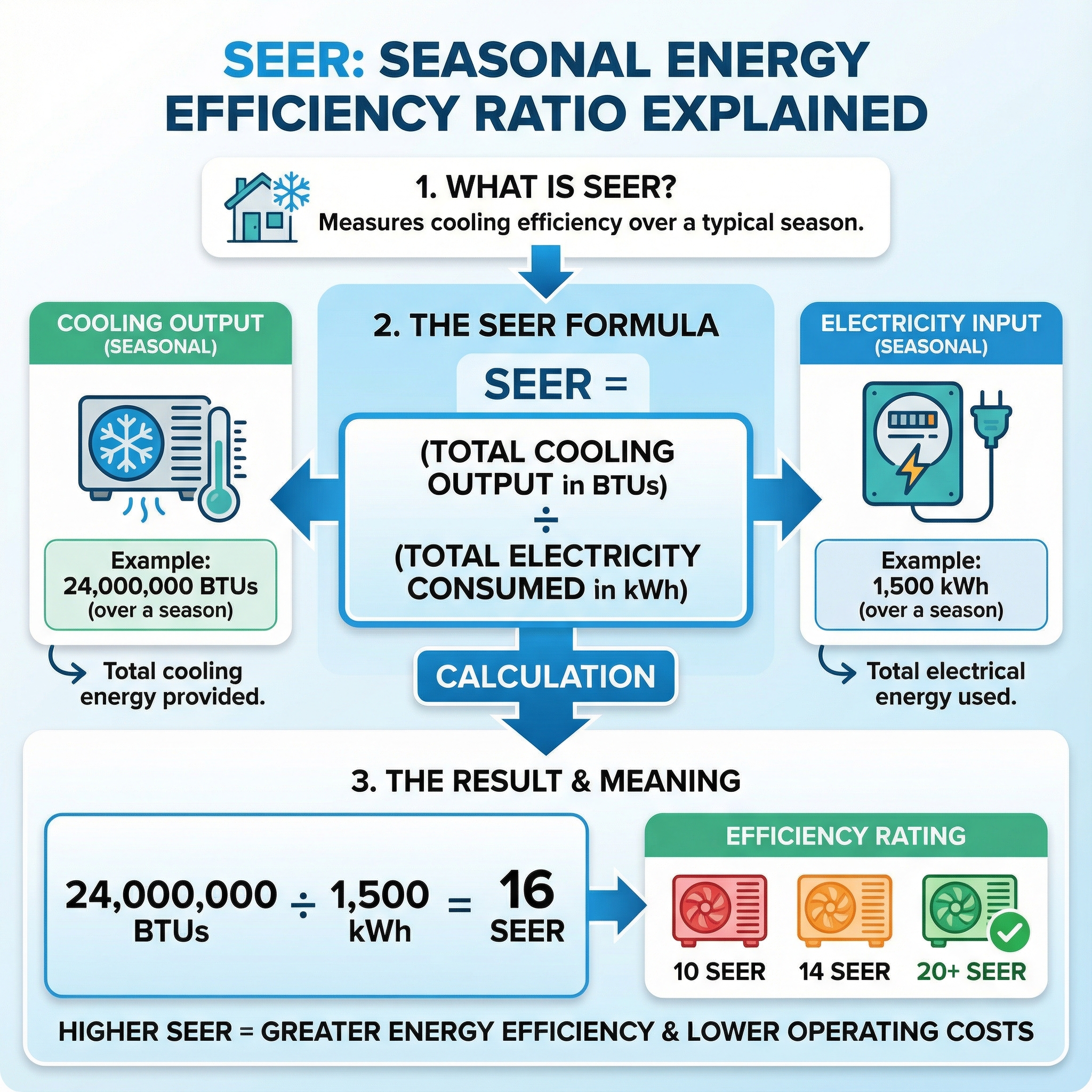
SEER2 is the seasonal efficiency of cooling, essentially miles per gallon for air conditioning. Higher SEER2 means the system uses less electricity to deliver the same cooling, which lowers operating costs.
As of January 1, 2023 the industry moved to SEER2 under the DOE M1 test. SEER2 values are not directly comparable to legacy SEER. Pre 2023 SEER maps only roughly to SEER2, so always compare SEER2 to SEER2. Heat pumps carry SEER2 for cooling and HSPF2 for heating, and the 2023 updates raised heat pump baselines nationwide. With 30+ years in HVAC, we treat SEER2 and HSPF2 as the common yardsticks when judging offers.
Minimums vary by region and sometimes by capacity: in the North the central AC split standard is about 13.4 SEER2, and in the Southeast and Southwest many smaller systems must meet about 14.3 SEER2. In hot dry Southwest climates, EER2 matters because it reflects peak efficiency at high temperatures, so confirm EER2 compliance.
A higher SEER2 unit draws less power per unit of cooling. The more you run AC, the more you save monthly. Holiday deals often sit at or just above these minimums, so verify the EnergyGuide label or AHRI certificate and make apples to apples comparisons.
Bottom Line: Should You Buy a New HVAC System This Black Friday/Cyber Monday?
If your system is unreliable or 10 to 15 years old, a holiday upgrade makes sense. The deal only pays off if the install is right: use licensed pros who pull permits, commission the system, and stand behind their workmanship. Before you buy, lock in written terms: installation dates, included extras, payment or financing, warranty coverage and registration, and the maintenance required to keep it valid. That turns sale pricing into lasting comfort and lower operating costs.
We know how to lock this down. With 30 plus years of online HVAC experience, our team will size correctly and document the details so the value survives install day.
- Get a Custom Quote
- Talk to Our Team: U.S.-based phone support with real HVAC techs
- Shop Heat Pumps, AC and Furnaces: wholesale pricing, free shipping on most systems, financing with Affirm
Frequently Asked Questions
-
Are Black Friday or Cyber Monday HVAC deals actually worth it?
Often yes. Holiday promotions typically bring real seasonal price drops and useful bundles, like equipment plus install materials and a first-year tune up. The true value depends on your system’s age and condition, whether you can stack utility rebates, tax credits, and financing, and what is included in the install and warranty. We recommend confirming efficiency ratings meet current standards, checking that labor and parts warranties are clearly stated, and making sure the quoted scope matches your home’s needs.
-
How do I decide whether to repair or replace my HVAC before the holidays?
We suggest leaning toward replacement if the system is 10 to 15 years old, uses R-22, has frequent breakdowns, or if a single repair exceeds 30 to 50 percent of replacement cost. Other clues include rising utility bills, uneven rooms, and humidity or comfort issues. To estimate payback, compare the price difference to new equipment against yearly energy savings. Modern systems often cut energy use 15 to 30 percent, so many upgrades recoup in 3 to 7 years depending on runtime and rates.
-
What must be included in an apples to apples written HVAC quote?
Insist on exact model numbers with the AHRI matched pair, stated tonnage and efficiency ratings, and a clear scope of work. The scope should cover duct changes, line set length, pad or stand, electrical disconnects and breakers, condensate handling, permits, and removal of old equipment. Require a total out the door price with taxes and fees, promo validity dates, and any freebies itemized with their normal value. Note warranty terms, registration steps, and whether load calculations and commissioning are included.
-
Can I stack utility rebates, tax credits and holiday promotions?
Often you can, but stacking depends on each program’s rules. Verify your chosen equipment meets the exact eligibility thresholds and that discounted inventory still carries valid AHRI ratings and current SEER2 or HSPF2 standards. Check caps per system and per calendar year, installation deadlines, and whether instant utility rebates can be combined with dealer discounts. Keep documentation ready, including AHRI certificates and serial numbers, and confirm who files the paperwork so you are not counting on savings you cannot claim.
-
Do I need a Manual J load calculation when buying an HVAC system on sale?
Yes. We recommend a Manual J load calculation and a Manual S equipment selection to size the system correctly. Skipping design steps risks oversizing or undersizing, which leads to short cycling, poor dehumidification, noise, and higher bills. Even a high efficiency unit will underperform if it is the wrong size. If ducts are involved, a Manual D check helps ensure proper airflow. A proper design preserves comfort and efficiency so a sale price does not cost you in long term performance.