




Why HVAC Needs to Be Different in Hot, Dry (Desert) Climates
In hot, arid regions, what counts as good HVAC changes. Loads are cooling dominated, indoor air is already dry, and outdoor dust pressures indoor air quality. The goal shifts toward strong sensible cooling, avoiding unnecessary moisture removal, protecting IAQ from dust, and cutting energy use through a long summer season.
Think of a home like a thermos set in the sun. The job is to slow heat gain and move heat out efficiently, while keeping the air comfortable without over drying it. We focus on equipment and controls that prioritize sensible cooling, settings that do not pull extra moisture from already dry air, and measures that keep dust from entering and circulating. Throughout, expect clear tradeoffs among comfort, IAQ, and energy use. This framing sets the stage for choosing features that match desert realities rather than a one size fits all approach.
High Efficiency Cooling for Desert Heat: SEER/SEER2, EER/EER2 & Inverter Technology
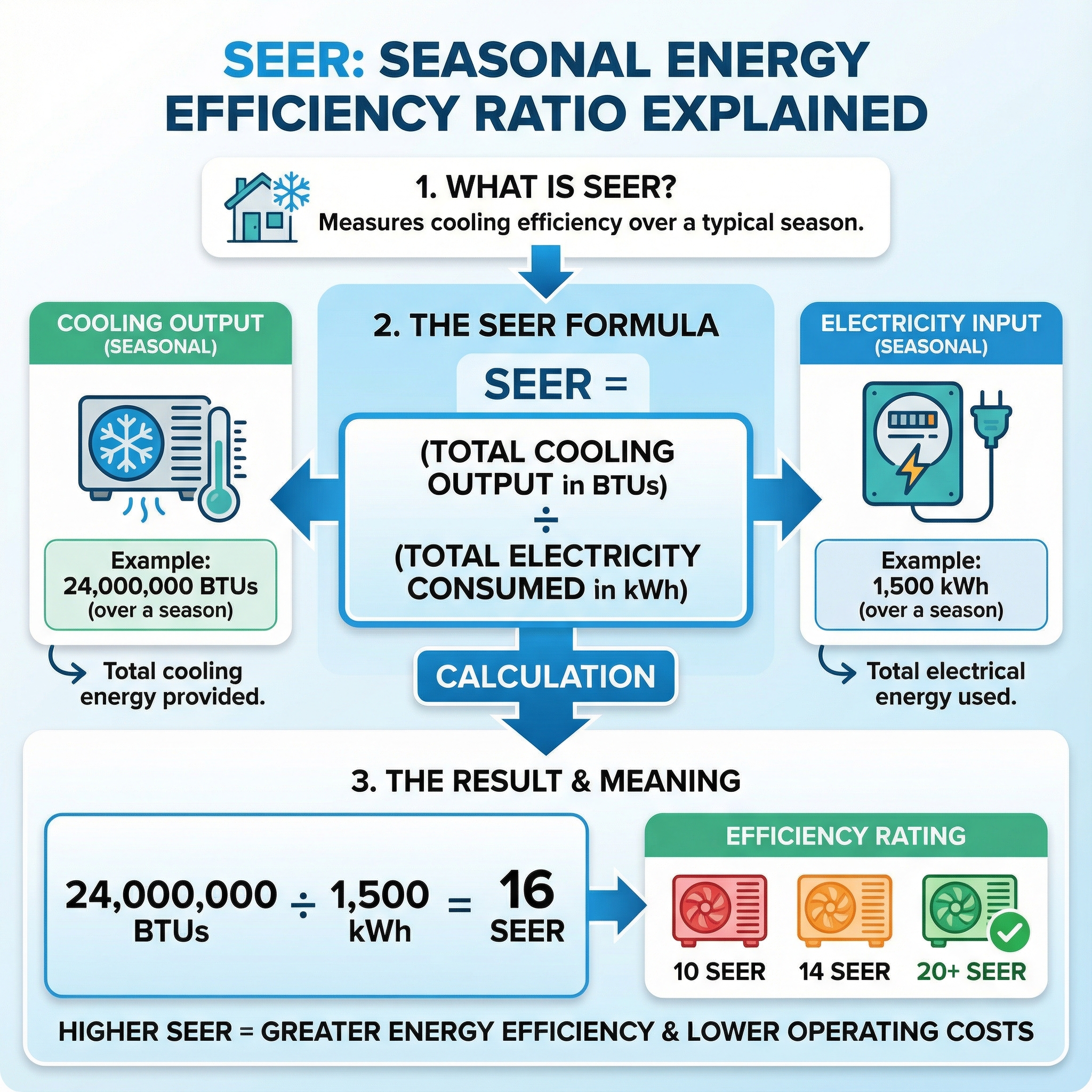
In the desert Southwest, cooling is mostly sensible load, not dehumidification, so efficiency metrics drive outcomes. SEER2 is the updated seasonal test, numerically lower than legacy SEER but a better predictor of real energy use. Think of SEER or SEER2 as miles per gallon for the whole season. EER and EER2 capture full load at high outdoor temperatures, which is the afternoon reality in desert heat, so they matter for both peak demand and your bill.
- Prioritize inverter or two stage compressors that modulate capacity under extreme heat.
- Choose variable speed ECM indoor blowers for smoother airflow and lower power draw.
- Look for efficient condenser fans and designs that sustain capacity at high outdoor temps.
- Compliance: since Jan 1, 2023, Southwest units under 45,000 Btu/h must meet 14.3 SEER2 and 11.7 EER2, with alternate paths available.
Higher SEER2 equipment costs more up front, but long hot seasons typically deliver payback through lower kWh and reduced peak draw. Moving from 13 to 16 SEER can cut cooling energy about 23 percent. Replacing older 10 SEER systems with roughly 20 SEER can approach 50 percent savings. Strong EER2 trims the most expensive afternoon kWh and eases grid stress. In our field experience, inverter systems and efficient condensers hold capacity better in extreme heat, delivering steadier temperatures and lower power use when it matters most.

Evaporative (Swamp) Coolers vs. Refrigerant AC: When Each Makes Sense
How they work: an evaporative cooler pulls hot, dry air through wet pads. As water evaporates it absorbs heat, delivering cooler, slightly humid air, like a breeze over a damp towel. This uses very little electricity but requires a water supply, pad changes, and pump upkeep, and performance falls as outdoor humidity rises, so they are rarely ideal as a sole system in muggy periods.
Where they shine: reliably arid climates, where the added moisture is welcome and energy use is minimal. When you need tight temperature control, stronger filtration for dust or wildfire smoke, or participation in utility demand response, a refrigerant AC or heat pump is the better fit. In our experience at Budget Heating (BudgetHeating.com), many desert homes run a high efficiency central system for precision, then use evaporative cooling or whole house fans as a supplemental, low cost strategy when conditions cooperate.


Ductless Mini Splits & Zoning: Targeted Comfort, Retrofits and Energy Savings
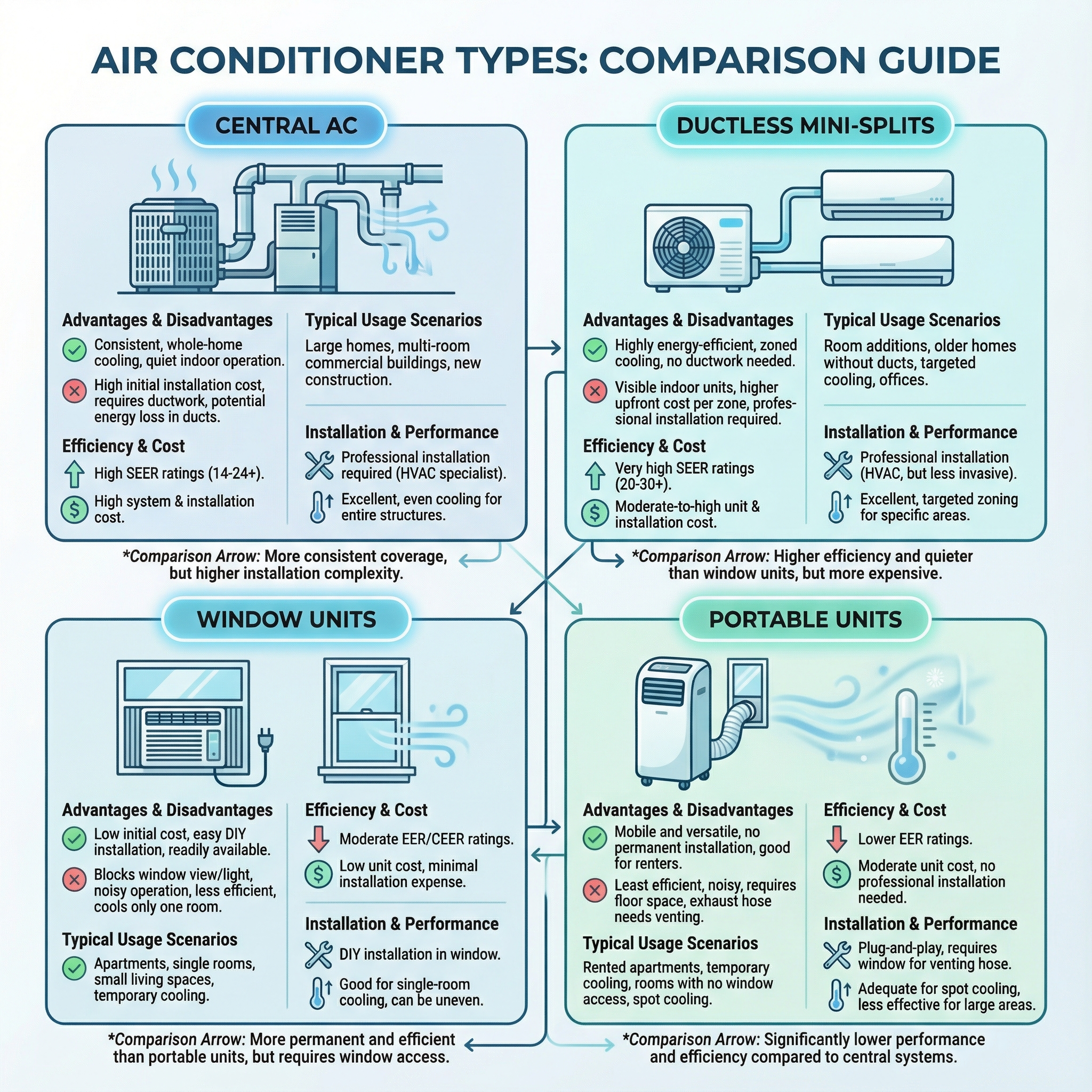
High efficiency ductless and multi zone mini split heat pumps shine when you need true zoned comfort, hard to cool rooms handled, or retrofits where improving ducts is difficult. By placing quiet indoor heads where you live, they bypass leaky or undersized ductwork and put cooling exactly where it is needed.
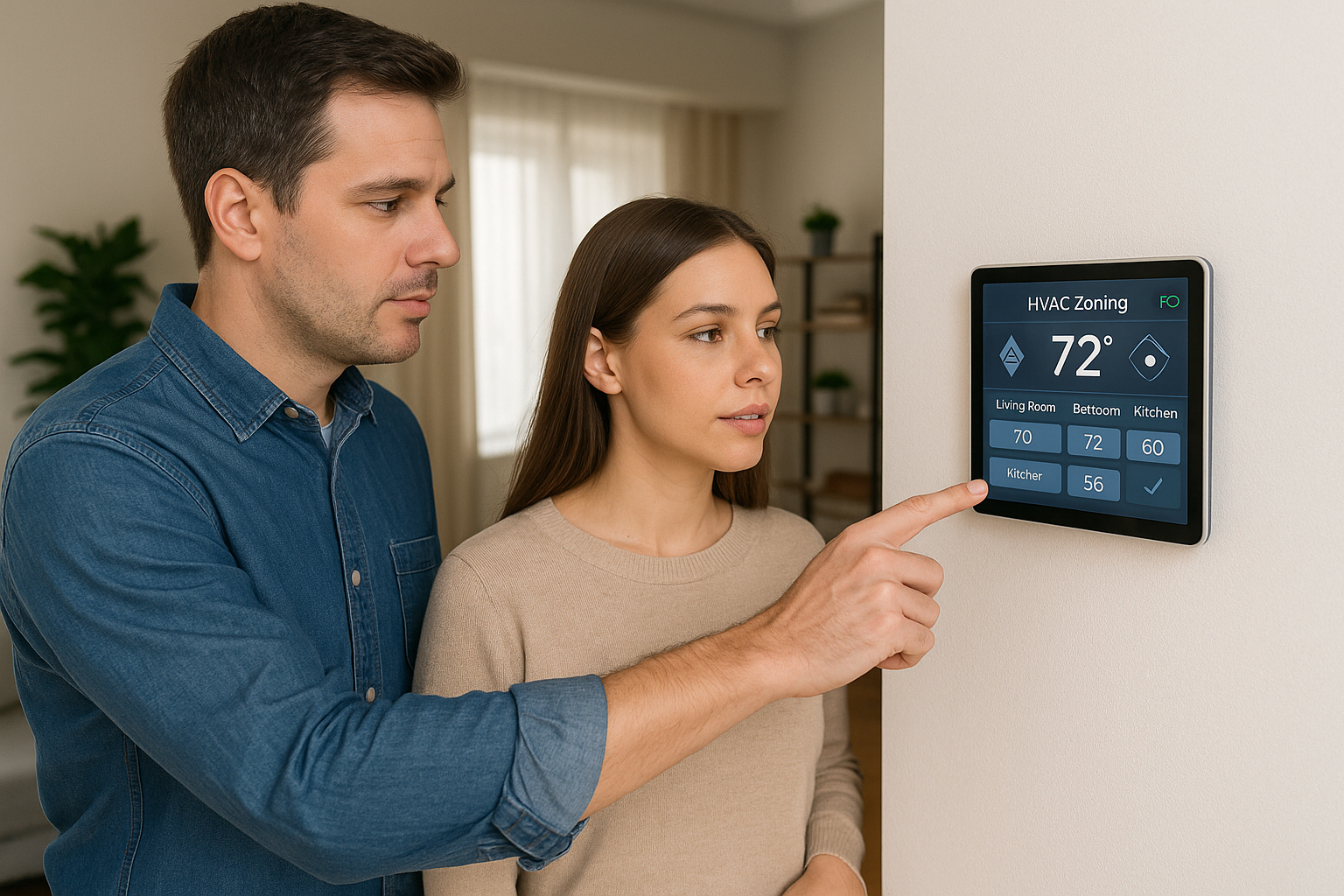
Here is how zoning works in practice: motorized dampers and multi zone controls, or individual mini split heads, direct cooling only to occupied areas, like valves steering water to the taps you are using. That cuts wasted runtime and helps manage large day and night temperature swings, especially in desert homes with uneven solar loads. Zoning also lets you give extra cooling to sun baked west and south exposures without overcooling the rest of the house.
Choose multi zone mini splits for targeted room control, or add motorized zoning to a solid ducted system. In our experience at Budget Heating (BudgetHeating.com), careful zone layout, right sized capacity per room, and smart sensor placement deliver the biggest gains, especially on retrofits where ducts are poor or impossible to upgrade.
Humidity Management: When to Add a Whole Home Humidifier in Dry Climates
Desert homes fight dryness, not humidity. In hot dry regions, indoor air often ends up too dry, which affects comfort and can put wood finishes at risk. That is when a whole home humidifier or add on unit is appropriate, especially if the house still feels parched after long cooling cycles. If an evaporative cooler is the primary system, it already adds helpful moisture, so supplemental humidification is needed less often. Fan strategy matters: running the blower in continuous or circulate mode evens temperatures and can slightly raise indoor moisture. Use ECM or variable speed blowers to keep fan energy low.
Limitations & Honest Tradeoffs: When Desert HVAC Choices Aren't Ideal
In desert climates, some popular choices have drawbacks. We see these myths cause cost and comfort issues:
- Continuous fan mode is not a cure-all. In dusty homes it loads filters fast and can pull attic-duct heat by day. Prefer auto, use night fan runs.
- Oversized AC feels strong but short-cycles, like flooring the gas then braking. Right-sized units run steadier and cool more evenly.
- Closing supply vents to save money spikes duct pressure and leakage. Balance airflow or use zoning instead.
- Filters need frequent changes, often monthly during dusty seasons or construction.
Where choices are not ideal: evaporative coolers falter when humidity rises or water and maintenance are not feasible. A high-SEER refrigerant system with good filtration is more consistent. Heat pumps handle most of the year, but rare hard freezes may call for dual-fuel or a small backup heater.
Plan for A2L refrigerants, R-32 or R-454B, and select installers experienced with A2L codes, handling, and detection.
Smart Thermostats, Scheduling & Pre Cooling: Control Strategies That Lower Bills
Smart thermostats and well planned schedules cut peak costs. We pre cool in the cooler morning, pulling indoor temp a few degrees lower and soaking that cool into the home's thermal mass, so the compressor idles more during the hottest, highest cost afternoon. Think of it like charging a battery with cheap, cool air. Program long, hot afternoons and cooler nights into the thermostat, and avoid big late-day setbacks that trigger an inefficient sprint to recover. Use fan circulate or an ECM blower at low speed to blend rooms and extend comfort while the setpoint drifts slightly upward later in the day. If available, enroll in demand response so minor setpoint nudges during peak events trade a bit of load for bill credits. Together these strategies shift runtime off peak and lower bills.
Air Quality & Dust Control in Desert Homes: Filters, MERV Ratings and Safe Maintenance
Desert homes see constant fine dust that can clog coils and recirculate indoors. A well chosen filter is the first line of defense. Where the system allows, use pleated or media filters sized to the return. Think of them like a coffee filter catching grit before it reaches the pump. Target MERV 8 to 13 that your blower can handle without driving static pressure too high. If airflow drops or you hear whistling, step down a MERV level or increase filter surface area with a deeper media cabinet. Expect shorter change intervals during wind or wildfire smoke events.
- Replace filters every 1 to 3 months, more often in dusty seasons.
- Keep supply and return vents clear and vacuum grilles.
- Keep the outdoor unit area free of windblown debris.
- Do visual checks for unusual noises or issues.
- Shut off power before access, never pressure wash coils, schedule professional coil cleanings, and replace evaporative cooler pads per the recommended schedule.
Installation, Sizing & Ductwork: Manual J/S/D, Sealing, Insulation and Commissioning
Insist on design first, equipment second. Require ACCA Manual J room-by-room loads, Manual S to match equipment to those loads, and Manual D when ducts are added or modified. Right-size capacity and airflow or you risk short cycling, humidity problems, and higher utility costs.
Ducts deserve the same attention as the equipment. Think of leaky ducts like a bucket with holes. Have ducts pressure tested, then seal every seam and boot with mastic, not cloth tape. Any runs in a hot attic should be insulated to at least R-8. Improving attic insulation and adding shading reduces sensible heat that the system must remove, which lowers peak loads and improves comfort.
At start-up, commissioning should verify refrigerant charge, target airflow in CFM per ton, and temperature split across the coil. Confirm the outdoor unit has open airflow, proper clearances, and smart placement with natural shading that does not block intake.
- Provide Manual J, S, and D reports with assumptions.
- Perform a duct leakage test and share results.
- Offer multiple equipment efficiencies with SEER and EER, plus cost and payback comparisons.
- Confirm solar-ready compatibility for future PV integration.
- Assess whether an evaporative cooler is suitable for the climate.
- Explain warranty terms and required maintenance, and set a documented service plan.
Putting It Together: The Best HVAC Features for Hot, Dry Climates (and Your Next Steps)
Here is the winning package for desert conditions: high SEER or SEER2 with strong EER or EER2, variable capacity cooling, efficient air distribution, tight ducts with envelope upgrades, plus climate aware controls and steady maintenance. Layer in smart scheduling like pre cooling and zoning, and you cut seasonal kWh and peak demand, which makes the upfront premium for better equipment worthwhile in hot, dry markets.
Winters are usually mild, so lean on a heat pump forward plan with minimal backup, size backups conservatively for rare cold snaps, and consider dual fuel only if needed.
Choosing gear and settings can feel like a lot. Our team can translate this playbook into a right sized design and equipment list that fits your home and budget.
- Get a Custom Quote
- Talk to Our Team, phone support available
- Shop Heat Pumps