




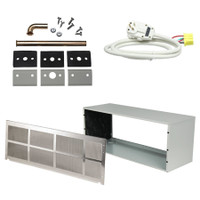
PTAC'S (Hotel Style Unit)
Bring room-by-room comfort to your property with reliable PTAC solutions. These hotel style units offer independent cooling and efficient heat pump or electric heat performance for fast retrofits and new projects.
-



List price:
$46.00Our price:
$39.00You save $7.00!
List price:
$45.00Our price:
$45.00
List price:
$101.00Our price:
$75.00You save $26.00!
List price:
$77.00Our price:
$77.00
List price:
$123.00Our price:
$95.00You save $28.00!
List price:
$125.00Our price:
$105.00You save $20.00!
List price:
$283.00Our price:
$215.00You save $68.00!
List price:
$254.00Our price:
$249.00You save $5.00!
List price:
$1,680.00Our price:
$995.00You save $685.00!
List price:
$1,665.00Our price:
$1,325.00You save $340.00!
List price:
$1,810.00Our price:
$1,460.00You save $350.00!
List price:
$1,870.00Our price:
$1,520.00You save $350.00!
List price:
$1,955.00Our price:
$1,590.00You save $365.00!PTAC'S (Hotel Style Unit)
Designed for hotels, multifamily, dorms, and assisted living, PTAC systems deliver individual room control with simple service and quick replacement. Choose from Cool Only with Electric Heat Strip, Heat Pump with backup heat strip, and PTAC Accessories to match new builds or replacements-all at budget-friendly pricing from about $970 to $1,859.
Capacities span 7,000, 9,000, 12,000, 15,000, and 17,000 BTU (about 0.6-1.4 tons) to fit small interior rooms up to larger corner suites. Units are factory-sealed and charged with R-410A or R32 refrigerant. PTACs are not rated by SEER2 like central systems; compare EER/CEER for cooling efficiency and COP/HSPF data where provided. Verify wall sleeve and grille compatibility for smooth retrofits and select accessories such as thermostats, drain kits, and filters for your application.
Property managers and licensed contractors appreciate fast installs and minimal downtime. For new installations or electrical changes, professional installation is required. For like-for-like replacements in existing sleeves, qualified maintenance staff can often handle swap-outs following local codes and manufacturer guidelines.
Top Brands for PTAC'S (Hotel Style Unit)
Shop trusted names like Amana and Gree for proven reliability, quiet operation, and easy service across cool-only and heat pump PTAC platforms.
Frequently Asked Questions
-
What size BTU PTAC do I need for a hotel or multifamily room?
Match capacity to room size and conditions: 7k for small rooms, 9k-12k for average rooms, 15k-17k for larger or corner rooms. Adjust for climate, sun load, insulation, and occupancy.
-
What is the difference between Cool Only with Electric Heat vs. Heat Pump with backup heat strip?
Cool-only models use resistance heat only. Heat pumps heat efficiently with the compressor; the backup strip engages in colder weather or high demand for consistent comfort.
-
Are these PTAC units charged with R-410A or R32 refrigerant, and does that affect compatibility?
Models come factory-sealed with R-410A or R32. Replacement compatibility centers on chassis, controls, sleeve, and grille-not mixing refrigerants, which are never field-combined.
-
What electric heat kW options are available and how do they impact room heating performance and power draw?
Heat strip kW varies by model. Higher kW provides faster recovery but increases amperage requirements. Always confirm circuit size and electrical specifications on the unit nameplate.
-
Can these PTAC units be used for light commercial applications like hotels, senior living, or dorms?
Yes. PTACs are purpose-built for hospitality, senior living, student housing, and other light commercial applications needing independent room control.
-
What are the installation and wall sleeve/grille considerations for PTAC replacements?
Match the chassis size to the existing wall sleeve, confirm sleeve depth and drain orientation, and use a compatible exterior grille. Replace worn seals and manage condensate correctly.
-
How do I choose between 7,000, 9,000, 12,000, 15,000, and 17,000 BTU models?
Beyond capacity, consider airflow, noise, and electrical amperage. Corner or sun-exposed rooms typically need more BTUs than interior rooms of the same size.
-
Do these PTAC units require professional installation or can maintenance staff handle replacement?
New installations and any electrical modifications require a licensed contractor. Like-for-like replacements in existing sleeves may be done by qualified maintenance per code and manuals.
-
Are PTACs rated by SEER2, and how should I compare efficiency?
SEER2 does not apply to PTACs. Compare EER/CEER for cooling efficiency and COP/HSPF (when provided) for heat pump heating performance.
-
What maintenance should I plan for to keep a PTAC running reliably?
Clean or replace filters regularly, vacuum coils, clear condensate drains, check the sleeve and exterior grille, and inspect seals for air and water tightness.
Sign up to receive exclusive deals, news, and more!
CompareCustom Quote